Contact Us
Choose your preferred way to contact our team
Free Quote
Fill out the form to obtain prices and information
Send an Email
Share your needs and concerns
+86 19021571516
Planetary ball mill series
Explore TENCAN Planetary Ball Mill Series for laboratory grinding, nano powder preparation, mixing and dispersion with vertical, horizontal, cryogenic and full-directional models.
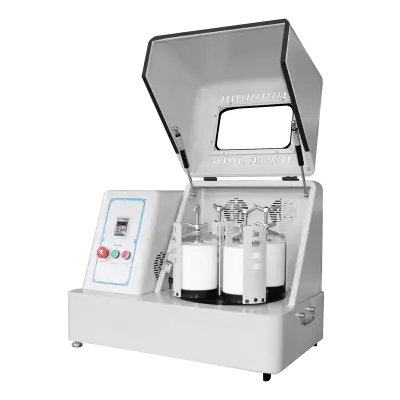
Laboratory planetary grinder
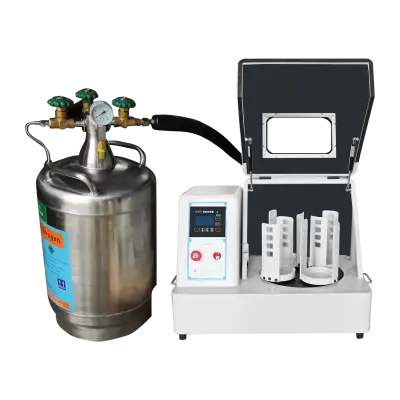
Liquid Nitrogen Planetary Ball Mill
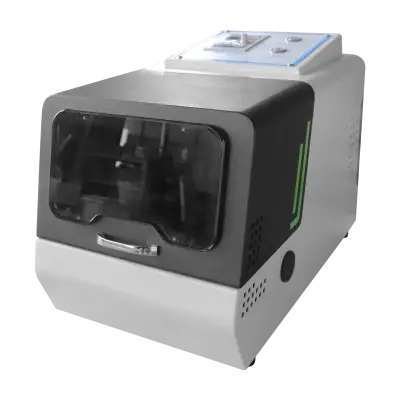
Micro Planetary Ball Mill
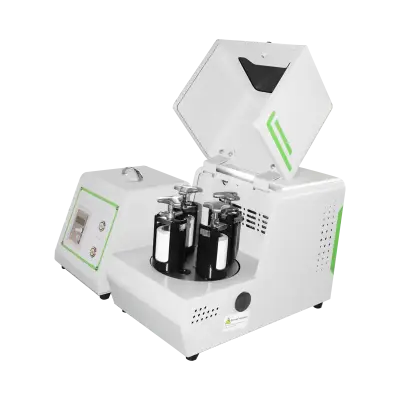
Micro Planetary Ball Mill
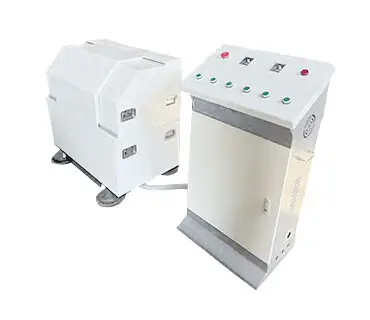
Continuous planetary ball mill
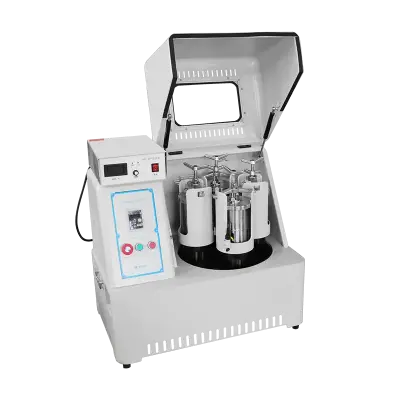
Ultrasonic planetary ball mill
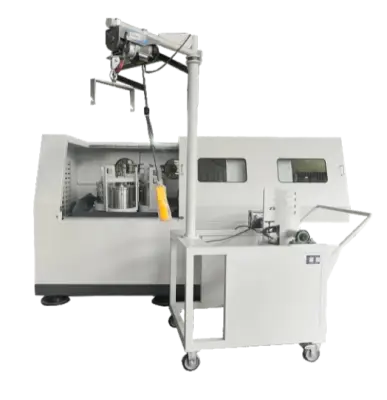
Heavy-duty Full-directional Planetary Ball Mill
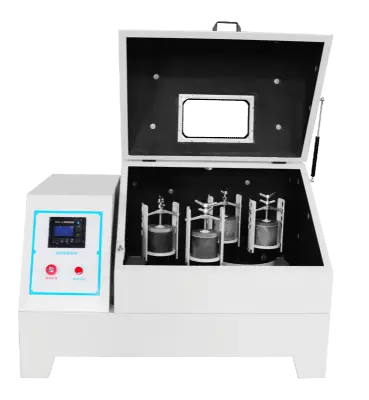
Dual Planetary Ball Mill
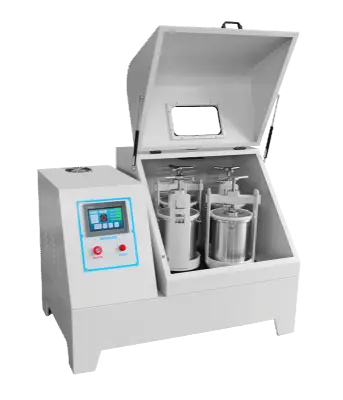
Micro-computerized Touch Screen Planetary Ball Mill
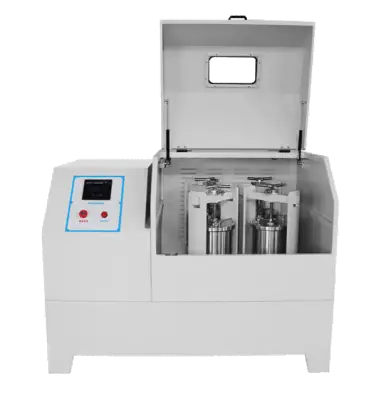
Vertical production planetary ball mill
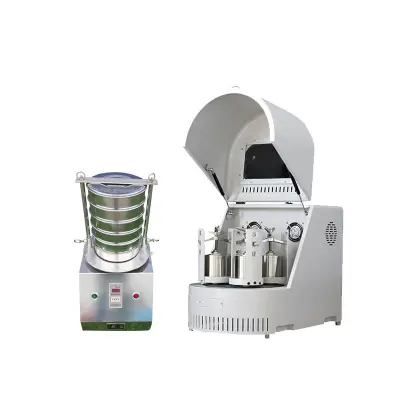
Soil grinder and sieve machine
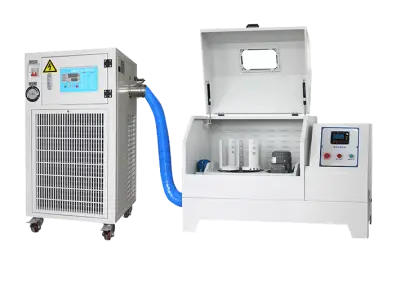
Low temperature planetary grinding machine
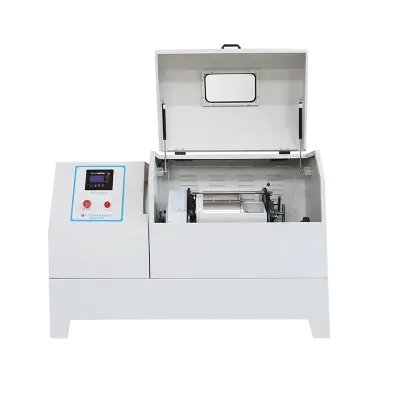
Heavy duty horizontal ball mill
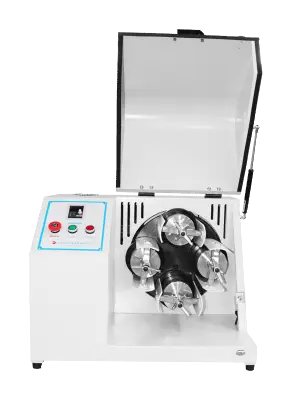
Horizontal light-duty ball mill
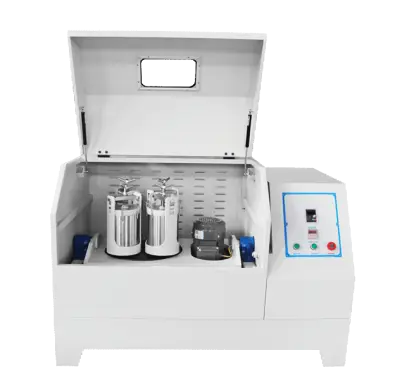
Laboratory Full-Directional Planetary Ball Mill
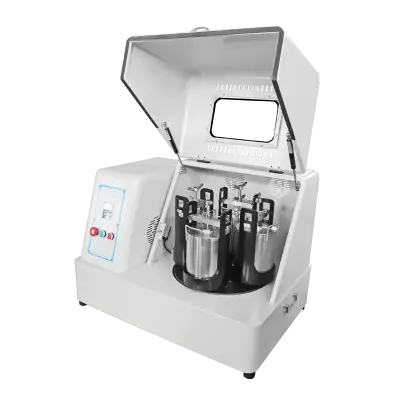
Vertical square planetary ball mill
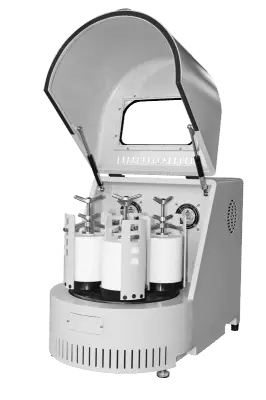
Planetary ball mill (semi-circular model)
TENCAN Planetary Ball Mill Series
TENCAN Planetary Ball Mill Series is designed for high-efficiency laboratory grinding, fine milling, powder mixing, dispersion and nano powder preparation. As one of the most important grinding solutions in modern powder processing, planetary ball mills are widely used in universities, research institutes, enterprise laboratories and small-batch production lines for ceramics, minerals, metallurgy, new energy materials, electronic materials, chemical powders, catalysts and advanced functional materials.
Why Choose TENCAN Planetary Ball Mills?
A planetary ball mill works through the combined movement of revolution and self-rotation. The grinding jars rotate around the central planetary disc while rotating around their own axes. This movement creates strong impact, friction and shear force between grinding balls and materials, helping users achieve rapid particle size reduction and uniform mixing in a compact laboratory system.
TENCAN provides a complete range of planetary ball mills for different process requirements. The product series includes vertical semi-circular planetary ball mills, vertical square planetary ball mills, horizontal light-duty models, heavy-duty horizontal models, 360° full-directional planetary ball mills, low-temperature planetary ball mills, liquid nitrogen cryogenic planetary ball mills, ultrasonic planetary ball mills, double planetary ball mills, micro-computer planetary ball mills and continuous planetary ball mills.
This wide model range allows customers to choose equipment according to sample volume, material characteristics, grinding target, temperature sensitivity and batch capacity. For routine laboratory use, standard four-jar models provide high flexibility. For temperature-sensitive materials, low-temperature and cryogenic models help reduce heat influence. For materials that settle, stick to the jar wall or agglomerate easily, full-directional and ultrasonic models can improve grinding uniformity and dispersion.
Different Models for Different Grinding Needs
The vertical semi-circular planetary ball mill is suitable for small-batch, high-precision laboratory grinding. It is commonly used for sample preparation, material mixing, fine grinding and nano powder research. Its compact structure and four-jar design make it practical for parallel experiments.
The vertical square planetary ball mill is one of the most widely used models. It is suitable for mixing, fine grinding, small sample preparation, new product development and small-batch production of high-tech materials. With different jar volumes and jar materials, it can process a broad range of powders and particles.
The horizontal light-duty planetary ball mill uses horizontally installed grinding jars and is suitable for laboratory users who need stable operation and compact equipment. For heavier loads or pilot-scale grinding, the heavy-duty horizontal planetary ball mill provides stronger structural support and better load capacity.
The 360° full-directional planetary ball mill adds multi-directional turning movement to the traditional planetary motion. This structure helps prevent material sedimentation, reduce dead zones and improve grinding consistency. It is especially suitable for materials that are easy to sink, stick or agglomerate during long-time grinding.
The low-temperature planetary ball mill and liquid nitrogen cryogenic planetary ball mill are designed for heat-sensitive materials. During high-speed grinding, friction may cause temperature rise and affect material properties. Cooling systems help protect polymers, biological samples, battery materials, chemical powders and other temperature-sensitive samples.
The ultrasonic planetary ball mill combines mechanical grinding with ultrasonic dispersion. It helps break secondary agglomerates, improve slurry dispersion and reduce wall sticking. This model is suitable for nano materials, ceramic slurries, electronic powders, catalysts and materials requiring both fine grinding and better dispersion.
The continuous planetary ball mill is suitable for users moving from laboratory testing to pilot or small-scale production. It supports higher processing capacity and more continuous operation, making it useful for material scale-up and process verification.
Key Application Fields
TENCAN planetary ball mills are widely used in new energy materials, lithium battery materials, sodium battery materials, solid-state electrolytes, ceramic powders, electronic ceramics, magnetic materials, rare earth materials, catalysts, powder metallurgy, mineral analysis, environmental samples, pigments, coatings and pharmaceutical research.
In battery material research, planetary ball mills can be used for active material grinding, conductive additive mixing, solid electrolyte preparation and material modification. In ceramic processing, they help prepare alumina, zirconia, silicon carbide and other fine ceramic powders. In mineral laboratories, they are used for ore sample grinding before analysis. In chemical and catalyst research, they support powder activation, dispersion and surface modification.
Difference from Roll Ball Mills and Stirred Ball Mills
Compared with roll ball mills, planetary ball mills provide higher grinding energy and are more suitable for fine grinding, nano powder preparation and small-batch laboratory testing. Roll ball mills are usually better for gentle grinding, mixing and larger batch processing.
Compared with stirred ball mills, planetary ball mills are more flexible for dry grinding, wet grinding, vacuum grinding and multi-sample experiments. Stirred ball mills are often selected for slurry dispersion and larger-scale wet grinding, while planetary ball mills are preferred for high-energy laboratory milling and fast sample development.
Customization and Selection Support
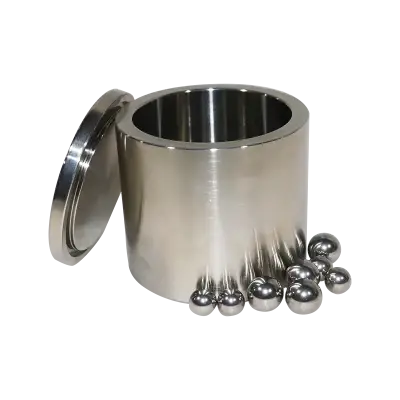
Selecting a suitable planetary ball mill depends on material hardness, initial particle size, target fineness, grinding method, sample volume, contamination requirements, atmosphere requirements and temperature sensitivity. TENCAN can provide different grinding jar materials, including stainless steel, zirconia, agate, corundum, tungsten carbide, nylon, PTFE and polyurethane. Vacuum jars and inert gas protection options are also available for oxidation-sensitive materials.
For customers who are not sure which model is suitable, TENCAN can provide selection support based on raw material type, target particle size, batch volume and process conditions. Whether the requirement is routine lab grinding, nano powder preparation, low-temperature milling, full-directional anti-sedimentation grinding, ultrasonic dispersion or pilot production, TENCAN can help match the right planetary ball mill solution.
FAQ
-
What is a Micro Planetary Ball Mill? A Compact Lab Grinder for Nano-Scale Sample Preparation
Discover the Micro Planetary Ball Mill, a compact lab grinder designed for ultra-fine grinding of materials down to 0.1 micron. Ideal for glove box use, it supports dry, wet, and vacuum grinding with programmable control for research and quality control.
MORE >> -
What is a Tungsten Carbide Planetary Mill Jar? A High-Performance Grinding Container for Ultra-Hard Material Processing and Contamination-Free Nano Grinding
Explore the definition, working principles, key performance metrics, and selection criteria of tungsten carbide planetary mill jars. This article explains how these ultra-hard grinding containers enable contamination-free nano grinding of hard and brittle materials in planetary ball mills, making them essential for advanced materials research, powder metallurgy, and ceramic processing.
MORE >> -
What is a Low Temperature Planetary Grinding Machine? A Specialized Ball Mill for Cryogenic Grinding of Heat-Sensitive Materials
A low temperature planetary grinding machine is a specialized planetary ball mill designed for cryogenic grinding, enabling fine milling of heat-sensitive, volatile, or biological materials without thermal degradation. This article explains its working principle, key components, performance indicators, and application areas, helping researchers and engineers select the right equipment for low-temperature powder processing.
MORE >> -
What is a Heavy-duty Full-directional Planetary Ball Mill? A High-Energy Milling Machine for Multi-Directional Ultra-Fine Grinding in Industrial Production
Discover the Heavy-duty Full-directional Planetary Ball Mill, a robust milling machine designed for ultra-fine grinding, mechanical alloying, and powder preparation. Learn about its unique 360° rotary motion, key performance indicators, selection tips, and applications in materials research and small-scale production.
MORE >> -
What is a Tungsten Carbide Planetary Mill Jar? A High-Wear-Resistant Milling Container for Ultrafine Grinding of Hard Materials
A tungsten carbide planetary mill jar is a specialized grinding container designed for planetary ball mills, enabling ultrafine and nano-scale grinding of ultra-hard materials like tungsten carbide, cemented carbides, and ceramics. Its extreme hardness, density, and wear resistance prevent contamination and maximize milling efficiency for high-energy applications in materials research and powder metallurgy.
MORE >> -
What is a Horizontal Light-Duty Ball Mill? A Compact Grinding Machine for Laboratory Powder Preparation
A horizontal light-duty ball mill is a compact planetary ball mill designed for efficient grinding, mixing, and homogenizing of small batches of materials in laboratories. It uses the planetary motion of grinding jars to achieve ultrafine particle sizes down to the nanometer range, making it ideal for research, quality control, and small-scale production in materials science, chemistry, and pharmaceuticals.
MORE >> -
What is a Micro-computerized Touch Screen Planetary Ball Mill? A High-Precision Grinding Equipment for Laboratory Powder Processing
A micro-computerized touch screen planetary ball mill is a high-energy grinding system designed for ultra-fine size reduction, mixing, and homogenization of powders in research laboratories. This compact device uses planetary motion to generate powerful impact, shear, and friction forces, enabling particle refinement down to the nanometer scale. Its advanced touch interface and programmable logic allow precise control over speed, run time, and grinding cycles. Ideal for materials science, chemistry, geology, and pharmaceuticals, this mill offers superior reproducibility and user-friendly operation. Explore how it transforms coarse solids into fine powders efficiently.
MORE >> -
What is an Ultrasonic Planetary Ball Mill? A High-Energy Milling Device for Ultrasonic-Assisted Nano-Grinding
An ultrasonic planetary ball mill combines planetary motion with ultrasonic energy to achieve ultra-fine grinding, dispersion, and nano-material synthesis. This article explains its working principle, key components, performance metrics, and selection criteria for researchers and engineers in materials science, chemistry, and pharmaceuticals.
MORE >> -
What is a Laboratory Full-Directional Planetary Ball Mill? A High-Energy Milling Device for Multi-Directional Fine Grinding and Nano Material Preparation
This article provides a comprehensive overview of the Laboratory Full-Directional Planetary Ball Mill, a versatile high-energy milling device designed for ultra-fine grinding, nano-material synthesis, and multi-sample preparation in research laboratories. It explains its working principle, key technical features, performance indicators, and selection criteria, helping users understand how this equipment achieves superior grinding uniformity through 360-degree rotational motion. The guide also covers typical applications in materials science, geology, pharmaceuticals, and battery research.
MORE >> -
What is 304 Stainless Steel Grinding Ball? A Durable Grinding Media for Planetary and Ball Mills
Explore the 304 stainless steel grinding ball – a versatile and corrosion-resistant grinding media used in planetary ball mills and other milling equipment. Learn about its composition, size range, hardness grades, and how to select the right ball for your material processing needs.
MORE >>
Get In Touch
Our professional team will reply to you within one business day. Please feel free to contact us!