Contact Us
Choose your preferred way to contact our team
Free Quote
Fill out the form to obtain prices and information
Send an Email
Share your needs and concerns
+86 19021571516

Why choose us
Simple ordering, reliable quality, professional support.
Easy Process
Clear communication from product selection to delivery, so your team can move faster.
Quality Assurance
Stable manufacturing, strict inspection, and support for configuration requirements.
Expert Support
Application-oriented advice for planetary ball milling, sample preparation, and scale-up needs.
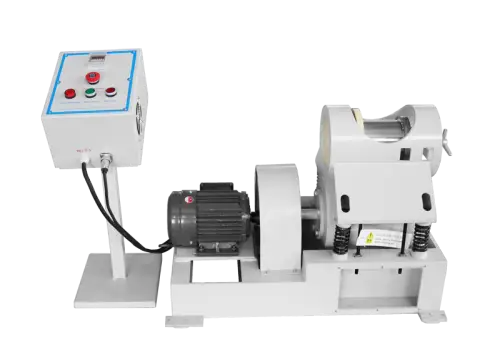
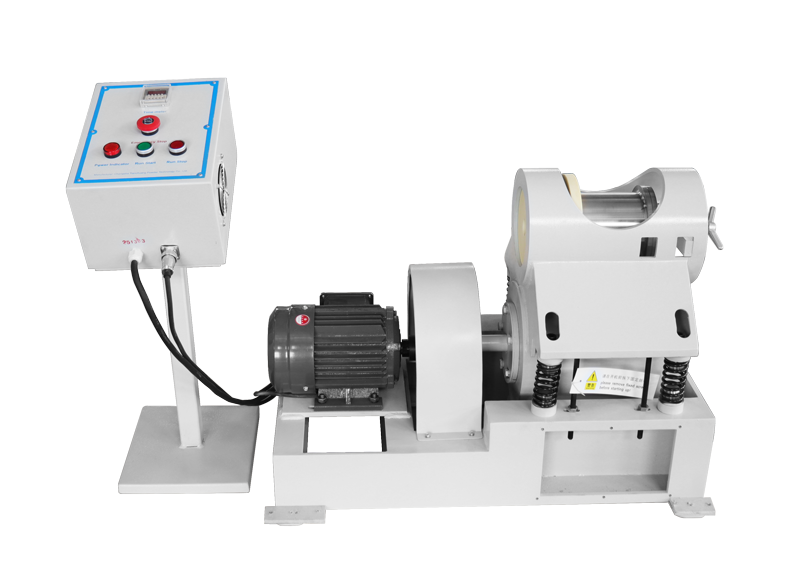
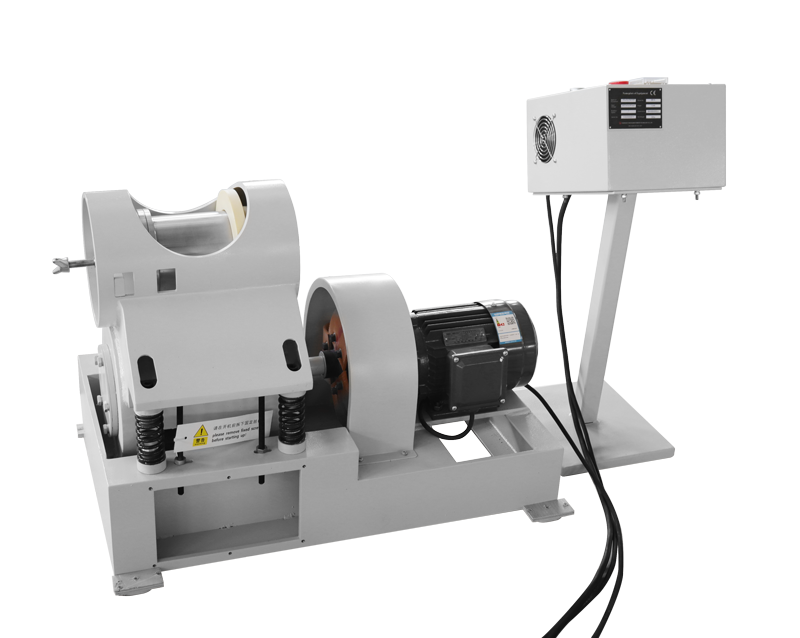
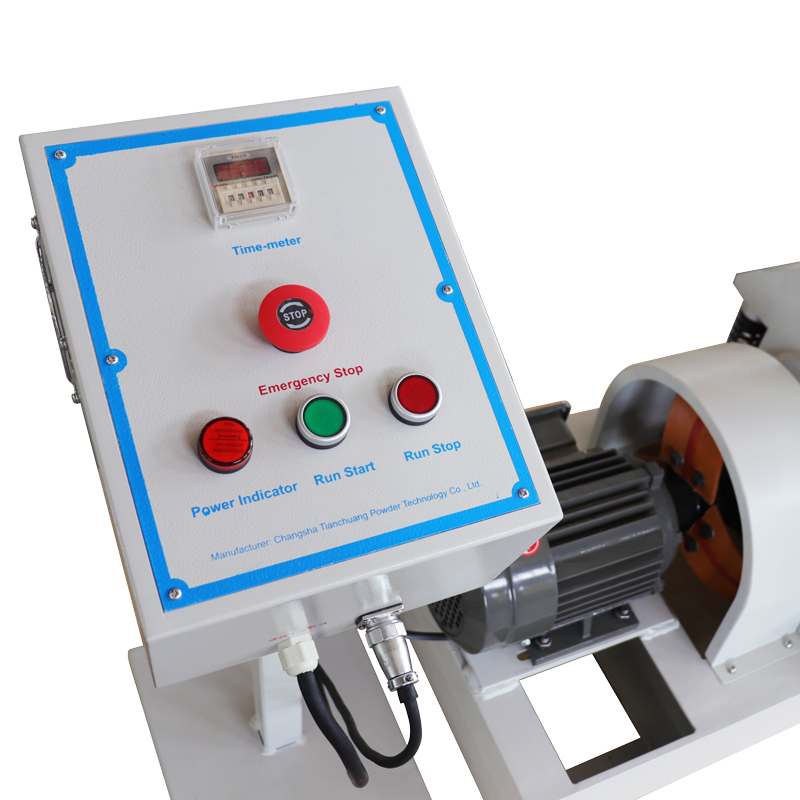
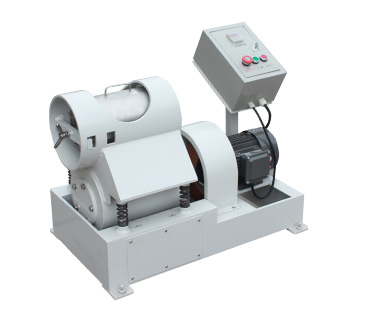
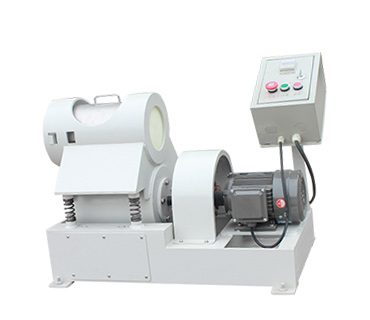
Experimental vibration mill, also called vibration mill, is a new type of high-efficiency milling equipment. It has three structural types: single-cylinder, double-cylinder and three-cylinder.
The experimental vibration mill is simple and convenient to operate, reliable in operation, easy to clean, and has strong adaptability to working conditions. It can be used for dry and wet ball milling.
Experimental vibration mills are widely used in the fields of electronics, ceramics, chemicals, powder metals, tungsten, calcium carbide, rubber compounds, magnetic materials and radio industries, high-frequency porcelain materials and pharmaceuticals.
Technical parameters
| model | Amplitude(mm) | Vibration frequency (r/min) | Loading capacity | ball loading | motor | Overall (reference) dimensions (mm) | Feed particle size (mm) | Discharge particle size (mesh) |
|---|---|---|---|---|---|---|---|---|
| ZM-(1-3)L | 5-8 | 1440 | 25% | 60% | 1.1kW-4 | 880x570x680 | ≤5 | 200~2000 (related to material characteristics) |
| ZM-(3-5)L | 5-8 | 1440 | 25% | 60% | 1.1kW-4 | 900x570x680 | ||
| ZM-10L | 5-8 | 1440 | 25% | 60% | 1.5kW-4 | 980x540x685 | ||
| ZM-20L | 5-8 | 1440 | 25% | 60% | 1.5kW-4 | 1160x740x740 |
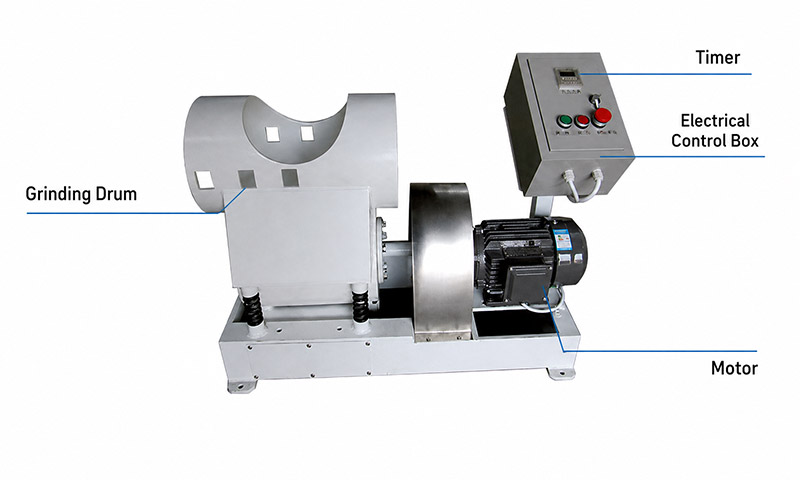
The experimental vibration mill is mainly composed of a frame, a bottom frame, an exciter, a grinding barrel, a spring, a motor, etc. When the machine is started, the motor drives the exciter to generate an exciting force, causing the grinding barrel to continuously vibrate at high frequency and small amplitude. Due to the rotation and relative motion of the grinding medium, the materials are frequently impacted and peeled, thereby achieving the purpose of uniformly crushing the materials.
1. The media filling amount in the grinding barrel is higher than that of a ball mill with the same capacity, up to 80%, so the processing capacity is large.
2. The structure is simple, and products of different particle sizes can be produced by adjusting the amplitude, frequency, medium, and ratio.
3. The vibration mill with jacketed grinding barrel can adjust the grinding temperature.
4. The vibrating mill with screen and collection device can carry out continuous production.
5. It is simple and convenient to operate, reliable in operation, easy to clean, and has strong adaptability to working conditions.
6. Dry and wet ball milling can be performed.
7. Light weight, small size and high efficiency.
8. Special customization can be made according to requirements.
Special options: The tank lining can be lined with stainless steel, ceramic (alumina), zirconia, ceramic tile, nylon, polytetrafluoroethylene, food grade rubber or polyurethane.
Parameters
| Model | ZM |
|---|---|
| Grinding Jar Capacity | |
| Feed Size | |
| Output Size | |
| Speed | |
| Power | |
| Voltage | |
| Dimensions | |
| Weight | 0 |
Related Videos
The trusted choice of industry leaders
FAQ
-
What is a Small Ball Mill with a Ceramic Jar? A Compact Drum Ball Mill for Laboratory Sample Grinding
A small ball mill with a ceramic jar is a compact drum-type grinding equipment widely used in laboratories for fine powder preparation. It features a ceramic jar that prevents metal contamination, making it ideal for grinding sensitive materials. This article explains its working principle, key components, performance indicators, and application scenarios to help users select the right model.
MORE >> -
What is a Lab Vibration Ball Mill? A High-Efficiency Grinding Device for Rapid Sample Preparation and Cell Disruption
Discover the working principle, types, key specifications, and selection tips of the Lab Vibration Ball Mill. This high-energy milling equipment is ideal for dry, wet, and cryogenic grinding of small samples, as well as cell disruption for DNA/RNA extraction. Learn how to choose the right model for your lab.
MORE >> -
What is a Lightweight Stirred Ball Mill? A High-Efficiency Grinding Equipment for Wet and Dry Ultrafine Pulverization
Discover what a lightweight stirred ball mill is, how it works, and its key advantages for laboratory and pilot-scale ultrafine grinding. This guide covers working principles, types, performance indicators, and selection tips for this versatile wet and dry milling equipment.
MORE >> -
What is a Jar Mill with 8 Working Station? A High-Efficiency Grinding Equipment for Multi-Sample Laboratory Powder Processing
Learn about the jar mill with 8 working station, a versatile drum ball mill designed for simultaneous grinding of multiple samples in laboratories. This article covers its definition, working principle, key components, performance indicators, application fields, and selection tips for efficient powder processing.
MORE >> -
What is a Zirconia Grinding Ball? A High-Performance Grinding Medium for Ultra-Fine Powder Preparation in Ball Mills and Sand Mills
Discover the essential role of zirconia grinding balls in ultra-fine powder processing. This FAQ guide explains their composition, working principles, types, key performance indicators, and selection tips for industries like lithium batteries, ceramics, and pharmaceuticals. Ideal for engineers and procurement professionals.
MORE >> -
What is an Electric Lifting Stirred Ball Mill? A High-Efficiency Grinding Equipment for Fine and Ultra-Fine Powder Processing
The electric lifting stirred ball mill is a specialized grinding device that uses a rotating agitator to drive grinding media for fine and ultra-fine milling. It features an electrically operated lifting mechanism for easy jar installation and cleaning. Ideal for wet or dry grinding of ceramics, chemicals, minerals, and battery materials, it combines high energy efficiency with precise particle size control, suitable for both R&D and small-batch production.
MORE >> -
What is a Production Type Stirred Ball Mill? A High-Efficiency Grinding Equipment for Industrial Fine and Ultra-Fine Powder Production
This article explains the production type stirred ball mill, an industrial-scale grinding machine designed for fine and ultra-fine powder production. It covers the working principle, key components, customization options, selection criteria, and typical applications in mining, ceramics, chemicals, and advanced materials.
MORE >> -
What is a Continuous Planetary Ball Mill? A High-Efficiency Grinding Equipment for Continuous Powder Production
A continuous planetary ball mill is a specialized grinding device that combines planetary motion with continuous material feeding and discharge, enabling high-throughput production of ultra-fine powders. This article explains its working principle, key features, application areas, and selection criteria for industrial users.
MORE >> -
What is a Four Station Jar Mill? A Multi-Sample Drum Ball Mill for Laboratory Powder Grinding
A four station jar mill is a laboratory-scale drum ball mill designed for simultaneous grinding and mixing of up to four different samples. It uses rotating rollers to drive grinding jars, achieving fine powder preparation through impact and attrition. This article explains its working principle, key features, selection criteria, and applications in research, materials science, and quality control.
MORE >> -
What is a Lab Stirred Ball Mill? A High-Efficiency Grinding Equipment for Fine and Ultra-Fine Powder Research
Discover the lab stirred ball mill: a compact, high-efficiency grinding device for fine and ultra-fine powder research. Learn its working principle, types, key performance indicators, and selection tips for materials science, chemistry, and pharmaceuticals.
MORE >>
Get In Touch
Our professional team will reply to you within one business day. Please feel free to contact us!
Related Products
Related Articles