
The Ultimate Guide to Lab Vibration Ball Mill: How It Works, Applications & Selection Tips

What Is a Lab Vibration Ball Mill?
If you've ever needed to grind a small amount of material into a fine powder quickly, you've probably wondered if there's a more efficient way than a traditional planetary ball mill. Enter the lab vibration ball mill — a compact, high-energy machine that uses rapid oscillation to pulverize samples in seconds. It's a go-to tool for researchers in materials science, biology, geology, and pharmaceuticals.
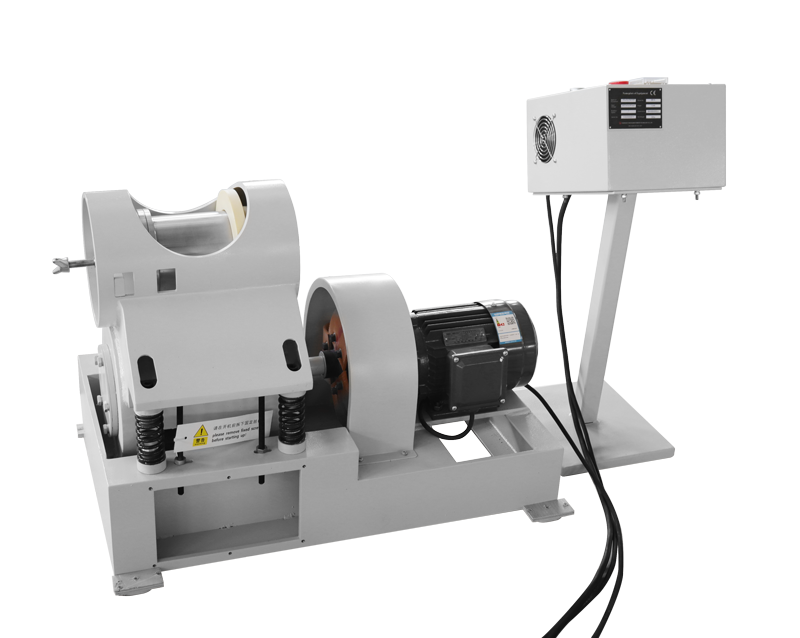
At TENCAN, we design these mills to handle everything from hard ores to soft plant tissues, and even frozen samples. The principle is simple: a motor drives a vibrating platform that shakes a grinding jar or adapter at high frequency. Inside the jar, grinding balls collide with the sample, breaking it down through impact and friction.
How Does It Work?
Imagine a paint shaker, but far more powerful and precise. The lab vibration ball mill generates a three-dimensional oscillatory motion — typically in a horizontal circle or a figure-eight pattern. The jar, filled with grinding balls and your sample, moves at frequencies up to 2200 rpm (depending on the model).
Here's the key: the balls don't just roll; they fly across the jar, smashing into each other and the walls. This creates intense shear and impact forces that can reduce particles down to 5 microns or even smaller. For biological samples, you can use tiny glass beads to break open cells — a technique called bead beating for DNA/RNA extraction.
Key Components
- Vibrating platform – holds the jar or adapter and delivers the oscillatory motion.
- Grinding jar or adapter – available in stainless steel, zirconia, agate, tungsten carbide, etc.
- Grinding balls – diameters from 1 mm to 25 mm, matched to sample hardness.
- Control system – digital display for setting time, frequency, and pause cycles.
Why Choose a Vibration Ball Mill Over Other Types?
You might be thinking: "Why not just use a planetary ball mill?" Great question. Both are excellent, but vibration mills have some superpowers:
- Speed – Grinding times are often 1–3 minutes, compared to 10–30 minutes for planetary mills.
- Throughput – Many models can process 96 samples at once using microplates or adapters.
- Versatility – They handle dry, wet, and cryogenic grinding with equal ease.
- Compact size – Perfect for cramped lab benches.
Of course, planetary mills are better for larger volumes (like 500 ml to 5 L) and for achieving extremely narrow particle size distributions. For most lab-scale tasks, especially with small batches, a vibration mill is the winner.
Applications Across Industries
The lab vibration ball mill is a true multipurpose tool. Here are some common use cases:
- Pharmaceuticals – grinding active ingredients, excipients, and herbal medicines.
- Biology – cell lysis for DNA/RNA extraction, homogenizing tissues.
- Materials science – mechanical alloying, preparing powders for XRF analysis.
- Geology & mining – pulverizing ores, rocks, and soil.
- Food & agriculture – grinding grains, seeds, and spices.
- Environmental – preparing solid waste, sludge, and electronic waste for analysis.
Key Parameters to Consider
When shopping for a lab vibration ball mill, here are the specs you should look at:
| Parameter | Typical Range | Why It Matters |
|---|---|---|
| Vibration frequency | 200 – 2200 rpm | Higher speed = faster grinding, but may cause overheating. |
| Feed size | < 10 mm | Larger particles need pre-crushing. |
| Final fineness | ~5 µm | Sufficient for most analytical methods. |
| Sample capacity | 0.2 ml – 100 ml per jar | Choose based on your batch size. |
| Number of stations | 1 – 2 (or adapter for 96 tubes) | High-throughput models can process many samples. |
| Jar materials | Stainless steel, agate, zirconia, WC, PTFE | Must match sample hardness and avoid contamination. |
Choosing the Right Model: TENCAN Series
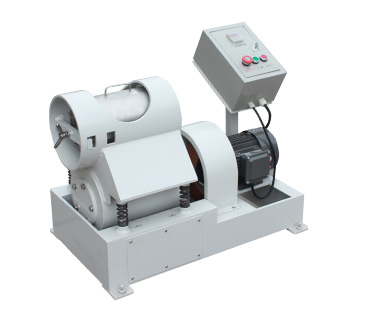
TENCAN offers a range of vibration ball mills tailored to different needs:
1. Lightweight Vibrating Ball Mill
Ideal for small labs with limited space. It's portable, quiet, and perfect for grinding 1–5 g samples. Learn more about the lightweight vibrating ball mill.
2. Heavy Duty Vibrating Ball Mill
Built for continuous operation and larger volumes (up to 100 ml per jar). Its robust construction handles hard materials like tungsten carbide and minerals. Check the heavy duty vibrating ball mill.
3. Lab Sample Grinder Machine
This is a versatile option for general-purpose grinding. It comes with a digital timer and speed control, making it easy to replicate results. See the lab sample grinder machine.
All TENCAN mills are built with safety features like a lid interlock, transparent window, and overload protection. They also support cryogenic grinding by pre-cooling the jar with liquid nitrogen.
Tips for Getting the Best Results
- Start with a small test – Use a small amount of sample to find the optimal time and speed.
- Balance the jars – If using two jars, make sure they weigh the same (including balls and sample) to avoid excessive vibration.
- Choose the right ball size – Large balls (10–20 mm) for crushing, small balls (1–5 mm) for fine grinding.
- Use wet grinding for heat-sensitive materials – Adding a solvent like ethanol reduces heat buildup.
- Clean thoroughly between runs – Cross-contamination can ruin your analysis.
Final Thoughts
A lab vibration ball mill is a game-changer for anyone who needs fast, reliable sample preparation. Whether you're extracting DNA from plant leaves, grinding cement clinker for XRF, or alloying metal powders, this machine can do it in minutes. TENCAN's lineup offers options for every budget and application, all backed by years of engineering expertise.
Ready to find your perfect mill? Browse the lab vibration ball mill page or contact TENCAN for personalized advice. Happy grinding!
Related Products
Micro Planetary Ball Mill
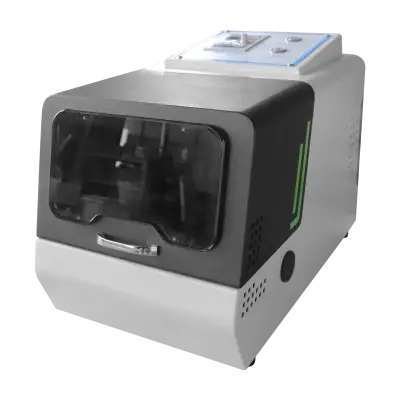
Micro planetary ball mill for mixing, fine grinding, and sample preparation. Compact, low noise, high efficiency. Ideal for R&D labs to obtain four samples simultaneously. Vacuum grinding jars available.
Lightweight vibrating ball mill
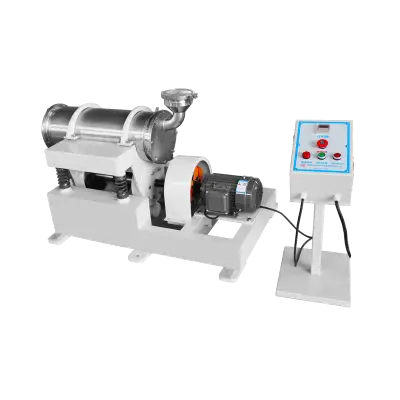
High-efficiency lightweight vibrating ball mill for ultra-fine powder grinding. Available in single, double, and triple-tube configurations for various material processing needs.
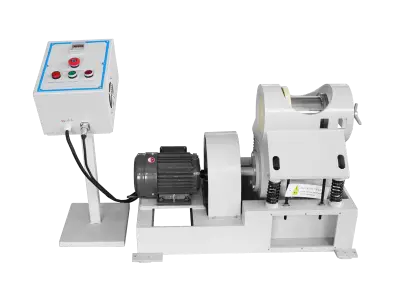
lab vibration ball mill
Lab vibration ball mill is a high-efficiency grinding equipment available in single, double, and three-cylinder configurations. Ideal for fine powder preparation in research and lab settings.
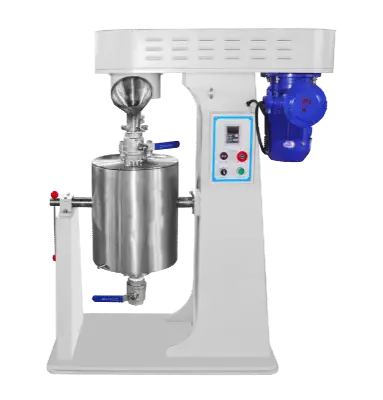
Lightweight stirred ball mill
Lightweight stirred ball mill for fine grinding of zirconium silicate, alumina, ceramics, paints, and non-metallic minerals. Ideal for lab and industrial use in material processing.
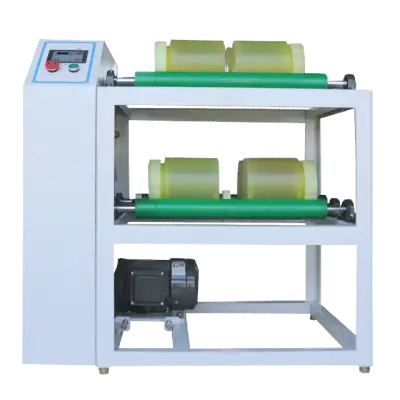
Jar mill with 8 working station
8-station jar mill for fine grinding and mixing in labs and small-scale production. Features compact design, high efficiency, and uniform particle size for research and industry.
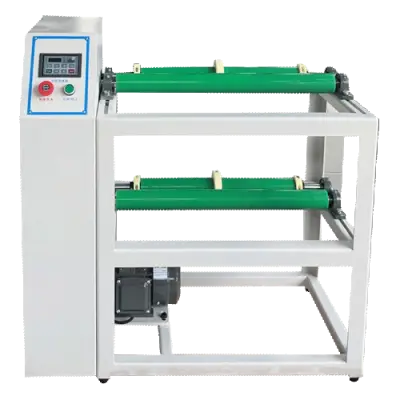
Four station jar mill
Four-station jar mill for ultra-fine grinding and mixing in lab & small-scale production. Compact, efficient, uniform particle size. Ideal for research, teaching, and pilot manufacturing.
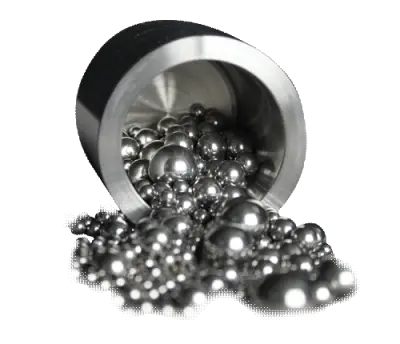
304 stainless steel grinding ball
High-quality 304 stainless steel grinding balls for fine grinding and dispersion in planetary, drum, stirred, and vibration ball mills. Durable, corrosion-resistant, widely used in powder processing.
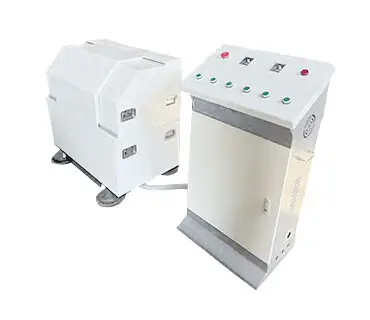
Continuous planetary ball mill
High-efficiency continuous planetary ball mill for nano & ultrafine powder processing. Ideal for R&D, teaching, testing, and production in material science labs.
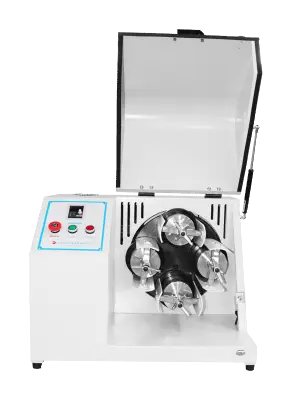
Horizontal light-duty ball mill
Horizontal ball mill for fine grinding soft to medium-hard materials. Ideal for lab research, chemical, and ceramic sectors. Compact.
Get In Touch
Our professional team will reply to you within one business day. Please feel free to contact us!