
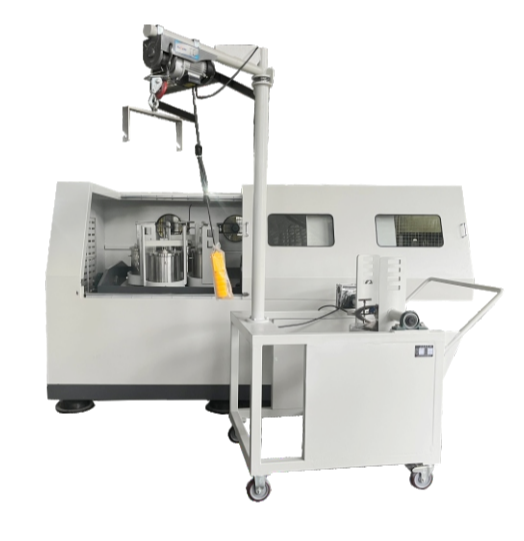
Heavy-Duty Full-Directional Planetary Ball Mill: Design, Motion and Real Uses

If you've ever stood next to a planetary ball mill running at full speed, you know the sound — a steady, hypnotic hum while the jars whip around like two dancers who refuse to agree on a direction. Now imagine that same machine built to keep going hour after hour, day after day, and to move those jars in three dimensions instead of two.
That is the short version of what a heavy-duty full-directional planetary ball mill is. If you grind powders for a living — battery materials, ceramics, minerals, catalysts, alloys — you already know the frustration of a mill that grinds beautifully in the middle of the jar and barely touches the edges. Below we'll walk through what "heavy-duty" and "full-directional" actually mean, which parameters deserve your attention, and how to decide whether this class of mill belongs in your lab.
What a Planetary Ball Mill Really Does
Strip away the housing and a planetary ball mill is a simple idea. A sun disc spins in one direction. Jars mounted on that disc spin in the other direction at the same time. Inside each jar, grinding balls and powder collide, tumble, and shear against one another. The energy that breaks your particles down comes from those collisions — there's no blade, no hammer, no cutter involved.
The name comes from the motion. The jars travel around the center of the disc the way planets travel around the sun, while also rotating on their own axis. That combination produces a force that pushes the balls up the inner wall of the jar and then lets them fall back along a curved path, so each impact lands at an angle rather than straight down. Every collision grinds and mixes at the same time, which is why this kind of mill is used both for size reduction and for blending.
The familiar two-dimensional dance
In a conventional planetary mill, the whole geometry lives in one plane. Jars sit on a horizontal disc, the disc turns, the jars counter-rotate, and the balls follow the same repeating loop. It works well — good enough that planetary mills became the default tool for laboratory fine grinding almost everywhere.
But a fixed plane has a blind spot. Powder that settles at the bottom of the jar, or material that cakes into a corner, can stay there for an entire run. You end up with a mill that is energetic in the middle of the jar and lazy near the walls. Operators call those spots dead zones, and they usually compensate by running longer, loading more media, or accepting a wider particle-size distribution than the application really allows.
Why the third dimension changes the result
A full-directional mill adds motion outside that single plane. The jars don't only counter-rotate in a flat circle — the assembly also rocks or swings through additional angles, so the direction of gravity inside each jar keeps changing. Powder and media never get the chance to settle into a comfortable resting place.
Think of shaking a jar of marbles. Shake it left and right only, and the marbles at the bottom find a rhythm and stay put. Shake it left, right, forward, back, and tilt it at the same time, and every marble gets a turn. That's the whole trick, and it's why full-directional grinding tends to deliver a tighter particle-size distribution with fewer stubborn coarse particles left behind.
There's a second benefit that shows up in mixed powders. When you're blending several components — say an active material, a conductive additive, and a binder — a two-dimensional mill can let denser particles sink while lighter ones float. Three-dimensional motion keeps re-stirring the load, so what you take out of the jar looks like what you put in, only finer.
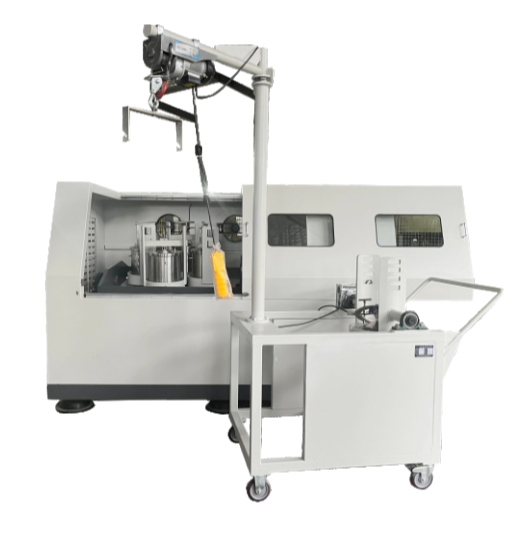
Inside the Heavy-duty Full-directional Planetary Ball Mill
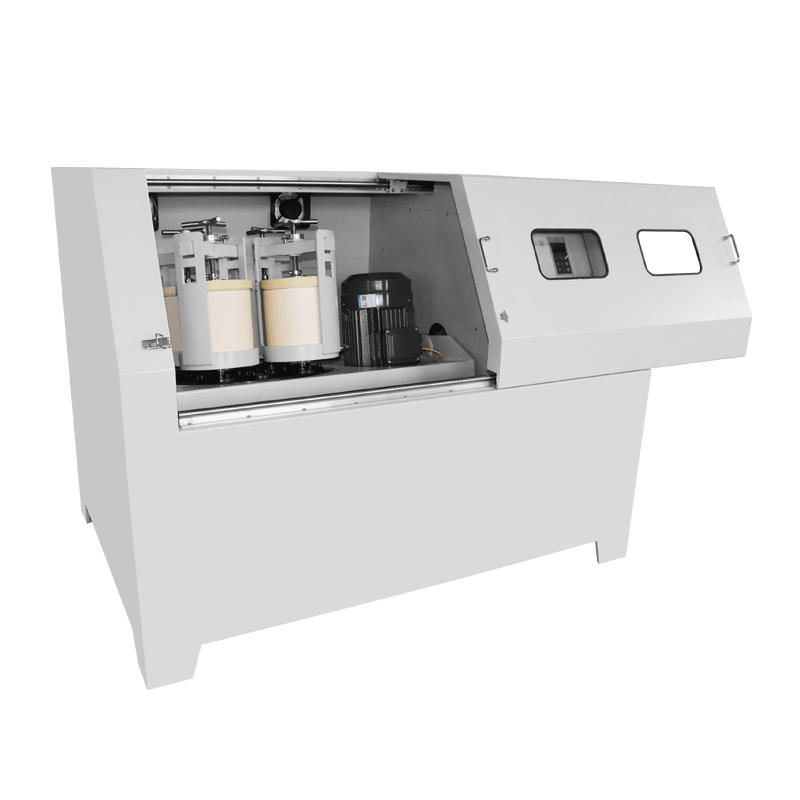
When we describe a machine as heavy-duty in this context, it isn't a marketing word. It describes how the mill is built and how long it can run without drifting. Thicker drive components, a stiffer frame, and better heat management are what let a unit hold high rotation speeds for extended periods. If your process calls for multi-hour milling or several cycles a day, that difference shows up fast — in noise, in speed stability, and in how often the machine needs attention. TENCAN's Heavy-duty Full-directional Planetary Ball Mill is built around exactly that idea: three-dimensional jar motion combined with a structure meant for continuous duty.
The parts you can't see are the ones that matter
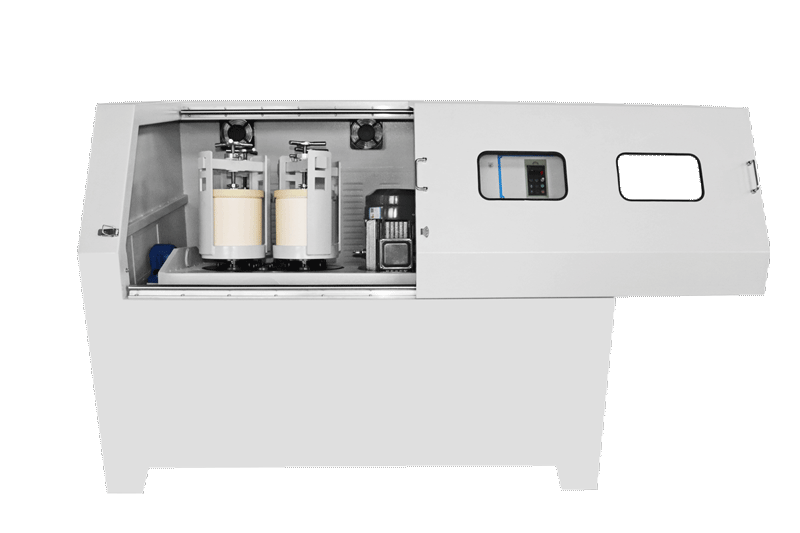
The components that decide whether a mill survives daily use are mostly hidden: the sun disc, the jar clamps, the bearings, the motor, and the control electronics. These absorb vibration and heat all day long. Undersized parts announce themselves through noise, speed drift, and eventually downtime. Properly sized parts are boring in the best way — the mill simply runs at a stable speed, cycle after cycle, and you stop thinking about it.
Jar clamping deserves a special mention. At high speed, a jar that isn't held firmly will move, and a moving jar changes your grinding geometry without telling you. A good clamp system keeps the jars exactly where the design intends them to be, which is why results stay repeatable from run to run instead of drifting quietly over a week of testing.
Jars and grinding media: the setup you control
Planetary mills normally accept a range of jar sizes, from small cups of a few tens of millilitres up to several hundred millilitres, and you match the jar material to the sample. Hard ceramics and minerals usually go into agate or zirconia to keep contamination low. Metal powders and alloys are typically milled in stainless steel or tungsten carbide, which are tough enough to survive dense metal charges.
Media follow the same logic. Denser media carry more energy into each impact. Larger balls break coarse particles faster, while smaller balls create more contact points and push the distribution finer. In most labs, mixing two ball diameters gets you to a narrow distribution faster than using a single size, because the small balls fill the gaps the big ones leave.
The Numbers That Actually Matter
Every mill ships with a datasheet, and most datasheets are longer than they need to be. For real powder work, four variables decide your outcome: rotation speed and speed ratio, ball-to-powder ratio, filling level, and the material pairing of jars and media. Get those right and the machine mostly takes care of itself.
Rotation speed and the speed ratio
Disc speed sets how much energy each collision carries. Turn it up and grinding gets faster and more aggressive; turn it down and you get gentler mixing with less heat and less media wear. The speed ratio — how fast the jars spin relative to the disc — shapes the path the balls travel. A ratio around 1:2 is a common starting point because it balances impact and friction nicely. Nudge the ratio and you shift that balance: more impact energy suits hard, brittle materials, while more friction suits blending and refining softer ones.
Ball-to-powder ratio and fill level
The ball-to-powder ratio is the mass of the grinding media divided by the mass of your sample. Low ratios, roughly 2:1 to 5:1, work for blending and light size reduction. High ratios, 10:1 and above, are how people reach very fine or nanoscale powders, and how mechanochemical reactions get enough energy transfer to proceed. The price you pay for a high ratio is more contamination from media wear and more heat inside the jar.
Fill level is the other half of the story, and it's where beginners lose the most time. A jar packed to the brim can't move anything, because the media have nowhere to accelerate. A jar with too little media wastes volume and produces weak impacts. A practical starting point is media filling about a third of the jar's volume, with powder filling the spaces between the balls. If you can't hear the charge tumbling when the mill starts, you've overloaded it.
Choosing media and jar material
Hardness matters, but chemistry matters just as much. Zirconia is dense and tough, which makes it a strong all-rounder for hard samples. Agate is softer but extremely low in contamination, so it's a favourite for spectroscopy and trace analysis. Alumina is economical and works well for ceramic and mineral work. Stainless steel and tungsten carbide handle metal powders and mechanical alloying, with tungsten carbide being the heaviest common option when the sample is too hard for anything else.
Where This Machine Earns Its Keep
Full-directional, heavy-duty planetary milling isn't the right answer for every powder problem. But in a handful of areas, it's genuinely hard to beat.
Energy materials and battery powders
Cathode powders, anode materials, solid electrolytes, and silicon-based composites all need two things at once: fine, uniform particles and intimate mixing of several components. Full-directional motion helps on both counts, because the powder can't settle while the jars keep changing orientation. A blend stays a blend, run after run, rather than separating into layers. That consistency often shows up directly in electrochemical performance, where one uneven batch can ruin a whole series of test cells.
Ceramics, glass, and mineral samples
When you're reducing frit, quartz, feldspar, or refractory oxides, the limiting factor is usually the coarse tail — the stubborn few percent of particles that refuse to break. Because the jar keeps reorienting, those coarse particles get pushed back into the high-energy zone instead of sitting quietly at the bottom. That's what lets you shorten grinding cycles and still end up with a narrower distribution.
Mechanochemistry and mechanical alloying
Mechanochemistry uses collision energy to drive reactions that would otherwise need solvents or high temperatures. Mechanical alloying does the same for metal systems, repeatedly welding and fracturing powders until new phases form. Both depend on sustained, high-energy impacts over long runs, which is precisely where a heavy-duty frame and stable speed control stop being luxuries and start being requirements.
Habits That Quietly Improve Your Results
Most grinding problems trace back to a handful of small decisions. These are the ones that pay off the fastest.
- Start with a coarse crush. Feeding a mill with centimetre-sized chunks wastes hours. Breaking material down to a few millimetres first can cut milling time dramatically.
- Run a short dry pass before a wet one. If your process allows it, a brief dry run helps break agglomerates before liquid is added.
- Keep the jar partially empty. Empty space is working space, and the media need room to accelerate before they hit.
- Match ball size to feed size. Bigger feed needs bigger balls; if you're chasing a very fine result, add small balls once the coarse particles are gone.
- Watch the temperature. Long runs with dense media heat up, so pause between cycles or split the run rather than baking your sample or cooking the jar seals.
- Write down every parameter. Speed, ratio, fill level, media type, run time — reproducibility is the whole game, and memory is not a reliable record.
- Clean between materials. Cross-contamination from the previous sample is more common than anyone likes to admit — a few grains of the last batch are enough to change an analysis.
A Simple Starting Recipe for Your First Run
New to planetary milling? Here's a conservative setup that works for most hard, brittle materials and gives you a reference point to adjust from.
- Fill the jar about one third full with grinding media.
- Use a ball-to-powder ratio between 5:1 and 10:1 for a first pass.
- Pick a disc speed around 60 to 70 percent of the maximum the machine allows.
- Run for 30 minutes, then pause for 10 minutes so the jar can cool.
- Take a small sample, check the particle size, and then decide whether to run longer or add smaller balls.
From there, change one variable at a time. Increase speed if the powder is still coarse, raise the ball-to-powder ratio if you need a finer result, or shorten the run if you're seeing contamination or heat damage. Recording each change turns guesswork into a process you can repeat, and a repeatable process is worth more than any single impressive result.
How It Compares With Other Milling Options
Planetary mills are one tool among several, and knowing where the boundaries sit saves a lot of wasted time. Each of the alternatives below is excellent at something specific.
Vibratory mills
A vibratory mill shakes a single jar or tube at high frequency, which makes it extremely fast for small samples and very fine powders. The catch is scale — you can't easily move to larger batches, and the motion is essentially one-dimensional, so the same settling problem returns. If you need grams of material, a vibratory mill is efficient. If you need hundreds of grams with a consistent distribution, planetary milling is the better route.
Attritors and bead mills
Attritors and bead mills stir media with a rotating shaft, often in a liquid slurry. They scale up beautifully and run continuously, which is why they dominate industrial production. What they don't do well is dry grinding, and they struggle when you need a genuinely dry powder with a tight distribution from a hard, brittle feedstock. Planetary mills fill that gap neatly.
Jet mills
Jet mills blast particles against each other with compressed gas, producing very fine powders without any grinding media at all, so contamination is minimal. They're excellent for heat-sensitive materials, but they need a feed that's already fairly fine, and they can't blend or mechanochemically react the way a ball mill can. If your powder needs both refining and reacting, the ball mill wins.
Straight Answers to Questions People Actually Ask
How long does a typical run take?
It depends on the material and the target particle size, but there's a pattern. Soft, brittle materials that crush easily can reach a fine powder in less than an hour. Hard minerals, alloys, and materials you're trying to push into a mechanochemical reaction can take many hours, sometimes in repeated cycles with cooling breaks. The useful rule is to sample your powder instead of trusting the clock — grind, check, and adjust rather than running on a fixed schedule.
Do I need a heavy-duty unit for small samples?
If you run the occasional twenty-gram batch, a standard mill will do the job. The heavy-duty, full-directional class makes sense when you're running long cycles, processing denser charges, running many batches a week, or working with a material that needs three-dimensional motion to grind evenly. The decision is really about duty cycle and consistency, not about sample size alone.
How do I keep contamination under control?
Choose the softest media and jar material that will still do the job, keep the ball-to-powder ratio as low as your target particle size allows, and shorten the run time by pre-crushing. If trace contamination is critical — for example in spectroscopy — agate or zirconia usually wins, and you should treat the milled powder as slightly enriched in whatever the jar and media are made of.
Can I mill wet and dry in the same machine?
Yes. Dry milling is simpler and gives you powder straight out of the jar, but it tends to produce more dust and more agglomeration. Wet milling, where you add a solvent to form a slurry, usually grinds faster and keeps particles suspended, which helps prevent re-agglomeration. Just check that the jar seals and the liquid are compatible with your sample.
Matching the Mill to Your Powder
Choosing a mill really comes down to three questions. How fine do you need to go? How much material do you need per batch? And how much contamination can your application tolerate? Answer those honestly, and the shortlist writes itself.
If your answers point toward fine grinding of hard materials, consistent multi-component blending, or long mechanochemical runs, a heavy-duty full-directional planetary ball mill is a sensible place to start. TENCAN (Changsha Tianchuang Powder Technology Co., Ltd.) builds this class of equipment, and you can review the configuration and options on the Heavy-duty Full-directional Planetary Ball Mill product page before deciding on jar sizes and media.
One last piece of advice: order a small set of jars and a couple of media types along with the mill. Being able to swap media is what turns a single machine into a flexible grinding platform, and it's far cheaper than buying a second mill later. You can always add more jars — but only if the drive and frame underneath them are built to keep up.
Whatever you end up choosing, the habit that matters most is the same: pick one material you know well, run it under controlled conditions, and let the results tell you which parameters actually move the needle. Grinding rewards patience and record-keeping more than any single piece of equipment.
Related Products
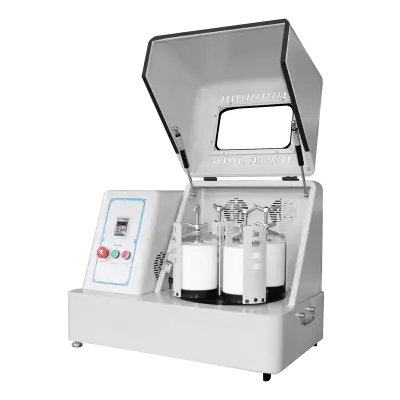
Laboratory planetary grinder
XQM
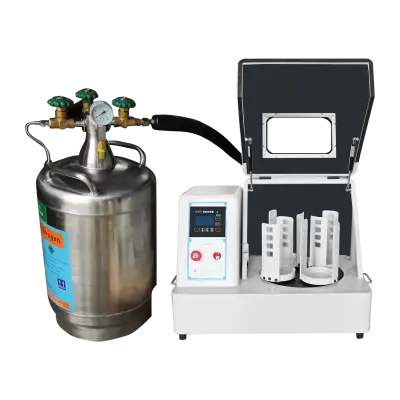
Liquid Nitrogen Planetary Ball Mill
XQM
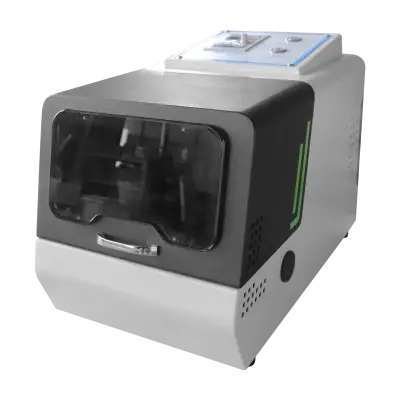
Micro Planetary Ball Mill
XQM-0.2
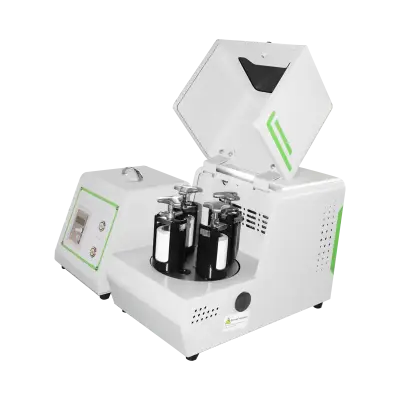
Micro Planetary Ball Mill
XQM-0.2S
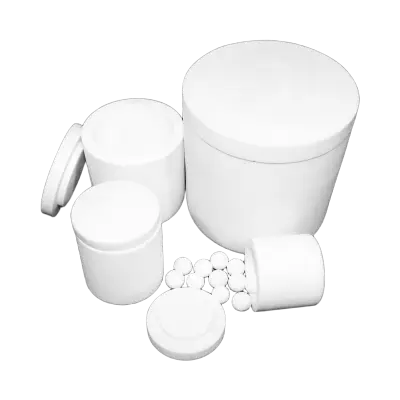
A grade Corundum planetary Mill Jar
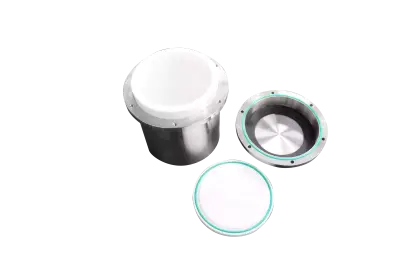
304 stainless steel lined with zirconia mill jar
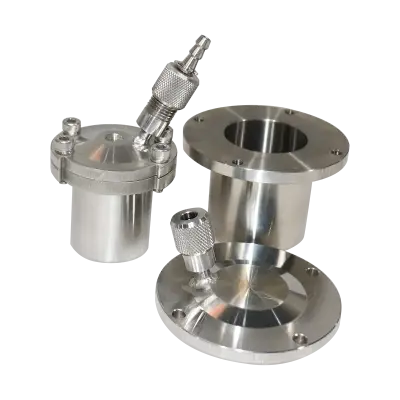
vacuum planetary mill jar
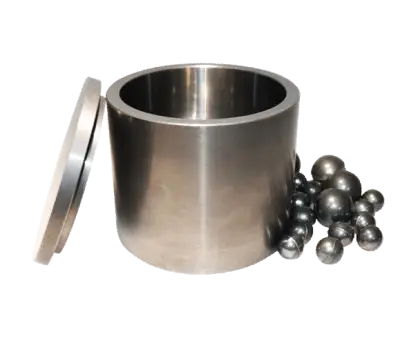
Tungsten carbide planetary mill jar
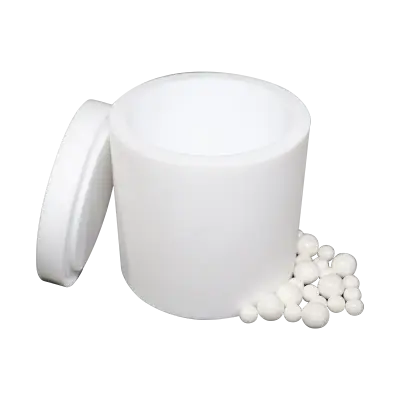
PTFE planetary mill jar
Get In Touch
Our professional team will reply to you within one business day. Please feel free to contact us!