Contact Us
Choose your preferred way to contact our team
Free Quote
Fill out the form to obtain prices and information
Send an Email
Share your needs and concerns
+86 19021571516
Sieving series
Explore TENCAN Sieving Series for powder and particle classification, including rotary vibrating screens, lab sieve shakers and stainless steel screeners.
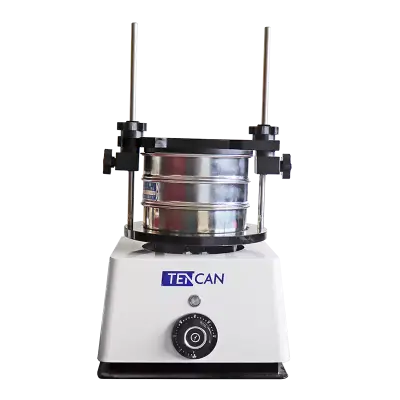
Small laboratory screening machine
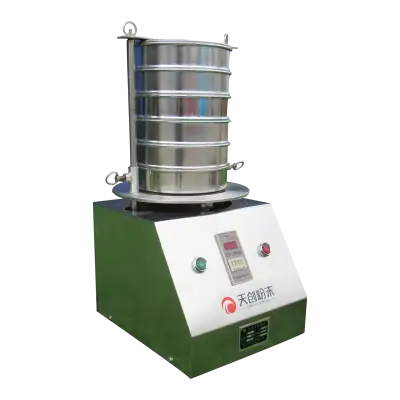
Stainless steel vibrating screen machine
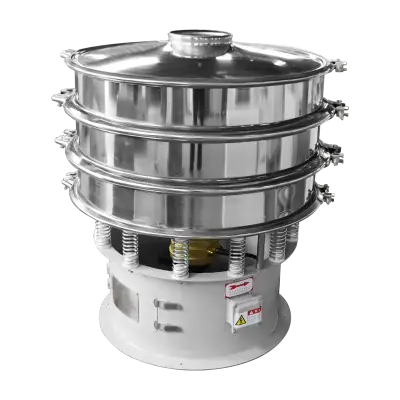
3D rotary vibrating screen
TENCAN Sieving Series: Efficient Screening and Particle Classification for Powder Processing
The TENCAN Sieving Series is designed for particle size separation, powder classification, material grading and laboratory particle analysis. In powder processing, screening is not only a simple separation step. It directly affects material quality, production stability, downstream grinding efficiency and final product consistency. Whether the user needs laboratory sample analysis, small-batch powder classification or continuous production screening, a suitable sieving machine can help separate oversized particles, control particle distribution and improve material uniformity.
Sieving equipment works by allowing particles smaller than the screen opening to pass through the mesh while larger particles remain on the screen surface. To achieve effective screening, the material must have a suitable particle size, enough contact with the screen surface and the correct movement direction to pass through the mesh opening. For this reason, screen motion, vibration frequency, mesh size, layer structure, material flow path and screen cleaning all play important roles in screening performance.
TENCAN provides different sieving equipment for laboratory and production applications, including 3D rotary vibrating screens, small laboratory screening machines and stainless steel vibrating screen machines. These machines are widely used in powder metallurgy, mining, minerals, ceramics, food, chemical materials, building materials, cement, glass, environmental testing, soil analysis, universities and research laboratories.
Why Choose TENCAN Sieving Series?
TENCAN has long focused on powder processing equipment, including grinding, crushing, mixing, screening and related laboratory equipment. In a complete powder preparation workflow, sieving is often used after crushing or grinding to classify the material into different particle size ranges. It can also be used before grinding to remove oversized particles, protect the grinding equipment and improve processing efficiency.
One advantage of the TENCAN Sieving Series is the coverage of both laboratory and production needs. For research laboratories, the small laboratory screening machine and stainless steel vibrating screen machine are suitable for particle size testing, sample preparation and quality inspection. For production users, the 3D rotary vibrating screen provides larger screening area, multi-layer classification and higher processing capacity.
Another advantage is practical application flexibility. TENCAN screening equipment can be used for powders, granules and some liquid-solid filtration processes. Different screen meshes can be selected according to target particle size. Multi-layer screen structures can separate one material into several particle size grades in a single operation. This helps users improve process efficiency and reduce repeated handling.
Stable vibration, easy operation and convenient screen replacement are also important for daily production. In laboratory testing, quick screen replacement reduces waiting time between samples. In production, stable vibration and smooth material discharge help maintain continuous operation. For industries that process different materials every day, easy cleaning and maintenance are key factors in selecting screening equipment.
3D Rotary Vibrating Screen for Production Screening
The 3D rotary vibrating screen is one of the main products in the TENCAN Sieving Series. It uses a vertical vibration motor as the excitation source. The eccentric weights installed at the upper and lower ends of the motor convert rotary motion into horizontal, vertical and inclined three-dimensional motion. This combined motion is transmitted to the screen surface, causing the material to move, spread and pass through the mesh.
By adjusting the phase angle of the upper and lower eccentric weights, the movement path of the material on the screen can be changed. This makes the machine suitable for different screening purposes, such as fast discharge, fine classification, impurity removal or multi-grade separation.
The 3D rotary vibrating screen is suitable for dry powder screening, granule classification and liquid filtration in many industries. It can be used for food powders, ceramic powders, chemical materials, mineral powders, metal powders, resins, coatings, building materials and other materials. With optional screen layers, it can separate material into several grades according to particle size.
For users with production requirements, the 3D rotary vibrating screen is suitable when higher screening efficiency, larger effective diameter and continuous operation are needed. It is a practical choice for powder processing workshops that require stable particle size control after grinding, crushing or mixing.
Small Laboratory Screening Machine for Sample Analysis
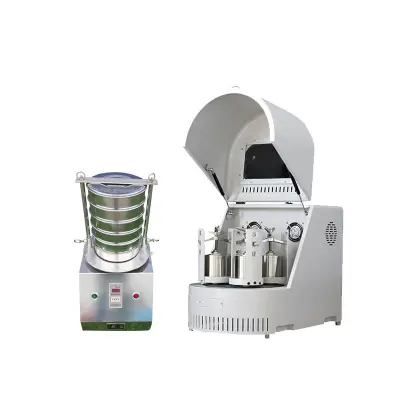
The small laboratory screening machine is mainly used with standard test sieves for particle size analysis. It replaces manual sieving and provides more stable vibration conditions, helping users obtain repeatable screening results in laboratory testing.
This machine is suitable for universities, research institutes, quality control laboratories and small-batch material testing. It can be used in food, medicine, metallurgy, building materials, chemical materials, cement, glass, grain, ceramics, paper making and other industries. The machine can perform dry or wet sieving and filtering depending on material characteristics and testing requirements.
The small laboratory screening machine is compact, lightweight and easy to operate. It can quickly replace screen layers without special tools and can stack multiple sieves for multi-grade analysis. The timer control function allows users to set a specific screening time, which helps improve repeatability between different tests.
For laboratories that need to compare grinding results, evaluate powder fineness or test particle size distribution before production, the small laboratory screening machine is a useful partner. It is often used together with laboratory ball mills, crushers and sample preparation equipment. After grinding or crushing, the sample can be screened to confirm whether the target particle size has been achieved.
Stainless Steel Vibrating Screen Machine for Laboratory and Material Testing
The stainless steel vibrating screen machine is another practical product in the TENCAN Sieving Series. It is commonly used for soil analysis, powder metallurgy, coal and power materials, mineral separation, ceramics, cement, construction materials, chemical materials, marine research, ore crushing tests, college experiments, metal beneficiation, magnetic separation and sample testing.
The stainless steel structure is suitable for applications where cleanliness, durability and easy cleaning are important. It is especially useful in laboratories that process different powder materials and need a reliable machine for particle size analysis. The machine is designed to work with test sieves and provides stable shaking or vibration to improve screening consistency.
Compared with manual sieving, the stainless steel vibrating screen machine helps reduce operator labor and improves testing repeatability. It is suitable for powders, liquids and granules. With proper sieve selection, it can be used for different mesh sizes and different material types.
For quality inspection departments, this machine can help check whether a batch of material meets the required particle size range. For research laboratories, it can be used to compare the effect of grinding time, milling speed, grinding media and raw material characteristics on final powder size.
Key Application Fields
The TENCAN Sieving Series can be used in many powder and particle processing fields.
In mineral and mining laboratories, sieving equipment is used for ore sample classification, particle size analysis and beneficiation testing. After crushing and grinding, the sample can be divided into different particle size ranges for further analysis.
In powder metallurgy and ceramic processing, screening helps remove oversized particles and improve powder uniformity. A stable particle size distribution is important for pressing, sintering, forming and final material performance.
In chemical and coating industries, sieving can remove impurities, break up agglomerates and classify powders before packaging or further processing. This helps improve product consistency and appearance.
In food and grain processing, screening can separate particles by size, remove impurities and improve powder quality. Stainless steel structures are often preferred when cleanliness and easy cleaning are required.
In building materials, cement, glass and sand industries, screening equipment is used for particle grading and quality control. Proper screening improves the stability of raw material preparation and final product performance.
In research laboratories and universities, sieving machines are widely used for teaching, sample preparation, particle size comparison and process development. They are often used together with jaw crushers, planetary ball mills, roll ball mills and other sample processing equipment.
Difference Between Sieving, Crushing, Grinding and Mixing
Sieving is different from crushing and grinding. Crushing equipment reduces large materials into smaller particles by compression, impact or cutting. Grinding equipment further refines materials into fine powders by impact, friction and shear. Sieving equipment does not normally reduce particle size. Instead, it separates particles according to size through a screen mesh.
Mixing equipment has another function. It blends different powders or granules to improve uniformity but does not classify particles by size. Therefore, crushing, grinding, sieving and mixing are often connected in one complete powder processing workflow.
For example, a mineral sample may first be crushed by a jaw crusher, then ground by a planetary ball mill, then screened by a laboratory sieve shaker and finally mixed or prepared for testing. In production, a rotary vibrating screen may be placed after a grinding mill to remove coarse particles or classify powder into different grades.
Understanding this difference helps users choose the right equipment. If the goal is to reduce large lumps, a crusher is needed. If the goal is to make fine powder, a mill is needed. If the goal is to separate different particle sizes, a sieving machine is needed. If the goal is to blend different components, a mixer is needed.
Selection Factors for Sieving Equipment
When selecting a sieving machine, users should consider material type, particle size range, required capacity, screening accuracy, mesh size, number of layers, dry or wet process, cleaning requirements and installation space.
For laboratory analysis, compact design, timing control, stable vibration and compatibility with standard test sieves are important. For production screening, users should focus on effective screening area, number of screen layers, discharge method, vibration strength, screen replacement convenience and continuous operation stability.
Material characteristics also affect selection. Fine powders may require anti-blocking measures and good sealing to prevent dust leakage. Granules need enough vibration force to move smoothly on the screen surface. Liquid-solid filtration requires suitable screen structure and discharge design. Materials with high cleanliness requirements may need stainless steel contact parts.
Mesh size is another key factor. A smaller mesh opening provides finer classification but may reduce throughput and increase the risk of screen blockage. A larger mesh opening improves screening speed but provides lower classification accuracy. The best choice should balance particle size requirement, capacity and material flow behavior.
Customization and Process Support
TENCAN can provide equipment selection suggestions according to customer materials and process requirements. Users can provide raw material name, initial particle size, target particle size range, moisture content, screening capacity, number of required grades and whether the process is dry or wet. Based on this information, TENCAN can recommend a suitable sieving machine and screen mesh configuration.
For production users, customization may include machine size, screen layer quantity, mesh specification, contact material, discharge outlet arrangement, dust control, sealing structure and connection with upstream or downstream equipment. For laboratory users, selection support may focus on sieve diameter, sieve stack height, timing control, sample capacity and testing repeatability.
The TENCAN Sieving Series is built to support the complete powder processing process. From laboratory particle size analysis to production-scale powder classification, these machines help users improve material consistency, reduce impurities, control particle distribution and build a more reliable powder processing workflow.
FAQ
-
What is a Small Laboratory Screening Machine? A Versatile Sieving Tool for Precision Particle Size Analysis
Discover the small laboratory screening machine, an essential sieving device for precise particle size analysis in research and quality control. Learn its working principle, key features, selection tips, and applications across industries like mining, pharmaceuticals, and materials science.
MORE >> -
What is a Stainless Steel Vibrating Screen Machine? A Type of Sieving Equipment Used for Precision Particle Separation and Grading
Discover the definition, working principle, types, and key selection criteria of the stainless steel vibrating screen machine. This guide explains how this durable sieving equipment achieves high-precision particle separation, grading, and liquid-solid filtration in industries like food, pharmaceuticals, and chemicals. Learn about its construction, performance parameters, and application scenarios to choose the right model for your powder processing needs.
MORE >> -
What is a 3D Rotary Vibrating Screen? A High-Efficiency Screening Machine for Precision Particle Classification
A 3D rotary vibrating screen is a specialized sieving equipment used in various industries for precise particle classification, powder separation, and liquid filtration. It utilizes a unique three-dimensional vibratory motion generated by a vertical motor to efficiently screen materials with high accuracy. This guide explores its working principle, key features, performance indicators, and selection advice for applications in food, chemical, pharmaceutical, and ceramic sectors.
MORE >>
Get In Touch
Our professional team will reply to you within one business day. Please feel free to contact us!