
Contact Us
Choose your preferred way to contact our team
Free Quote
Fill out the form to obtain prices and information
Send an Email
Share your needs and concerns
+86 19021571516

Why choose us
Simple ordering, reliable quality, professional support.
Easy Process
Clear communication from product selection to delivery, so your team can move faster.
Quality Assurance
Stable manufacturing, strict inspection, and support for configuration requirements.
Expert Support
Application-oriented advice for planetary ball milling, sample preparation, and scale-up needs.
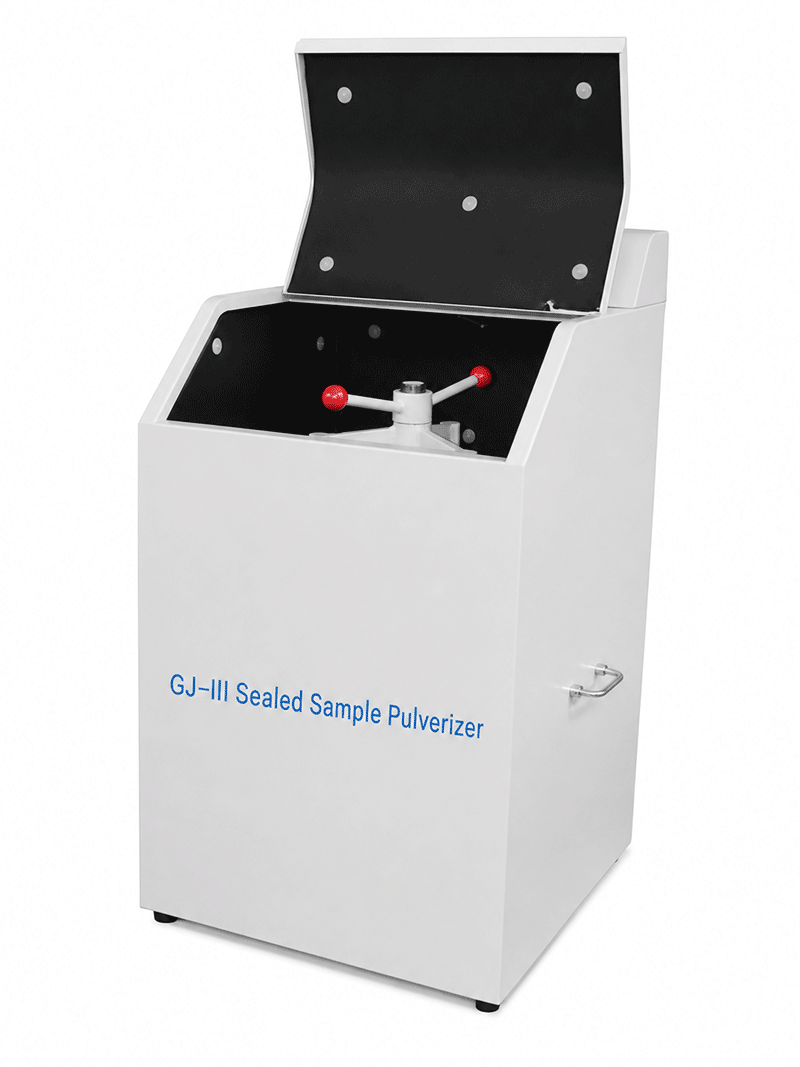
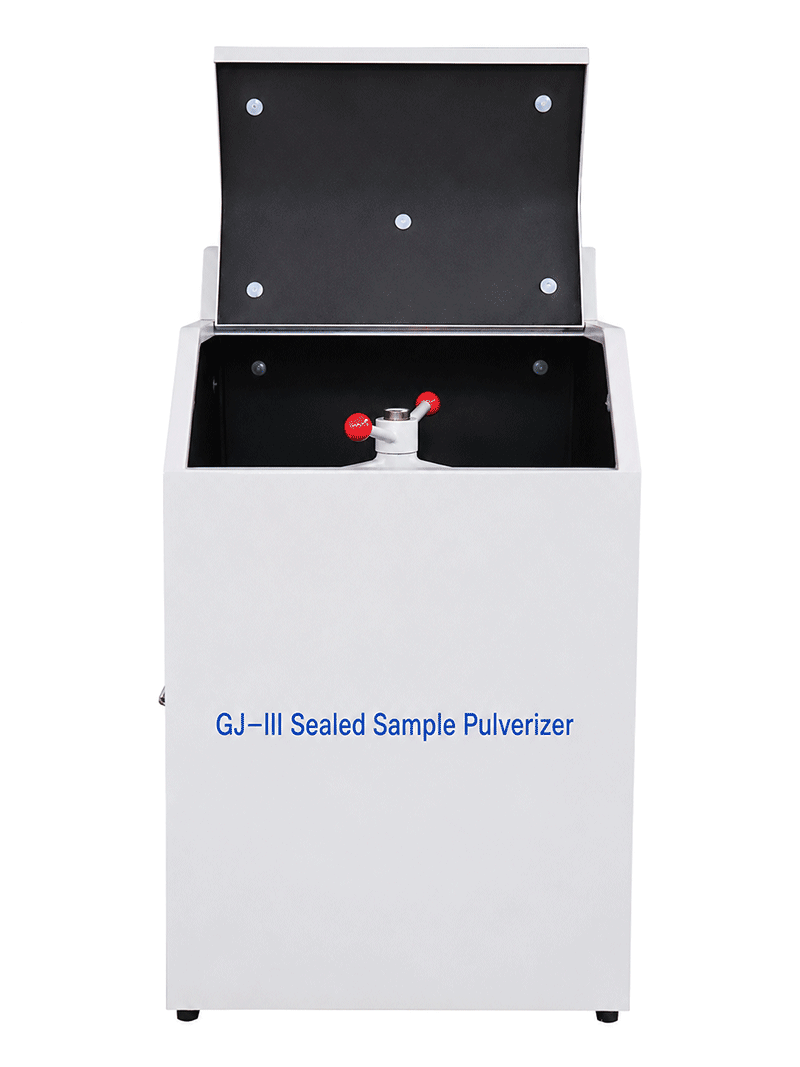
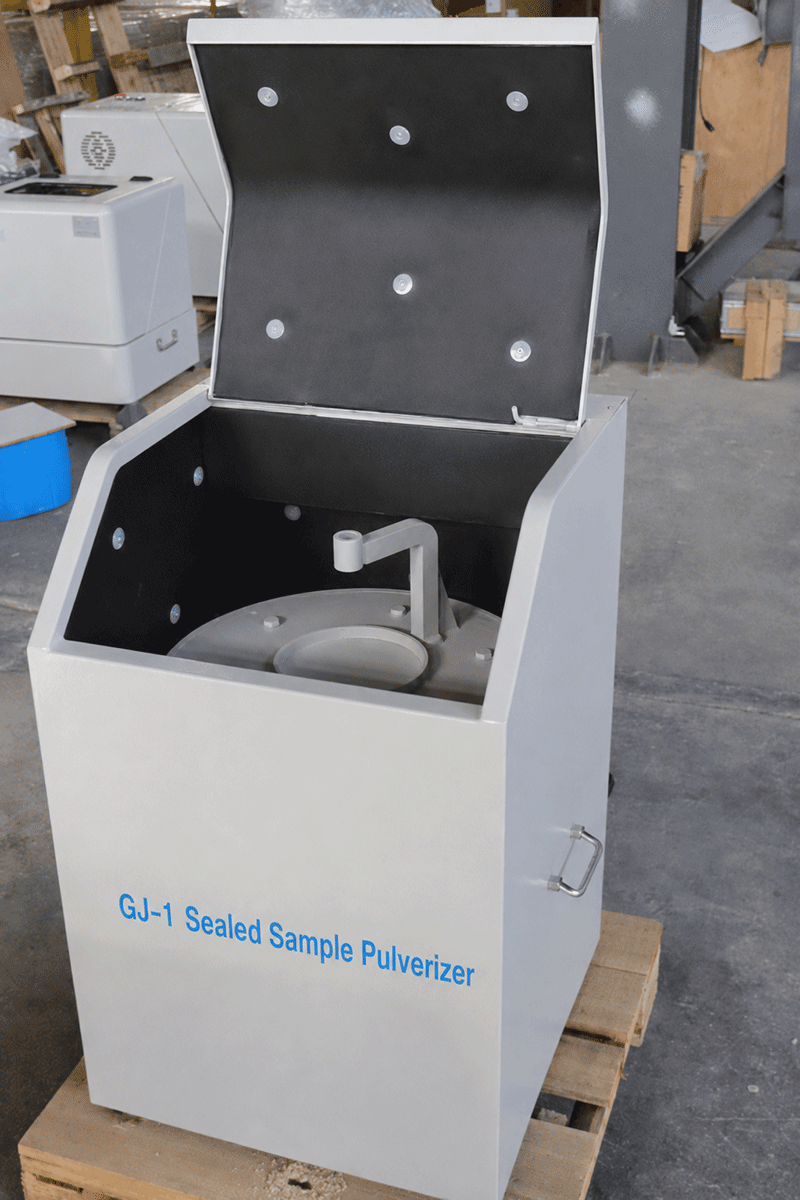
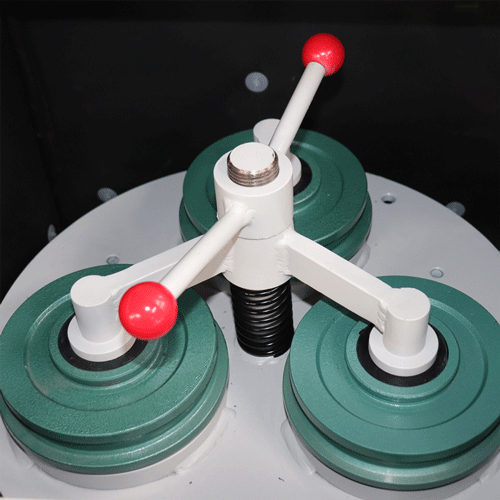
The working mode of the sample making machine is vibration grinding. The material is placed in a bowl, which contains a crushing ring and a breaker hammer. The bowl forms vibration and grinding functions during high-speed rotation. The material is crushed and ground by the crushing ring and breaker hammer. The material is quickly made into 80-200 mesh (0.175-0.075mm) micro-powdered samples within 2-6 minutes, which can be directly used for testing.
The main parts of the crushing and grinding bowl include ordinary bonded steel type, high manganese steel type, wear-resistant alloy type, chromium steel type, tungsten carbide type, etc.
The hardness of the ore materials that can be crushed by the bowl of different steel materials is also different.
The material is put into a sealed bowl. There is a breaker hammer and a crushing ring in the bowl. The motor drives the eccentric hammer to rotate at high speed, forming vibration, impact force and friction to turn the material into powder.

The sample making machine is mainly used to grind raw materials for testing.
It is specially used for crushing and grinding non-metallic minerals with a certain hardness, and is widely used in testing in coal, coking, non-ferrous metal smelting, mining and other industries. Such as: coal, coke, gangue, various ores, etc.
Technical parameters
| model | Material opening size | Feed particle size | Discharge particle size | production capacity | power | Dimensions | weight |
| GJ-3 | 130*3 | 13 | 80-200 | 300 | 1.5KW(380V) | 530*530*920 | About 130KG |
| GJ-2 | 130*2 | 13 | 80-200 | 200 | 1.1KW(380V) | 480*480*730 | About 115KG |
| GJ-1 | 130*1 | 13 | 80-200 | 100 | 1.1KW(380V) | 480*480*730 | About 110KG |
1. The sample preparation particle size is uniform, the speed is fast, the work is reliable, and the grinding efficiency is high.
2. Sample preparation can be used directly without screening, with few steps and high production efficiency.
3. Reasonable design: The whole machine is sealed and designed to meet environmental protection requirements.
4. Smooth operation, low noise, and meets safety production requirements.
5. Compact structure, convenient maintenance and operation.
6. Can grind 1-3 samples at the same time.
7. The grinding bowl is sealed without sample loss and is made of special anti-wear materials with long service life.
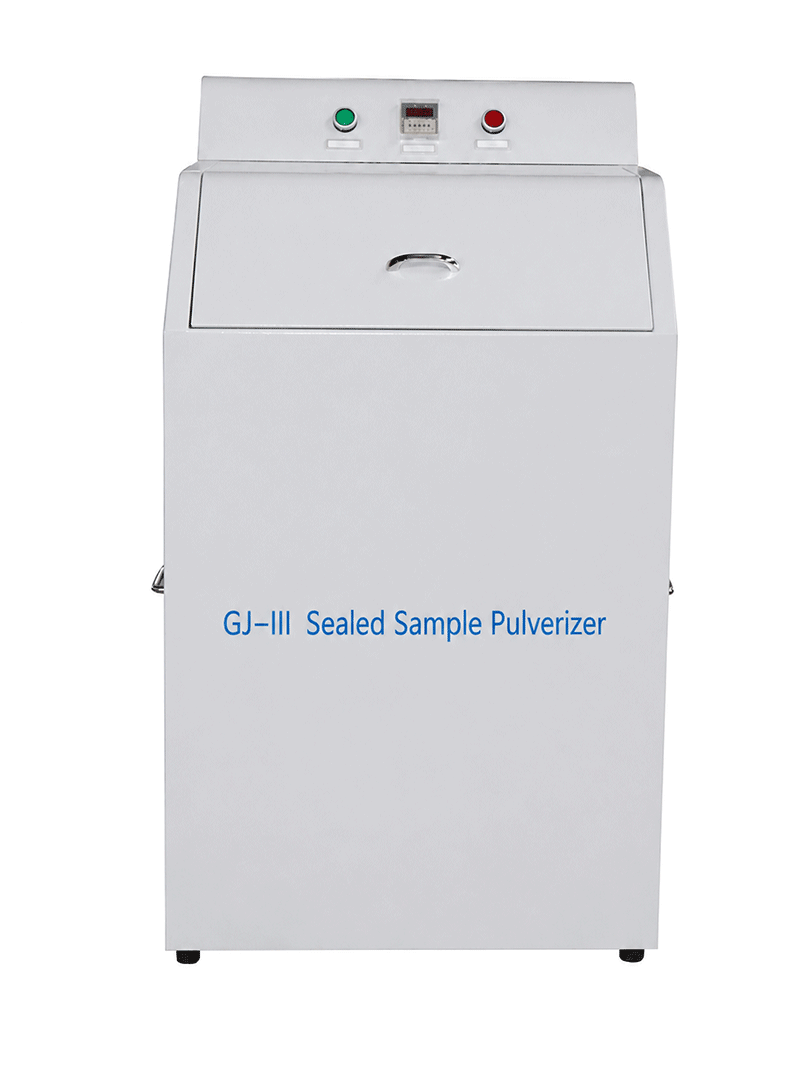
8. The equipment can be equipped with an electronic timer.

Parameters
| Model | GJ |
|---|---|
| Grinding Jar Capacity | |
| Feed Size | |
| Output Size | |
| Speed | |
| Power | |
| Voltage | |
| Dimensions | |
| Weight | 0 |
Related Videos
The trusted choice of industry leaders
FAQ
-
What is a Stainless Steel Vibration Crusher? A Sanitary Fine Grinding Mill for Ultra-Fine Powder Processing
Discover the stainless steel vibration crusher, a hygienic vibratory mill designed for ultra-fine grinding of dry and wet materials in pharmaceutical, food, and chemical labs. This product overview covers working principles, key features, performance indicators, and selection tips to help you choose the right mill for your powder processing needs.
MORE >> -
What is a Laboratory Full-Directional Planetary Ball Mill? A High-Energy Milling Device for Multi-Directional Fine Grinding and Nano Material Preparation
This article provides a comprehensive overview of the Laboratory Full-Directional Planetary Ball Mill, a versatile high-energy milling device designed for ultra-fine grinding, nano-material synthesis, and multi-sample preparation in research laboratories. It explains its working principle, key technical features, performance indicators, and selection criteria, helping users understand how this equipment achieves superior grinding uniformity through 360-degree rotational motion. The guide also covers typical applications in materials science, geology, pharmaceuticals, and battery research.
MORE >> -
What is a Laboratory Sand Grinder? A Wet Ultra-fine Grinding Device for R&D and Small-batch Processing
Learn what a laboratory sand grinder is, how it works, its key types, and selection tips. This wet ultra-fine grinding device is essential for nano-dispersion and particle size reduction in inks, coatings, batteries, ceramics, and more. Ideal for R&D labs and pilot-scale production.
MORE >> -
What is a Laboratory Sand Grinder? A Wet Ultra-fine Grinding Device for Nano-scale Material Dispersion
Learn about laboratory sand grinders, their working principles, types, key performance indicators, and selection tips. Ideal for R&D in nano-materials, inks, coatings, and lithium batteries.
MORE >> -
What is a Basket Mill? A Wet Grinding Equipment for Efficient Dispersion and Milling
A basket mill is a versatile wet grinding and dispersing machine used in industries like paint, ink, and coating manufacturing. It combines milling and dispersion in one unit, using a rotating basket filled with grinding beads to achieve fine particle size reduction. This article explains its working principle, key components, selection criteria, and application scenarios.
MORE >> -
What is an Agate Grinder? A Precision Grinding Equipment for Lab Sample Preparation to Achieve Ultra-Fine, Uniform Powders
An agate grinder is a laboratory grinding equipment that uses a mortar and pestle made of natural agate to produce ultra-fine, uniform powders with minimal contamination. Ideal for hard, brittle materials in materials science, geology, and pharmaceuticals, it offers automated control for consistent particle sizes down to micron or even nano levels.
MORE >> -
What is an Inner Lined Roll Ball Mill? A Versatile Grinding Equipment for Fine Powder Processing in Laboratories
An inner lined roll ball mill is a specialized drum ball mill equipped with a wear-resistant inner lining, widely used in laboratories for fine grinding of materials such as ceramics, minerals, and pharmaceuticals. This article explains its working principle, key features, types, and selection criteria to help users choose the right equipment for their powder processing needs.
MORE >> -
What is a Lab Sample Grinder Machine? A High-Frequency Vibrating Mill for Rapid Sample Preparation in Laboratories
A lab sample grinder machine is a compact, high-frequency vibrating ball mill designed for rapid and efficient grinding of small batches of materials in laboratories. It uses a powerful vibration mechanism to pulverize samples down to micron-level fineness, making it ideal for sample preparation in analytical chemistry, materials science, geology, and pharmaceuticals.
MORE >> -
What is a Laboratory Cone Ball Mill? A Precision Grinding Equipment for Ore Sample Preparation in Mineral Processing
Discover the laboratory cone ball mill, a compact and efficient grinding machine for fine ore sample preparation in mineral processing. Learn about its working principle, XMQ series models, key selection criteria, and applications in metallurgy, geology, and chemical labs.
MORE >> -
What is a Laboratory Cone Ball Mill? A Lab Grinding Equipment for Wet Fine Grinding of Ore and Minerals
A laboratory cone ball mill is a compact, efficient grinding device designed for wet fine grinding of ore and other materials in research and mineral processing labs. It features a unique conical structure, variable frequency drive, and sealed grinding chamber for low noise and dust-free operation. Ideal for mineral feasibility studies, sample preparation, and small-scale material processing in geology, metallurgy, chemistry, and construction industries.
MORE >>
Get In Touch
Our professional team will reply to you within one business day. Please feel free to contact us!