
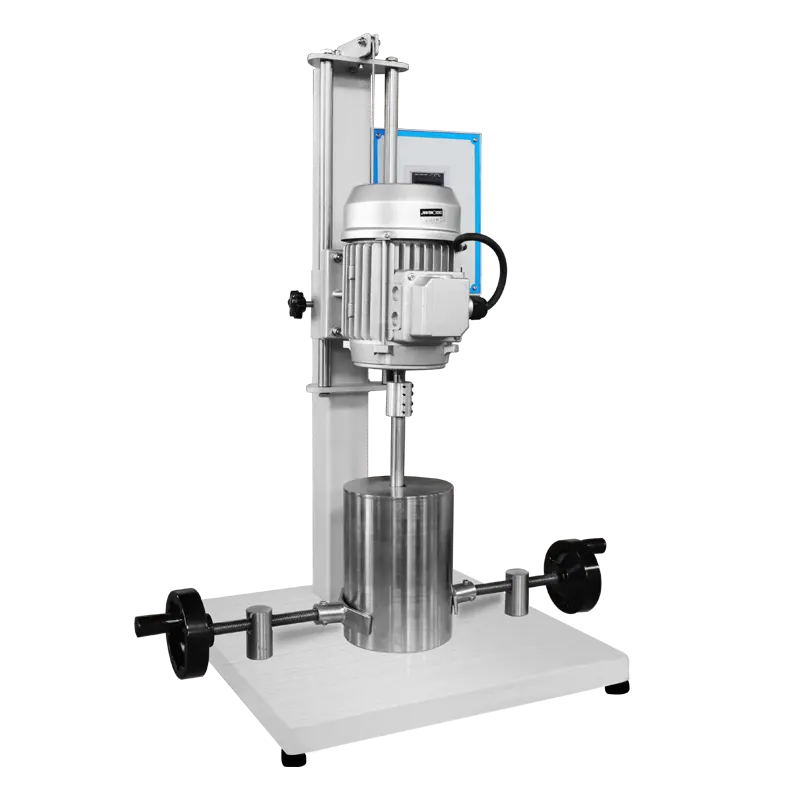
What is a Basket Mill? A Wet Grinding Equipment for Efficient Dispersion and Milling

What is a Basket Mill? A Wet Grinding Equipment for Efficient Dispersion and Milling
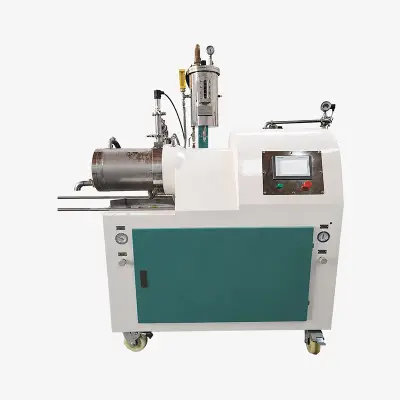
At its core, a basket mill is a specialized wet grinding and dispersing device that industries such as paint, ink, coatings, pigments, and agrochemicals use to simultaneously mill and disperse solid particles into a liquid medium. Unlike traditional two-step processes that require separate milling and dispersion equipment, a basket mill integrates both functions into a single compact unit, significantly reducing processing time and material loss. Its design features a rotating basket filled with grinding beads that are immersed directly into the product container, making it ideal for small to medium batch production and laboratory-scale development.
Core Function and Working Principle
The basket mill transforms solid-liquid mixtures (slurries) from a coarse, agglomerated state into a finely dispersed, homogeneous suspension. The core working mechanism involves a high-speed rotating basket that contains grinding media—typically zirconia or glass beads. As the basket spins, the centrifugal force drives the beads outward, creating intense shear and impact forces on the particles passing through the basket's slots. The material is continuously circulated from the bottom of the container upward through the bead bed, ensuring uniform particle size reduction.
Key process parameters include rotation speed (typically 1000–3000 rpm), bead size (0.3–2.0 mm), bead filling ratio (60–80% of basket volume), and residence time. Adjusting these parameters allows operators to control the final particle size distribution, which can reach submicron or even nanometer levels. The basket mill also features a built-in pumping effect, eliminating the need for an external pump, and its self-cleaning design minimizes cross-contamination between batches.
Core Components and Key Technologies
Although the basket mill is a relatively simple machine, its performance relies on several critical components:
- Grinding Basket: A cylindrical mesh or slotted container that holds the grinding beads. The slot size determines the bead retention and the maximum particle size that can pass through.
- Agitator Shaft: Driven by a motor, the shaft rotates the basket at high speed. Some models feature a double-action design where the basket rotates in one direction and an internal impeller rotates in the opposite direction to enhance dispersion.
- Lifting Mechanism: Allows the basket to be raised and lowered into the product container, facilitating batch changes and cleaning.
- Sealing System: Mechanical seals or lip seals prevent leakage of the product and solvent, especially important for volatile or hazardous materials.
- Control System: Modern basket mills often include a touchscreen controller for setting speed, time, and temperature monitoring, enabling reproducible results.
Key Performance Indicators and Selection Criteria
When selecting a basket mill, users should consider the following critical metrics:
- Processing Capacity: Typically ranges from 0.5 liters for laboratory models to 200 liters for production-scale units. The capacity is determined by the container volume and the basket size.
- Grinding Fineness: The ability to achieve a target particle size (e.g., D50 < 1 μm). This depends on bead size, speed, and residence time.
- Energy Efficiency: Compared to traditional ball mills, basket mills consume less energy per unit of product due to the localized high-intensity grinding zone.
- Automation and Programmability: Advanced models offer recipe storage, batch logging, and remote monitoring via Ethernet or USB interfaces.
- Ease of Maintenance: Quick-release baskets, easy bead replacement, and CIP (Clean-in-Place) features reduce downtime.
Application Fields and Selection Advice
Basket mills are widely used in the production of paints, printing inks, coatings, adhesives, magnetic slurries, pesticide suspensions, and ceramic slurries. For laboratory R&D, a compact bench-top basket mill with a 1–5 liter container is recommended for process development and small-scale trials. For pilot or production batches, consider a floor-standing model with a lifting system and explosion-proof motor if solvent-based materials are involved. If extremely high fineness (nanoscale) is required, pair the basket mill with a subsequent pass through a lab sand grinder or a three roll mill for ultra-fine grinding.
参考资料
Related Products
Get In Touch
Our professional team will reply to you within one business day. Please feel free to contact us!