Contact Us
Choose your preferred way to contact our team
Free Quote
Fill out the form to obtain prices and information
Send an Email
Share your needs and concerns
+86 19021571516

Why choose us
Simple ordering, reliable quality, professional support.
Easy Process
Clear communication from product selection to delivery, so your team can move faster.
Quality Assurance
Stable manufacturing, strict inspection, and support for configuration requirements.
Expert Support
Application-oriented advice for planetary ball milling, sample preparation, and scale-up needs.
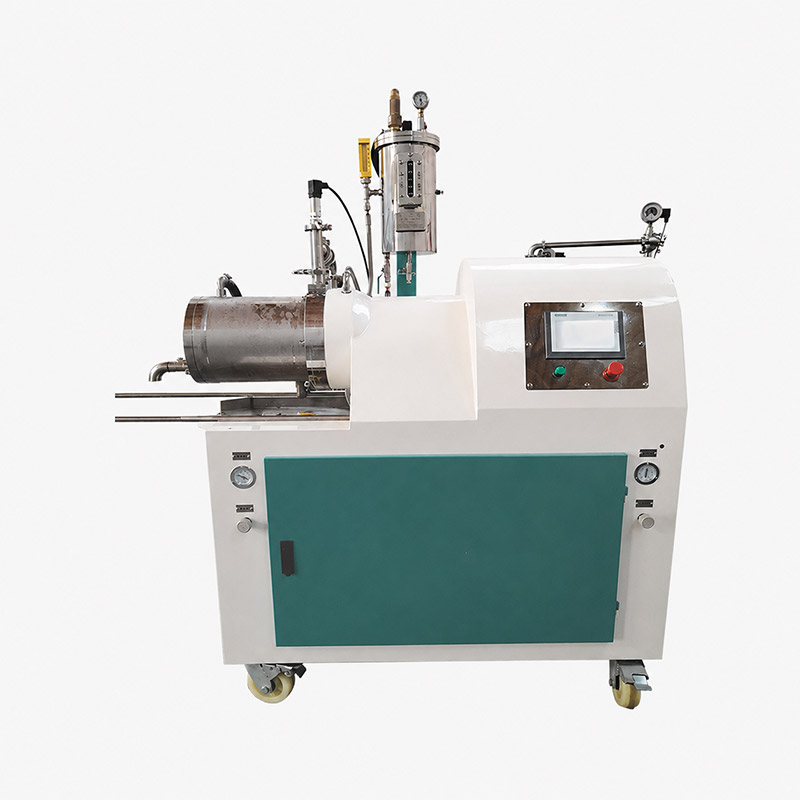
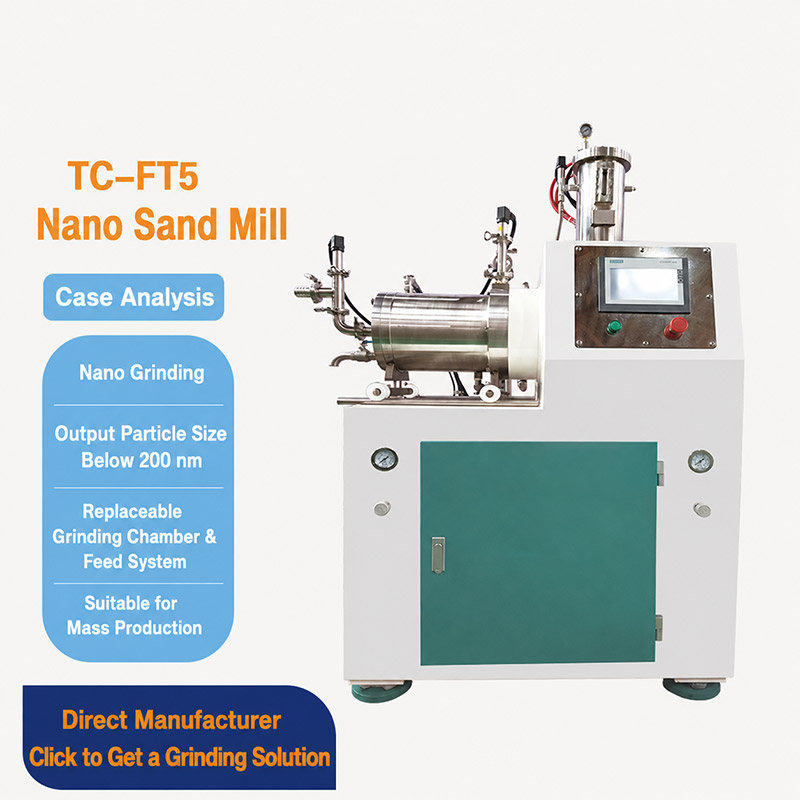
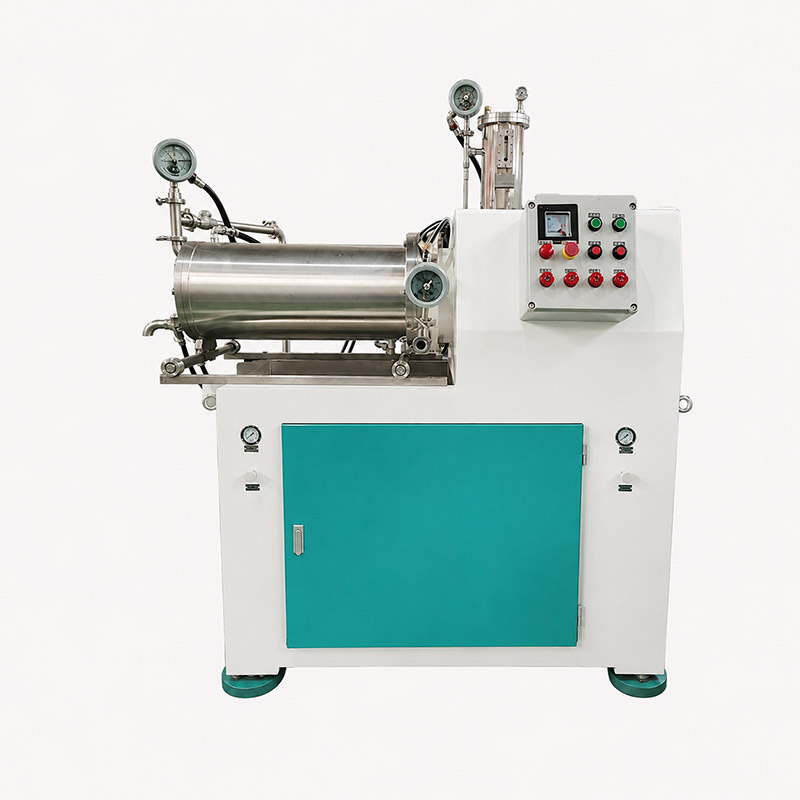
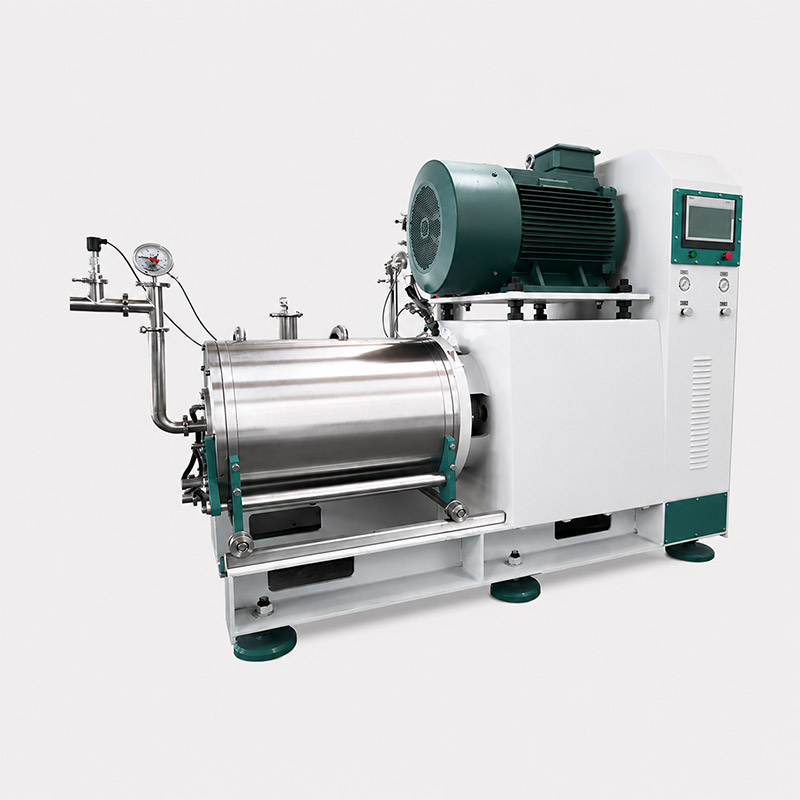
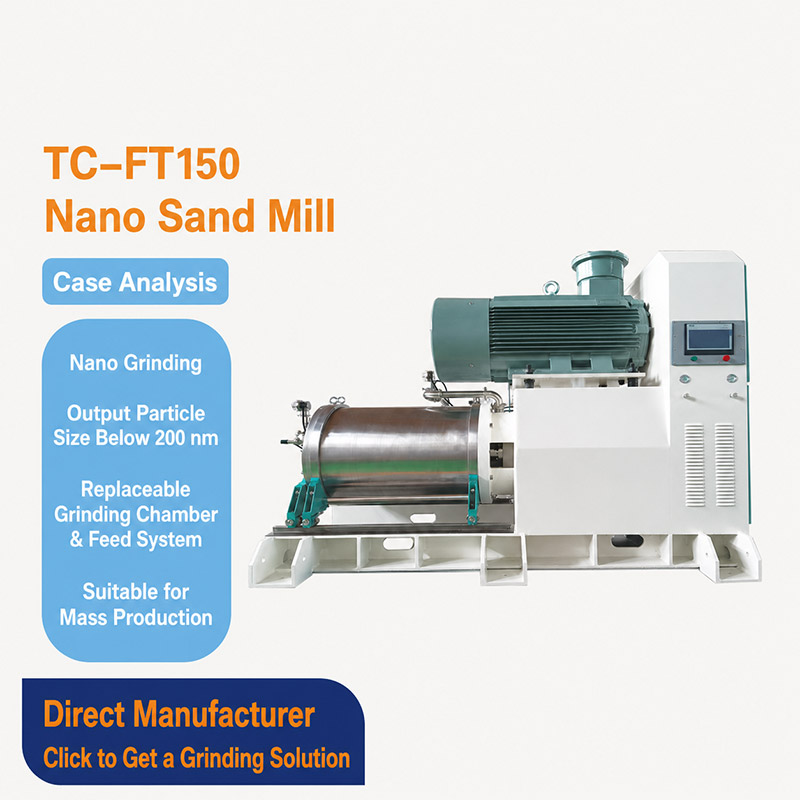
The mass-production nano sand mill is a high-efficiency grinding equipment specially designed for industrial mass production. It is mainly used to disperse solid particles to the nanometer level (usually up to 200nm or less). It is widely used in high-precision fields such as lithium battery materials, coatings, inks, and medicine. Its core design focuses on high productivity, continuous operation stability and low energy consumption. The structure uses a large-capacity grinding chamber, high-strength wear-resistant materials (such as tungsten carbide, zirconia) and an intelligent control system to support long-term continuous operation. Through dynamic separation technology and optimized grinding media distribution, the equipment can achieve uniform nano-scale particle crushing and dispersion to meet industrial-level production needs.
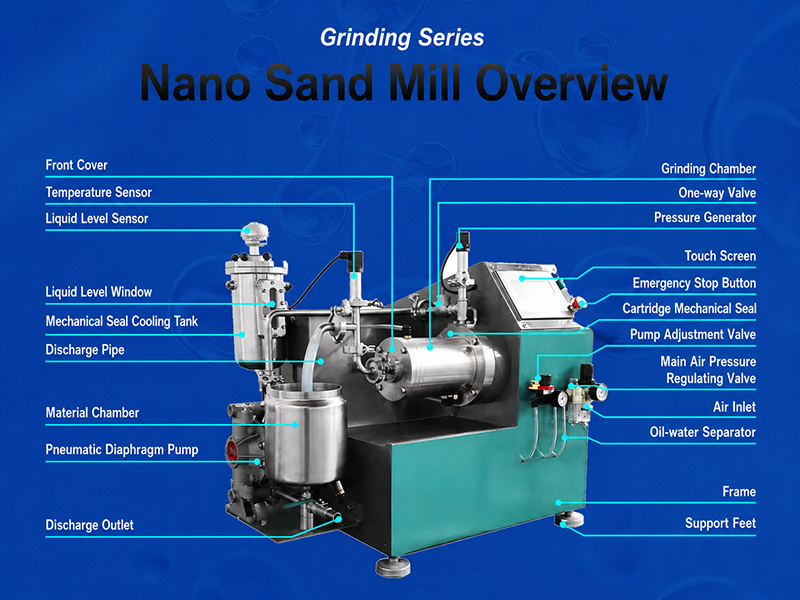
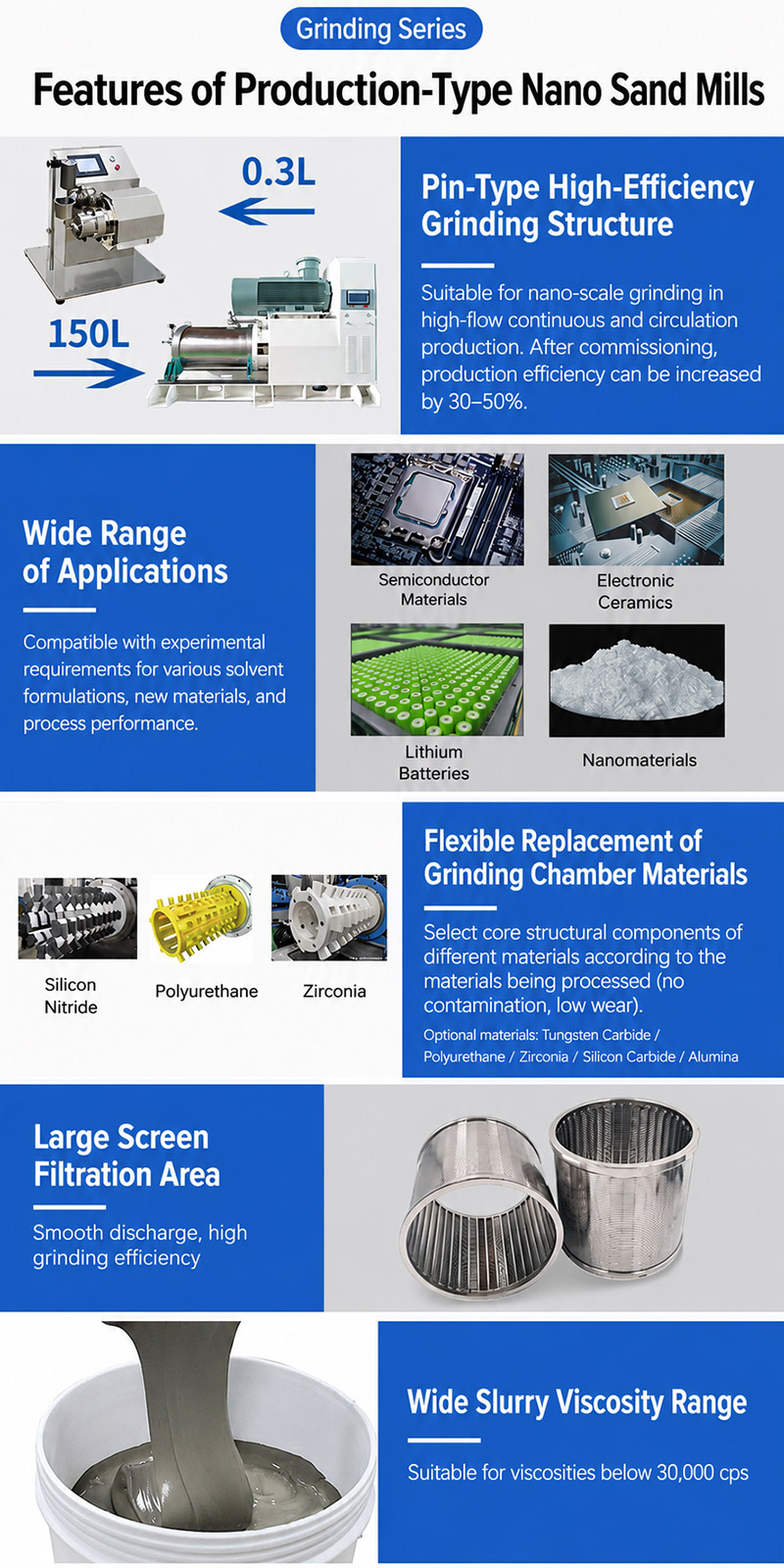
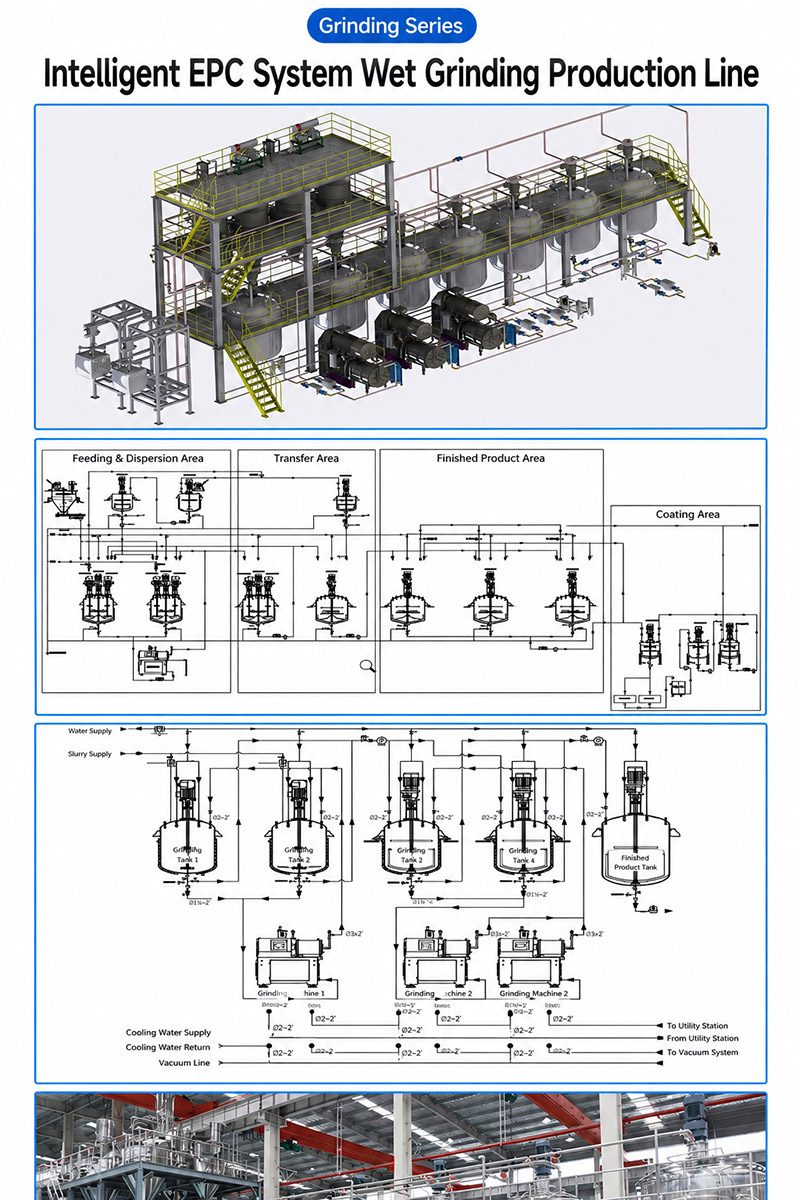
Mass-produced nano sand mills mainly serve the following industries:
-
New energy field : Nano-grinding of lithium battery positive and negative materials (such as lithium iron phosphate, ternary materials) to improve battery energy density and cycle life.
-
Chemicals and Coatings : Dispersion of high-precision color paste, ceramic ink, nanopigment, and preparation of special coatings (such as magnetic coatings, heat-insulating coatings).
-
electronic materials : Ultra-fine processing of MLCC (multilayer ceramic capacitor) slurry and electronic ceramic powder.
-
Pharmaceuticals and Cosmetics : Homogeneous dispersion of pharmaceutical nano-preparations and functional cosmetic raw materials.
-
Special materials : Dispersion of carbon nanotubes and graphene slurries and synthesis of functional nanomaterials.
Technical parameters
| model | Applicable | convey power | Sealed form | separated form | Grinding barrel net volume (L) | Motor power (KW) | Number of revolutions (r/min) | Linear speed (m/s) | Processing batch size (L) | Media size (mm) | Processing capacity (kg) | Weight (kg) | Overall dimensions (mm) |
|---|---|---|---|---|---|---|---|---|---|---|---|---|---|
| TC-FT5 | Wet process pilot test and small mass production | pump | mechanical seal | static screen separation | 5 | 15 | 1470 | 12.9 | 20-150 | 0.2-2.0 | 100mm -2μm | 500 | 1510*910*1600 |
| TC-FT10 | Wet process pilot test and small mass production | pump | mechanical seal | static screen separation | 10 | 22 | 1100 | 12.7 | 30-300 | 0.2-2.0 | 100mm -2μm | 700 | 1510*910*1600 |
| TC-FT30 | mass production | pump | mechanical seal | static screen separation | 30 | 45 | 828 | 13.7 | 100-1000 | 0.2-2.0 | 100mm -2μm | 1800 | 1770*1050 *1940 |
| TC-FT60 | mass production | pump | mechanical seal | static screen separation | 60 | 75 | 596 | 13.4 | 200-2000 | 0.2-2.0 | 100mm -2μm | 3500 | 2250*1450 *1830 |
| TC-FT150 | mass production | pump | mechanical seal | static screen separation | 150 | 160 | 450 | 13.4 | 800-6000 | 0.2-2.0 | 100mm -2μm | 6600 | 4300*2000 *2420 |
-
Choose according to production capacity needs :
-
Small-scale mass production (500-2000L/h): Choose medium-sized equipment with a cylinder volume of 15-60L and a main motor power of 22-45kW.
-
Large-scale continuous production (>5000L/h): Priority is given to large-scale equipment with a cylinder volume of more than 100L, equipped with high-power motors (≥90kW) and automatic feeding systems.
-
-
Adapt according to material characteristics :
-
High viscosity materials : Choose a horizontal sand mill or a large-flow pumping system to ensure material fluidity.
-
Pollution prevention needs : Use ceramic or polyurethane grinding chamber and separator to avoid metal ion contamination.
-
-
Additional functionality considerations :
-
Temperature control sensitive : Optional dual-circulation cooling system or heating jacket to accurately control material temperature.
-
Automation integration : Priority is given to models that support intelligent control systems (such as PLC + touch screen) to facilitate linkage with other equipment in the production line.
-
-
Energy consumption and maintenance costs :
-
Compare the unit energy consumption of the equipment (kW·h/ton) and the replacement frequency of wearing parts, and choose a model with long maintenance cycle and low energy consumption.
-
1. The grinding media is accelerated by the rotation of the rotor to the inner wall of the grinding barrel. The grinding media moving toward the barrel wall will collide with the grinding media or grinding materials close to the inner wall of the grinding barrel. The resulting collision can be used to disperse and crush the materials.
2. Under the action of centrifugal force, the grinding material is close to the inner wall of the grinding barrel and receives the pressure and shearing force of the adjacent medium to disperse and break.
3. Due to the different distances between the grinding media and the axis, the obtained speeds are different, resulting in speed differences. Collisions will occur during the movement to break the materials.
4. In the early stage of grinding, the particle size is large, and impact crushing plays the main role. As the grinding time increases, the ground material gradually becomes finer, and at this time, friction, shearing and crushing mainly occur in the grinding barrel.
-
High productivity and stability :
-
The processing capacity can reach more than 2000L/h, supporting continuous or cyclic production mode to meet large-scale needs.
-
Use high-strength wear-resistant materials (such as carbide, ceramics) and double-end mechanical seals to extend equipment life and reduce downtime maintenance.
-
-
Intelligent control :
-
Integrated PLC control system and touch screen operation interface support parameter preset, real-time monitoring and data recording to ensure process repeatability.
-
-
High performance design :
-
Dynamic separation technology (such as gap separator) enables rapid separation of grinding media and materials to avoid blockage and leakage.
-
The forced cooling system (water cooling or air cooling) controls the grinding temperature to prevent heat-sensitive degradation of materials.
-
-
Wide adaptability :
-
It can handle materials with a viscosity range of 20mPa·s to 20000mPa·s, and supports a variety of grinding media (0.05-2.0mm zirconia beads, silicon carbide beads).
-
The modular design allows the grinding chamber material (such as polyurethane, ceramic) to be replaced to avoid cross-contamination of materials sensitive to metal contamination.
-
Parameters
| Model | TC-FT |
|---|---|
| Grinding Jar Capacity | |
| Feed Size | |
| Output Size | |
| Speed | |
| Power | |
| Voltage | |
| Dimensions | |
| Weight | 0 |
Related Videos
The trusted choice of industry leaders
FAQ
-
What is a Production Type Sand Mill? A High-Efficiency Wet Grinding Equipment for Industrial-Scale Nano Dispersion
A production type sand mill is a professional wet grinding and dispersing equipment designed for large-scale industrial processing of liquid-phase materials. It efficiently reduces particle sizes to the nanometer range through high-energy bead milling, widely used in coatings, inks, pharmaceuticals, and advanced materials industries.
MORE >> -
What is an Electric Lifting Stirred Ball Mill? A High-Efficiency Grinding Equipment for Fine and Ultra-Fine Powder Processing
The electric lifting stirred ball mill is a specialized grinding device that uses a rotating agitator to drive grinding media for fine and ultra-fine milling. It features an electrically operated lifting mechanism for easy jar installation and cleaning. Ideal for wet or dry grinding of ceramics, chemicals, minerals, and battery materials, it combines high energy efficiency with precise particle size control, suitable for both R&D and small-batch production.
MORE >> -
What is an Electric Lifting Stirred Ball Mill? A High-Performance Grinding Mill for Fine and Ultra-Fine Particle Processing
Learn the definition, working principle, types, and key selection parameters of the electric lifting stirred ball mill. This guide covers how it achieves ultra-fine wet and dry grinding through high-energy agitation, its applications in ceramics, battery materials, and pigments, and a comparison of lab, lightweight, and production models.
MORE >> -
What is a Laboratory Sand Grinder? A Wet Ultra-fine Grinding Device for R&D and Small-batch Processing
Learn what a laboratory sand grinder is, how it works, its key types, and selection tips. This wet ultra-fine grinding device is essential for nano-dispersion and particle size reduction in inks, coatings, batteries, ceramics, and more. Ideal for R&D labs and pilot-scale production.
MORE >> -
What is a Lab Horizontal Bar Pin Nano Sand Mill? A High-Performance Wet Grinding Mill for Nano-Scale Material Dispersion
Discover the lab horizontal bar pin nano sand mill, a precision wet grinding machine designed for nano-scale dispersion and comminution. Learn its working principle, key features, selection criteria, and applications in battery materials, ceramics, inks, and more.
MORE >> -
What is a Laboratory Sand Grinder? A Wet Ultra-fine Grinding Device for Nano-scale Material Dispersion
Learn about laboratory sand grinders, their working principles, types, key performance indicators, and selection tips. Ideal for R&D in nano-materials, inks, coatings, and lithium batteries.
MORE >> -
What is a Lab Horizontal Bar Pin Nano Sand Mill? A High-Efficiency Wet Grinding Mill for Nano-Scale Material Processing
Discover the lab horizontal bar pin nano sand mill, a professional wet grinding equipment designed for nano-scale particle size reduction. This article explains its working principle, key components, performance indicators, and selection tips for R&D and small-batch production in industries like ink, paint, and advanced materials.
MORE >> -
What is a Laboratory Cone Ball Mill? A Lab Grinding Equipment for Wet Fine Grinding of Ore and Minerals
A laboratory cone ball mill is a compact, efficient grinding device designed for wet fine grinding of ore and other materials in research and mineral processing labs. It features a unique conical structure, variable frequency drive, and sealed grinding chamber for low noise and dust-free operation. Ideal for mineral feasibility studies, sample preparation, and small-scale material processing in geology, metallurgy, chemistry, and construction industries.
MORE >> -
What is a Production Type Sand Mill? An Industrial-Scale Wet Grinding Equipment for Nano and Fine Powder Dispersion
A production type sand mill is a high-efficiency wet grinding and dispersing machine designed for large-scale manufacturing of fine and nano-sized particles. It continuously processes slurries from coarse mixtures into stable dispersions using high-speed rotors and grinding media. This article explains its working principle, types, key performance indicators, and selection guides for industries like coatings, inks, and battery materials.
MORE >>
Get In Touch
Our professional team will reply to you within one business day. Please feel free to contact us!
Related Products
Related Articles