Contact Us
Choose your preferred way to contact our team
Free Quote
Fill out the form to obtain prices and information
Send an Email
Share your needs and concerns
+86 19021571516
Roll ball mill
Explore TENCAN Drum Ball Mill Series for dry/wet grinding, mixing and batch milling, including lab roll mills, ceramic, lined and jar mill models.
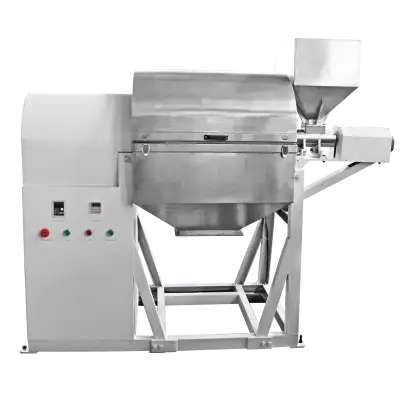
Screening Ball Mill
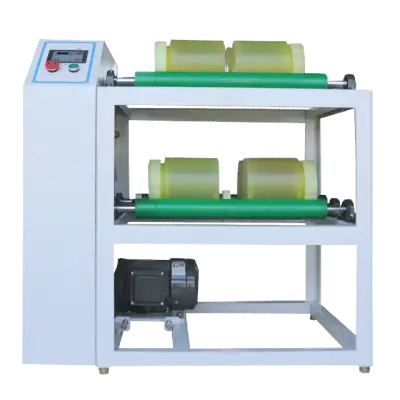
Jar mill with 8 working station
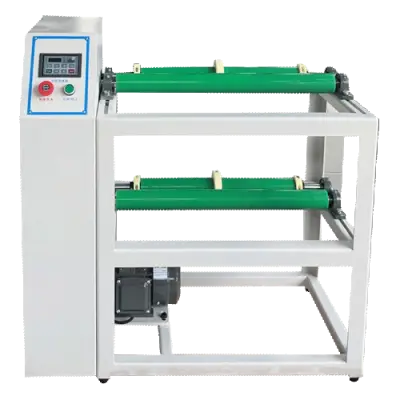
Four station jar mill
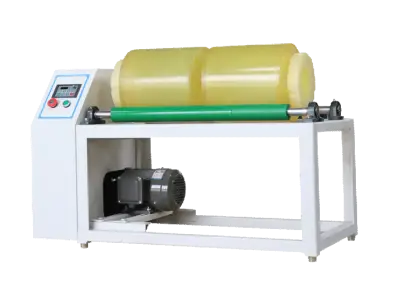
Two working station jar mill
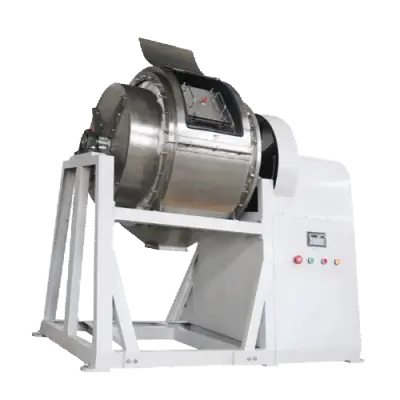
Inner lined roll ball mill
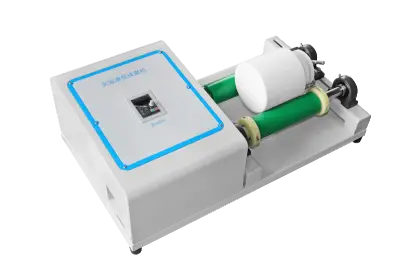
lab roll ball mill
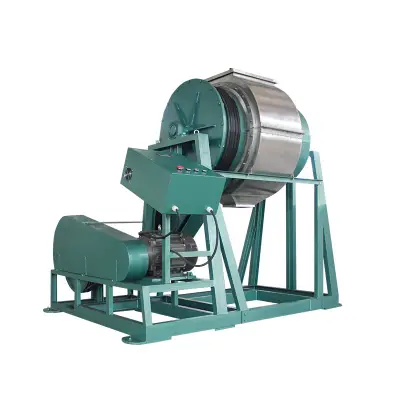
Large roll ball mill
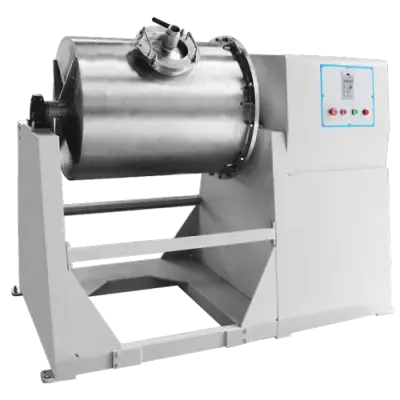
Light-duty roll ball mill
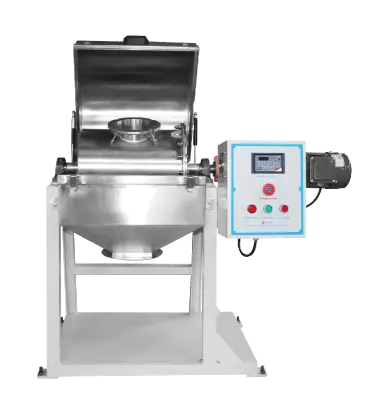
small ball mill with a ceramic jar
TENCAN Roll ball mill
TENCAN Roll ball mill is designed for dry grinding, wet grinding, powder mixing, material dispersion and small-to-medium batch powder preparation. Compared with high-energy planetary ball mills, drum ball mills use a gentler rolling and cascading grinding method. The grinding cylinder or jar rotates continuously, lifting grinding media and materials to a certain height. Under gravity, the media falls and rolls, creating impact, friction and shear force to grind, mix and disperse materials.
This series is widely used in laboratories, teaching, research, pilot production and small-batch manufacturing. It is suitable for ceramic materials, electronic materials, magnetic materials, biological materials, metal powders, non-metallic minerals, chemical materials, new materials, glaze slurry and other powder or slurry systems.
Why Choose TENCAN Drum Ball Mills?
TENCAN drum ball mills are practical for users who need stable operation, lower noise, flexible jar selection and larger batch capacity. The equipment structure is simple, reliable and easy to operate. It can support both dry and wet grinding, making it suitable for different material preparation processes.
For laboratory users, compact roll ball mills and jar mills are convenient for sample preparation and formula testing. For production users, light-duty, large-capacity and lined drum ball mills can provide higher loading volume and more stable long-time operation. Some models support automatic discharge, allowing grinding balls and materials to be separated automatically after milling, which improves unloading efficiency and reduces manual work.
Another important advantage is material compatibility. According to the user’s powder purity, wear resistance and contamination control requirements, the drum or liner can be selected from stainless steel, carbon steel, polyurethane, nylon, PTFE, corundum ceramic, zirconia and other materials. This helps match different materials such as ceramics, minerals, battery powders, pigments, chemicals and metal powders.
Different Models for Different Applications
The laboratory roll ball mill is suitable for research, teaching, testing and small-batch production. It has compact structure, simple operation and adjustable roller spacing, allowing users to work with grinding jars of different outer diameters. It is suitable for ultra-fine grinding, mixing and uniform sample preparation.
The light-duty drum ball mill is suitable for batch grinding and mixing with larger volume. It is often selected for ceramic slurry, mineral powder, chemical powder and general material grinding. The machine runs smoothly, has low noise and can be equipped with different liners according to material requirements.
The ceramic drum ball mill is mainly used when ceramic lining is required to reduce metal contamination. It is suitable for ceramic materials, glaze, non-metallic minerals and high-purity powders. For users who care about material purity, ceramic lining can be a practical choice.
The lined drum ball mill allows users to select different inner lining materials according to hardness, corrosion resistance and contamination requirements. Optional liners such as polyurethane, corundum, PTFE or zirconia can help improve wear resistance and protect sensitive materials.
Two-station, four-station and eight-station jar mills are suitable for users who need to grind multiple samples at the same time. They are practical for laboratories and small-batch production, especially when different formulas or materials need to be compared under similar grinding conditions. Timed operation also helps improve repeatability and reduce manual supervision.
The screening ball mill combines grinding and sieving in one system. During operation, materials are ground in the drum and screened when they reach the target particle size range. This design is suitable for users who need a specific particle size section and want to reduce repeated milling and screening steps.
Key Application Fields
TENCAN drum ball mills are widely used in ceramics, mineral processing, powder metallurgy, electronic materials, magnetic materials, pigments, coatings, chemicals, biological materials, new energy materials and laboratory sample preparation.
In ceramic processing, drum ball mills are used for glaze slurry preparation, ceramic powder grinding and material mixing. In mineral and non-metallic powder industries, they are suitable for batch grinding and particle size adjustment. In chemical and coating fields, they can be used for powder dispersion, pigment mixing and wet grinding. In laboratories, jar mills are useful for repeated experiments, material comparison and small-batch formula development.
Difference from Planetary Ball Mills and Stirred Ball Mills
A drum ball mill is different from a planetary ball mill. A planetary ball mill provides stronger grinding energy through revolution and self-rotation, making it more suitable for fast fine grinding, nano powder preparation and high-energy laboratory milling. A drum ball mill provides gentler rolling grinding and is more suitable for larger batch processing, mixing, wet grinding and stable long-time operation.
Compared with stirred ball mills, drum ball mills have a simpler structure and are easier to operate for batch grinding. Stirred ball mills are often selected for high-efficiency slurry dispersion and finer wet grinding, while drum ball mills are better for general batch grinding, material mixing and processes that need stable rolling motion.
Customization and Selection Support
Selecting the right drum ball mill depends on material type, feed size, target particle size, grinding method, batch volume, liner requirement, contamination control and discharge method. Users can choose laboratory models, light-duty models, large-capacity models, lined models, multi-station jar mills or screening ball mills according to their process.
TENCAN can provide customized support for machine volume, roller speed, jar size, liner material, discharge structure, automatic unloading, ball-material separation, electrical configuration and production capacity. Whether the requirement is laboratory testing, ceramic slurry preparation, mineral powder grinding, multi-sample comparison or batch production, TENCAN can help match a suitable drum ball mill solution.
FAQ
-
What is a Jar Mill with 8 Working Station? A High-Efficiency Grinding Equipment for Multi-Sample Laboratory Powder Processing
Learn about the jar mill with 8 working station, a versatile drum ball mill designed for simultaneous grinding of multiple samples in laboratories. This article covers its definition, working principle, key components, performance indicators, application fields, and selection tips for efficient powder processing.
MORE >> -
What is a PU Roll Mill Jar? A Wear-Resistant, Low-Contamination Grinding Jar for Wet Milling
The PU Roll Mill Jar is a polyurethane grinding container designed for roll ball mills in laboratories and small-scale production. Its key features include excellent wear resistance, no metal contamination, and chemical stability. Ideal for grinding materials sensitive to metal impurities, such as ceramics, pigments, and pharmaceuticals. Learn how it works, key performance indicators, and how to select the right jar for your application.
MORE >> -
What is a Jar Mill with 8 Working Station? A Multi-Sample Grinding Device for Efficient Laboratory Milling
Discover the Jar Mill with 8 Working Station, a high-efficiency drum ball mill designed for simultaneous wet or dry grinding of up to eight samples. Ideal for laboratories in materials science, chemistry, and geology, it offers consistent particle size reduction, easy operation, and scalability.
MORE >> -
What is a Stainless Steel Roll Mill Jar? A Corrosion-Resistant Grinding Container for Laboratory Ball Milling
Discover the essential role of stainless steel roll mill jars in laboratory ball milling. This article explains their construction, working principle, key performance indicators, and selection criteria for researchers and industry professionals seeking contamination-free, durable grinding solutions.
MORE >> -
What is a Stainless Steel Roll Mill Jar? A Durable Grinding Container for Contamination-Free Powder Processing in Roll Ball Mills
A stainless steel roll mill jar is a robust, corrosion-resistant grinding container designed for roll ball mills used in powder metallurgy, battery materials, and chemical processing. This article explains its working principle, key features, selection criteria, and common applications, helping you choose the right jar for contamination-free, high-efficiency milling.
MORE >> -
What is a Lab Roll Ball Mill? A Versatile Drum Ball Mill for Laboratory Wet and Dry Grinding
A lab roll ball mill is a compact drum ball mill designed for fine grinding, mixing, and homogenizing small batches of materials in research labs. It uses rotating rollers to tumble a jar containing grinding media and sample, achieving micron to submicron particle sizes. Ideal for ceramics, chemicals, minerals, and battery materials, it offers adjustable speed, multiple jar options, and dry/wet grinding capability. This guide explains its working principle, types (light-duty, large, inner-lined, multi-station), key performance indicators, and selection tips for laboratory applications.
MORE >> -
What is a Four Station Jar Mill? A Versatile Mill for Multi-Sample Batch Grinding in Laboratories
A four station jar mill is a compact roll ball mill designed for simultaneous grinding of up to four samples in jars. Ideal for laboratories and research institutions, it enables efficient batch processing, fine grinding, and mixing of materials like ceramics, chemicals, and minerals. This article explores its working principle, key components, performance indicators, and selection tips.
MORE >> -
What is a Large Roll Ball Mill? A High-Capacity Drum Grinding Equipment for Industrial-Scale Fine Powder Milling
Discover the Large Roll Ball Mill, a robust drum grinding machine designed for high-volume wet and dry milling of minerals, ceramics, and battery materials. Learn its working principle, key types, performance indicators, and selection tips for industrial-scale powder processing.
MORE >> -
What is a Large Roll Ball Mill? A High-Capacity Grinding Equipment for Industrial-Scale Material Processing
This article provides a comprehensive FAQ-style introduction to the Large Roll Ball Mill, a robust drum-type grinding machine designed for high-throughput industrial applications. It explains the working principle, core components, key performance metrics, selection criteria, and typical use cases in mining, ceramics, chemicals, and battery materials. Ideal for engineers and procurement professionals seeking reliable bulk grinding solutions.
MORE >> -
What is an Inner Lined Roll Ball Mill? A Roll Ball Mill for Contamination-Free Fine Grinding
Discover the inner lined roll ball mill, a specialized drum ball mill designed for contamination-free fine grinding of materials. Learn about its working principle, key components, performance indicators, and applications in laboratories and industries. Ideal for grinding ceramics, minerals, and pharmaceuticals with high purity.
MORE >>
Get In Touch
Our professional team will reply to you within one business day. Please feel free to contact us!