
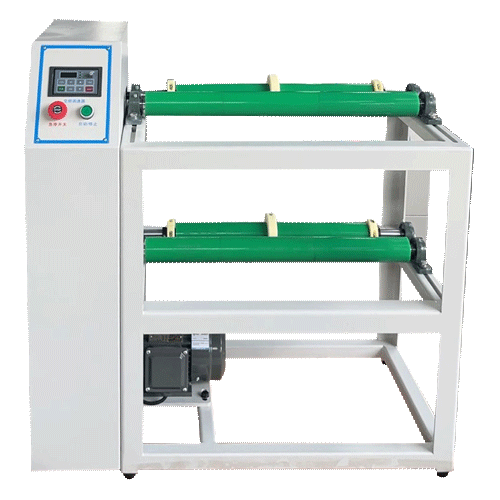
What is a Four Station Jar Mill? A Roll Jar Mill Equipment for Laboratory Multi-Sample Grinding and Mixing

What is a Four Station Jar Mill?
At its core, a four station jar mill is a specialized roll jar mill designed for laboratory and small-scale production environments. It is used to grind, mix, and homogenize powders, granules, and suspensions through controlled rotation of multiple grinding jars. The device features four independent roller stations, each capable of accommodating a jar of varying sizes, allowing simultaneous processing of up to four different samples or replicates. This makes it an indispensable tool for material research, quality control, and process development in fields such as ceramics, battery materials, pharmaceuticals, and pigments.
Core Function and Working Principle
The fundamental function of a four station jar mill is to transform coarse or granular materials into fine powders or uniform mixtures. It achieves this through a simple yet effective mechanism: each roller station rotates a grinding jar filled with material and grinding media (such as balls or rods). As the jar rotates, the media cascade and impact the material, creating friction and shear forces that break down particles. The process is purely mechanical, operating at low speeds (typically 50–300 rpm) to avoid excessive heat generation, making it suitable for heat-sensitive substances.
The key working principle relies on the rotation of the jar itself. Unlike planetary ball mills where the jar rotates on its own axis while the turntable revolves, a jar mill uses only the rotation of rollers to spin the jar. This results in a gentler, more uniform grinding action, ideal for mixing and homogenizing fragile materials. The four independent stations can be controlled individually or collectively, allowing different grinding parameters (speed, time, direction) for each jar. This flexibility is crucial for comparative studies or when processing multiple formulations simultaneously.
Critical process parameters include rotation speed, grinding duration, jar fill level, and the size/material of grinding media. Adjusting these parameters directly influences final particle size distribution and uniformity. For example, higher speeds increase impact energy but may cause excessive wear or temperature rise, while longer grinding times yield finer powders but may risk over-grinding or contamination. Operators must optimize these variables based on the material's properties and desired outcome.
Key Components and Technical Features
A four station jar mill typically consists of the following core components:
- Roller Stations: Four independent sets of rollers, each driven by a dedicated motor or a common drive system with clutches. The rollers are made of wear-resistant materials such as rubber or polyurethane to provide traction and reduce noise.
- Jars (Grinding Containers): Interchangeable jars made of various materials (ceramic, stainless steel, agate, nylon, etc.) to suit different applications. The capacity of each jar can range from 0.5L to 5L or more, depending on the model.
- Speed Control System: Variable speed control (often via a digital display or knob) allows precise adjustment of rotational speed from 0 to the maximum rated rpm. Some advanced models include programmable timers and automatic reverse rotation for enhanced mixing.
- Safety Features: Emergency stop buttons, lid locks, and overload protection to ensure safe operation during unattended runs.
- Frame and Base: A sturdy, vibration-dampening frame ensures stability during operation, minimizing noise and wear.
The modular design of the four station jar mill allows users to easily swap jars, adjust speeds, and run multiple samples without cross-contamination. This makes it a versatile platform for laboratories conducting diverse grinding tasks.
Key Performance Indicators and Selection Criteria
When selecting a four station jar mill, consider the following performance metrics:
- Processing Capacity per Station: Maximum jar volume and weight. Choose a model that matches your typical batch size. For small-scale R&D, 0.5L to 2L jars are common; for pilot production, larger jars up to 5L may be needed.
- Grinding Precision and Particle Size Control: The ability to achieve consistent, reproducible results. Look for mills with digital speed control and timers to ensure repeatability.
- Speed Range and Torque: A wider speed range (e.g., 0–300 rpm) offers greater flexibility. Low-speed operation is essential for gentle mixing, while higher speeds are needed for effective grinding of hard materials.
- Automation and Programmability: Advanced models may include programmable cycles, data logging, and remote monitoring, enhancing productivity and traceability.
- Ease of Maintenance: Quick-change rollers, accessible drive components, and simple cleaning protocols reduce downtime. Consider the availability of spare parts and jar materials.
- Noise and Vibration Level: A well-designed machine should operate quietly (<70 dB) with minimal vibration, especially in laboratory environments.
Additionally, evaluate the compatibility with different jar materials and media. For instance, if you work with corrosive chemicals, PTFE or polyurethane jars may be necessary. If you need high-purity grinding, use agate or zirconia jars and media.
Application Fields and Selection Advice
The four station jar mill is widely used in:
- Materials Science: Grinding and mixing of ceramics, metal powders, oxides, and composites for battery materials, catalysts, and advanced ceramics.
- Pharmaceuticals and Biotechnology: Homogenization of active ingredients, excipients, and herbal extracts for drug development.
- Chemical Industry: Fine grinding of pigments, dyes, and fillers; preparation of dispersions and suspensions.
- Geology and Mining: Sample preparation for mineral analysis and ore beneficiation studies.
- Food and Agriculture: Grinding of spices, grains, and soil samples for quality control.
For beginners, a basic model with fixed speed and manual timer is sufficient for routine grinding tasks. For advanced research requiring precise control and high throughput, opt for a programmable unit with digital display and multiple jar options. If you anticipate processing different materials frequently, choose a model with easy jar interchange and quick-release rollers. For large-scale screening or batch production, consider a jar mill with 8 working stations or a lab roll ball mill for better scalability.
References
Related Products
Get In Touch
Our professional team will reply to you within one business day. Please feel free to contact us!