
What is a Large Roll Ball Mill? A High-Capacity Grinding Equipment for Industrial-Scale Material Processing

What is a Large Roll Ball Mill?
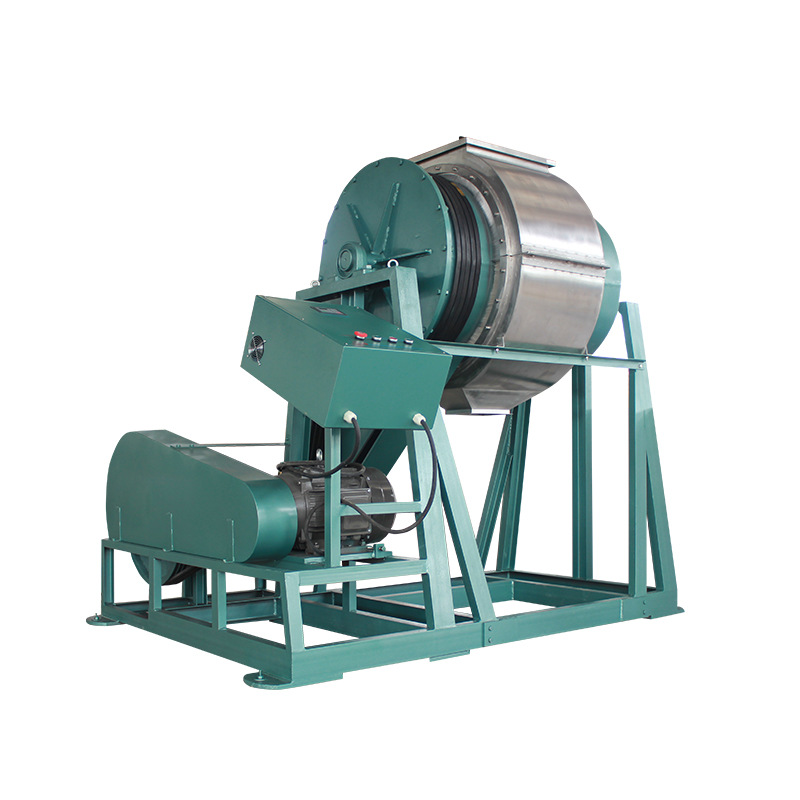
At its core, a Large Roll Ball Mill is a professional grinding equipment used in industrial-scale powder processing. It is designed to reduce coarse materials into fine powders through the combined action of impact and attrition inside a rotating cylindrical drum. This machine is the workhorse of many production lines, handling everything from mineral ores to ceramic raw materials and battery precursor powders.
Core Function and Working Principle
The Large Roll Ball Mill transforms feed materials from coarse lumps or granules (typically up to 25 mm) into a fine powder with particle sizes down to 20–75 microns. The mill consists of a horizontal rotating cylinder, partially filled with grinding media such as steel balls, ceramic balls, or rods. As the cylinder rotates, the media are lifted by centrifugal force and friction against the inner liner, then cascade or cataract down, crushing the material through impact and shearing actions.
The rotational speed is a critical parameter: it is usually set at 65%–75% of the critical speed—the speed at which centrifugal force pins the media against the wall. Operating below this speed ensures efficient tumbling and grinding. The drum’s diameter and length determine the mill’s capacity and the residence time of the material, both of which can be adjusted to achieve the desired fineness.
Key Components and Design Features
Understanding the internal structure helps in selecting the right machine. The Large Roll Ball Mill typically includes:
- Drum Shell: Made of heavy-duty steel, lined with removable wear-resistant liners (e.g., manganese steel, rubber, ceramic) to protect the shell and reduce contamination.
- Trunnion Bearings: Support the drum and allow smooth rotation; often equipped with automatic lubrication.
- Drive System: A motor, reducer, and gear transmission (or belt drive) that provides controlled rotation. The large size may require a ring gear and pinion drive.
- Feeding and Discharging: Feed enters through a hollow trunnion, and discharge can be via overflow, grate, or peripheral openings, depending on the application.
- Grinding Media: Steel balls, ceramic balls, or rods with optimized size distribution and ball-to-material ratio (typically 2:1 to 4:1 by mass).
Compared to smaller light-duty roll ball mills, the large version uses a heavier frame, more powerful motor, and advanced sealing to handle continuous operation and higher throughput.
Key Performance Indicators and Selection Guide
When choosing a Large Roll Ball Mill, evaluate these critical parameters:
1. Processing Capacity
Capacity is usually expressed in tons per hour (t/h) for industrial mills. For example, a mill with a drum diameter of Φ1500 mm can process 2–5 t/h, while a Φ2400 mm mill can handle 8.5–60 t/h. Match the capacity to your daily production needs, leaving a reasonable margin.
2. Grinding Fineness
The required particle size distribution dictates the mill length, rotation speed, and grinding media selection. Finer products demand longer grinding times or higher energy input. The mill can be operated in a closed circuit with a classifier to achieve precise cut points.
3. Material Characteristics
Hard materials (e.g., quartz, ceramics, alloys) require high-power motors and durable wear liners. Moist or sticky materials may need a wet grinding configuration with special discharge mechanisms. For contamination-sensitive applications (e.g., battery materials), choose ceramic liners and media.
4. Automation and Maintenance
Modern large roll ball mills often feature PLC control for speed regulation, torque monitoring, and automatic lubrication. Easy access to the drum for liner replacement and media charging is essential for minimizing downtime.
Application Areas and Selection Advice
Large Roll Ball Mills are widely used in:
- Mining and Mineral Processing: Grinding ores such as gold, copper, iron, and lead-zinc prior to flotation or leaching.
- Ceramics and Glass: Producing fine powders for glazes, tiles, and refractory materials.
- Chemical Industry: Pulverizing pigments, catalysts, and fertilizers.
- New Energy Materials: Grinding lithium-ion battery cathode and anode materials, such as NMC, LFP, and graphite.
- Building Materials: Cement clinker grinding, slag, and fly ash processing.
For pilot-scale or small-batch production, consider the lab roll ball mill or a small ball mill with a ceramic jar. For heavy-duty continuous production, the Large Roll Ball Mill offers the best balance of throughput, reliability, and cost-efficiency.
References
- Large Roll Ball Mill product page: https://www.planetaryballmills.com/products/grinding-series/drum-ball-mill/large-roll-ball-mill.html
- Related product: Lab Roll Ball Mill: https://www.planetaryballmills.com/products/grinding-series/drum-ball-mill/lab-roll-ball-mill.html
- Related product: Light-Duty Roll Ball Mill: https://www.planetaryballmills.com/products/grinding-series/drum-ball-mill/light-duty-roll-ball-mill.html
Related Products
Get In Touch
Our professional team will reply to you within one business day. Please feel free to contact us!