

What is a Large Roll Ball Mill? A High-Capacity Drum Grinding Equipment for Industrial-Scale Fine Powder Milling
What is a Large Roll Ball Mill?
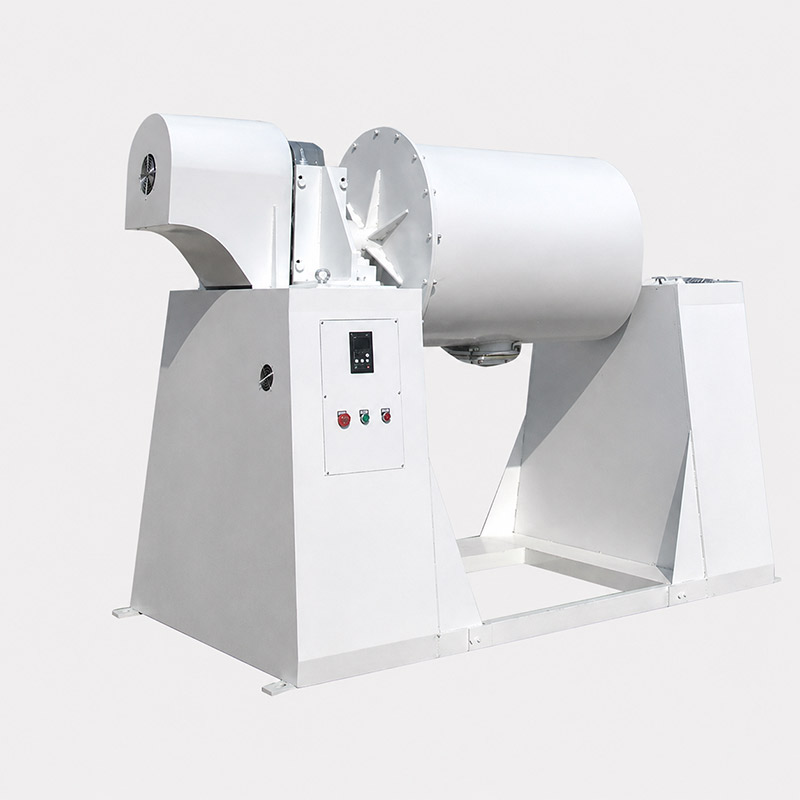
At its core, a Large Roll Ball Mill is a high-capacity drum grinding machine used in mining, ceramics, chemical, and new energy industries to continuously grind coarse materials into fine or ultra-fine powders. This equipment rotates a horizontal cylindrical drum partially filled with grinding media (balls or rods) and the material to be ground. The tumbling action of the media generates impact, attrition, and shear forces that break down particles, making it the backbone of many large-scale milling operations.
Core Function and Working Principle
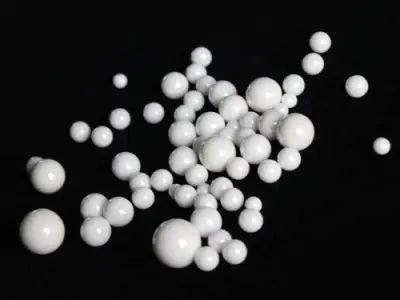
The Large Roll Ball Mill transforms coarse feed material (typically <25 mm) into a fine powder with a target particle size ranging from tens of microns to sub-micron levels. The working principle is elegantly simple yet remarkably effective. A cylindrical drum is mounted horizontally on sturdy bearings and driven by a motor through a gear system. The drum is filled with grinding media — usually steel balls, ceramic balls, or rods — occupying 25% to 50% of the drum's volume.
As the drum rotates at a speed between 4 and 20 revolutions per minute (depending on the drum diameter), the grinding media are lifted by the drum wall and then cascade or cataract down, impacting the material trapped between them. Simultaneously, the relative motion of the media creates shear and attrition forces that further break down the particles. The rotation speed is critical: too slow and the media simply slide without effective impact; too fast and the media centrifuge against the drum wall, losing grinding action. The optimal speed is typically 65% to 80% of the critical speed where centrifugal force equals gravity.
Key process parameters include mill speed, media size and material, media filling ratio, material-to-media ratio, and grinding time. For wet grinding, the pulp density and viscosity also affect the final fineness. The Large Roll Ball Mill can be operated in batch or continuous mode, and in open or closed circuit with a classifier to achieve precise particle size distribution.
Main Types and Configurations
Although the Large Roll Ball Mill is a specific category of drum ball mills, it can be further classified by discharge method, lining, and number of working stations. The most common types are:
Overflow vs. Grate Discharge
Overflow ball mills discharge the product through a hollow trunnion at the discharge end, relying on slurry level to push the material out. They are suitable for fine grinding and high fineness requirements. Grate discharge mills use a grid plate at the discharge end to retain the grinding media while allowing the slurry to exit, which is better for coarse grinding and high throughput.
Lined vs. Unlined
Large Roll Ball Mills often feature replaceable liners (e.g., manganese steel, ceramic, rubber) to protect the drum shell and reduce contamination. The Inner Lined Roll Ball Mill is a variant designed for high-purity applications where iron contamination must be avoided.
Multi-Station Mills
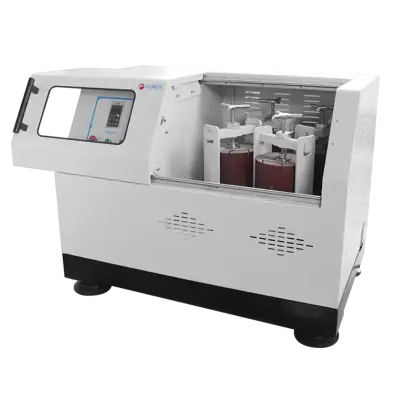
For laboratories or small-scale production, the Large Roll Ball Mill can be configured with multiple jars (e.g., two-station, four-station, or eight-station) to simultaneously process different materials or conditions. These jar mills are essentially smaller versions of the Large Roll Ball Mill, using the same rolling principle.
Key Performance Indicators and Selection Criteria
When selecting a Large Roll Ball Mill, consider the following factors:
Processing Capacity and Throughput: The capacity of a Large Roll Ball Mill ranges from a few hundred kilograms per hour to over 100 tons per hour, depending on the drum diameter (typically 1.2 m to 4.5 m) and length. The required throughput directly determines the mill size.
Particle Size Control: The fineness of the final product can be adjusted by changing the mill speed, media size, and residence time. For example, using smaller media (e.g., 10-20 mm balls) yields finer particles, while larger media (50-100 mm) are more effective for coarse grinding. The ability to achieve a P80 of 75 µm or lower makes the Large Roll Ball Mill suitable for mineral liberation and fine powder production.
Energy Efficiency: Ball mills are known for high energy consumption (typically 10-25 kWh per ton of material). However, modern Large Roll Ball Mills incorporate energy-saving designs such as variable frequency drives (VFD), optimized liner profiles, and efficient gear transmissions to reduce power consumption by 15-30% compared to older models.
Automation and Programmability: Advanced models offer PLC control, touch-screen interfaces, and remote monitoring capabilities. Features like automatic speed control, timed operation, and data logging enhance reproducibility and ease of use, especially in research and multi-product manufacturing.
Maintenance and Wear Parts: The grinding media and liners are consumable components that require periodic replacement. The availability of wear-resistant liners (e.g., high-chrome steel, rubber, polyurethane) and the ease of access to the drum for maintenance are important considerations. A well-designed Large Roll Ball Mill should have quick-opening doors and replaceable trunnion bearings.
Application Areas and Selection Advice
Large Roll Ball Mills are indispensable in the following industries:
- Mining and Mineral Processing: Grinding of ores (gold, copper, iron, etc.) for liberation of valuable minerals. The Large Roll Ball Mill is often used in the regrind circuit or as a secondary mill after primary crushing.
- Ceramics and Refractories: Fine grinding of feldspar, quartz, zircon, and alumina for ceramic bodies, glazes, and refractory bricks.
- Chemicals and Pigments: Production of fine powders of pigments, dyes, fillers, and catalysts.
- New Energy Materials: Grinding of lithium battery cathode and anode materials (e.g., LiCoO₂, graphite, silicon) to achieve the required particle size distribution for electrode slurry.
- Building Materials: Cement and slag grinding in finish grinding mills or pre-grinding systems.
Selection Advice: For operations requiring high throughput and coarse grinding (e.g., primary grinding in mineral processing), a grate discharge mill with large media is recommended. For fine grinding and high purity requirements (e.g., ceramic and battery materials), an overflow discharge mill with ceramic liners and small media is preferable. Lab-scale testing is always advisable to determine the optimal mill configuration and grinding parameters. For lower throughput needs, smaller models like the Light-Duty Roll Ball Mill or Lab Roll Ball Mill may be more cost-effective.
References
- Large Roll Ball Mill product page: https://www.planetaryballmills.com/products/grinding-series/drum-ball-mill/large-roll-ball-mill.html
- Light-Duty Roll Ball Mill: https://www.planetaryballmills.com/products/grinding-series/drum-ball-mill/light-duty-roll-ball-mill.html
- Lab Roll Ball Mill: https://www.planetaryballmills.com/products/grinding-series/drum-ball-mill/lab-roll-ball-mill.html
- Inner Lined Roll Ball Mill: https://www.planetaryballmills.com/products/grinding-series/drum-ball-mill/inner-lined-roll-ball-mill.html
Related Products
Get In Touch
Our professional team will reply to you within one business day. Please feel free to contact us!