Contact Us
Choose your preferred way to contact our team
Free Quote
Fill out the form to obtain prices and information
Send an Email
Share your needs and concerns
+86 19021571516
Sand mill
Explore TENCAN Sand Mill for wet nano grinding, slurry dispersion and continuous production, including lab horizontal pin mills and production nano sand mills.
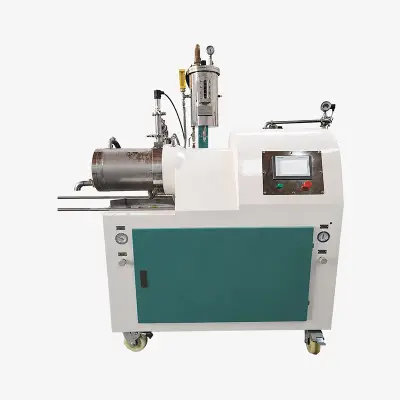
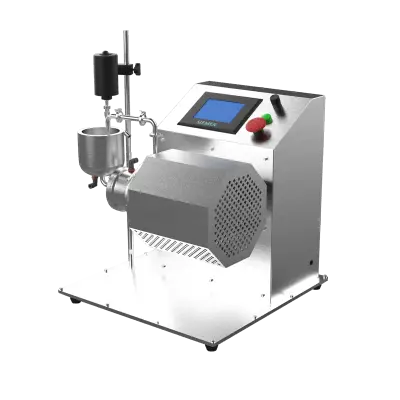
TENCAN Sand Mill
TENCAN Sand Mill is designed for wet ultra-fine grinding, nano-level dispersion, slurry homogenization and continuous material processing. Compared with conventional ball mills, a sand mill uses high-speed rotating discs, pins or dispersing structures to drive small grinding media inside a closed grinding chamber. The material and grinding media move irregularly at high speed, generating impact, friction, extrusion and shear force to break particles and disperse agglomerates.
This series is suitable for materials that require fine particle size, narrow distribution and stable slurry quality. It is widely used in lithium battery materials, ceramic inks, electronic pastes, pigments, coatings, catalysts, graphene conductive slurry, carbon nanotubes, magnetic materials, pharmaceutical nano formulations, cosmetics, non-metallic mineral powders and other advanced material industries.
Why Choose TENCAN Sand Mills?
TENCAN sand mills are suitable for users who need wet grinding and dispersion from laboratory research to production scale. The equipment can process solid-liquid mixtures after pre-dispersion and wetting. Through pump feeding or self-suction feeding, the material enters the grinding chamber, where small grinding media transfer high kinetic energy to the slurry. After grinding and dispersion, the product is separated from the media through a dynamic or static separation system and discharged continuously.
A key advantage of sand mills is high grinding efficiency. Small grinding beads provide more contact points and stronger dispersion performance than larger milling media. This makes sand mills suitable for nano slurry preparation, fine pigment dispersion, ceramic ink production and battery material processing.
Another advantage is process continuity. A sand mill can operate in single-pass or circulation mode, helping users control residence time, particle size and dispersion stability. For heat-sensitive materials, jacket cooling helps control temperature during grinding. For contamination-sensitive materials, the grinding chamber, rotor and separator can be selected from wear-resistant or non-metal materials such as zirconia, silicon carbide, silicon nitride, polyurethane or tungsten carbide.
Lab Horizontal Pin Nano Sand Mill
The lab horizontal pin nano sand mill is designed for R&D, formula testing and small-batch wet grinding experiments. It is suitable for universities, research institutes and enterprise laboratories that need to verify slurry formulation, grinding media selection, solid content, viscosity and target fineness before scale-up.
This model is especially useful for new energy materials, nano pigments, ceramic ink, catalyst refinement, pharmaceutical nano processing, electronic slurry and special functional materials. It provides flexible process adjustment and can help users build a reliable basis for later pilot or production equipment selection.
For laboratory users, easy operation, small batch size, cooling control and replaceable core materials are important. The lab sand mill allows users to test different material systems while reducing sample consumption and improving experimental repeatability.
Production Nano Sand Mill
The production nano sand mill is designed for industrial continuous operation and large-scale slurry processing. It focuses on high throughput, stable particle size control, low energy consumption and long-time operation. It is suitable for production lines that require nano-level dispersion and consistent batch quality.
This model can be used in lithium battery cathode and anode materials, high-precision color pastes, ceramic inks, electronic ceramic slurry, pharmaceutical nano formulations, functional cosmetics, carbon nanotube slurry and graphene slurry. With PLC control, touch screen operation, dynamic separation, mechanical sealing and forced cooling, it helps users improve process repeatability and production stability.
Production sand mills are also suitable for scale-up from laboratory results. When the laboratory machine and production machine follow similar grinding principles and media systems, the process data can be more easily transferred to industrial production.
Difference from Stirred Ball Mills and Planetary Ball Mills
A sand mill is different from a stirred ball mill and a planetary ball mill. Planetary ball mills are mainly used for high-energy laboratory grinding, dry or wet sample preparation and small-batch nano powder research. Stirred ball mills are suitable for wet fine grinding and slurry processing with a stirring shaft and media movement inside a fixed cylinder.
Sand mills are more focused on continuous wet dispersion, nano slurry production and industrial material refinement. They are usually selected when the user needs stable flow, small grinding media, high dispersion efficiency, cooling control and continuous discharge.
Customization and Selection Support
Selecting the right sand mill depends on material type, initial particle size, target fineness, viscosity, solid content, solvent system, production capacity, contamination control and temperature sensitivity. TENCAN can provide model selection support for laboratory testing, pilot scale-up and production lines.
Optional configurations may include different chamber volumes, rotor structures, feeding pumps, grinding chamber materials, separator types, cooling systems, control systems and grinding media materials. Whether the requirement is laboratory nano grinding, slurry dispersion, ceramic ink preparation, battery material processing or production-scale wet milling, TENCAN Sand Mill can provide a practical solution for fine and stable material processing.
FAQ
-
What is a Production Type Sand Mill? A High-Efficiency Wet Grinding Equipment for Industrial-Scale Nano Dispersion
A production type sand mill is a professional wet grinding and dispersing equipment designed for large-scale industrial processing of liquid-phase materials. It efficiently reduces particle sizes to the nanometer range through high-energy bead milling, widely used in coatings, inks, pharmaceuticals, and advanced materials industries.
MORE >> -
What is a Zirconia Grinding Ball? A High-Performance Grinding Medium for Ultra-Fine Powder Preparation in Ball Mills and Sand Mills
Discover the essential role of zirconia grinding balls in ultra-fine powder processing. This FAQ guide explains their composition, working principles, types, key performance indicators, and selection tips for industries like lithium batteries, ceramics, and pharmaceuticals. Ideal for engineers and procurement professionals.
MORE >> -
What is a Laboratory Sand Grinder? A Wet Ultra-fine Grinding Device for R&D and Small-batch Processing
Learn what a laboratory sand grinder is, how it works, its key types, and selection tips. This wet ultra-fine grinding device is essential for nano-dispersion and particle size reduction in inks, coatings, batteries, ceramics, and more. Ideal for R&D labs and pilot-scale production.
MORE >> -
What is a Lab Horizontal Bar Pin Nano Sand Mill? A High-Performance Wet Grinding Mill for Nano-Scale Material Dispersion
Discover the lab horizontal bar pin nano sand mill, a precision wet grinding machine designed for nano-scale dispersion and comminution. Learn its working principle, key features, selection criteria, and applications in battery materials, ceramics, inks, and more.
MORE >> -
What is a Laboratory Sand Grinder? A Wet Ultra-fine Grinding Device for Nano-scale Material Dispersion
Learn about laboratory sand grinders, their working principles, types, key performance indicators, and selection tips. Ideal for R&D in nano-materials, inks, coatings, and lithium batteries.
MORE >> -
What is a Zirconia Grinding Ball? A High-Performance Ceramic Grinding Media for Ultra-Fine Milling and Contamination-Free Processing
Zirconia grinding balls are premium ceramic grinding media used in planetary ball mills, sand mills, and stirred mills for ultra-fine powder processing. With high hardness, fracture toughness, and wear resistance, they enable contamination-free milling of ceramics, pigments, battery materials, and more. This guide explains their working principle, types, key performance indicators, and selection tips.
MORE >> -
What is a Lab Horizontal Bar Pin Nano Sand Mill? A High-Efficiency Wet Grinding Mill for Nano-Scale Material Processing
Discover the lab horizontal bar pin nano sand mill, a professional wet grinding equipment designed for nano-scale particle size reduction. This article explains its working principle, key components, performance indicators, and selection tips for R&D and small-batch production in industries like ink, paint, and advanced materials.
MORE >> -
What is a Corundum Grinding Ball? A High-Performance Grinding Media for Ball Mills and Powder Processing
Corundum grinding balls are high-density alumina ceramic grinding media used in ball mills, vibration mills, and sand mills for efficient particle size reduction. This article explains their manufacturing process, key properties, selection criteria, and applications across ceramics, mining, and chemical industries.
MORE >> -
What is a Production Type Sand Mill? An Industrial-Scale Wet Grinding Equipment for Nano and Fine Powder Dispersion
A production type sand mill is a high-efficiency wet grinding and dispersing machine designed for large-scale manufacturing of fine and nano-sized particles. It continuously processes slurries from coarse mixtures into stable dispersions using high-speed rotors and grinding media. This article explains its working principle, types, key performance indicators, and selection guides for industries like coatings, inks, and battery materials.
MORE >>
Get In Touch
Our professional team will reply to you within one business day. Please feel free to contact us!