

What is a Laboratory Sand Grinder? A Wet Ultra-fine Grinding Device for Nano-scale Material Dispersion
What is a Laboratory Sand Grinder?
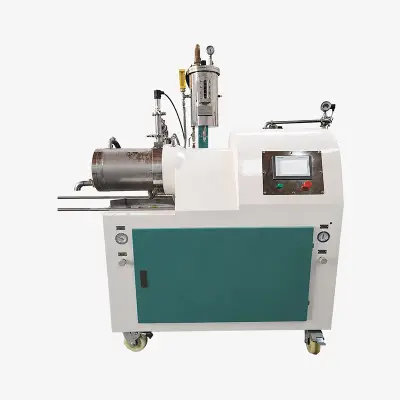
At its core, a laboratory sand grinder is a specialized wet ultra-fine grinding device that R&D laboratories, universities, and pilot plants use to disperse, deagglomerate, and mill solid particles in liquid suspensions down to the nanometer or submicron range. It is essentially a compact version of industrial sand mills (also known as bead mills or pearl mills), designed for small batch processing, rapid formulation optimization, and process scale-up studies.
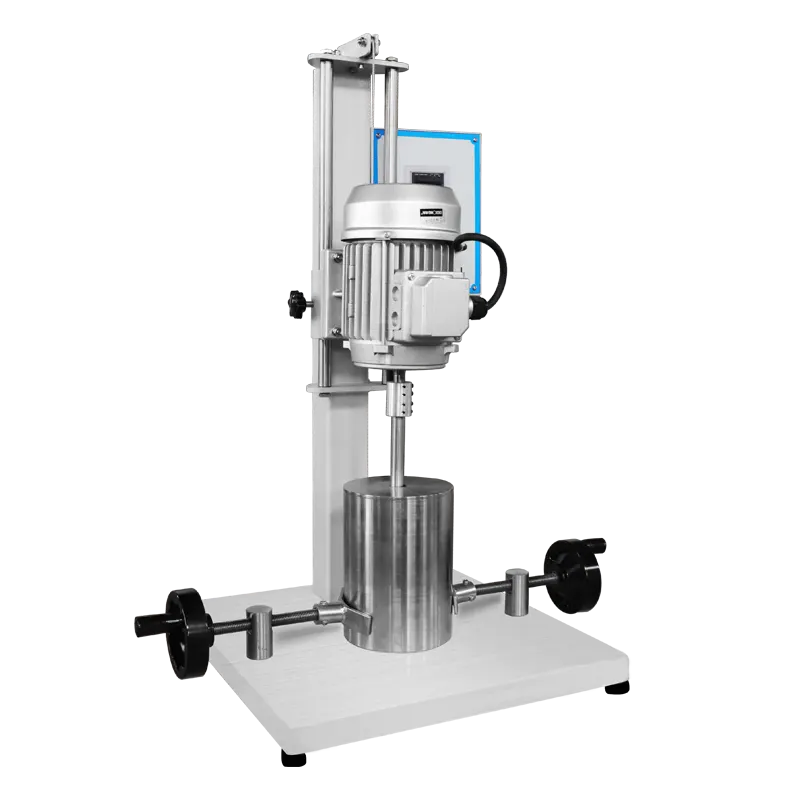
Core Function and Working Principle
The basic function of a laboratory sand grinder is to transform a coarse slurry or pre-mixed paste into a stable, homogeneous dispersion with a controlled particle size distribution. The machine consists of a stationary grinding chamber, a rotating agitator shaft, and a charge of grinding media (typically 0.1–3 mm diameter zirconia, glass, or ceramic beads).
During operation, the slurry is pumped into the chamber through a feed inlet. The high-speed rotation of the agitator (discs, pins, or turbines) imparts kinetic energy to the media, creating intense shear, impact, and friction forces between the beads and the particles. These mechanical actions break down agglomerates and reduce primary particle size. The residence time, agitator speed, bead size, and feed rate are critical parameters that determine the final fineness and energy efficiency.
Modern laboratory sand grinders often feature a closed-loop circulation system, where the slurry is continuously recirculated through the mill until the desired particle size is achieved. This allows precise control over the grinding process and minimizes material waste.
Main Types and Key Technologies
Laboratory sand grinders are available in several configurations, each suited for different viscosity ranges and throughput requirements:
Horizontal Sand Grinders
These have a horizontal grinding chamber, offering high energy density and excellent cooling efficiency. They are ideal for low-to-medium viscosity slurries and are the most common type for lab-scale nano-milling.
Vertical Sand Grinders
With a vertical orientation, these are simpler in design and easier to clean. They are often used for medium-viscosity materials and are favored in educational settings for their straightforward operation.
Basket Mills
Also known as basket sand grinders, these integrate the grinding chamber and a dispersing impeller in a single unit. The basket containing the grinding media is immersed directly into the product container. This design is perfect for small batches (e.g., 0.5–5 liters) as it eliminates the need for a separate pump and recirculation system, making it highly efficient for frequent color changes or multiple formulations.
Key technological advancements include dynamic centrifugal separation systems (which replace traditional screens to prevent clogging), full ceramic (zirconia or silicon carbide) one-piece chambers for wear resistance and contamination-free grinding, and dual-channel water cooling to maintain stable temperature during high-energy milling.
Key Performance Indicators and Selection Criteria
When choosing a laboratory sand grinder, several metrics should be evaluated:
- Grinding Fineness and PSD Control: The ability to achieve target D50 and D90 values consistently, with narrow particle size distribution (PDI).
- Throughput and Batch Size: Typical lab units handle 0.3 L to 10 L per batch. Select based on your typical sample volume and required turnaround time.
- Temperature Management: Effective cooling prevents heat-sensitive materials from degrading. Look for units with jacketed chambers and optional cooling of the agitator shaft.
- Sealing and Containment: For solvent-based or toxic materials, mechanical seals or magnetic couplings are essential to prevent leakage and contamination.
- Ease of Cleaning and Media Changeover: Quick-release closures, smooth surfaces, and minimal dead zones reduce downtime between batches.
- Automation and Data Logging: Advanced models offer programmable speed, timer, and energy monitoring, which facilitate reproducible results and scale-up calculations.
Application Areas and Selection Advice
Laboratory sand grinders are widely used in the development of functional ceramics, printing inks, lithium battery electrode slurries, nano-pigments, food additives, and advanced coatings. They are indispensable for formulators who need to rapidly evaluate raw material combinations and optimize dispersion parameters before scaling up to production.
For users new to wet milling, a basket mill is often the most cost-effective entry point due to its simplicity and low material consumption. For those aiming at sub-100 nm particles, a horizontal pin-mill with a ceramic chamber and centrifugal separator is recommended. Always consult with the manufacturer to match the machine’s flow and energy characteristics to your specific material properties.
References
Related Products
Get In Touch
Our professional team will reply to you within one business day. Please feel free to contact us!