

What is a Lab Horizontal Bar Pin Nano Sand Mill? A High-Performance Wet Grinding Mill for Nano-Scale Material Dispersion
What is a Lab Horizontal Bar Pin Nano Sand Mill?
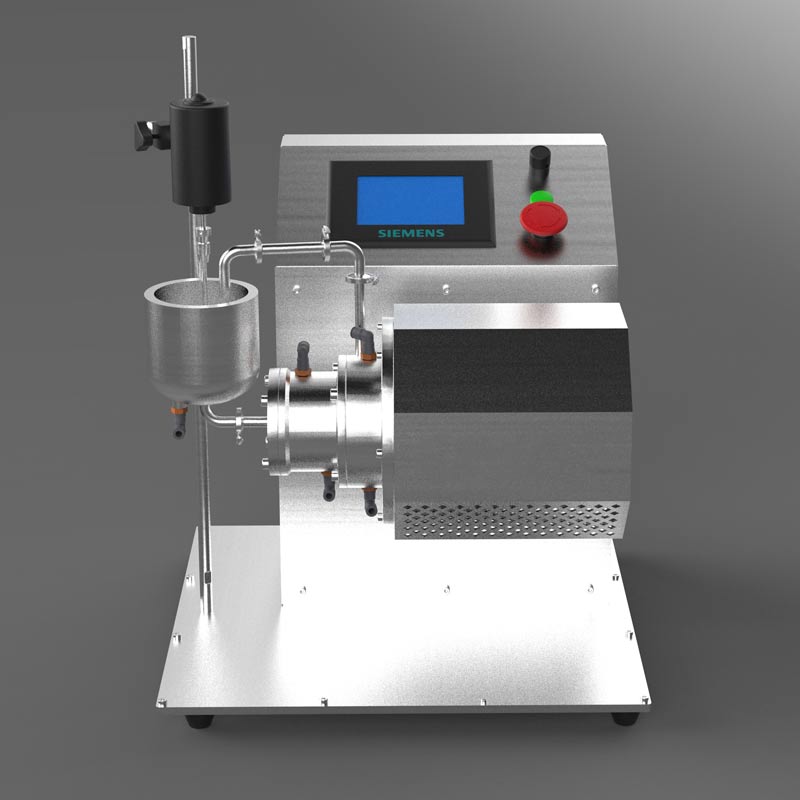
At its core, a lab horizontal bar pin nano sand mill is a specialized wet grinding and dispersing machine used in research laboratories and small-scale production to reduce particle size down to the nanometer range. It employs a horizontal grinding chamber filled with small grinding media (e.g., zirconia beads) and a rotor equipped with bar pins that agitate the media at high speed. The intense shear, impact, and friction forces generated by this mechanism effectively deagglomerate and disperse solid particles in liquid slurries, making it an indispensable tool for developing advanced materials such as battery electrodes, electronic ceramics, nano-inks, and high-performance coatings.
Core Function and Working Principle
The lab horizontal bar pin nano sand mill transforms a coarse suspension into a stable, homogeneous nano-dispersion. The key components include a cylindrical grinding chamber, a rotor with bar pins, a feeding pump, a separation system, and a cooling jacket.
In operation, the pre-mixed slurry is pumped into the grinding chamber which is partially filled with grinding beads (typically 0.1–0.3 mm in diameter). The rotor rotates at high speed (line speed up to 12–15 m/s), causing the bar pins to agitate the beads vigorously. The beads collide with each other and with the chamber wall, creating intense shear forces that break down agglomerates and reduce primary particle size. The milled slurry passes through a dynamic or static gap separator that retains the beads while allowing the product to exit. The entire process is continuous or recirculated, enabling precise control over residence time and energy input.
Critical process parameters include rotor speed, bead size and filling ratio, feed rate, and temperature. The horizontal orientation ensures uniform bead distribution and prevents sedimentation, which is particularly important for high-viscosity or high-density slurries.
Key Components and Design Features
Bar Pin Rotor
The rotor is equipped with multiple bar pins arranged in a helical pattern, providing high kinetic energy transfer to the grinding media. This design maximizes the active grinding zone and ensures uniform energy distribution, resulting in narrow particle size distributions.
Grinding Chamber
The chamber is typically made of wear-resistant materials such as silicon carbide, zirconia, or polyurethane lining to prevent metal contamination. The internal geometry is optimized for efficient flow and heat transfer.
Separation System
A dynamic gap separator or slit filter retains beads while allowing the product to pass. This enables the use of very fine beads (down to 0.1 mm) for achieving sub-100 nm particles.
Cooling System
High-speed grinding generates significant heat. The mill is equipped with a double-walled cooling jacket, and often the rotor shaft is also cooled, ensuring stable temperature control for heat-sensitive materials like battery slurries or organic pigments.
Key Performance Indicators and Selection Criteria
When selecting a lab horizontal bar pin nano sand mill, researchers should evaluate the following factors:
- Discharge fineness: The ability to achieve target particle size (e.g., D50 < 100 nm). The mill design should allow for reproducible results.
- Grinding chamber volume: Typically from 0.3 L to 5 L for lab units, matching the batch size needed for experimental trials.
- Line speed and power: Higher line speed increases energy input but also heat generation. A variable frequency drive enables precise speed adjustment.
- Material compatibility: The chamber and rotor materials must be inert to the slurry to avoid contamination. For lithium-ion battery materials, full ceramic or polyurethane contact parts are recommended.
- Sealing system: Double mechanical seals with a pressurized barrier fluid tank prevent leakage and extend seal life, especially when using organic solvents.
- Ease of cleaning and maintenance: Quick-release clamps, removable chamber, and tool-free disassembly reduce downtime between batches.
Applications and Selection Advice
The lab horizontal bar pin nano sand mill is widely used in:
- Battery materials: Dispersion of cathode and anode active materials, conductive additives, and binder slurries for Li-ion, solid-state, and next-generation batteries.
- Electronic ceramics: Grinding of MLCC powders, ceramic inks, and piezoelectric materials.
- Inks and pigments: Nano-dispersion of organic pigments, carbon black, and quantum dots for printing inks, e-paper, and display applications.
- Pharmaceuticals and cosmetics: Wet milling of active pharmaceutical ingredients (APIs) and sunscreen nanopigments.
- Advanced coatings: Preparation of functional coatings with precise optical or mechanical properties.
For researchers aiming to scale up from lab to production, it is crucial to select a lab mill that is geometrically similar to the production unit. TENCAN's lab horizontal bar pin nano sand mill is designed with the same flow field and mechanical structure as its production-type sand mills, ensuring direct transfer of process parameters. Always test with your actual material to verify the mill's performance and identify optimal operating conditions.
References
Related Products
Get In Touch
Our professional team will reply to you within one business day. Please feel free to contact us!