

What is a Corundum Grinding Ball? A High-Performance Grinding Media for Ball Mills and Powder Processing
What is a Corundum Grinding Ball?
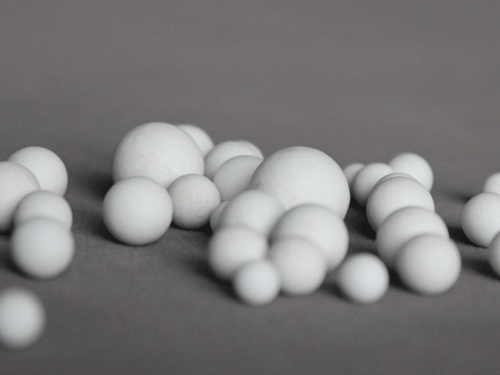
From the core, a corundum grinding ball is a specialized grinding media made primarily from high-purity alumina (Al₂O₃). Industries such as ceramics, mining, chemical processing, and refractories use it to crush and grind solid materials into fine powders inside ball mills, vibration mills, and sand mills. These balls are known for their high density, extreme hardness, and low wear rate, making them a cost-effective choice for demanding milling operations.
Core Function and Working Principle
The basic function of a corundum grinding ball is to transfer kinetic energy from the mill to the material being ground. When the mill rotates, the balls are lifted and then cascade or cataract, generating impact and attrition forces that fracture and grind the particles. The high density of corundum balls (typically 3.65–3.68 g/cm³ for high-alumina types) provides greater impact energy compared to lower-density media, shortening the milling cycle.
Key working parameters include ball size, mill speed, ball-to-material ratio, and grinding time. Larger balls deliver stronger impact for coarse grinding, while smaller balls offer more surface area for fine grinding. The corundum material itself is chemically inert, meaning it does not contaminate the product, which is critical for applications in pharmaceuticals, electronics, and high-purity ceramics.
Main Types and Classification
By Alumina Content
- High Alumina Grinding Balls (Al₂O₃≥92%): Bulk density 3.65–3.68 g/cm³, Mohs hardness 9, low abrasion loss (≤0.011%). Ideal for high-wear conditions like ceramic glaze grinding and mineral processing.
- Medium Alumina Grinding Balls (Al₂O₃ 65–75%): Bulk density ~2.93 g/cm³, slightly lower wear resistance but more economical. Used in less demanding applications such as building materials.
- Carbonized Alumina Grinding Balls (Al₂O₃ 60–70%): Ash-black color, density 2.8–2.9 g/cm³, added carbon for improved thermal shock resistance. Often used in refractory and high-temperature environments.
By Manufacturing Process
- Isostatic Pressing: Produces balls in larger sizes (D40–D70 mm) with uniform density and minimal internal stress. Suitable for heavy-duty ball mills.
- Roll Forming: Produces balls from D1 to D50 mm with smooth surface and tight dimensional tolerance. Ideal for sand mills and vibration mills where precision is required.
Key Performance Indicators and Selection Criteria
When selecting corundum grinding balls, consider the following factors:
- Density: Higher density means higher impact energy, but also higher mill load. Match density to the mill's power capacity.
- Hardness: Mohs 9 (corundum) ensures long service life, but for extremely abrasive materials, zirconia or tungsten carbide may be alternatives.
- Abrasion Loss: High-alumina balls have abrasion loss below 0.01%, meaning less contamination and longer replacement intervals.
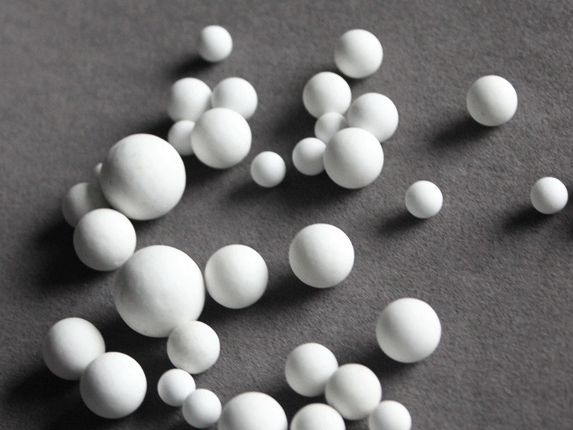
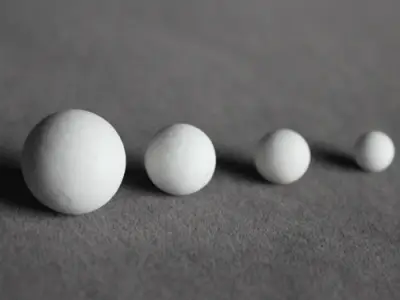
- Size Range: Available from 1 mm to 70 mm; choose ball size based on feed particle size and target fineness.
- Thermal Properties: Corundum balls can withstand high temperatures (up to 1650°C), making them suitable for calcination and heat storage applications.
- Purity: For contamination-sensitive processes, select high-alumina (≥99% Al₂O₃) balls.
Application Areas and Selection Advice
Corundum grinding balls are widely used in:
- Ceramics: Grinding of glazes, ceramic pigments, and sanitary ware. High-alumina balls are preferred for minimal contamination.
- Mining and Minerals: For grinding ores like bauxite, kaolin, and quartz. Use medium-alumina balls for cost efficiency.
- Paints and Coatings: Dispersion of pigments and fillers in sand mills. Roll-formed balls offer better surface finish.
- Refractories: As heat storage media in regenerators and hot blast stoves, where carbonized alumina balls provide thermal shock resistance.
- Petrochemicals: As catalyst support balls or desiccant due to their chemical inertness and high surface area.
For general-purpose grinding in ball mills, high-alumina isostatic-pressed balls (D20–D50 mm) offer the best balance of wear life and cost. For fine grinding in sand mills, roll-formed small balls (D1–D5 mm) are recommended. Always consult the manufacturer's specifications to match the product to your mill's operating conditions.
References
Related Products
Get In Touch
Our professional team will reply to you within one business day. Please feel free to contact us!