

What is Corundum Grinding Ball? A High-Hardness Ceramic Grinding Media for Contamination-Free Milling in Ball Mills
What is Corundum Grinding Ball? A High-Hardness Ceramic Grinding Media for Contamination-Free Milling
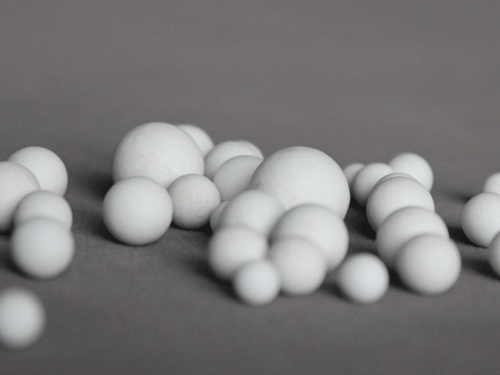
From the core, a corundum grinding ball is a professional grinding media made from high-purity alumina (α-Al₂O₃, also known as corundum), used in ball mills, planetary ball mills, and other grinding equipment to reduce particle size of materials while minimizing contamination. It is engineered to provide extreme hardness, high wear resistance, and excellent chemical stability, making it the preferred choice for grinding brittle materials like vitreous silica, glass, ceramics, and advanced oxides where iron contamination from steel balls would be unacceptable.
Core Function and Working Principle
The primary function of corundum grinding balls is to transfer kinetic energy from the mill's rotating drum or planetary disc to the material being ground. When the mill rotates, the balls are lifted and cascaded, creating impact and attrition forces that fracture and pulverize the feed material. The high density (3.70–3.76 g/cm³) and extreme hardness (Mohs hardness 9) of corundum balls ensure efficient grinding with minimal wear.
Key process parameters that influence grinding efficiency include ball diameter (typically 10–20 mm for lab mills), ball-to-powder weight ratio, mill speed, and grinding time. For example, in wet grinding of vitreous silica, a charge ratio of 1:1 (silica to corundum balls) and a 23-hour milling cycle can produce a suspension with density 1.81 g/cm³ and a residue of only 0.6% on a 63 μm sieve. The corundum balls' own wear rate is extremely low, maintaining the purity of the final product.
Key Properties and Manufacturing Technology
Corundum grinding balls are manufactured by pressing and sintering high-purity alumina powder at temperatures above 1700°C, resulting in a dense, non-porous structure. The main properties include:
- Chemical composition: Al₂O₃ ≥ 99% (typically 99.5% or higher), with very low Fe₂O₃, SiO₂, and Na₂O impurities.
- Hardness: Mohs 9, second only to diamond.
- Density: 3.70–3.76 g/cm³, providing sufficient mass for effective impact grinding.
- Wear resistance: Significantly higher than steel, agate, or glass media under identical conditions.
- Chemical inertness: Resistant to acids, alkalis, and organic solvents, making it suitable for wet grinding in corrosive environments.
Key Performance Indicators and Selection Guide
When selecting corundum grinding balls, consider the following specifications:
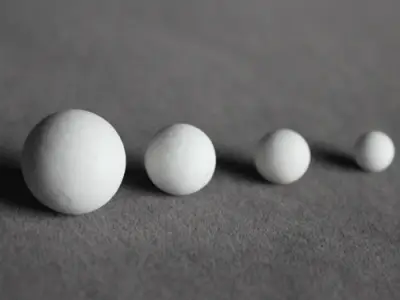
- Diameter range: Typically 1 mm to 20 mm; smaller balls (1–5 mm) are used for fine grinding, larger balls (10–20 mm) for coarse grinding or high-energy milling.
- Sphericity and surface finish: High-quality balls have < 0.5 mm deviation from spherical shape and a smooth surface to reduce wear on the mill liner.
- Crushing strength: Should exceed 2000 N for 10 mm balls to prevent breakage during high-energy milling.
- Package and quantity: Available in 100 g, 500 g, 1 kg, or custom packages; typical bulk density is about 2.0–2.2 g/cm³.
Compared to other grinding media, corundum balls offer a unique balance of hardness, purity, and cost-effectiveness. For example, zirconia grinding balls have higher density (5.6 g/cm³) and better toughness, but are more expensive. 304 stainless steel grinding balls are cheaper but can introduce iron contamination. For applications demanding absolute purity, corundum is the preferred choice.
Application Fields and Selection Advice
Corundum grinding balls are widely used in:
- Ceramics and glass: Grinding vitreous silica, alumina, quartz, feldspar, and porcelain.
- Advanced materials: Milling piezoelectric ceramics, ferrites, optical glass, and refractory materials.
- Chemical and pharmaceutical: Grinding pigments, dyes, catalysts, and active pharmaceutical ingredients.
- Laboratory R&D: In planetary ball mills, vibratory mills, and rolling ball mills for sample preparation.
For small-scale lab work, 2–5 mm corundum balls are recommended for planetary ball mills (e.g., corundum grinding ball). For production-scale ball mills, 10–20 mm balls are common. If you need to avoid any metallic contamination, corundum balls are the best choice; for extremely high-energy milling, consider tungsten carbide mill balls.
References
Product page: Corundum grinding ball
Related Products
Get In Touch
Our professional team will reply to you within one business day. Please feel free to contact us!