

What Is a Corundum Grinding Ball? A Hard Ceramic Media for Fine Powder Grinding
What Is a Corundum Grinding Ball?
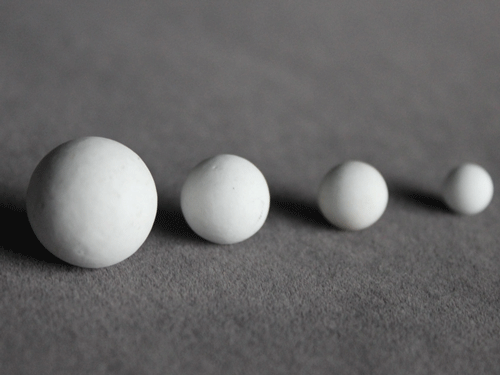
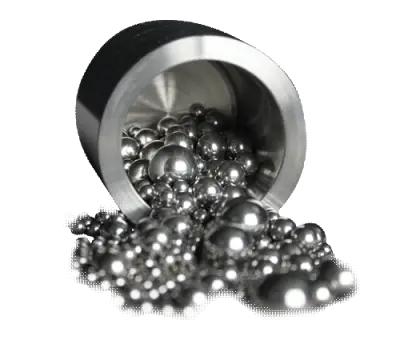
At its core, a corundum grinding ball is a dense ceramic grinding medium made from fused alumina (Al2O3), used inside mills to turn coarse feed into fine or ultra-fine powder. Corundum ranks about 9 on the Mohs scale, so the balls hold their shape far longer than steel or glass media, while their chemical inertness keeps the milled powder free of metallic contamination.
How a Corundum Grinding Ball Works
From Coarse Feed to Fine Powder
Inside a rotating mill jar, the media is lifted by the wall and then cascades back onto the material. Each ball delivers impact energy that fractures brittle particles, while the sliding contact between neighbouring balls adds shear and friction that grind the fragments finer. Feed of a few millimetres can be reduced to tens of microns, or even to sub-micron size in high-energy planetary mills.
Parameters That Control the Result
Ball size and density set the impact energy, and smaller balls create more contact points, which usually gives a finer product. Rotation speed and milling time decide how often the media strikes the powder. The ball-to-powder ratio, often 5:1 to 20:1, fixes how much energy each particle receives, while the jar filling level, typically 30–50%, affects both efficiency and media wear.
Main Types of Corundum Grinding Media
Grades by Alumina Content
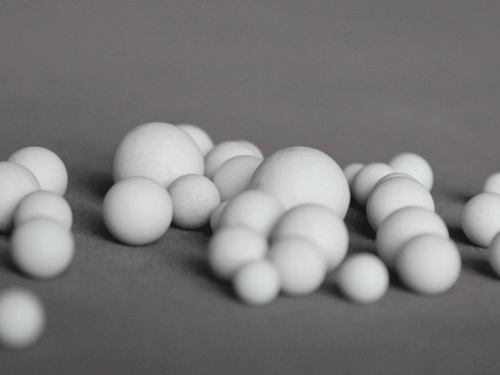
Corundum balls are commonly graded by alumina purity. Standard grades of about 92–95% Al2O3 balance price and wear life for ceramics, glazes, pigments and mineral powders. High-purity grades of 99% or more are chosen where contamination must stay minimal, such as electronic ceramics, phosphors and battery materials.
Sizes and Shapes
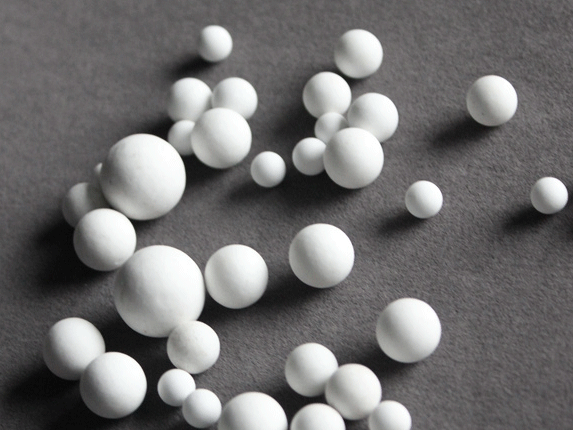
Sizes normally range from about 1 mm to 60 mm. Small balls suit fine grinding in planetary and stirred mills, while larger balls are used in drum mills that must break coarse feed first. Cylinders and other shapes are also available for mills that rely on line contact rather than point contact.
Key Performance Indicators and Selection Points
- Hardness and wear rate – media consumed per tonne of product.
- Density – higher density means more impact energy and faster grinding.
- Chemical purity – critical when iron contamination is unacceptable.
- Size grading – a narrow range keeps results repeatable.
- Mill compatibility – match ball size to jar material, speed and load.
Applications and Selection Advice
Corundum media is used in ceramic bodies and glazes, mineral and pigment grinding, refractories and abrasives, and increasingly in battery and electronic ceramic powders where low contamination matters. For laboratory planetary or jar mills, small high-purity balls are usually the best choice, while production drum mills handling coarse minerals benefit from larger standard-grade balls that lower the cost per tonne.
References
Product data and ordering information are available on the Corundum grinding ball product page.
Related Products
Get In Touch
Our professional team will reply to you within one business day. Please feel free to contact us!