

What is a Corundum Grinding Ball? A High-Purity Grinding Media for Hard and Abrasive Materials
What is a Corundum Grinding Ball?
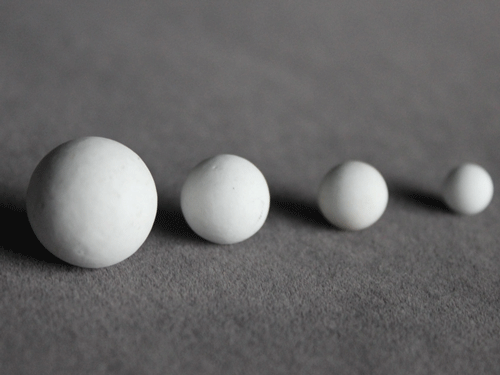
At its core, a corundum grinding ball is a high-purity alumina (Al₂O₃) ceramic ball used as grinding media in planetary ball mills, drum ball mills, and other milling equipment. It is specifically designed for grinding hard, brittle materials such as ceramics, minerals, and electronic components while maintaining chemical purity and minimizing wear contamination. The term "corundum" refers to crystalline aluminum oxide, which is one of the hardest naturally occurring minerals, second only to diamond in hardness. In industrial grinding, synthetic corundum balls offer exceptional wear resistance and thermal stability, making them indispensable for laboratories and production lines that demand consistent, contamination-free results.
Core Function and Working Principle
Corundum grinding balls function by transferring kinetic energy from the mill's motion to the material being ground. In a planetary ball mill, the balls undergo complex planetary motion—simultaneous revolution around the central axis and rotation around their own axis. This generates high-impact forces, shear forces, and friction between balls, material, and mill jar walls, effectively reducing particle size. The high density (typically 3.6–3.9 g/cm³) and hardness (Mohs 9) of corundum ensure efficient grinding of even the toughest materials. Key parameters affecting performance include ball size, ball-to-material ratio, milling speed, and time. For example, using smaller balls (e.g., 3–5 mm) is ideal for achieving submicron particle sizes, while larger balls (10–20 mm) are better for coarse grinding. The wear rate of corundum balls is extremely low, often <0.1% per hour under normal conditions, which minimizes contamination of the final product.
Key Characteristics and Material Comparison
Corundum grinding balls belong to the family of ceramic grinding media. Compared to other common media:
- Zirconia grinding balls: Higher density (6.0 g/cm³) and toughness, suitable for ultra-fine grinding but more expensive. Zirconia balls are preferred for nanoscale grinding of hard materials like zirconia itself.
- Agate balls: Excellent chemical inertness, ideal for trace analysis, but lower hardness and density. Agate balls are best for contamination-sensitive applications like geological sample preparation.
- Stainless steel balls: Lower cost, but may introduce metal contamination. 304 stainless steel balls are used for general metal grinding where purity is not critical.
- Tungsten carbide balls: Extremely hard and dense (14.8 g/cm³), used for very hard materials like cemented carbides, but high cost and potential cobalt contamination. Tungsten carbide mill balls are reserved for specialized applications.
Corundum balls offer a balance of high hardness, good wear resistance, and reasonable cost, making them a popular choice for general-purpose hard material grinding. They are available in purity grades from 95% to 99.7% Al₂O₃, with higher purity providing lower contamination but slightly higher cost.
Key Performance Indicators and Selection Criteria
When selecting corundum grinding balls, consider the following factors:
- Purity: Typically 95%–99.7% Al₂O₃; higher purity reduces contamination. For electronic ceramics or battery materials, 99.7% purity is recommended.
- Density: 3.6–3.9 g/cm³; higher density increases impact energy and grinding efficiency.
- Hardness: Mohs 9, ensuring long service life and low wear rate.
- Size range: Available in diameters from 1 mm to 30 mm or more; smaller balls for finer grinding, larger balls for coarse grinding. A common recommendation is to use balls 1/3 the size of the mill jar diameter.
- Wear rate: Low wear (<0.1% per hour) extends media life and reduces contamination. High-quality corundum balls can be used for hundreds of hours without significant degradation.
- Batch consistency: Uniform size, shape, and density are essential for reproducible milling results. Reputable suppliers provide tight tolerances on diameter (±0.1 mm) and sphericity.
- Compatibility with mill type: Corundum balls work well in planetary ball mills, drum ball mills, and vibration mills, but must be matched to the jar material to avoid excessive wear. For example, using corundum balls in a corundum jar minimizes cross-contamination.
Applications and Selection Advice
Corundum grinding balls are widely used in:
- Ceramics industry: grinding of alumina, zirconia, and other ceramic powders for structural ceramics, electronic ceramics, and refractory materials.
- Mineral processing: grinding of ores, minerals, and geological samples for mining and metallurgical analysis.
- Electronics: preparation of electronic ceramic powders such as MLCC, PTC, NTC, and piezoelectric ceramics, where high purity is critical.
- Battery materials: grinding of cathode (e.g., LiCoO₂, LiFePO₄) and anode materials to achieve uniform particle size and high tap density.
- Research laboratories: material synthesis, nanoparticle preparation, and sample homogenization in universities and R&D centers.
For high-purity applications, choose 99.7% alumina corundum balls. For general grinding, 95% alumina is sufficient. Always match ball size to the desired final particle size and mill type. For example, a planetary ball mill with a 500 mL jar typically uses 10–20 mm balls for coarse grinding and 3–5 mm balls for fine grinding. When in doubt, consult the mill manufacturer's recommendations or run a small-scale test to determine optimal ball-to-material ratio and milling time.
References
Related Products
Get In Touch
Our professional team will reply to you within one business day. Please feel free to contact us!