
What is a Jar Mill with 8 Working Stations? A High-Throughput Grinding Machine for Multi-Sample Batch Processing

What is a Jar Mill with 8 Working Stations?
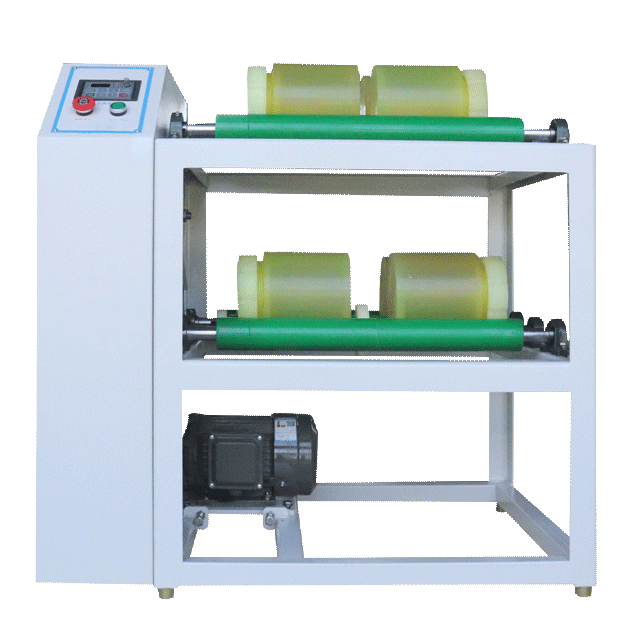
At its core, a jar mill with 8 working stations is a specialized roll ball mill designed for simultaneous grinding of up to eight different samples under identical conditions. Laboratories and small-scale production facilities use it to efficiently process multiple batches of powders, ceramics, chemicals, or other granular materials without cross-contamination. The equipment relies on a set of rotating rollers that drive individual milling jars, enabling high-throughput, reproducible size reduction and mixing.
Core Function and Working Principle
The jar mill with 8 working stations transforms coarse materials into fine powders through a simple yet effective rolling mechanism. Each milling jar – typically made of ceramic, stainless steel, or nylon – is placed on a pair of parallel rollers that rotate at a controlled speed. As the rollers turn, the jar rotates, causing the grinding media (balls) and the material inside to tumble, collide, and rub against each other. This action gradually breaks down particles via impact and attrition.
Key process parameters include roller rotation speed (adjustable via frequency converter), grinding time, jar size, and media type. The mill can operate in either dry or wet mode, and the final particle size can be tuned down to the micron level. The 8-station design allows users to run multiple samples concurrently, significantly increasing lab productivity while maintaining consistent processing conditions across all stations.
Core Components and Key Technology
This jar mill consists of several critical parts:
- Roller bed: A set of 8 pairs of rollers, each driven by a geared motor. The rollers are precision-machined to ensure smooth rotation and minimal vibration.
- Control system: A digital touch panel or knob that allows setting rotation speed, timer, and direction. Many models include programmable cycles and reverse rotation to prevent material caking.
- Milling jars: Interchangeable containers made from various materials (e.g., alumina, zirconia, PTFE, nylon) to suit different material properties and avoid contamination. The jars are sealed with lids to prevent dust leakage.
- Safety features: Emergency stop buttons, protective covers, and overload protection ensure safe operation.
The 8-station configuration is a major advantage over single-station or two-station mills, as it enables parallel processing of up to eight samples, ideal for quality control, R&D, and batch consistency testing.
Key Performance Indicators and Selection Criteria
When selecting a jar mill with 8 working stations, consider the following parameters:
- Throughput capacity: Each station typically accommodates jars from 0.5L to 2L, so total batch volume can reach 8×2L = 16L. Models with larger jars are available.
- Speed range: Typical roller speed ranges from 50 to 400 RPM. Variable speed control allows fine-tuning for different materials.
- Grinding fineness: Achievable particle size depends on material hardness, grinding time, and media selection. Most models can reach D50 below 10 microns.
- Automation: Look for programmable timers, digital display, and optional data logging for repeatable results.
- Noise level: Modern mills are designed to operate at low noise (typically <60 dB) for comfortable lab use.
- Maintenance: Easy access to rollers and motors for cleaning and replacement. Rollers should be made of wear-resistant materials.
Application Areas and Selection Advice
The jar mill with 8 working stations is widely used in industries such as:
- Ceramics and glass: Grinding raw materials for glazes, pigments, and frits.
- Mining and minerals: Preparing ore samples for analysis.
- Pharmaceuticals and cosmetics: Fine grinding of active ingredients or excipients.
- Battery materials: Mixing and milling electrode powders.
- Universities and research institutes: Multi-sample processing for material development.
For users who need to process multiple samples simultaneously, the 8-station jar mill is the ideal choice. If throughput is lower, consider a two-station or four-station model. For very fine grinding (<1 micron), a lab roll ball mill with higher speed options may be required.
References
- Product page: Jar Mill with 8 Working Station
- Related product: Light-duty roll ball mill
- Related product: Inner lined roll ball mill
Related Products
Get In Touch
Our professional team will reply to you within one business day. Please feel free to contact us!