
What is a 304 Stainless Steel Grinding Ball? A Durable Grinding Media for Ball Mills and Powder Processing

What is a 304 Stainless Steel Grinding Ball?
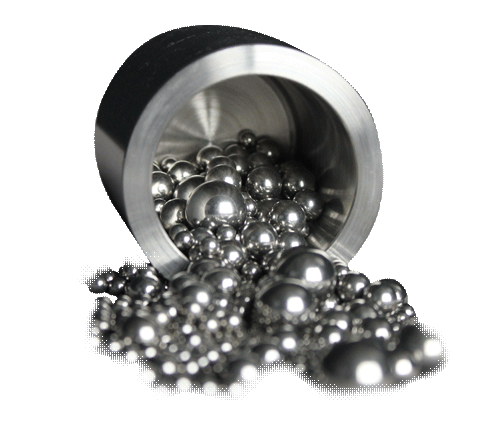
From the core, a 304 stainless steel grinding ball is a professional grinding media made from AISI304 austenitic stainless steel, used in ball mills and other grinding equipment to crush, grind, and disperse materials into fine powders. It is widely employed in industries such as food processing, pharmaceuticals, chemicals, ceramics, and laboratory research, where high corrosion resistance and low contamination are critical. These balls act as the working horses inside the mill, transferring kinetic energy to the material and achieving the desired particle size reduction.
Core Function and Working Principle
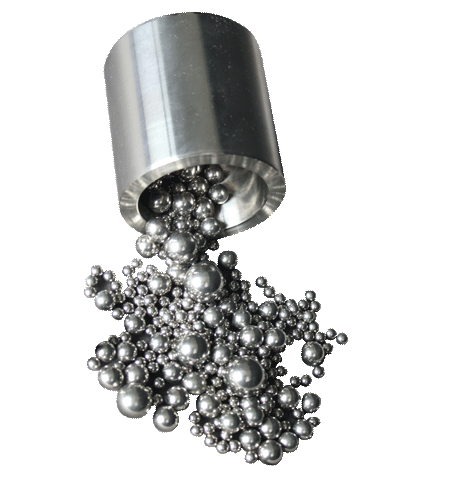
The basic function of a 304 stainless steel grinding ball is to transform coarse or lumpy materials into fine or ultrafine powders through impact and attrition. When placed inside a rotating mill chamber (such as a planetary ball mill or drum ball mill), the balls are lifted and then cascaded or thrown across the material. The kinetic energy from the collisions fractures the particles, while the rubbing action between balls and material further reduces particle size.
Key parameters affecting grinding efficiency include ball size, ball-to-material ratio, rotation speed, and grinding time. For example, smaller balls (e.g., 0.5mm to 5mm) are used for ultrafine grinding, while larger balls (up to 250mm) are suitable for coarse crushing. The material's hardness and toughness also influence the choice of ball size and mill settings. The 304 stainless steel composition ensures that the balls themselves do not introduce harmful contaminants, making them ideal for food-grade or pharmaceutical applications.
Core Components and Key Technical Features
As a homogeneous product, the 304 stainless steel grinding ball's key features lie in its material composition and manufacturing precision. The material is AISI304 (equivalent to 0Cr18Ni9 in China, SUS304 in Japan, 1.4301 in Germany), offering a hardness of HRC 25-39, excellent corrosion resistance, and good wear resistance. The balls are available in precision grades from G10 to G1000, where G10 represents the highest sphericity and dimensional tolerance, suitable for high-precision bearings, while G1000 is adequate for general grinding applications.
Surface finish options include high polished, matte, or as-rolled, depending on the specific application. The balls are produced through advanced forging or rolling processes, followed by heat treatment and grinding to achieve the required roundness. The factory can produce sizes from 0.5mm to 250mm, with customization available for special alloys or surface treatments. For instance, 304 stainless steel grinding balls are also used in vacuum grinding jars to prevent oxidation of sensitive materials.
Key Performance Indicators and Selection Guide
When selecting 304 stainless steel grinding balls, users should consider the following metrics:
- Size and Grade: Choose ball diameter based on target particle size. For planetary ball mills, common sizes are 3mm, 5mm, 10mm, and 20mm. Precision grade should match the application: G10-G100 for high-end bearings or precision grinding, G500-G1000 for general milling.
- Hardness and Wear Resistance: With a hardness of HRC 25-39, these balls are suitable for most non-abrasive materials. For extremely hard materials (e.g., zirconia, tungsten carbide), consider zirconia grinding balls or tungsten carbide mill balls.
- Corrosion Resistance: 304 stainless steel offers good resistance to acidic and alkaline environments, but for severe chloride conditions, 316L is recommended. For food and pharmaceutical use, ensure the balls meet FDA or equivalent standards.
- Contamination Control: The low wear rate and non-toxic nature of 304 stainless steel minimize product contamination, making it ideal for sensitive materials.
- Cost Efficiency: Compared to ceramic or carbide balls, 304 stainless steel balls offer a balance of performance and affordability, especially for large-scale industrial grinding.
Application Fields and Selection Advice
304 stainless steel grinding balls are widely used in laboratory milling, food processing, chemical synthesis, pharmaceutical formulation, and ceramic manufacturing. They are the preferred choice for grinding materials that require high purity and corrosion resistance, such as cocoa beans, pigments, herbal extracts, and battery materials. For users in the food industry, these balls are often used in stainless steel grinding jars to avoid rust and contamination. For high-throughput industrial applications, larger sizes (e.g., 20mm-150mm) are recommended for drum ball mills or planetary ball mills.
When selecting, always match the ball material to the mill liner material to avoid galvanic corrosion. For instance, pairing 304 stainless steel balls with a stainless steel mill jar is ideal. If you need higher hardness or lower density, consider agate balls or corundum grinding balls.
References
Related Products
Get In Touch
Our professional team will reply to you within one business day. Please feel free to contact us!