

What is a Light-duty Roll Ball Mill? A Compact Milling Solution for Lab-Scale Powder Grinding and Mixing
What is a Light-duty Roll Ball Mill?
At its core, a light-duty roll ball mill is a compact, bench-top grinding device designed for the efficient milling and mixing of small batches of powder materials in research and development settings. Laboratories and small-scale production facilities use it to reduce particle size, achieve uniform blending, and prepare slurries for advanced materials such as ceramics, chemicals, and pharmaceuticals. Unlike heavy industrial mills, this equipment features a lightweight structure, low power consumption, and flexible operation—making it ideal for routine sample preparation and process optimization.

Core Function and Working Principle
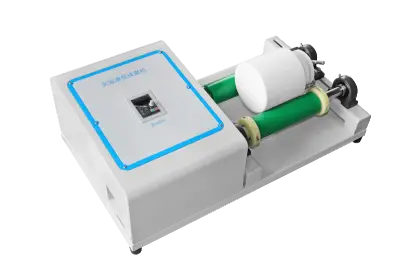
The light-duty roll ball mill transforms coarse solid particles (typically <20 mm) into fine powders with controllable particle size distribution, often down to 20–75 microns. The core mechanism is a set of rotating rollers that drive one or more milling jars. As the rollers rotate, friction between the jar surface and the rollers causes the jar to spin, lifting the grinding media (e.g., steel, ceramic, or agate balls) inside the jar. The media cascade and impact against the material, shearing and crushing it into finer particles.
Key operational parameters include the rotation speed (typically 50–410 rpm for light-duty models), the number of milling stations (from 1 to 16), and the jar volume (0.05 L to 20 L). The speed must be kept below the critical speed—where the grinding media would centrifuge against the jar wall—usually operating at 65%–75% of critical speed for optimal grinding efficiency. The user can adjust the speed and milling time to achieve the desired fineness, making this mill suitable for both dry and wet grinding processes.
Key Components and Critical Technologies
A light-duty roll ball mill consists of several essential subsystems:
- Drive System: A variable-speed motor (typically 0.32–0.75 kW) and gearbox that provide precise roller speed control. The speed range of 50–410 rpm allows adaptation to different jar sizes and material types.
- Roller Assembly: High-quality rollers (often rubber-coated or polyurethane) that grip the milling jars and transmit rotational motion. The number of rollers and their spacing determine how many jars can be run simultaneously.
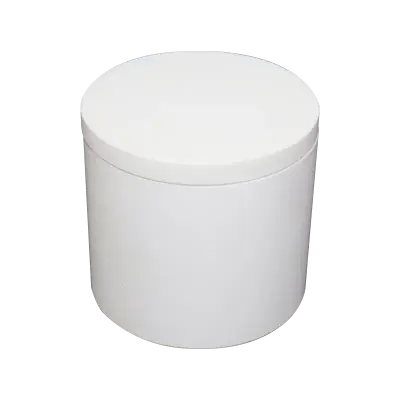
- Milling Jars: Interchangeable containers made from materials such as stainless steel, alumina, zirconia, agate, or nylon. The jar material must be chemically compatible with the sample and resistant to abrasion to avoid contamination.
- Grinding Media: Balls of various sizes (e.g., 5–20 mm diameter) and materials (steel, ceramic, agate, etc.) that provide the impact and shear forces. The media density, size, and filling ratio directly affect grinding efficiency and final particle size.
- Control Panel: Digital or analog interface for setting speed, timer, and sometimes direction reversal. Some models include programmable multi-step protocols for automated milling cycles.
The design emphasizes safety and ease of use: rubber feet reduce vibration, a transparent cover allows process observation, and emergency stop buttons are standard on newer models.
Key Performance Indicators and Selection Criteria
When selecting a light-duty roll ball mill, consider the following factors:
- Processing Capacity: The maximum jar volume per station (e.g., 0.05–20 L) and the total number of stations determine batch throughput. For small labs, 2–4 station models with 0.5–2 L jars are common.
- Particle Size Control: The mill can achieve final particle sizes down to 20 microns or finer, depending on the material, milling time, and media. Units with precise speed control (e.g., ±1 rpm) offer better reproducibility.
- Energy Efficiency: Light-duty mills consume only 0.32–0.75 kW, making them economical for intermittent use. However, for continuous operation, look for models with overload protection and efficient cooling.
- Automation: Digital timers, programmable speed profiles, and automatic stop functions enhance convenience. Some advanced models support multi-step milling with pause and reversal cycles.
- Maintenance: Easy access to rollers, bearings, and motor for cleaning and lubrication. Replaceable jar lids and seals simplify routine maintenance. The 18-month warranty offered by reputable manufacturers is a good indicator of reliability.
Application Fields and Selection Recommendations
The light-duty roll ball mill is widely used in:
- Ceramics Research: Grinding and homogenizing oxide powders (alumina, zirconia, silicon nitride) for advanced ceramics.
- Chemical Laboratories: Preparing catalyst supports, pigments, and fine chemicals.
- Pharmaceutical Development: Milling active ingredients and excipients for solid dosage forms.
- Materials Science: Mechanical alloying, nanocomposite synthesis, and milling of battery materials.
For labs with limited space and low throughput requirements, a 2-station model with 0.5–1 L jars is ideal. For medium-scale R&D or quality control, 4–8 station mills with 1–5 L jars offer better efficiency. If you need to process highly abrasive or hard materials, choose a mill with sturdy rollers and a reinforced frame, and select jars/liners made of wear-resistant materials like zirconia or tungsten carbide.
References
For more details, please visit the product page: Light-duty Roll Ball Mill.
Related Products
Get In Touch
Our professional team will reply to you within one business day. Please feel free to contact us!