
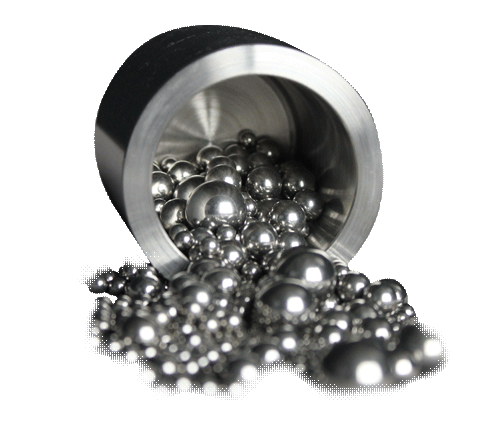
What is a 304 Stainless Steel Grinding Ball? A Corrosion-Resistant Grinding Media for Ball Mills and Pulverization Equipment

What is a 304 Stainless Steel Grinding Ball?
From the core, a 304 stainless steel grinding ball is a professional grinding media used in ball mills and other pulverization equipment to mill, mix, and disperse materials into fine powders. It is a spherical grinding medium made from AISI304 stainless steel, offering excellent corrosion resistance, moderate hardness, and good toughness. Industries such as mining, ceramics, chemicals, food processing, and pharmaceuticals use it to achieve efficient grinding while minimizing contamination from the grinding media.
Core Function and Working Principle
The primary function of a 304 stainless steel grinding ball is to convert coarse particles into fine or ultra-fine powders through impact and attrition within a ball mill. The grinding ball is placed inside a rotating mill chamber together with the material to be ground. As the mill rotates, the balls are lifted by the chamber wall and then cascade or fall, creating high-energy impacts that break the material. Additionally, the rolling and shearing actions between balls and between balls and the chamber wall provide fine grinding.
Key parameters affecting grinding efficiency include ball size, ball-to-material ratio, mill speed, and grinding time. For example, smaller balls (e.g., 0.5mm) are suitable for ultra-fine grinding, while larger balls (e.g., 20mm or more) are used for coarse grinding or breaking agglomerates. The hardness of 304 stainless steel balls (HRC 25-39) provides a balance between wear resistance and the ability to avoid excessive contamination of the product.
Types and Classification
By Size
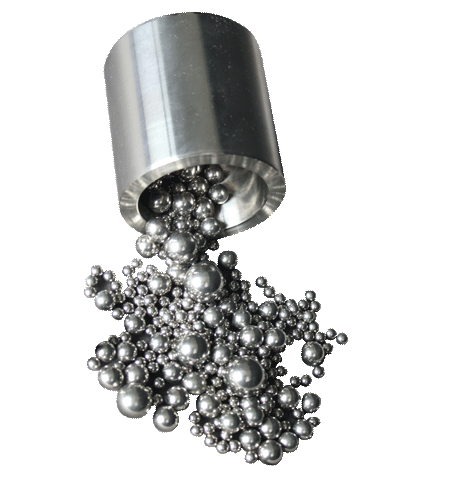
304 stainless steel grinding balls are available in a wide range of diameters from 0.5mm to 250mm. Small balls (0.5-5mm) are often used in planetary ball mills for nano-grinding, while medium balls (5-20mm) are common in laboratory and small-scale production. Large balls (20-250mm) are used in industrial drum ball mills for coarse grinding.
By Grade (Precision)
Common grades include G10, G25, G40, G60, G100, G200, G500, and G1000 according to standards like AISI. Higher grades (e.g., G10) have tighter dimensional tolerances and better sphericity, making them suitable for high-precision applications such as bearing manufacturing or critical milling processes. Lower grades (e.g., G1000) are acceptable for general grinding where cost is a priority.
By Material Variant
Besides standard 304 (AISI304), variants like 304L (low carbon) offer better corrosion resistance in welded or high-temperature environments, while 316/316L provide even higher resistance to chlorides and acids. The choice depends on the chemical environment of the grinding process.
Key Performance Indicators and Selection Criteria
Hardness and Wear Resistance
Hardness of 304 stainless steel balls typically ranges from HRC 25 to 39. Higher hardness generally improves wear life but may cause more impact on the mill lining. For abrasive materials, a balance between hardness and toughness is critical.
Size Tolerance and Sphericity
Precision grades (G10-G1000) ensure consistent ball diameter and roundness, which directly affect grinding uniformity and mill performance. Tighter tolerances are required for high-energy planetary ball mills where even slight deviations can cause imbalance.
Corrosion Resistance
304 stainless steel offers good resistance to water, atmospheric corrosion, many organic chemicals, and food environments. However, it is not suitable for strong acids like sulfuric acid. For chloride-rich environments, 316L is recommended.
Contamination Level
In sensitive applications such as pharmaceutical or electronic materials, the purity of the grinding media is crucial. 304 stainless steel balls typically introduce iron, chromium, and nickel traces. If contamination is a concern, consider using ceramic balls (e.g., zirconia) or lined stainless steel balls.
Application Fields and Selection Advice
304 stainless steel grinding balls are used in planetary ball mills, drum ball mills, stirred mills, and vibration mills across many industries:
- Mining & Minerals: Grinding ores, coal, and cement raw materials.
- Ceramics & Glass: Milling frits, glazes, and ceramic powders.
- Chemicals & Pigments: Dispersing pigments, dyes, and catalysts.
- Food & Pharmaceuticals: Grinding herbs, spices, and active ingredients (with cleanability).
- Laboratories: Sample preparation for analysis.
For general-purpose grinding with moderate cost and good corrosion resistance, 304 stainless steel balls are an excellent choice. If you need higher hardness or lower contamination, consider zirconia grinding balls or tungsten carbide mill balls. For environments requiring extreme corrosion resistance, 316L stainless steel balls are recommended.
References
Related Products
Get In Touch
Our professional team will reply to you within one business day. Please feel free to contact us!