
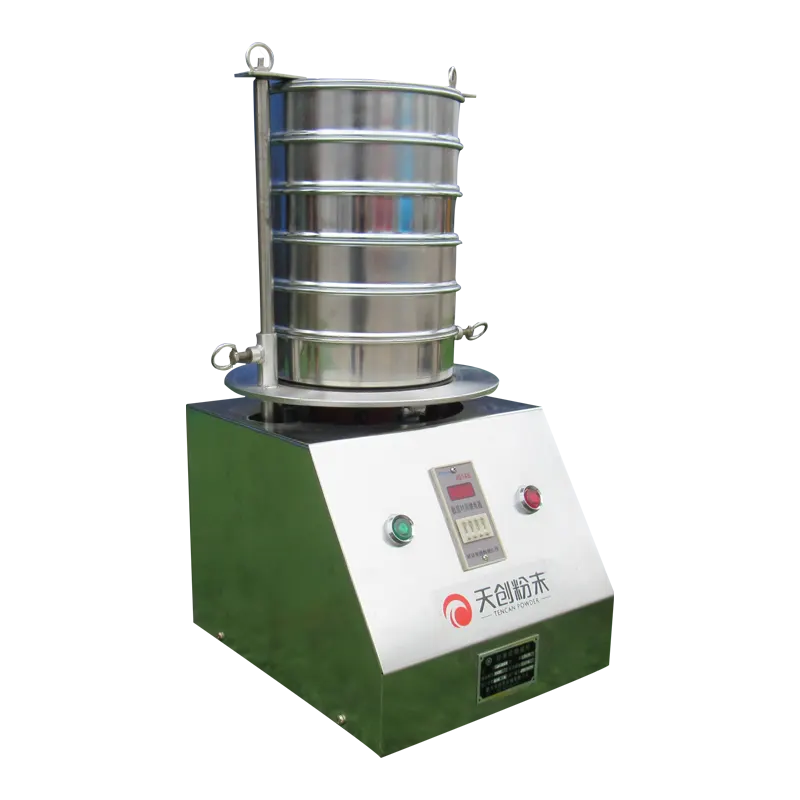
What is a Stainless Steel Vibrating Screen Machine? A Type of Sieving Equipment Used for Precision Particle Separation and Grading

What is a Stainless Steel Vibrating Screen Machine?
From the core, a stainless steel vibrating screen machine is a professional sieving equipment used in industries such as food processing, pharmaceuticals, chemicals, and mineral processing to separate materials based on particle size, shape, or density. It combines a durable stainless steel construction with a high-frequency vibrating mechanism to achieve precise classification, dewatering, or liquid-solid filtration. The machine is designed to handle both dry powders and wet slurries, making it a versatile solution for quality control and production efficiency.
Core Function and Working Principle
The primary function of the stainless steel vibrating screen machine is to transform a bulk material mixture into two or more defined particle size fractions. It achieves this by using a vibratory motor that generates a three-dimensional motion (vertical, horizontal, and inclined). The material is fed onto the screen surface, where particles smaller than the mesh openings pass through, while larger particles are retained and discharged separately.
Key working parameters include the vibration frequency, amplitude, and the angle of eccentric weights on the motor. Adjusting these parameters allows operators to control the material flow rate, screening efficiency, and the accuracy of separation. The screen mesh is easily replaceable, and the machine can be equipped with cleaning devices such as bouncing balls or ultrasonic systems to prevent blinding and ensure continuous operation.
Main Types and Configurations
Stainless steel vibrating screen machines are available in several configurations to suit different applications:
Circular Vibrating Screen
This type uses a vertical motor as the vibration source, creating a circular motion on the screen surface. It is ideal for fine powder and granular materials, offering high screening accuracy and easy mesh replacement. The circular design is commonly used in the food, chemical, and ceramic industries.
Linear Vibrating Screen
With a linear motion generated by two counter-rotating motors, this type is suitable for larger capacity and coarser screening. It handles materials with high moisture content or sticky properties, such as sand, coal, and minerals. The linear screen provides a straight-line material travel path, which improves dewatering efficiency.
Tumbler Screen
Also known as a gyratory screen, the tumbler screen mimics the gentle motion of hand sieving. It is designed for precise classification of fine powders and fragile materials, such as pharmaceutical powders, flour, and spices. The low-energy motion reduces particle degradation while achieving high throughput.
Key Performance Indicators and Selection Criteria
When selecting a stainless steel vibrating screen machine, consider the following factors:
- Processing Capacity: The throughput ranges from a few kilograms per hour for laboratory models to several tons per hour for industrial units. Choose a model that matches your production scale.
- Separation Precision: Mesh size can be as fine as 500 mesh (25 microns) for ultra-fine powder, or as coarse as 2 inches for large particles. The machine's design must ensure consistent accuracy.
- Material of Construction: Full stainless steel (304 or 316L) is preferred for corrosion resistance and hygiene. Contact parts should be smooth and easy to clean.
- Cleaning and Maintenance: Look for quick-release screen frames, tool-less mesh changes, and integrated cleaning systems (e.g., bouncing balls, ultrasonic) to minimize downtime.
- Automation: Modern machines offer variable speed drives, programmable logic controllers, and remote monitoring, allowing for consistent operation and easy integration into existing production lines.
Application Areas and Selection Advice
Stainless steel vibrating screen machines are widely used in:
- Food & Beverage: Flour, sugar, milk powder, tea, spices, and fruit juice filtration.
- Pharmaceuticals: API powders, granules, and tablet mix de-agglomeration.
- Chemicals & Minerals: Pigments, resins, catalysts, quartz sand, and abrasive powders.
- Wastewater Treatment: Solid-liquid separation of sludge and industrial effluents.
For laboratory or small-scale R&D, a small laboratory screening machine is recommended. For medium to large production, the standard stainless steel vibrating screen machine or a 3D rotary vibrating screen offers the best balance of capacity and precision. Always verify the material compatibility, mesh size, and whether the machine meets relevant industry standards (e.g., FDA, GMP) before purchase.
Related Products
Get In Touch
Our professional team will reply to you within one business day. Please feel free to contact us!