Contact Us
Choose your preferred way to contact our team
Free Quote
Fill out the form to obtain prices and information
Send an Email
Share your needs and concerns
+86 19021571516

Why choose us
Simple ordering, reliable quality, professional support.
Easy Process
Clear communication from product selection to delivery, so your team can move faster.
Quality Assurance
Stable manufacturing, strict inspection, and support for configuration requirements.
Expert Support
Application-oriented advice for planetary ball milling, sample preparation, and scale-up needs.
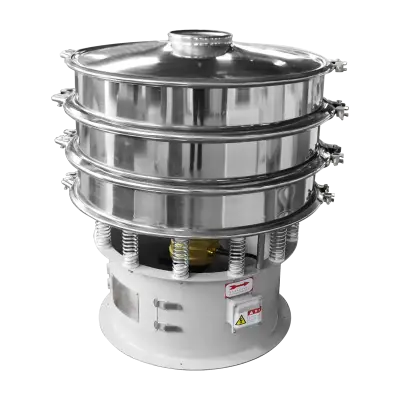
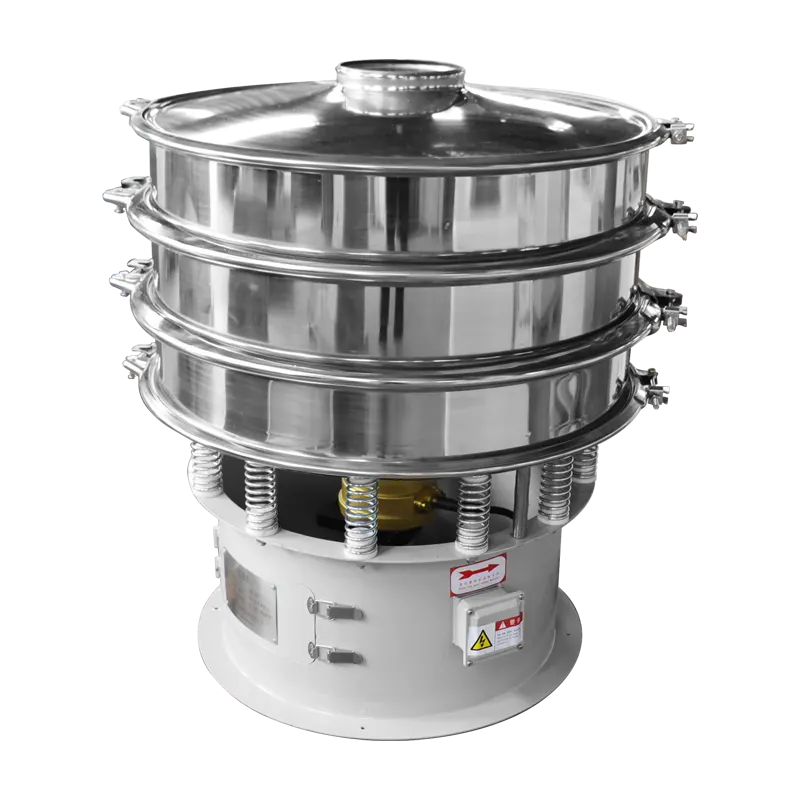
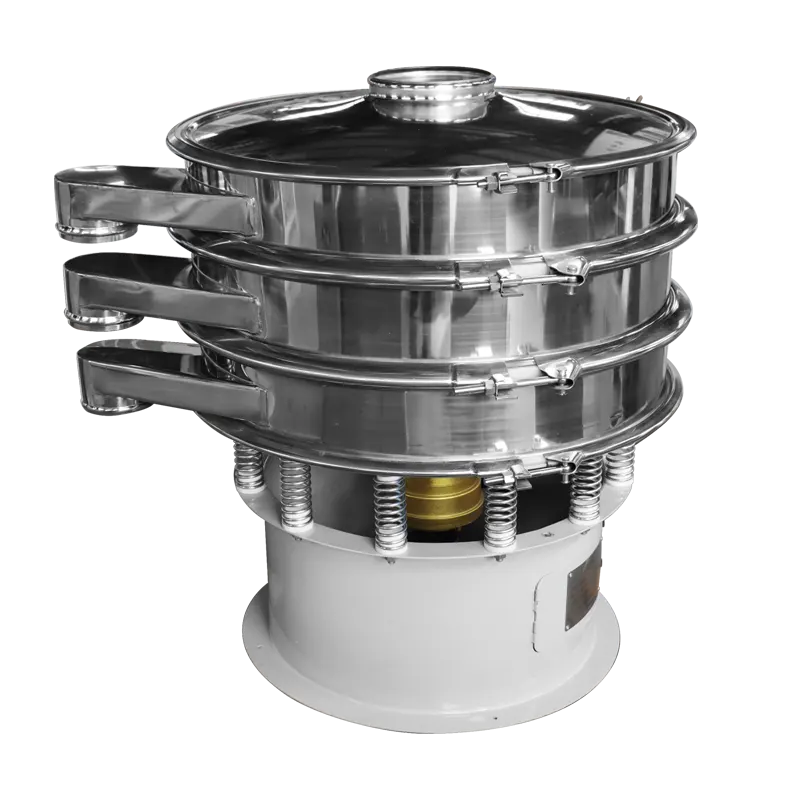
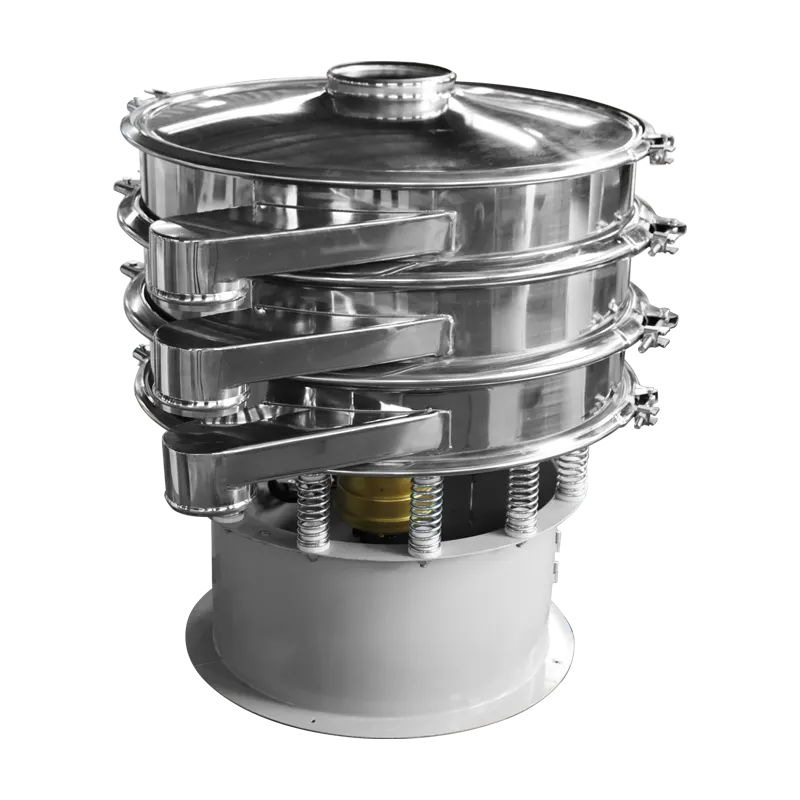
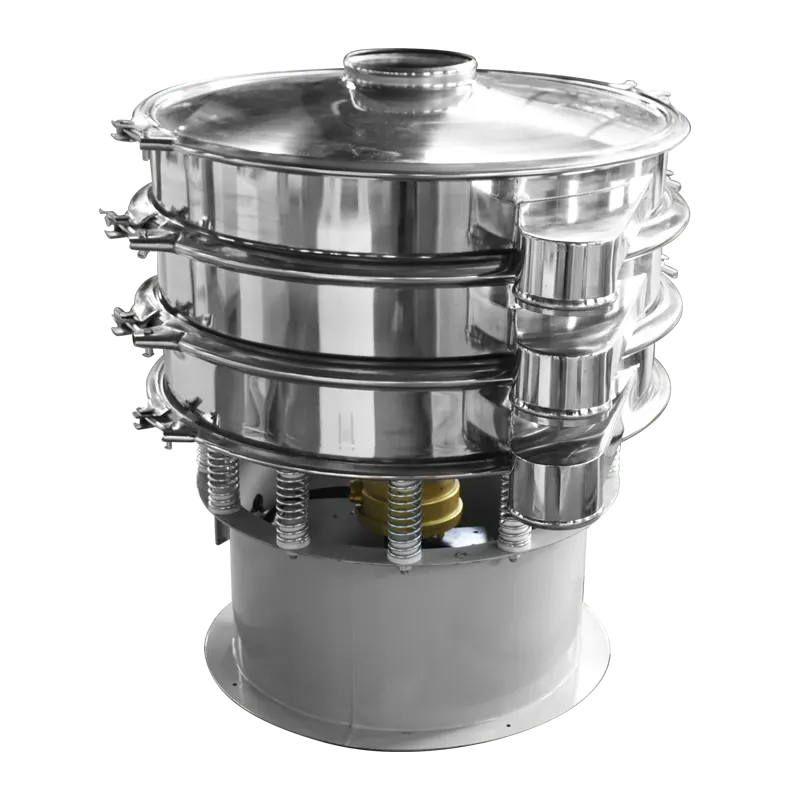
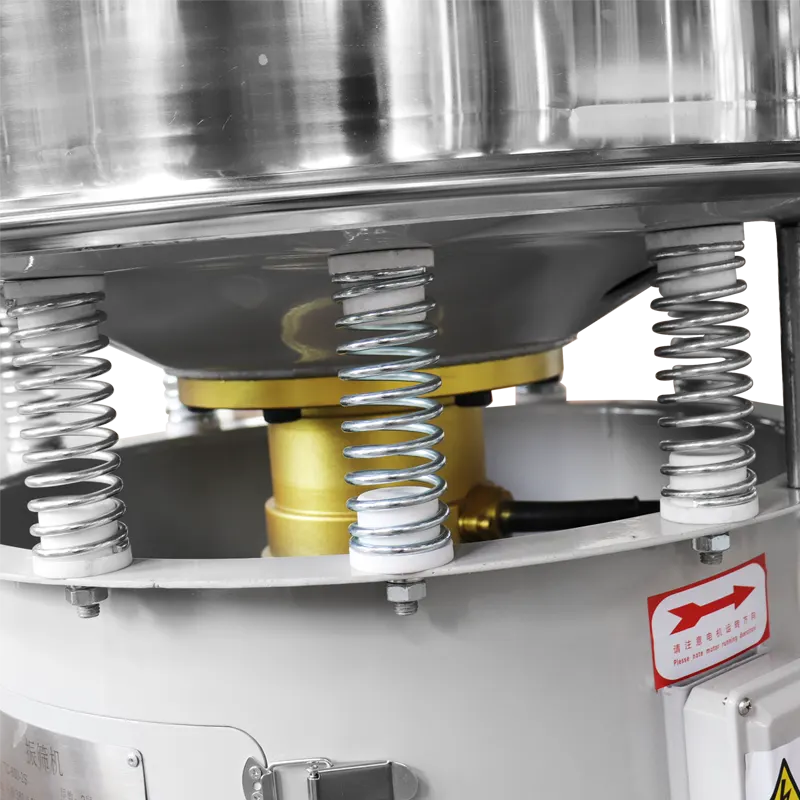
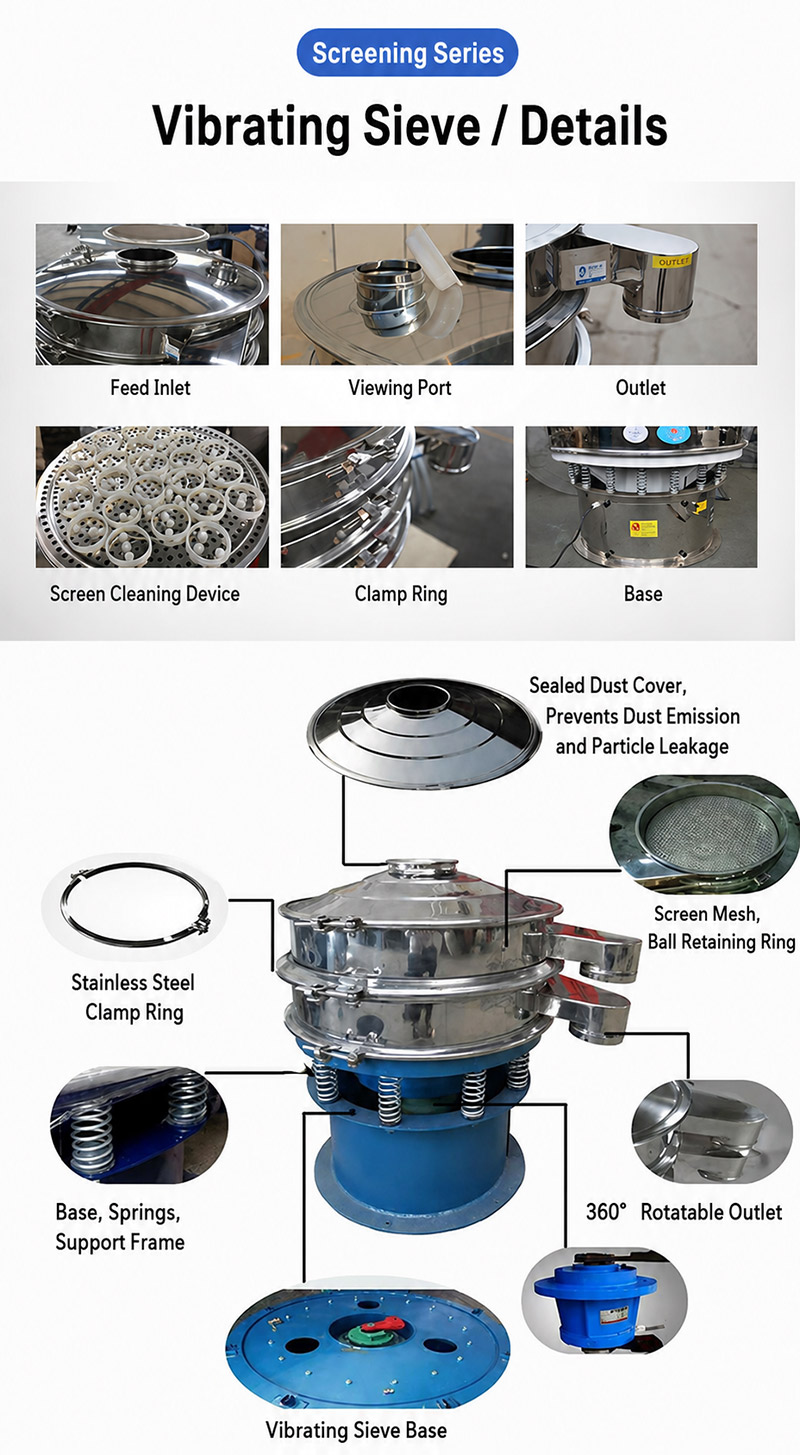
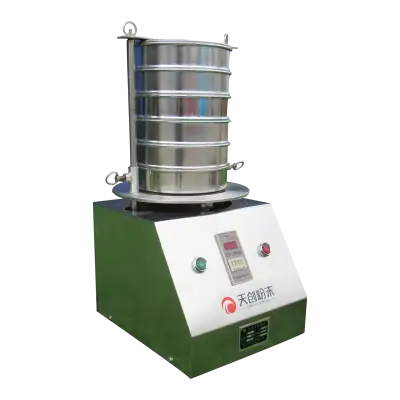
The three-dimensional rotary vibrating screen uses an upright motor as the excitation source. Eccentric weights are installed on the upper, lower and both ends of the motor to convert the rotational motion of the motor into horizontal, vertical and tilted three-dimensional motion, and then transfer this motion to the screen surface. Adjusting the phase angles of the upper and lower ends can change the movement trajectory of the material on the screen surface.
Technical parameters
| model | Effective diameter (mm) | Effective screening area (㎡) | Number of screening layers | Maximum material size (mm) | Screen specifications (mm) | Vibration frequency (r/min) | Double amplitude (mm) | Vibration force (N) | Motor power (Kw) | Screening efficiency% | Production (flour) kg/h |
|---|---|---|---|---|---|---|---|---|---|---|---|
| ZS-600 | 560 | 0.23 | 1-5 | 50 | 0.02~50 | 1440 | 2~3 | 5000 | 0.55 | 85-95 | 85-95 |
| ZS-800 | 760 | 0.44 | 1-5 | 50 | 0.02~50 | 1440 | 2~3 | 8000 | 0.75 | 85-95 | 85-95 |
| ZS-1000 | 930 | 0.68 | 1-5 | 50 | 0.02~50 | 1440 | 2~3 | 10000 | 0.75 | 85-95 | 85-95 |
| ZS-1200 | 1130 | 1 | 1-5 | 50 | 0.02~50 | 1440 | 2~3 | 15000 | 1.1 | 85-95 | 85-95 |
| ZS-1500 | 1430 | 1.60 | 1-5 | 50 | 0.02~50 | 1440 | 2~3 | 30000 | 2.2 | 85-95 | 85-95 |
| ZS-1800 | 1750 | 2.4 | 1-5 | 50 | 0.02~50 | 1440 | 2~3 | 50000 | 2.2 | 85-95 | 85-95 |
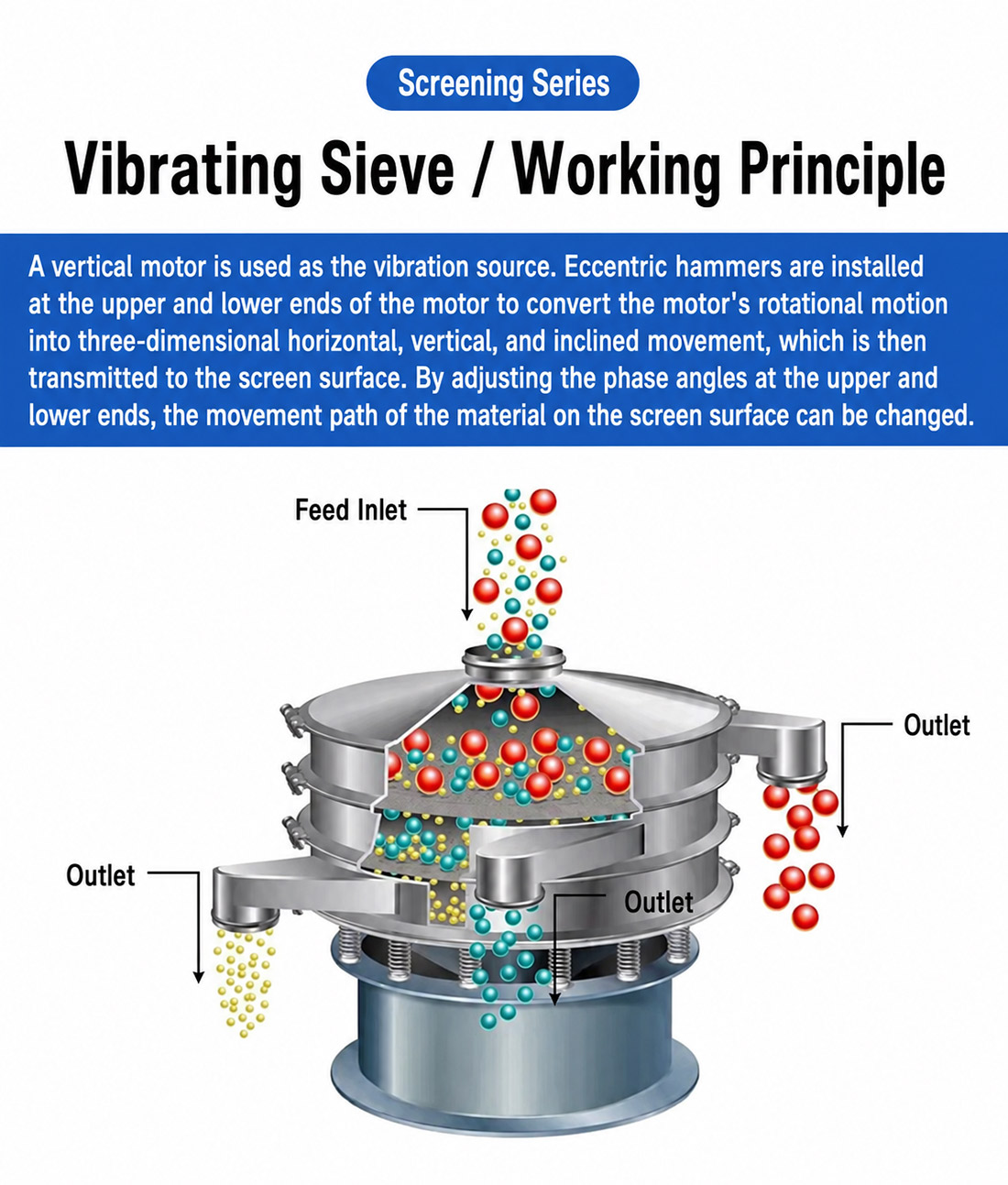
The three-dimensional rotary vibrating screen uses an upright motor as the excitation source. Eccentric weights are installed on the upper, lower and both ends of the motor to convert the rotational motion of the motor into horizontal, vertical and tilted three-dimensional motion, and then transfer this motion to the screen surface. Adjusting the phase angles of the upper and lower ends can change the movement trajectory of the material on the screen surface.
Parameters
| Model | ZS |
|---|---|
| Grinding Jar Capacity | |
| Feed Size | |
| Output Size | |
| Speed | |
| Power | |
| Voltage | |
| Dimensions | |
| Weight | 0 |
Related Videos
The trusted choice of industry leaders

FAQ
-
What is a Small Laboratory Screening Machine? A Versatile Sieving Tool for Precision Particle Size Analysis
Discover the small laboratory screening machine, an essential sieving device for precise particle size analysis in research and quality control. Learn its working principle, key features, selection tips, and applications across industries like mining, pharmaceuticals, and materials science.
MORE >> -
What is a Multi Dimensional Mixer? A High-Efficiency Powder Homogenization Equipment for Laboratory and Production
Discover the multi dimensional mixer, a versatile powder mixing equipment that uses three-dimensional motion to achieve uniform blending of powders and granules. Learn its working principle, types, key performance indicators, and application fields in industries like pharmaceuticals, ceramics, and chemicals.
MORE >> -
What is a Stainless Steel Vibrating Screen Machine? A Type of Sieving Equipment Used for Precision Particle Separation and Grading
Discover the definition, working principle, types, and key selection criteria of the stainless steel vibrating screen machine. This guide explains how this durable sieving equipment achieves high-precision particle separation, grading, and liquid-solid filtration in industries like food, pharmaceuticals, and chemicals. Learn about its construction, performance parameters, and application scenarios to choose the right model for your powder processing needs.
MORE >> -
What is a 3D Rotary Vibrating Screen? A High-Efficiency Screening Machine for Precision Particle Classification
A 3D rotary vibrating screen is a specialized sieving equipment used in various industries for precise particle classification, powder separation, and liquid filtration. It utilizes a unique three-dimensional vibratory motion generated by a vertical motor to efficiently screen materials with high accuracy. This guide explores its working principle, key features, performance indicators, and selection advice for applications in food, chemical, pharmaceutical, and ceramic sectors.
MORE >> -
What is a Multi-Dimensional Mixer? A High-Efficiency Mixing Equipment for Uniform Blending of Powders and Granules
The Multi-Dimensional Mixer is a specialized industrial mixing equipment designed to achieve uniform blending of dry powders and granules. It utilizes a unique multi-axial, three-dimensional motion that effectively eliminates mixing dead zones, ensuring high homogeneity even for materials with different densities and particle sizes. This guide covers its working principle, key advantages, selection criteria, and primary applications in industries like pharmaceuticals, chemicals, and food processing.
MORE >>
Get In Touch
Our professional team will reply to you within one business day. Please feel free to contact us!
Related Products
Related Articles