

What is a Multi-Dimensional Mixer? A High-Efficiency Mixing Equipment for Uniform Blending of Powders and Granules
What is a Multi-Dimensional Mixer? A High-Efficiency Mixing Equipment for Uniform Blending of Powders and Granules
From the core, a Multi-Dimensional Mixer is a professional mixing equipment used in industries such as pharmaceuticals, chemicals, food processing, and metallurgy to blend dry powders, granules, and other bulk solid materials into a homogeneous mixture. Unlike traditional mixers that rely on a single axis of rotation, this device generates a complex three-dimensional movement to ensure every particle is thoroughly mixed, achieving uniformity even when materials differ significantly in density or particle size.
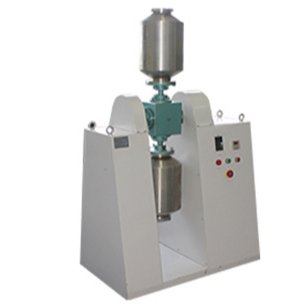
Core Function and Working Principle
The fundamental function of the multi-dimensional mixer is to transform a group of distinct, initially segregated solid particles into a uniform mixture. Its core mechanism is a sophisticated multi-axial motion system. The mixing container—often a uniquely shaped drum or vessel—is driven to simultaneously rotate, tumble, and oscillate in multiple planes. This complex motion, which can be described as a combination of translation and rotation in three-dimensional space, creates a state of constant agitation. The materials inside the container are continuously lifted, folded, and sheared against each other, preventing components with different particle sizes, shapes, or densities from settling or segregating. For example, in a pharmaceutical application, this ensures an even distribution of a potent active ingredient throughout a granulated excipient base.
Key Advantages of the Multi-Dimensional Motion
This sophisticated motion offers distinct advantages over simpler mixing methods. A primary benefit is the elimination of mixing dead zones—areas within the mixer where materials remain unmoved. The multi-dimensional tumbling action ensures that all particles are engaged in the mixing process, leading to high homogeneity in a short period. Additionally, the geometric design of the mixing vessel is optimized to avoid sharp corners or internal baffles, making it suitable for blending materials that are gentle or prone to particle breakdown. The energy input is efficiently distributed, reducing mechanical stress on the equipment while providing a thorough mix.
Core Components and Key Technologies
While the product name suggests a single type, its functionality is defined by its core components. The system typically comprises a specially designed mixing drum, a powerful drive unit with a multi-axis gear system, and a control panel. The drive unit is the heart of the machine, generating the complex movements that define the multi-dimensional action. The mixing drum is often constructed from stainless steel, providing corrosion resistance and easy cleaning, which is critical for industries like food and pharmaceuticals.
Comparison with Other Mixers
To understand the multi-dimensional mixer's niche, it helps to compare it with other common blenders. A V-type mixer, for instance, uses a simple tumbling action that is effective for free-flowing powders but can be less effective for materials with high segregation tendencies. A double cone mixer operates similarly. The multi-dimensional mixer's 3D motion provides a more aggressive and comprehensive mixing action, often achieving higher homogeneity for challenging material combinations, such as blending a small quantity of a fine powder with a larger amount of coarse granules.
Key Performance Indicators and Selection Criteria
When selecting a multi-dimensional mixer, several key performance indicators should be considered. The most critical is mixing homogeneity, which can be validated through sample testing. Processing capacity (volume per batch) is a primary factor, ranging from small laboratory models (a few liters) to large industrial systems (hundreds or thousands of liters). The material of construction (e.g., 304 stainless steel for general use, 316L for stringent sanitary requirements) is vital, especially in food and pharma. The ease of cleaning—often influenced by the drum's design and the presence of smooth welds—affects changeover time between batches. The type of discharge valve (e.g., butterfly valve, full-opening door) also impacts efficiency. Finally, the control system's sophistication, from basic timers to fully programmable logic controllers (PLCs) for recipe management, defines the level of automation and repeatability.
Applications and Selection Advice
The Multi-Dimensional Mixer is primarily used for dry blending of powders and granules in industries such as pharmaceuticals (mixing active ingredients with excipients, blending tablet granules), chemicals (formulating pigment mixtures, blending additives into plastic granules), and food processing (mixing flavorings with base powders, creating nutritional blends). For users with materials that are prone to segregation, or where extreme homogeneity is required, this mixer is an excellent choice. For lab-scale or small-batch needs, a compact model is ideal. For large-scale production, a heavy-duty industrial unit with automated loading and discharging systems is recommended. For gentler blending of fragile granules, a oblique mixer might be considered, but for the highest uniformity in challenging blends, the multi-dimensional mixer remains the preferred option.
For more information on our complete range of mixing equipment, including the 3D mixer and high speed dispersing homogenizer, please visit our website.
Related Products
Get In Touch
Our professional team will reply to you within one business day. Please feel free to contact us!