

What is a Multi Dimensional Mixer? A High-Efficiency Powder Homogenization Equipment for Laboratory and Production
What is a Multi Dimensional Mixer? A High-Efficiency Powder Homogenization Equipment for Laboratory and Production
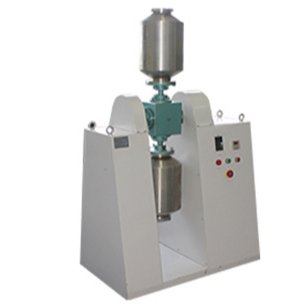
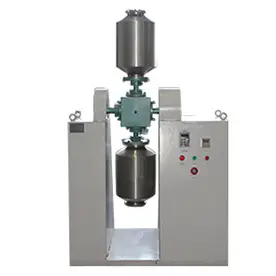
At its core, a multi dimensional mixer is a specialized mixing device that the pharmaceutical, chemical, ceramic, and food industries use to achieve uniform blending of dry powders, granules, and other particulate materials. Unlike traditional single-axis blenders, this equipment employs a unique three-dimensional motion pattern—combining translation, rotation, and inversion—to ensure that even trace amounts of active ingredients are homogeneously distributed throughout the entire batch. The result is a highly consistent product with minimal segregation, making it indispensable for quality control and process reproducibility.
Core Functionality and Working Principle
The fundamental function of a multi dimensional mixer is to transform an initial mixture of dissimilar particles into a homogeneous final blend. Its working mechanism relies on the principle of chaotic mixing, where the container moves in multiple axes simultaneously, causing the material to flow, tumble, shear, and fold upon itself. This eliminates the dead zones common in conventional mixers and ensures that every particle experiences the same mixing intensity.
The core component is a mixing drum (or container) that is gimbal-mounted or suspended on a multi-axis drive system. The drive system generates controlled movements in the X, Y, and Z directions, often with adjustable speed and frequency. During operation, the drum rotates, rocks, and translates, creating a continuous convective and diffusive mixing action. The process parameters—such as rotational speed, oscillation amplitude, and mixing time—directly influence the final blending uniformity. For example, longer mixing times and higher speeds generally improve homogeneity, but may also cause particle attrition or heat generation, which must be balanced for specific materials.
Key Components and Technical Features
While the multi dimensional mixer is a single product category, its design incorporates several critical subsystems:
Mixing Container
Typically made of stainless steel (304 or 316L) for corrosion resistance and cleanability. The container can be fixed or removable, with capacities ranging from a few liters for laboratory use to hundreds of liters for pilot or production scale.
Multi-Axis Drive System
High-precision servo motors or frequency-controlled motors that coordinate the motion in three dimensions. Advanced models feature programmable logic controllers (PLC) that allow users to store and recall multiple mixing recipes, ensuring repeatability across batches.
Safety and Control Interface
Touch-screen control panels with real-time monitoring of speed, time, and motion parameters. Emergency stop buttons, overload protection, and safety interlocks are standard to meet GMP and laboratory safety requirements.
Key Performance Indicators and Selection Criteria
When selecting a multi dimensional mixer, users should evaluate the following metrics:
Mixing Uniformity
The most critical parameter, often measured by the coefficient of variation (CV) of a tracer component. A good mixer can achieve CV below 5% within a few minutes.
Capacity and Throughput
Laboratory mixers typically handle 1–20 L per batch, while production units can process 100–1000 L. The total process time (including loading, mixing, and unloading) determines overall throughput.
Material Compatibility
The mixer must be suitable for the material's density, particle size, flowability, and abrasiveness. For fragile or agglomerated powders, gentle mixing modes may be required.
Automation and Programmability
Modern units offer digital control, data logging, and remote monitoring, which are essential for GMP compliance and audit trails.
Ease of Cleaning and Maintenance
Quick-release clamps, smooth internal surfaces, and CIP (clean-in-place) capability reduce downtime and cross-contamination risks.
Application Fields and Selection Advice
The multi dimensional mixer is widely used in:
- Pharmaceuticals: Blending active pharmaceutical ingredients (APIs) with excipients for tablet or capsule production.
- Ceramics and Advanced Materials: Homogenizing ceramic powders, binders, and additives before pressing or sintering.
- Chemicals and Pigments: Mixing colorants, catalysts, and fine chemicals for consistent quality.
- Food and Cosmetics: Blending spices, nutritional supplements, and cosmetic powders.
For small-scale R&D laboratories, a compact benchtop model with programmable controls is ideal. For pilot or production batches, a floor-standing unit with larger capacity and optional vacuum or inert gas purging should be considered. Always verify the mixer's compatibility with your specific material properties by conducting a trial run with a sample.
References
For more information, please visit the product page: Multi Dimensional Mixer.
Related products include: V-type Mixer, Double Cone Mixer, 3D Mixer.
Related Products
Get In Touch
Our professional team will reply to you within one business day. Please feel free to contact us!