

What is a 3D Rotary Vibrating Screen? A High-Efficiency Screening Machine for Precision Particle Classification
What is a 3D Rotary Vibrating Screen? A High-Efficiency Screening Machine for Precision Particle Classification
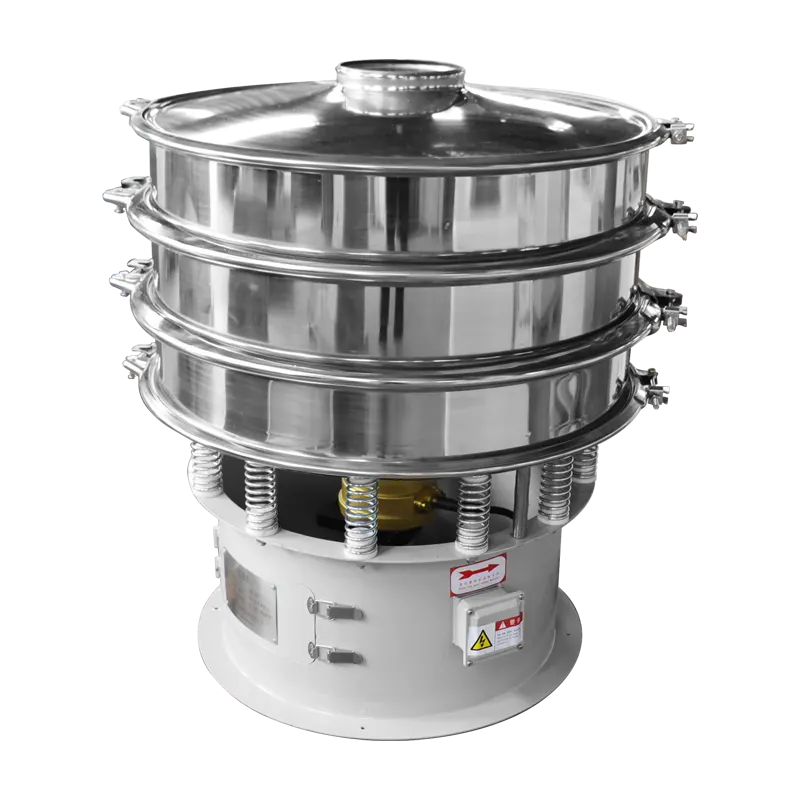
At its core, a 3D rotary vibrating screen is a sophisticated sieving device that industries such as food processing, chemical manufacturing, pharmaceuticals, and ceramics use to achieve high-precision particle classification and liquid-solid separation. Also known as a tumble screener or three-dimensional vibrating screen, this equipment efficiently separates dry powders, granules, and slurries into multiple fractions based on particle size. Unlike traditional vibrating screens, its unique three-dimensional motion ensures high capacity, fine screening down to 500 mesh (28 microns), and reliable performance with minimal blinding.
Core Function and Working Principle
Transforming Bulk Materials into Graded Fractions
The primary function of a 3D rotary vibrating screen is to transform a mixed bulk material—ranging from dry powders to slurries—into distinct, uniform particle size fractions. This process is critical for quality control, material recovery, and ensuring downstream processing consistency. The equipment efficiently separates oversized particles, fines, and target product fractions in a single pass or multi-deck configuration.
The Mechanism of Three-Dimensional Vibration
The working principle of this screen is elegantly simple yet highly effective. A vertical vibration motor, mounted at the center of the machine, generates a powerful force. This motor’s eccentric weights at the top and bottom create a compound vibration that combines horizontal, vertical, and tangential movements. The resulting three-dimensional motion projects the material across the screen surface in a spiral path, allowing fines to pass through quickly while oversized material is discharged from the outlet. This continuous, tumbling action maximizes contact between the material and the screen mesh, leading to high throughput and exceptional separation efficiency.
Key Features and Advantages
The 3D rotary vibrating screen stands out due to several design and operational benefits:
- High Screening Accuracy: Capable of achieving separations down to 500 mesh (28 microns) for dry powders and even finer for liquid filtration (down to 5 microns).
- High Capacity: Designed for large output, making it suitable for both laboratory and production-scale operations.
- No Screen Blinding: The unique three-dimensional motion, combined with optional bouncing balls or ultrasonic systems, prevents screen mesh from clogging ensures continuous, efficient operation.
- Flexible Configuration: Available in single or multi-layer designs (up to 5 decks), allowing for the separation of multiple particle size fractions simultaneously. The discharge outlets can be adjusted arbitrarily for easy integration into existing lines.
- Easy Maintenance: The patented mother-daughter grid design simplifies screen replacement to just 3-5 minutes, reducing downtime. All contact parts can be made of stainless steel for hygiene and corrosion resistance.
Key Performance Indicators and Selection Criteria
Processing Capacity and Output
When selecting a 3D rotary vibrating screen, processing capacity—usually measured in tons per hour (t/h) or liters per minute for liquids—is a primary consideration. This depends on the screen diameter, mesh size, and the material’s flowability. For high-volume production, larger diameter screens (e.g., 1200mm, 1500mm) with multiple layers are recommended.
Separation Accuracy and Mesh Options
The required separation fineness dictates the mesh size. Standard options range from coarse meshes (2 mesh) to ultra-fine meshes (500 mesh or 28 microns). For very fine or sticky powders, consider units equipped with ultrasonic deblinding systems to maximize accuracy. Ensure the screen material (stainless steel or nylon) is compatible with your product grade and cleaning requirements.
Automation and Controllability
Modern 3D vibrating screens can be integrated with automated feeding, discharge, and cleaning systems. For critical applications, look for models that offer adjustable vibration amplitude and frequency to fine-tune the screening performance for different materials.
Material of Construction
For food, pharmaceutical, or corrosive chemical applications, a full stainless steel (304 or 316L) construction is essential. For less demanding applications, carbon steel models offer a cost-effective solution. Also consider the sealing design for dust-tight operation or sanitary requirements.
Application Areas and Selection Advice
The 3D rotary vibrating screen is widely used across a multitude of industries. In the food industry, it is used for classifying flour, sugar, spices, tea, and dairy powders. In chemicals and pharmaceuticals, it handles resins, pigments, active pharmaceutical ingredients (APIs), and granules. The ceramics and metallurgy sectors use it for screening abrasives, powders, and metal powders. It is also effective for liquid filtration in effluent treatment and paint/ink production.
For laboratory and R&D purposes, a smaller small laboratory screening machine is often sufficient to determine the best mesh size and process parameters. For production environments, selecting a full-size unit with the correct deck count and automation level (like a stainless steel vibrating screen machine) is advised. Always consider the material characteristics (abrasiveness, moisture content, particle shape) and throughput demands to choose the optimal configuration that ensures both efficiency and long-term reliability.
References
Related Products
Get In Touch
Our professional team will reply to you within one business day. Please feel free to contact us!