
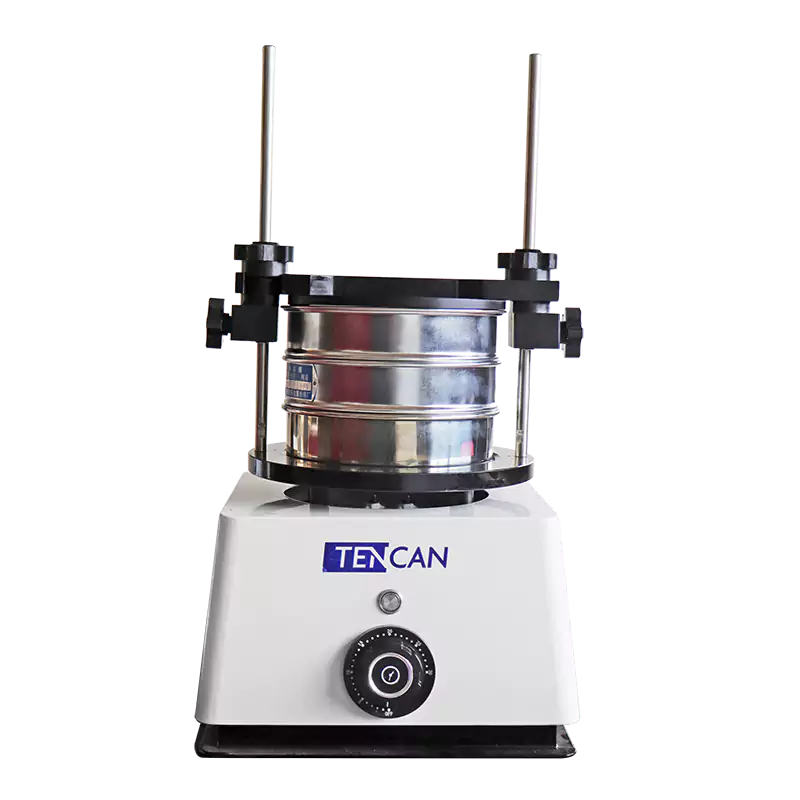
What is a Small Laboratory Screening Machine? A Versatile Sieving Tool for Precision Particle Size Analysis

Introduction
At its core, a small laboratory screening machine is a compact and efficient sieving device designed for precise particle size classification and analysis in research, quality control, and small-scale production environments. It is widely used across industries such as mining, metallurgy, ceramics, pharmaceuticals, food processing, and materials science to separate granular materials into different size fractions with high accuracy and repeatability.
Unlike industrial-scale sieving equipment, the small laboratory screening machine is tailored for handling small sample volumes (typically from a few grams to several kilograms), making it an indispensable tool for laboratories and pilot plants where sample preparation and particle size distribution analysis are critical. Its compact footprint, ease of use, and reliable performance make it a go-to solution for both routine testing and advanced research.
Core Function and Working Principle
The primary function of a small laboratory screening machine is to separate particles by size using a vibrating or oscillating motion that moves the material across one or more sieve screens. The machine typically consists of a base unit, a set of interchangeable sieve frames (mesh sizes from coarse to fine), and a clamping mechanism that holds the sieves securely in place.
During operation, the material is placed on the top sieve. The machine generates a controlled vibration (often three-dimensional, such as rotational or gyratory motion) that causes the particles to move across the sieve surface. Particles smaller than the mesh openings pass through to the next sieve, while larger particles remain on the current sieve. The process continues until all sieves have been traversed, resulting in several fractions of known particle sizes.
Key parameters influencing the sieving efficiency include vibration amplitude, frequency, and duration. Most modern laboratory screening machines allow users to adjust these parameters to optimize the separation for different materials and desired cut points. The end result is a precise particle size distribution (PSD) that can be used for quality control, formulation development, or compliance with industry standards.
Key Components and Technologies
Vibration Mechanism
Small laboratory screening machines typically employ one of three vibration technologies:
- Electromagnetic vibratory drive – provides precise, adjustable amplitude and frequency, ideal for fine powders (down to 20 microns).
- Rotary (gyratory) motion – simulates hand sieving with a circular motion, suitable for a wide range of materials.
- Ultrasonic vibration – used for very fine or sticky powders to prevent mesh blinding (clogging).
Sieve Frames and Mesh
Interchangeable sieves are available in various diameters (e.g., 100mm, 200mm) and mesh sizes (from 0.5mm down to 20 microns). High-quality stainless steel mesh ensures durability and corrosion resistance. Some machines support both dry and wet sieving, the latter being essential for materials that tend to agglomerate.
Control System
Digital controllers with timers and programmable settings allow users to set vibration amplitude, interval, and run time. Data logging features can record results for traceability and analysis. Advanced models may include integrated software for automated particle size distribution calculation.
Key Performance Indicators and Selection Criteria
When selecting a small laboratory screening machine, consider the following factors:
- Throughput capacity: Typically expressed as maximum sample weight per batch (e.g., from 100g to 5kg). Choose based on your typical sample size.
- Sieving precision: The ability to achieve consistent, repeatable results. Look for machines with adjustable amplitude and frequency control.
- Mesh range: Ensure the machine can accommodate the finest mesh required for your application. Some models support down to 20 microns.
- Ease of cleaning: Quick-release clamping systems and easy-to-remove sieves reduce downtime between samples.
- Noise level: Quieter operation is preferred in lab environments.
- Compliance with standards: Many machines conform to ASTM, ISO, or other international sieving standards, which is important for regulated industries.
Other considerations include power supply (single-phase vs. three-phase), portability, and availability of accessories such as sieve covers, collecting pans, and calibration standards.
Applications and Selection Advice
Small laboratory screening machines are used in a wide range of fields:
- Mining and minerals: Particle size analysis of ores, coal, and aggregates.
- Pharmaceuticals: Sieving of active ingredients, excipients, and granules for tablet compression.
- Food and beverages: Quality control of flour, sugar, spices, and other powders.
- Ceramics and construction materials: Particle size distribution of clays, abrasives, and cements.
- Environmental testing: Soil and sediment analysis for particle size classification.
For occasional testing of small samples, a basic electromagnetic sieve shaker with a few sieves is sufficient. For high-throughput labs or applications requiring very fine sieving (down to micron levels), a rotary or ultrasonic model with programmable controls is recommended. For wet sieving, ensure the machine is designed to handle liquid and has a drainage system. Always consult the manufacturer's selection guide or contact technical support for specific advice.
References
For more detailed product information, please visit the official product page: Small laboratory screening machine. Related sieving equipment includes the 3D rotary vibrating screen and the Stainless steel vibrating screen machine.
Related Products
Get In Touch
Our professional team will reply to you within one business day. Please feel free to contact us!