
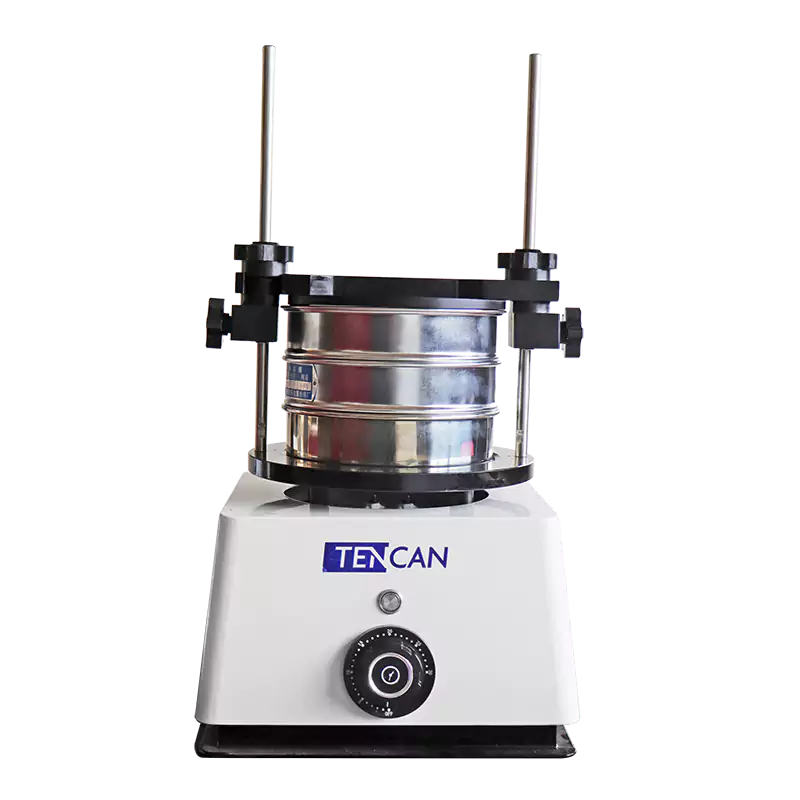
What is a Small Laboratory Screening Machine? An Efficient Sieving Device for Particle Size Analysis and Sample Classification

Introduction
At its core, a small laboratory screening machine is a compact, precision-engineered sieving device used in research and quality control laboratories to classify powders, granules, and bulk solids by particle size. It is the go-to tool for performing accurate particle size analysis, removing oversize contaminants, and separating materials into different fractions. Whether you are developing a new pharmaceutical formulation, testing soil samples, or optimizing a ceramic slurry, this machine ensures consistent, repeatable results that are essential for product quality and process control.
Core Functionality and Working Principle
The fundamental function of a small laboratory screening machine is to separate a mixture of particles into two or more size fractions based on their ability to pass through a mesh screen. The machine typically consists of a base unit with an electromagnetic or mechanical vibrator, a stack of sieves with different mesh sizes, and a cover. The sample is placed on the top sieve, and the vibrator imparts a controlled three-dimensional motion (often a combination of vertical and horizontal vibrations) that causes particles to move across the sieve surface. Particles smaller than the mesh openings pass through to the next sieve, while larger particles are retained. This process continues down the stack, resulting in several fractions with defined particle size ranges.
The key to its efficiency lies in the adjustable vibration amplitude and frequency. Most modern laboratory screening machines, such as the Small Laboratory Screening Machine from TENCAN, allow users to fine-tune these parameters to match the specific characteristics of the material being tested. For example, cohesive or electrostatic powders may require a higher amplitude to break agglomerates, while fragile crystals need gentler motion to avoid breakage. The entire screening process is typically controlled by a digital timer, ensuring reproducible test durations.
Key Components and Technologies
Although the product line is not divided into distinct types, a small laboratory screening machine features several critical components that influence its performance:
Vibration Mechanism
Two main technologies are commonly used: electromagnetic vibration and mechanical eccentric drive. Electromagnetic vibrators offer precise frequency control and low noise, making them ideal for fine powders. Mechanical drives provide higher amplitude and are better suited for coarse or heavy materials. Many machines combine both to achieve a versatile motion profile.
Sieve Frame and Mesh
The sieve frames are usually made of stainless steel for durability and corrosion resistance. The mesh can be woven wire cloth, perforated metal plate, or electroformed mesh, depending on the required aperture size and application. Precision sieves conform to international standards (ISO, ASTM) to ensure accurate results.
Control System
Digital controllers with programmable timers, amplitude settings, and continuous operation modes are standard. Advanced models may include a built-in memory for storing test protocols, which is particularly useful in regulated environments like pharmaceutical QC labs.
Key Performance Indicators and Selection Criteria
When choosing a small laboratory screening machine, several factors should be considered:
Processing Capacity
Capacity is typically expressed as the maximum sample volume or weight per batch. For most lab applications, a few grams to 100 grams is sufficient, but some machines can handle up to 500 grams. Choose based on your typical sample size.
Sieving Precision
The ability to separate particles accurately down to 20 microns or even less is a hallmark of a good lab screener. Check the available mesh sizes and the machine's ability to provide consistent results within ±2% of the nominal cut point.
Ease of Cleaning and Maintenance
Quick-release clamping systems and smooth, crevice-free surfaces facilitate cleaning between different materials, preventing cross-contamination. Machines with no tools required for sieve changeover save time.
Automation and Connectivity
Modern machines may offer data logging, RS-232 or USB interfaces for connecting to a computer, enabling automated reporting and traceability. This is crucial for labs that need to comply with 21 CFR Part 11 regulations.
Application Areas and Selection Advice
The small laboratory screening machine is widely used in industries such as mining, ceramics, chemicals, pharmaceuticals, food, and environmental testing. For example, in a cement plant it helps monitor the fineness of raw meal; in a battery material lab it separates cathode and anode powders; in a university it is used for teaching particle technology.
For most routine particle size analysis, a standard model with adjustable amplitude and a timer is sufficient. If you work with very fine powders (<50 µm), consider a machine with ultrasonic deblinding or a gentle tapping action. For heavy-duty or larger samples, a mechanical drive model with higher capacity is recommended. Always request a free test with your material to confirm the machine can achieve the desired separation efficiency.
References
Related Products
Get In Touch
Our professional team will reply to you within one business day. Please feel free to contact us!