

What is a Small Laboratory Screening Machine? A precision sieving device for particle size analysis and material classification in research labs
What is a Small Laboratory Screening Machine?
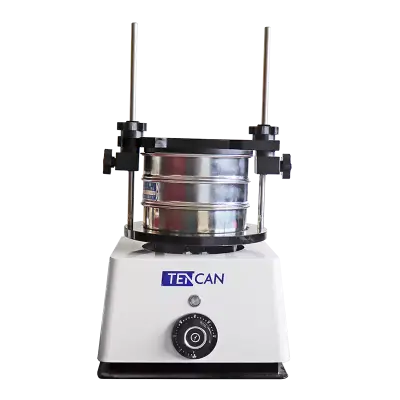
At its core, a small laboratory screening machine is a compact, high-precision vibratory sieving device used in research laboratories, quality control departments, and small-scale production facilities to separate, classify, and analyze the particle size distribution of powders, granules, and bulk solids. It transforms a mixed particle sample into discrete size fractions by passing the material through a series of stacked woven mesh sieves under controlled vibration. This equipment is essential for ensuring product consistency, optimizing material performance, and meeting regulatory standards in industries ranging from pharmaceuticals and materials science to food processing and metallurgy.
Core Function and Working Principle
The primary function of a small laboratory screening machine is to achieve accurate and repeatable particle size separation. The machine typically consists of a base unit, an electromagnetic or mechanical vibratory drive, and a stack of test sieves with different aperture sizes. The sample is placed on the top sieve, and the stack is clamped onto the vibrating platform. When the machine is activated, the vibration energy is transmitted to the sieve stack, causing the particles to move across the sieve surfaces. Particles smaller than the sieve openings pass through to the next sieve, while larger particles remain on the current sieve. This process continues through all sieves, resulting in multiple fractions that can be weighed and analyzed.
The working principle relies on a combination of vertical and horizontal vibrations. The electromagnetic drive generates a high-frequency, low-amplitude oscillation that propels the particles in a spiral motion over the sieve cloth. This motion ensures that each particle has multiple opportunities to either pass through or be retained, maximizing separation efficiency. The amplitude and frequency can be adjusted to suit different material characteristics, such as stickiness, moisture content, or particle shape. The final result is a detailed particle size distribution curve that is critical for process control and product development.
Key Components and Technologies
Although the small laboratory screening machine is a relatively simple device, its performance depends on several key components:
- Vibratory Drive System: Most lab sieve shakers use an electromagnetic drive that provides precise control over vibration amplitude and frequency. Some models use a mechanical eccentric mechanism for higher energy output. The drive system must be stable and durable to ensure consistent results over long periods.
- Sieve Stack and Mesh: The sieves are typically made of stainless steel or brass frames with woven wire mesh. The mesh size is precisely calibrated according to international standards (ISO, ASTM). The quality of the mesh directly affects the accuracy of classification. Sieves are available in various diameters, with 200 mm and 300 mm being common for laboratory use.
- Clamping Mechanism: A reliable clamping system ensures that the sieve stack is securely fastened to the vibrating base. Quick-release clamps are common for easy operation and cleaning.
- Control Panel: Modern screening machines feature digital timers, amplitude adjustment knobs, and sometimes programmable settings for different materials. This allows operators to store and recall standard operating procedures (SOPs) for routine analyses.
- Soundproofing and Dust Collection: Some advanced models include soundproof enclosures to reduce noise and a dust collection port to minimize airborne particles, enhancing laboratory safety.
Key Performance Indicators and Selection Criteria
When selecting a small laboratory screening machine, users should consider the following key performance indicators:
- Screening Capacity and Sample Size: Lab screening machines typically handle sample sizes from a few grams up to several kilograms per batch. The capacity depends on the sieve diameter and the number of sieves in the stack. For most analytical applications, a 200 mm diameter sieve stack can process 50–500 g of material.
- Separation Accuracy and Mesh Size Range: The machine must be able to separate particles down to the micron level. The finest standard mesh size is around 20 microns (0.02 mm), but specialized electroformed sieves can go down to 5 microns. The machine should maintain consistent vibration without damaging the fine mesh.
- Amplitude and Frequency Control: Adjustable amplitude (0–3 mm) and frequency (50–3000 rpm) allow optimization for different materials. For example, fragile materials require lower amplitude to avoid particle breakage, while free-flowing powders can use higher amplitude for faster throughput.
- Automation and Data Integration: Some models come with built-in software for automatic weight recording and particle size distribution calculation. These features are valuable for laboratories that require high throughput and digital traceability.
- Ease of Maintenance: Sieves must be cleaned regularly to prevent blinding. Machines with easy-to-remove sieve stacks and washable components reduce downtime. Also, the drive system should be maintenance-free or have long service intervals.
Application Areas and Selection Advice
Small laboratory screening machines are widely used in:
- Material Science and Research: For evaluating the particle size distribution of new materials, ceramics, catalysts, and metal powders.
- Pharmaceutical Industry: For quality control of active pharmaceutical ingredients (APIs) and excipients, ensuring consistent dissolution and flow properties.
- Food and Agriculture: For analyzing grain particle size, flour fineness, and other food powders.
- Mining and Metallurgy: For grading ores, coal, and other mineral samples before further processing.
- Environmental Testing: For soil and sediment particle size analysis.
When choosing a machine, consider the volume of samples, the required precision, and the budget. For basic analytical work, a standard electromagnetic sieve shaker with a digital timer and amplitude control is sufficient. For high-throughput labs, a model with programmable settings and data output is recommended. Always ensure that the machine is compatible with the sieve sizes and mesh standards used in your laboratory.
References
Small laboratory screening machine product page
3D rotary vibrating screen
Stainless steel vibrating screen machine
Related Products
Get In Touch
Our professional team will reply to you within one business day. Please feel free to contact us!