
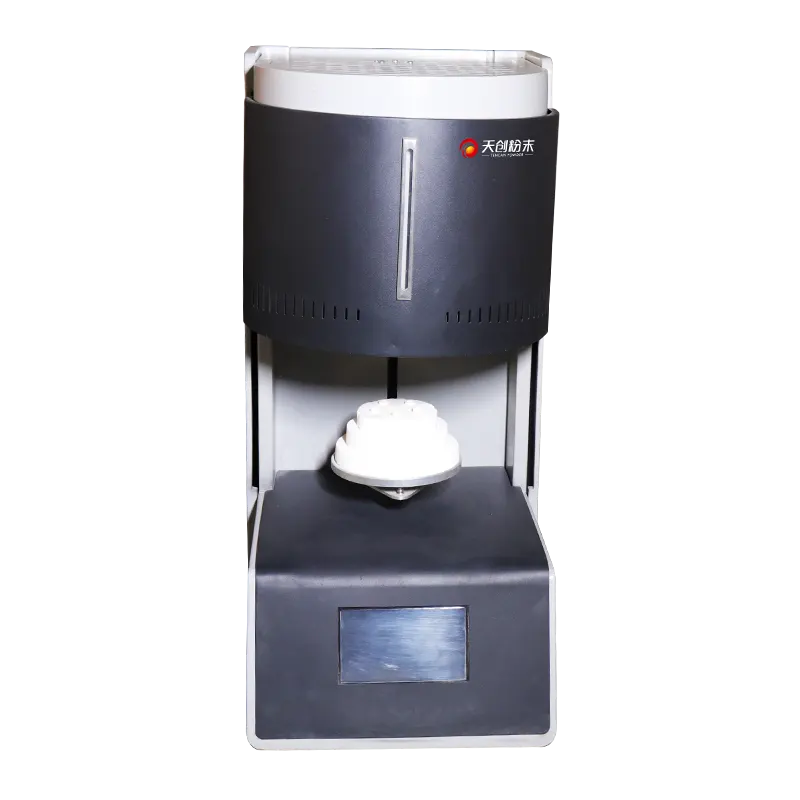
T-Bright Plus Sintering Furnace: What Sintering Really Does to Powder Materials

If you spend your days around powders — metal powders, ceramics, or something in between — you already know the powder itself is only half the story. The other half is what happens after you have weighed it, mixed it, and pressed it into a shape. Very often, that step is sintering.
Sintering is where loose, dusty powder turns into a solid, usable part. No melting, no glue holding it together at the end — just heat, time, and a controlled atmosphere doing quiet work at the atomic scale.
We are going to walk through what sintering really is, what happens inside the chamber, and how to think about choosing and running a sintering furnace. Along the way we will look at a real machine — the T-Bright Plus Sintering Furnace from Changsha TENCAN Powder Technology Co., Ltd. (TENCAN for short) — because a concrete example beats a page of theory.
Why Sintering Is the Quiet Hero of Powder Processing
Let us start with a fair question: why not just melt the powder and cast it?
Sometimes you do exactly that. But melting has limits. It wipes out fine microstructures, it can let alloying elements segregate, and for materials like tungsten carbide or many technical ceramics, the melting point is so high that melting is impractical — or it destroys the very properties you were trying to build in.
Sintering takes a different route. The material stays solid the whole time. Instead of turning everything into liquid, you give the atoms enough energy to move — to diffuse — so particles bond with their neighbours and the gaps between them shrink. What you get is a dense body with a controlled microstructure, not a cast ingot with oversized grains and a history of shrinkage defects.
That is why sintering shows up almost everywhere: cutting tools, bearings, filters, magnets, dental restorations, fuel-cell components, ceramic armour, sputtering targets, and a long list of electronic parts. Every one of them leans on the same basic idea — pack the powder well, then let heat do the joining.
The catch is that 'heat' is a deceptively simple word. Temperature is only one variable. Heating rate, hold time, cooling rate, atmosphere, gas purity, and the way you load the furnace all matter, and they interact with one another. A sintering furnace is not a toaster. It is a process tool, and the better you understand it, the better your parts come out.
What Actually Happens Inside a Sintering Furnace
Here is the part many people skip. Sintering is not a single event — it is a sequence of stages, and each one has its own rules. Skip a stage and you will see it later as cracks, warping, or disappointing density.
Stage One: Binder Burn-Off
Most shaped powder bodies contain a small amount of organic binder or lubricant. It is there to help the powder hold its shape during pressing or injection moulding, but it has to leave before real sintering begins — and it has to leave slowly.
Burn-off usually happens in a lower temperature window. Heat too fast and the organics decompose into gas faster than they can escape, which shows up as blisters, internal cracks, or carbon residue that later interferes with the material's properties. Slow, steady, and often with a gentle gas flow is the way to go.
Stage Two: Neck Growth and Densification
Once the binder is gone, the interesting part begins. Where two particles touch, atoms migrate across the contact point and a neck forms. Picture two soap bubbles joined by a small bridge — that bridge is the neck.
As necks grow, the pores between particles change shape. Open, connected channels gradually pinch off into isolated pores. The part shrinks, often by 15 to 20 percent linearly and sometimes more, while density climbs. This is where a material's final strength, hardness, and thermal behaviour are largely decided.
Temperature and time both drive this stage. Higher temperature means faster diffusion — but it also means faster grain growth, and big grains usually mean worse mechanical properties. The goal is never 'as hot as possible.' It is 'hot enough, for long enough, without letting the grains run away.'
Stage Three: Cooling Without Cracks
Cooling looks passive. It is not. Thermal gradients across a part create stress, and if that stress beats the material's strength at that temperature, you get cracks — sometimes dramatic, sometimes invisible until the part fails in service.
Different materials want different cooling profiles. Some need a slow, controlled ramp through a specific temperature range to avoid phase transformations that leave them brittle. Others are happy to come down quickly. Knowing which camp your material sits in saves a lot of heartbreak.
Before the Furnace: Getting the Powder Ready
It is tempting to treat the furnace as the whole story, but what you feed it decides most of the outcome. Three things matter more than anything else.
Particle Size and Distribution
Fine particles sinter faster because they have more surface energy driving the process. But very fine powders also agglomerate, and agglomerates create uneven packing that turns into uneven shrinkage. A powder with a sensible size distribution — a mix of coarse and fine — often packs denser than a single narrow fraction, because the small particles fill the gaps between the big ones.
Green Density and Shape
Green density is how dense your part is before sintering. Higher, more uniform green density generally means less shrinkage and less distortion later. If one side of a pressed part is denser than the other, one side will shrink more, and you will get a banana instead of a bearing.
Binder and Additives
Binder helps shaping and hurts sintering, so the goal is the smallest amount that does the job, plus a clean burn-off profile that removes it fully. The same logic applies to lubricants and any other additives: know what they leave behind after they decompose.
One more practical point — mixing quality matters as much as powder quality. If a two-component powder is not blended evenly, you will not see it in the green body, but you will absolutely see it after sintering as patches of different density and hardness. That is where a reliable mill earns its keep, long before the furnace is even switched on.
Meet the T-Bright Plus Sintering Furnace
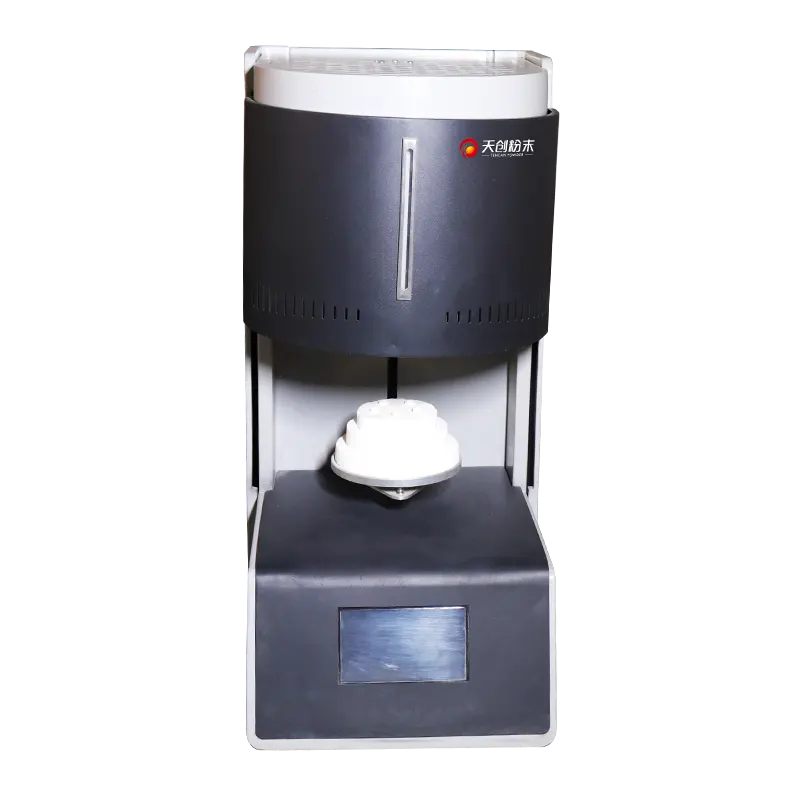
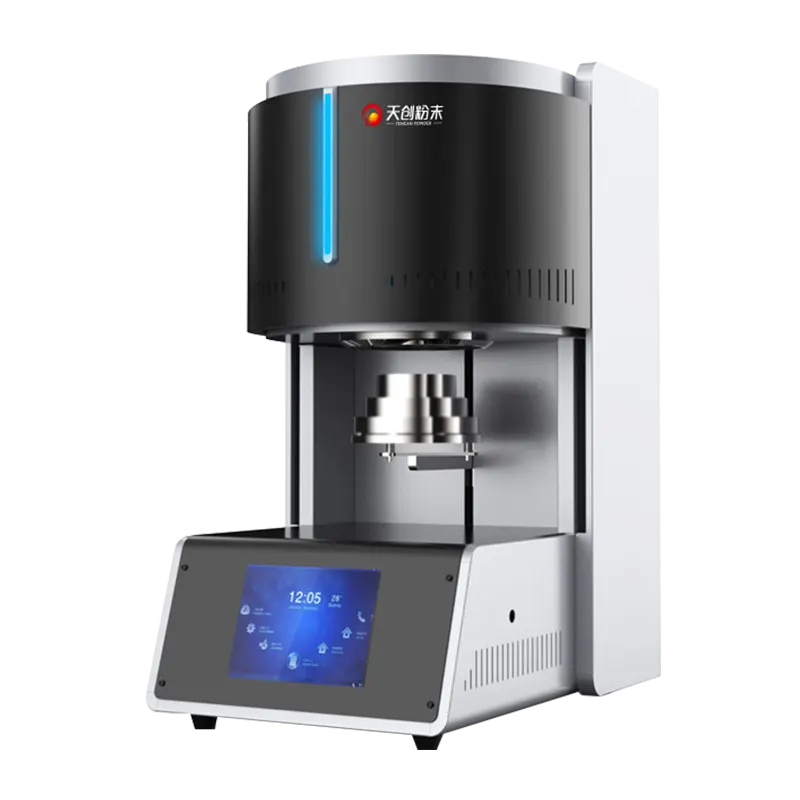
Abstract advice only gets you so far, so let us look at something concrete. The T-Bright Plus Sintering Furnace is part of TENCAN's sintering series, built for labs and production teams that need repeatable thermal cycles rather than one-off experiments.
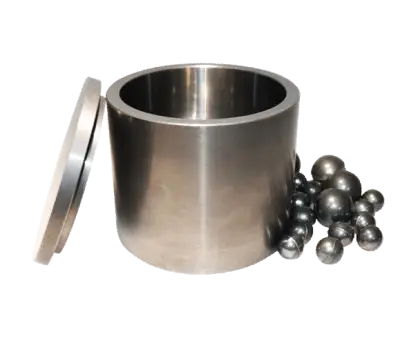
TENCAN is a powder equipment manufacturer whose name you will recognise if you have ever shopped for a planetary ball mill or a set of milling jars. The company's focus has always been on the tools that sit around a powder sample: the milling, the mixing, and the thermal steps that come after. The T-Bright Plus sits at the thermal end of that chain.
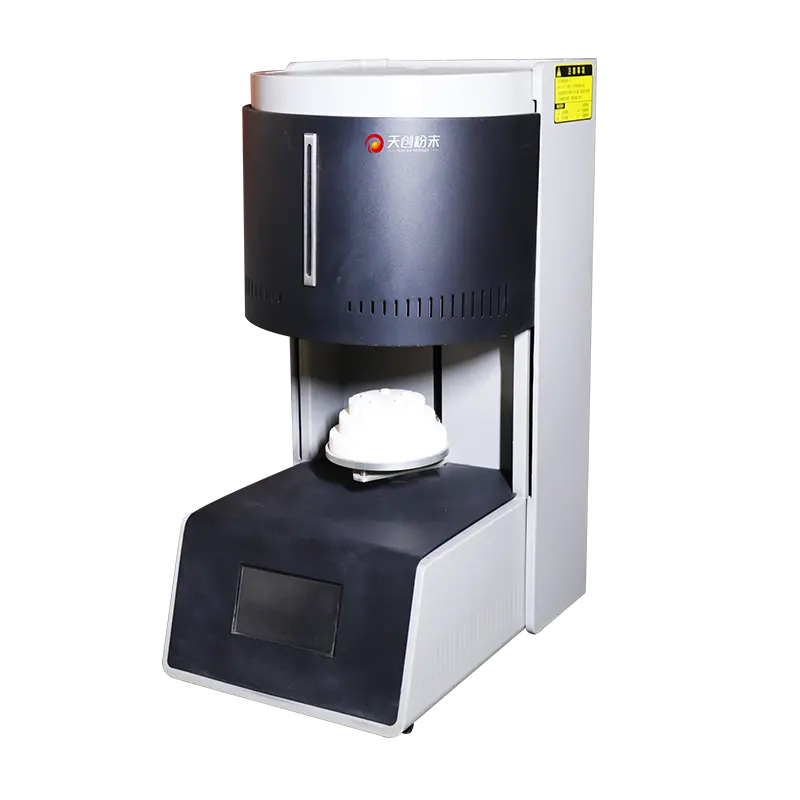
We will not guess at specifications here. Chamber size, heating elements, maximum temperature, control system, and atmosphere package are exactly the details you should read from the source rather than from a blog post — the full breakdown lives on the T-Bright Plus Sintering Furnace product page, and it is worth a careful look before you compare anything else.
What we would say is this: when you evaluate any sintering furnace, ask how it handles the three stages above. Does it give you slow, controlled ramps for binder burn-off? Can it hold a stable soak at your target temperature? Does it cool at a rate you can specify? Those questions matter more than any single headline number.
The Variables That Decide Whether Your Run Succeeds
Let us unpack the knobs you will actually be turning.
Temperature Range and Uniformity
Maximum temperature gets all the attention, but uniformity across the hot zone is what determines whether your parts behave consistently. A furnace that runs 30 °C hotter in one corner will give you different grain sizes, different shrinkage, and different hardness in the same batch. When you compare machines, ask about the size of the uniform zone, not just the peak number.
Heating and Cooling Rates
Programmable ramps are not a luxury feature — they are the core of the process. You want to specify a rate, hold it, and trust that the furnace followed it. Fast ramps save cycle time. Slow ramps protect delicate parts. Ideally, the same furnace gives you both, on the way up and on the way down.
Atmosphere and Vacuum
Many powders are oxygen-sensitive. Copper, iron, titanium, and most reactive metals will oxidise happily if there is residual air in the chamber. That is why sintering furnaces work under vacuum, inert gas, hydrogen, or a mix — and why gas purity and leak-tightness matter as much as the set temperature.
Choosing the atmosphere is a materials question first and an equipment question second. If your powder needs hydrogen to reduce surface oxides, the furnace has to be built for hydrogen safely. If it needs a deep vacuum, you need pumps and seals that can hold it. Decide the chemistry, then pick the hardware.
Load, Fixturing, and Throughput
How you stack parts in the chamber affects both the thermal profile and the yield. Dense loads heat and cool more slowly, and parts can shadow each other from the heating elements. Good fixturing — setter plates, crucibles, sensible spacing — is part of the recipe, not an afterthought.
Throughput then becomes an honest calculation: parts per cycle, cycle length, and how much of the chamber you can actually use. A perfectly uniform small hot zone beats a big sloppy one every time.
Control, Recipes, and Data Logging
The last variable is not a physical one. It is how well the furnace remembers what it did. A controller that stores recipes, records the actual profile, and lets you export the data turns every run into something you can learn from. Without that record, a good result is a lucky accident and a bad result is a mystery.
Box, Tube, or Vacuum? Matching the Furnace to the Job
Sintering furnaces come in a few broad shapes, and each shape solves a different problem.
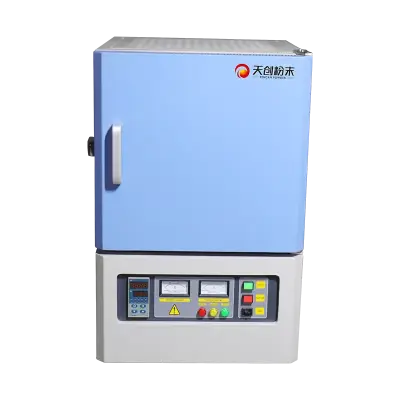
Box furnaces, also called chamber furnaces, give you the most usable volume for a given footprint. They suit batch work where you are sintering several parts at once and want straightforward loading. Their trade-off is that large chambers are harder to keep uniform, so the hot zone and the chamber are not the same thing.
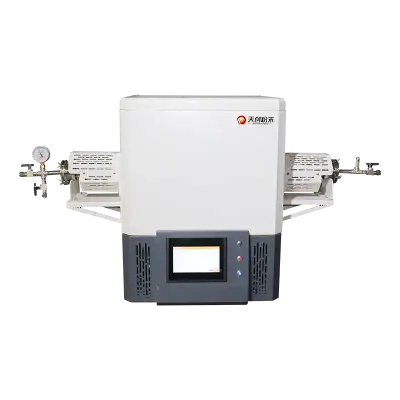
Tube furnaces use a cylindrical ceramic or quartz tube. They heat very evenly along the tube, they are easy to purge with gas, and they are the natural choice for small samples, continuous flow, or process development where you want tight control over atmosphere. Their limit is size — you will not fit a large bearing in one.
Vacuum and atmosphere furnaces are less about geometry and more about chemistry. If your material cannot tolerate oxygen at temperature, you need a chamber that can be pumped down or backfilled with a controlled gas, plus the seals, pumps, and safety systems to match.
The T-Bright Plus sits in the sintering family that TENCAN has developed for powder work, and the practical question is not 'which type is best' but 'which type matches my parts, my material, and my batch size.' A lab running dozens of small experiments has very different needs from a shop running the same part every day.
Common Mistakes and How to Dodge Them
After enough conversations with people running sintering furnaces, the same handful of problems come up again and again.
- Rushing the burn-off. Binder has to leave as a gas, and gas needs time and a path out. Slow down that first ramp and your parts will thank you.
- Chasing density with temperature alone. Over-sintering grows grains, and coarse grains often hurt hardness and toughness. Density is not the only number that matters.
- Ignoring the cooling curve. Plenty of cracks blamed on 'bad powder' actually happen on the way down.
- Assuming the atmosphere is clean. Residual oxygen and moisture do real damage. Check gas purity, purge properly, and hunt for leaks before blaming the material.
- Loading the chamber like a suitcase. Packing parts edge to edge changes the thermal environment for every one of them.
- Skipping the record-keeping. If you do not log the profile, you cannot reproduce the good run or diagnose the bad one.
Where Sintering Fits in Real Work
It helps to see the process in context, because sintering is not a standalone step — it is the finish line of a longer chain.
In a typical powder workflow you start with raw powder and a ball mill. Milling reduces particle size, breaks up agglomerates, and mixes multiple components evenly. From there the powder might be pressed, cast, or printed into a green body — green meaning unfired and fragile. Then it goes into the furnace.
That is why TENCAN's product range makes sense as a set: milling equipment shapes the powder, and a sintering furnace such as the T-Bright Plus turns it into a finished part. If you are building a lab from scratch, those two capabilities cover an enormous range of experiments and small-batch production.
Real examples include cemented carbide cutting inserts, porous bronze bearings that hold lubricant, ceramic substrates for electronics, metal filters for the chemical industry, and sintered magnets. Different materials, different temperatures, same underlying logic.
And it is not only about the finished part. Sintering is also a research tool. If you are developing a new alloy or doping a ceramic, the furnace is where you find out whether your formulation actually works. That makes cycle flexibility — the ability to try different profiles without rebuilding your setup — genuinely valuable.
Questions We Get Asked a Lot
Does sintering melt the powder?
No, and that is the whole point. Sintering bonds particles through diffusion while everything stays solid. Some systems use a small amount of liquid phase to speed things along, but the bulk of the material never melts.
How much will my part shrink?
It depends on the powder, the green density, and the thermal profile, but linear shrinkage in the 15 to 20 percent range is common. That is why you design the mould or the print slightly oversized, and why consistent green density matters so much.
Can one furnace handle metals and ceramics?
Often yes, if the temperature range, atmosphere options, and control system are flexible enough. The constraint is usually atmosphere and maximum temperature rather than the furnace concept itself. Check the specification against your most demanding material before you commit.
Do I need vacuum, or is gas enough?
It depends on how oxygen-sensitive your powder is. Vacuum removes air and helps control dew point; inert gas is simpler and often cheaper to run. Many processes use both — vacuum first, then a controlled gas backfill.
How long does a cycle take?
Anywhere from a couple of hours to more than a day once you include burn-off, soak, and a controlled cool-down. The slow parts are usually not the sinter itself but the ramps protecting the part from cracking.
How do I know my profile is right?
Measure the result, not the dial. Density, hardness, microstructure, and dimensional change tell you what actually happened. Then change one variable at a time and log it. Sintering optimisation is mostly disciplined bookkeeping with a furnace attached.
Bringing It Back to Your Bench
Sintering rewards patience and punishes shortcuts. The good news is that the process is understandable. Powder, heat, time, atmosphere — four ingredients, endlessly adjustable, and once you have mapped how they interact for your material, the results become predictable.
If you are evaluating equipment, start with your material and your required properties, then work backwards to the furnace. Compare what each machine can control, how uniformly it heats, and how well the atmosphere is managed. That is a far better filter than a spec sheet headline.
And if you would like to start somewhere concrete, the T-Bright Plus Sintering Furnace is a sensible reference point — the full details are on its product page, and comparing it against your own requirements is a quick way to find out what you actually need.
Related Products
Get In Touch
Our professional team will reply to you within one business day. Please feel free to contact us!