
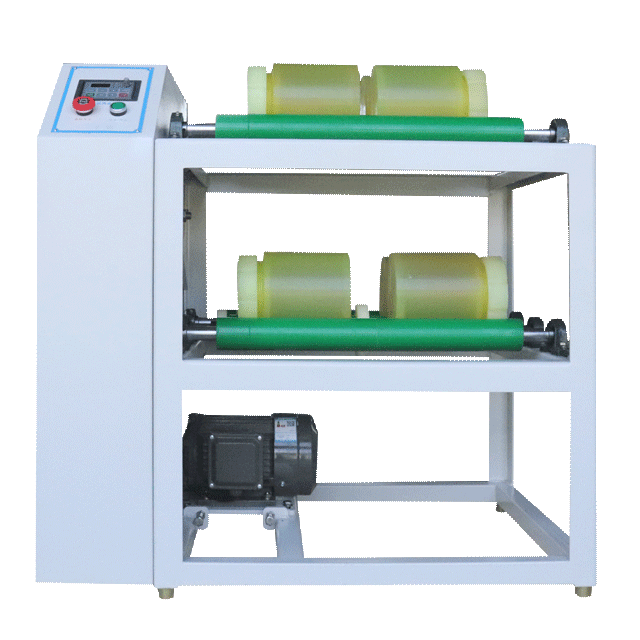
Jar Mill with 8 Working Stations: A Practical Guide for Multi-Sample Grinding

If you have ever lined up six or eight sample bags on a bench and wondered how you would get through them before lunch, the jar mill with 8 working stations exists for exactly that moment. Instead of one drum turning one jar, you get eight positions turning eight jars at once — same speed, same run time, same motion profile — so eight samples come out genuinely comparable instead of "roughly similar." The jar mill with 8 working stations is the machine we are going to unpack here: what it is, how grinding actually happens inside each jar, and how to run it so your results repeat.
No jargon walls, no sales pitch — just the things we wish someone had told us the first time we loaded eight jars and wondered why one of them behaved differently from the others.
What a jar mill with 8 working stations actually is
Strip away the paint and a jar mill is a simple idea: a drum, or a set of rollers, spins cylindrical jars around their own axis. Inside each jar sit grinding balls and your sample. As the jar turns, the balls tumble, lift and fall back onto the powder. That repeated impact and rolling friction is what breaks particles down. Nothing exotic — which is exactly why it works so dependably.
The drum ball mill family, in plain language
You will see this class of equipment described in several ways, and the names overlap more than people expect. Drum ball mill, roller jar mill, pot mill, jar rolling mill — all of them describe the same core action of rotating a jar full of media. The differences come down to how many jars the machine holds, how those jars are driven, and how much control you have over speed and time.
The 8-station version takes that core action and multiplies it by eight. Each station is a position where a jar sits and rotates. Because the positions share one drive system, all eight jars turn at the same speed for the same duration. If you have ever tried to keep two separate machines in sync by hand, you already know why that matters.
Why eight stations beat eight separate runs
Repeatability is the quiet hero here. When every jar sees the same rotational speed, the same total revolutions and the same geometry, differences between your results come from the samples — not from the machine. That is a big deal when you are comparing ore bodies, checking batch-to-batch consistency of a pigment, or validating a milling recipe before scaling it up.
Throughput follows close behind. Eight jars per run means eight times the samples in the same wall-clock time, using one motor and one bench footprint. In a busy preparation lab, that is the difference between running the mill twice a day and running it twice a week.
There is also a sample-size argument. Small jars suit small samples. If your analytical method only needs a few grams, you do not want to fill a huge drum just to get a representative grind — you want eight modest jars doing modest jobs in parallel.
How grinding actually happens inside each jar
Inside a rotating jar, the media do not simply spin with the wall. Depending on how fast the jar turns, the balls behave in different ways, and that behaviour decides whether you are grinding efficiently or just polishing the inside of the jar.
Tumbling, cascading and cataracting
At low speed, the ball charge slides and tumbles gently. This is called cascading, and it is dominated by abrasion — particles get rubbed and sheared between balls rolling over one another. Abrasion is gentle on the sample and tends to produce finer, more uniform powder, but it is slow.
Speed up and the charge lifts higher before it breaks away and falls. That is cataracting, where balls arc through the air and land on the powder below. Impact takes over from abrasion, grinding gets faster and coarser, and the risk of contaminating your sample with jar and ball material goes up.
Push the speed further still and you reach a point where the whole charge is pinned to the wall by centrifugal force and simply rotates with the jar. No tumbling, no impact, no grinding. This is why "faster" is not the same as "better," and why most jar mills are deliberately designed to run at low, controlled rotational speeds.
Why the jar keeps turning instead of shaking
Vibratory mills and planetary mills shake or fling the media at high energy. A jar mill does the opposite: it is a slow, steady, low-energy process. The payoff is heat. A gentle tumbling action puts far less thermal stress on your sample, which matters for materials that decompose, oxidize or change phase when they warm up. If your powder is heat-sensitive, slow and steady usually wins.
Jars, balls and fill ratios: three choices that decide your result
Give two people the same mill and the same sample and they can still produce wildly different powders. Almost always, the difference traces back to three choices: what the jar is made of, what the balls are made of and how big they are, and how much of each you put in.
Jar material matters more than you think
Grinding is abrasive, and every hour of milling slowly eats the jar and the media. Those worn-away atoms do not vanish — they land in your sample. So the first question is not "which jar is strongest" but "which jar contaminates my powder in a way I can tolerate."
Hard, dense ceramic jars such as alumina or zirconia resist wear well and suit hard, abrasive feeds. Agate is a favourite when contamination has to stay minimal and the sample is not brutally hard. Stainless steel jars are tough and cheap to replace, but they shed iron and chromium, which is bad news if you are analysing trace metals. Polymer jars such as nylon or PTFE are chemically inert and gentle, useful for soft materials and for keeping metal out of the picture entirely.
Ball size, ball charge and sample load
Ball size is a trade-off between impact energy and the number of contact points. Bigger balls hit harder and break coarse material quickly; smaller balls create more contacts and grind fine. A common approach is a mixed charge — a few large balls to crack the coarse particles, many small ones to finish the job.
The fill level matters too. If the jar is nearly full, the charge cannot lift or fall and grinding stalls. If it is nearly empty, most of the energy goes into balls colliding with each other instead of with your sample. A useful rule of thumb is to fill roughly a third to a half of the jar volume with media, then add sample so the powder sits in the gaps between balls rather than drowning them.
Speaking of sample load: more powder is not more production. Overloading cushions the impacts and slows the grind dramatically. Start modest, watch how the particle size responds, and increase only when the curve says you can.
Where an 8-station jar mill earns its keep
Multi-position jar mills show up wherever a lab has to process many small samples the same way. A few scenes that will feel familiar.
Mining, geology and cement
Ore samples arrive in batches and every one of them needs the same preparation before assay. Eight jars let a geologist run a full batch of drill-core intervals under identical conditions, which makes grade comparisons meaningful. Cement and clinker labs use the same logic for raw meal and finished product checks.
Battery materials, ceramics and pigments
In battery research, cathode and anode powders need a consistent particle size before testing, and recipes are usually screened in parallel — several formulations, same milling energy. Ceramic and pigment producers use multi-station mills for colour consistency checks, where a slight difference in grind can shift the shade.
Sample preparation for analysis
XRF, XRD and spectroscopy all prefer a powder that is fine and homogeneous. Running eight jars at once means eight unknowns prepared identically, so the analytical result reflects the sample rather than the preparation. It also means you can slip a standard or a duplicate jar into the same run, which is an easy way to prove the method is under control.
Setting up and running the machine
Most of the frustration people have with jar mills comes from setup, not from the machine itself. Get these habits right and the mill becomes boring — which is the highest compliment a preparation tool can receive.
Loading the jars properly
Weigh your sample and media rather than eyeballing them, and record both. Use the same jar type, the same ball charge and the same total mass in every station you intend to compare, because an unnoticed difference of fifty grams is enough to shift your particle size distribution.
Seal each jar carefully. Powder that escapes during a run does two bad things: it changes the sample mass you thought you had, and it ends up in places you will be cleaning for weeks. Check the gasket or lid seating before the jar goes onto its station, and make sure the jar sits squarely in its cradle. A jar that is slightly off-centre will wear unevenly and add noise to your results.
Speed, time and repeatability
Once you find a speed and duration that give you the particle size you want, write them down and treat them as part of the method. Changing either one invalidates your previous results. If you need finer powder, resist the temptation to simply crank up the speed — extend the time instead, or adjust the ball charge. Longer at a moderate speed usually beats shorter at a high speed, in fineness and in contamination alike.
Run a blank jar now and then: media only, no sample, for the same duration. Weigh the jar before and after. The mass you lose is jar and ball wear, and it is a direct estimate of how much foreign material you are adding to your powders. It is a five-minute check that saves a lot of head-scratching later.
Noise, dust and safety
A loaded jar mill is not loud by industrial standards, but eight jars tumbling together produce a steady low rumble that wears on a room over a full day. Placing the unit on a stable bench, away from the edge, and keeping jars evenly distributed across the stations both reduce vibration. Never open a jar straight after a run to check the powder — give it a few minutes for dust to settle, and wear a mask when you do.
Keep loose media covered. Spilled balls on a tiled floor are a slip hazard nobody expects until it happens to them.
Cleaning, care and the problems you will actually meet
A cleaning routine that takes minutes, not hours
Clean jars immediately after emptying them. Powder that sits overnight cakes into the corners, and the next sample inherits it. A dry wipe followed by a rinse with water or a suitable solvent, depending on jar material, is usually enough. For cross-contamination-sensitive work, run a small charge of the next sample's own material through the jar before the real run. This is called a grind-out, and it is standard practice in trace analysis labs.
Common problems and easy fixes
- Grinding suddenly slows down. Check the fill level first. Either the jar is overfilled, or the media have compacted into a single mass. Split the charge and restart.
- Results drift between stations. Weigh the contents of each jar. Unequal sample or media mass is the usual culprit, followed by a worn jar or a deformed gasket.
- Powder looks coarser than before. The balls have worn down, or the charge has picked up fines and cushioned itself. Replace or top up the media.
- Unusual contamination appears in analysis. Reconsider the jar and ball material. Steel media in a steel jar are the classic source of iron in a trace-metal result.
- Excess vibration or noise. A jar is sitting off-centre, or the machine is not level. Fix it before you run again, because vibration shortens the life of bearings and drive components.
None of these require a service visit. They are the ordinary signals a well-used mill sends you, and reading them keeps a preparation lab running smoothly for years.
Eight stations versus the other mills in the catalogue
If you are still deciding, here is the plain-language comparison. A single-jar roller mill is the cheapest entry point and perfect if you grind one sample at a time and rarely need duplicates. A vibratory mill shakes one jar fast and hard, giving quick results for small amounts, but it brings heat and noise with it. A planetary ball mill is the high-energy option, reaching very fine particle sizes quickly, though it is typically a one- or two-jar proposition and it is not gentle on temperature-sensitive powders.
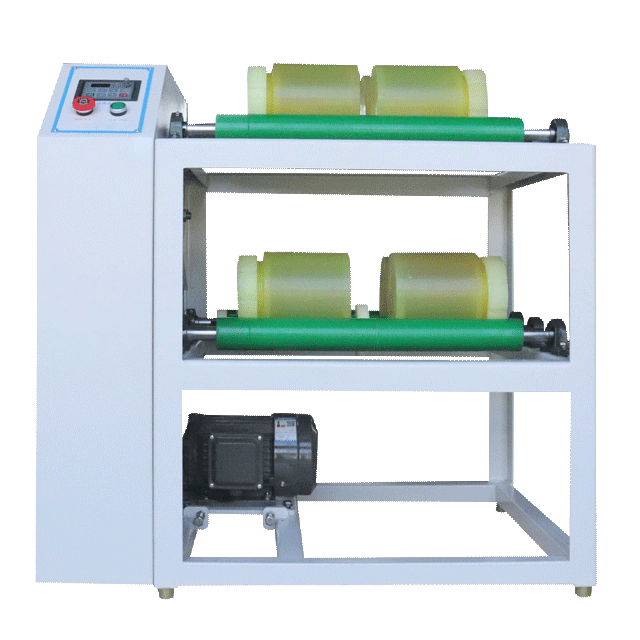
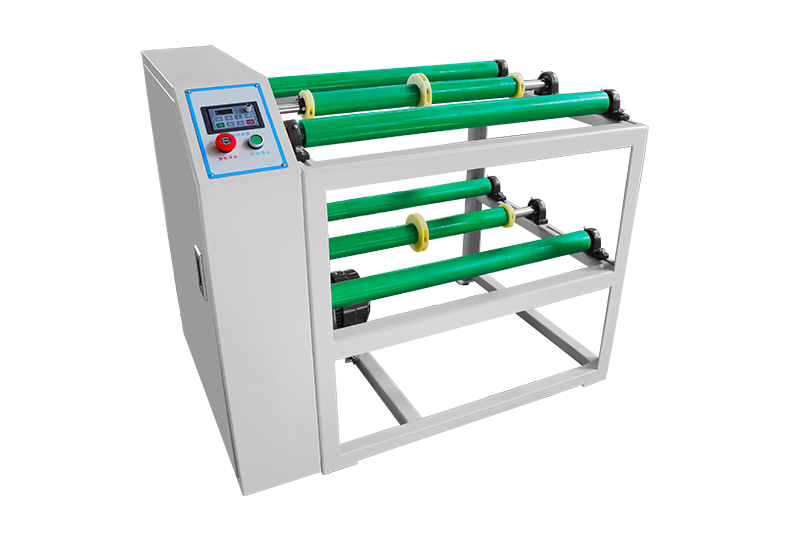
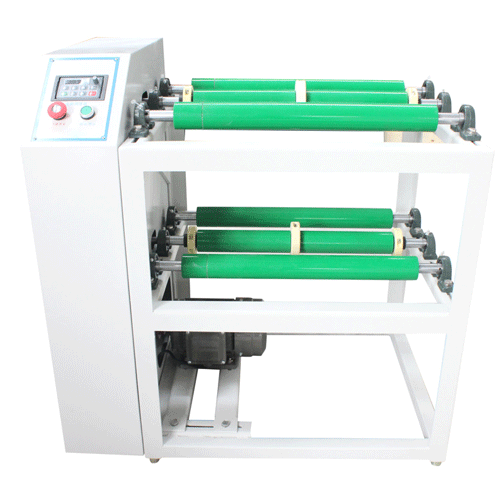
The 8-station jar mill sits at the other end of that spectrum: modest energy per jar, a high sample count per run, and excellent consistency from jar to jar. If your bottleneck is preparing many samples to a common specification rather than chasing the smallest possible particle size, this is the machine class you want. You can see the full layout and jar arrangement on the jar mill with 8 working stations page.
Frequently asked questions about 8-station jar mills
How many samples can I grind at once?
Eight, one per station — that is the whole point of the design. In practice you can run fewer jars and leave the remaining stations empty, though keeping the load balanced across the machine is kinder to the drive.
Can I grind different materials in different jars at the same time?
Yes, and labs do it constantly. Just remember that all jars share one speed and one run time, so anything you intend to compare should be treated identically. If one jar needs a very different duration, run it separately.
Is a jar mill the same as a planetary ball mill?
No. A planetary mill spins jars around a central axis while the jars counter-rotate, producing much higher energy and much finer particles in less time. A jar mill is slower and gentler, better suited to larger sample volumes and heat-sensitive materials. If you need nanoscale grinding, a planetary mill is the right tool; if you need eight consistent preparation samples, the jar mill wins on simplicity.
How long does a typical run take?
It depends entirely on your target fineness and the hardness of the material. Soft, brittle powders may reach the desired size quickly, while hard minerals take considerably longer. The honest answer is to run a small trial series, plot particle size against time, and pick the point where the curve flattens — beyond that you are mainly adding wear.
Do I need special jars?
You need jars that fit the machine's stations and suit your material. Match the jar material to your contamination budget and the sample hardness, and keep one consistent set for anything you intend to compare.
The short version
A jar mill with 8 working stations is not glamorous. It spins jars slowly, steadily and without fuss — and that is exactly why labs trust it. Eight jars, one speed, one timer, and eight samples that can be compared honestly.
Choose jar and media materials that suit your powder, keep fill levels sane, log your settings the way you log your analytical method, and the machine will quietly do its job for years. Then weigh your charges, seal the jars, and let the tumbling do the rest.
Related Products
Get In Touch
Our professional team will reply to you within one business day. Please feel free to contact us!