
The Ultimate Guide to Corundum Grinding Balls: Properties, Applications, and Selection Tips

If you've ever worked with a planetary ball mill, you know that the choice of grinding media can make or break your experiment. Too hard? You might contaminate your sample. Too soft? Your milling efficiency tanks. Enter the corundum grinding ball – a workhorse in the world of ceramic milling media that strikes a fantastic balance between hardness, purity, and cost.
In this guide, we’ll walk through everything you need to know about corundum grinding balls: what they are, why they’re so popular, how they compare to other media, and how to pick the right ones for your work. By the end, you’ll feel confident about whether corundum is the right fit for your next milling project.
What Exactly Is a Corundum Grinding Ball?
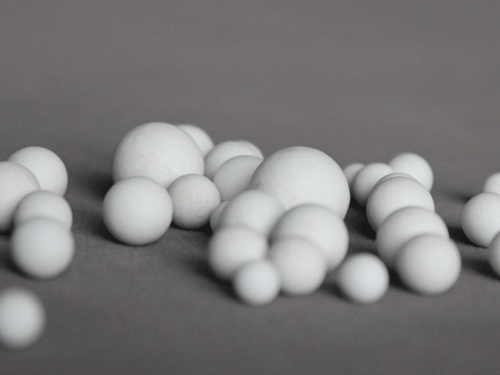
Corundum is a crystalline form of aluminum oxide (Al₂O₃). It’s one of the hardest naturally occurring minerals – second only to diamond on the Mohs scale. In the lab and industry, we use high-purity synthetic corundum (often >92% Al₂O₃) to create grinding balls that are incredibly hard, dense, and chemically inert.
These balls are also commonly referred to as alumina grinding balls or high-alumina ceramic balls. The terms are often used interchangeably, but technically, “corundum” implies a specific crystalline phase (α-Al₂O₃) that gives the material its exceptional hardness.
Key Properties of Corundum Grinding Media
Let’s break down the numbers and characteristics that make corundum balls so valuable.
Hardness & Wear Resistance
With a Mohs hardness of 9, corundum is extremely resistant to abrasion. This means the grinding media itself wears down very slowly during milling, keeping your sample free from excessive aluminum contamination (though some trace wear is unavoidable). For most non-metallic materials, the contamination level is negligible.
High Density
Corundum balls typically have a density of about 3.6–3.9 g/cm³, depending on the exact composition. This is significantly heavier than glass or agate, giving them more impact energy per collision. For planetary ball mills, higher density generally means faster grinding – a big plus when you’re processing tough materials.
Chemical Inertness
Except for strong acids and alkalis under extreme conditions, corundum is chemically stable. It won’t react with most samples, making it a safe choice for many chemical, pharmaceutical, and ceramic applications.
Smooth Surface & Low Porosity
High-quality corundum balls have a very smooth surface, which reduces the risk of cross-contamination between batches and makes cleaning easier. You can reuse them many times without degradation.
How Corundum Balls Compare to Other Grinding Media
Choosing the right media often comes down to comparing options. Here’s a quick look at how corundum stacks up against other popular materials you might find at TENCAN’s ball mill media collection.
| Media Type | Hardness (Mohs) | Density (g/cm³) | Typical Use |
|---|---|---|---|
| Corundum (Al₂O₃) | 9 | 3.6–3.9 | Hard materials, ceramics, minerals, cement |
| Zirconia (ZrO₂) | 8.5 | 5.5–6.0 | Very hard materials, fine grinding, low contamination |
| 304 Stainless Steel | ~5.5 | 7.9 | Tough materials, impact grinding, but may contaminate with Fe/Cr |
| Agate (SiO₂) | 7 | 2.6 | Soft materials, precious samples, low contamination |
You can see that corundum offers a great middle ground: it’s nearly as hard as zirconia but much more affordable, and it’s denser than agate, giving faster milling. If you’re curious about specific alternatives, check out our detailed pages on zirconia grinding balls and agate balls.
Common Applications of Corundum Grinding Balls
Because of their balanced properties, corundum balls are used across many fields. Here are some classic scenarios:
- Ceramics & Glazes: Milling raw materials like feldspar, quartz, and clay for ceramic bodies and glazes. Corundum doesn’t introduce color or unwanted elements.
- Minerals & Ores: Grinding mineral samples like limestone, bauxite, and phosphate. The high wear resistance keeps media consumption low.
- Cement & Building Materials: Fine grinding of clinker, slag, and fly ash.
- Chemical & Pharmaceutical: Milling active ingredients, pigments, and catalysts where purity matters.
- Electronics: Preparing powders for electronic ceramics, ferrites, and insulators.
Choosing the Right Size and Grade
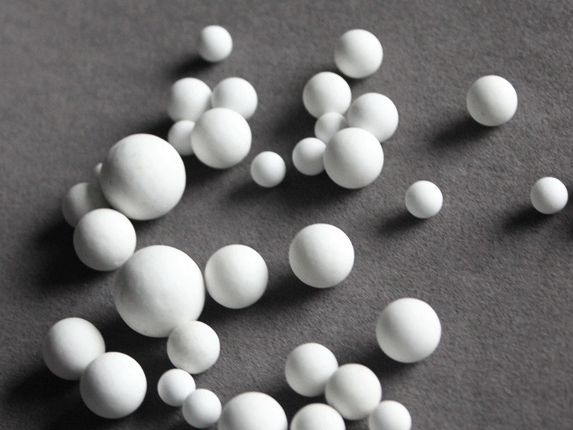
When you’re browsing the corundum grinding ball product page at TENCAN, you’ll see a range of diameters from just a few millimeters up to 30mm or more. How do you choose?
Small Balls (1–5 mm)
Best for fine grinding and achieving submicron particle sizes. Use them when you need high surface area contact and gentle milling.
Medium Balls (6–15 mm)
The sweet spot for most planetary ball mill applications. They provide enough impact for hard materials while still offering good surface area for efficient grinding.
Large Balls (20–30 mm and above)
Designed for breaking down coarse chunks or very hard materials. They deliver high impact forces but lower total surface area.
Also, pay attention to the alumina content. Standard corundum balls are around 92% Al₂O₃, but you can also find 95% and even 99% grades. Higher alumina means better hardness and lower wear, but also higher cost. For most routine milling, 92% or 95% works great.
Tips for Using Corundum Balls in Your Mill
- Match ball size to jar volume: A common rule is to fill the jar about one-third full with balls, one-third with sample, and leave one-third empty for movement.
- Consider using a mix of sizes: A combination of large and small balls can improve packing density and grinding efficiency.
- Wash before first use: Even though corundum balls are very clean, a quick rinse with deionized water and ethanol can remove any dust.
- Don’t overfill: Overloading the jar with balls reduces the free space needed for effective impact.
- Check for cracking: After intensive milling, inspect balls for cracks. A damaged ball can contaminate your sample.
Why Choose Corundum from TENCAN?
At Changsha Tianchuang Powder Technology Co., Ltd. (TENCAN), we manufacture our corundum grinding balls using high-purity raw materials and advanced sintering processes. The result is a uniform microstructure with consistent hardness and density from ball to ball. We also offer a wide selection of diameters to fit all standard planetary ball mills. If you need custom sizes or special grades, our team can accommodate.
We understand that every grinding task is unique. That’s why we provide not only corundum balls but also a full range of media, including stainless steel, tungsten carbide, and polyurethane-coated iron core balls – so you can always find the perfect match.
Final Thoughts
Corundum grinding balls are an excellent choice for a wide variety of milling tasks. They combine high hardness, good density, chemical inertness, and reasonable cost. Whether you’re grinding ceramics, minerals, or chemical powders, they deliver consistent results without breaking the bank.
Next time you set up your planetary ball mill, take a closer look at the media you’re using. If you’ve been relying on steel or agate and wondering why your results aren’t optimal, give corundum a try. You might be surprised by the difference.
Happy milling!
Get In Touch
Our professional team will reply to you within one business day. Please feel free to contact us!