
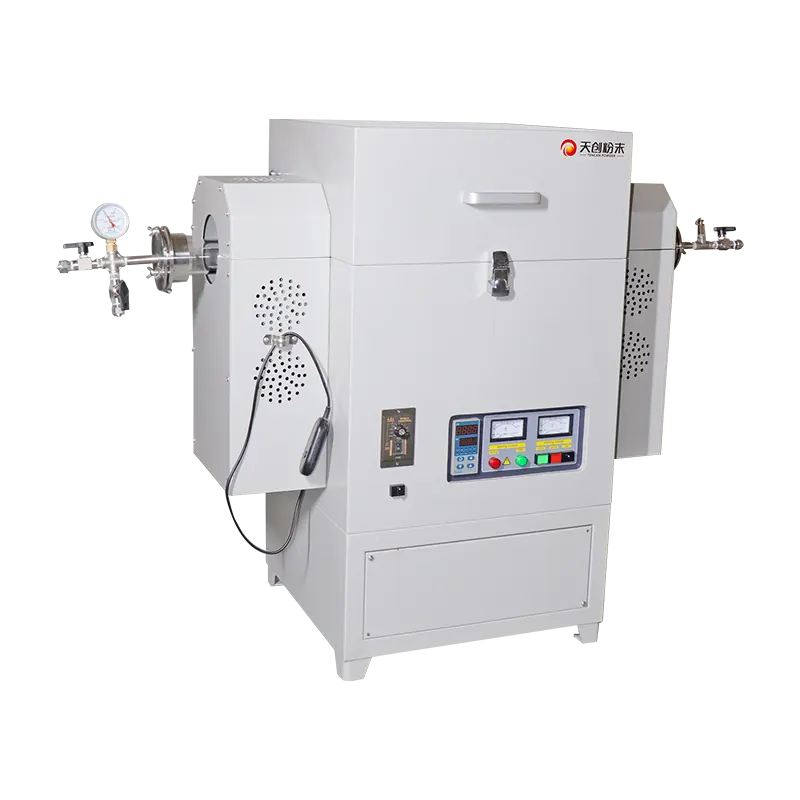
Vibration Mill: Working Principle

A vibration mill looks almost too simple until you watch it run. The grinding tube barely travels a few millimetres, yet the powder inside is hammered down to micron size in minutes. If you need fine, uniform powder without a factory full of equipment, this machine deserves a closer look.
What Is a Vibration Mill?
Picture a heavy steel tube sitting on springs instead of trunnions, filled with hundreds of steel or ceramic balls. A motor spins a shaft fitted with eccentric weights, and that imbalance makes the tube vibrate in a fast, tight circle. Frequency is high, often 1000 to 1500 vibrations per minute, while amplitude stays small, from a few millimetres up to about 20 mm.
That combination is the whole trick. The tube never lifts the media and drops them the way a tumbling mill does. It shakes the media bed so hard that it fluidises, and the balls collide with each other, with the tube wall, and with powder trapped in between. Every collision is a chance to fracture a particle.
Why High Frequency Beats Big Drops
In a tumbling mill, much of the motor energy goes into lifting the ball charge against gravity. In a vibration mill the media stay in a dense, excited bed, so energy goes into impact and attrition instead of lifting. You get faster size reduction, a narrower particle size distribution, and a fine product in a fraction of the time.
Vibration Mill vs Ball Mill vs the Rest
People use "ball mill" as a catch-all name, but the family is bigger than that.
| Mill type | How the media move | Typical fineness | Best fit |
|---|---|---|---|
| Tumbling ball mill | Slow rotation, balls lifted and dropped | Tens of microns | Large tonnage, coarse grinding |
| Vibration mill | High frequency, small amplitude | A few microns or finer | Fine grinding, medium batches |
| Planetary ball mill | Pots rotating on a sun wheel | Sub-micron | Laboratory samples |
Within the vibration family you will also meet double-tube designs, which mount two grinding tubes on one exciter for more volume per frame and better balance, plus batch versions for lab work and continuous versions for steady production.
Where Vibration Mills Earn Their Keep
- Battery materials: uniform particle size affects electrochemical performance.
- Technical ceramics: alumina and zirconia powders that need tight size control.
- Cemented carbide: mixing tungsten carbide and cobalt before pressing.
After Milling: The Thermal Step
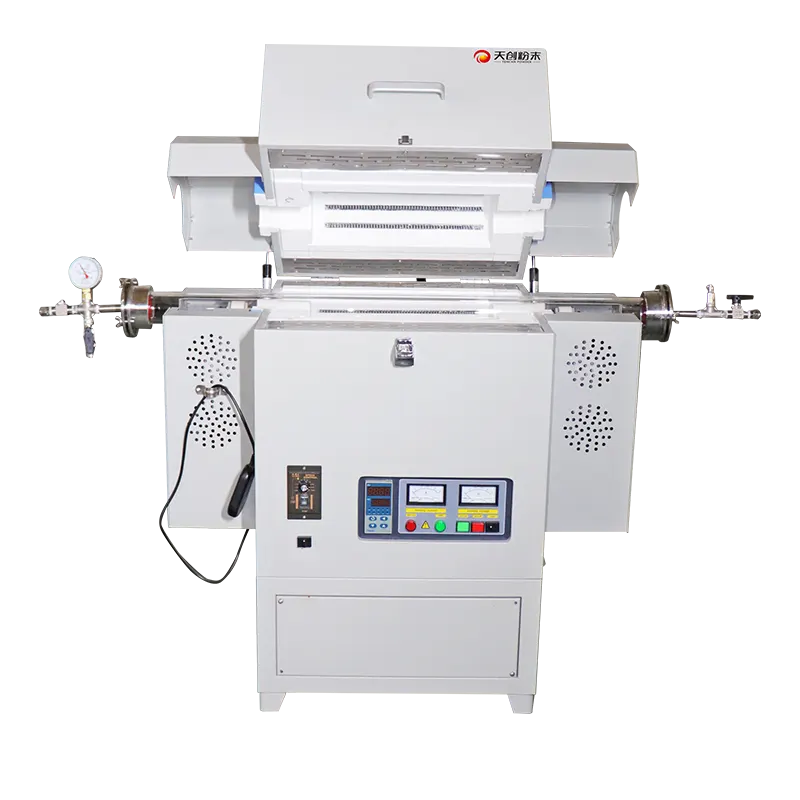
Grinding is rarely the last step. Most fine powders are calcined or sintered afterwards, and that is where a rotary tube furnace comes in. Instead of a static boat sitting in a hot zone, the powder tumbles slowly inside a rotating tube, so every particle sees a similar temperature.
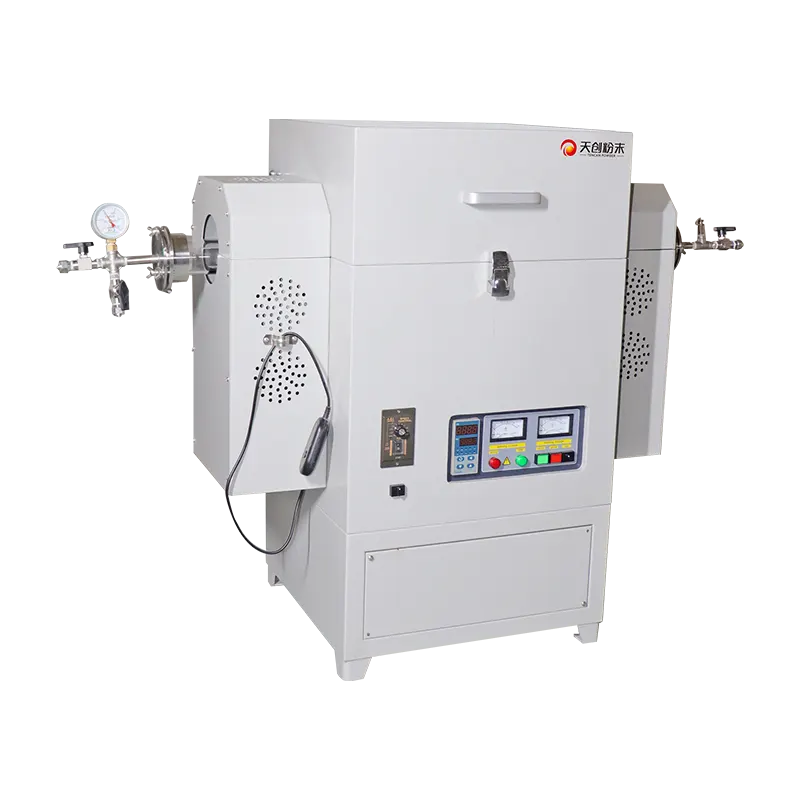
Rotating the tube keeps material moving, which improves heat transfer, cuts local overheating and gives you a more consistent product. It also opens the door to continuous processing, so freshly milled powder can go straight from the mill into the furnace.
TENCAN builds a rotary tube furnace that pairs naturally with a fine grinding line, and the same team covers the milling side of the process too. If your powder needs a controlled heating step after grinding, it is worth looking at the rotary tube furnace before you plan the rest of the line.
Troubleshooting: What Usually Goes Wrong
| Symptom | Likely cause | What to do |
|---|---|---|
| Fineness stops improving | Agglomeration or media too large | Shorten the cycle, use smaller media |
| Machine shakes the floor | Worn springs or unbalanced exciter | Inspect springs, retighten, rebalance weights |
Quick Answers to Common Questions
How fine can a vibration mill grind?
For many powders, single-digit microns are a realistic target with the right media and cycle time.
Is it loud?
Louder than a tumbling mill, yes. Damping mounts or an acoustic enclosure are usually part of the installation.
Picking Your Next Step
If you take one thing away, let it be this: a vibration mill is a fine-grinding tool, not a coarse-crushing one. Give it a well-prepared feed, the right media and a sensible fill ratio, and it will deliver a tight particle size distribution in a small footprint.
Related Products
Get In Touch
Our professional team will reply to you within one business day. Please feel free to contact us!