
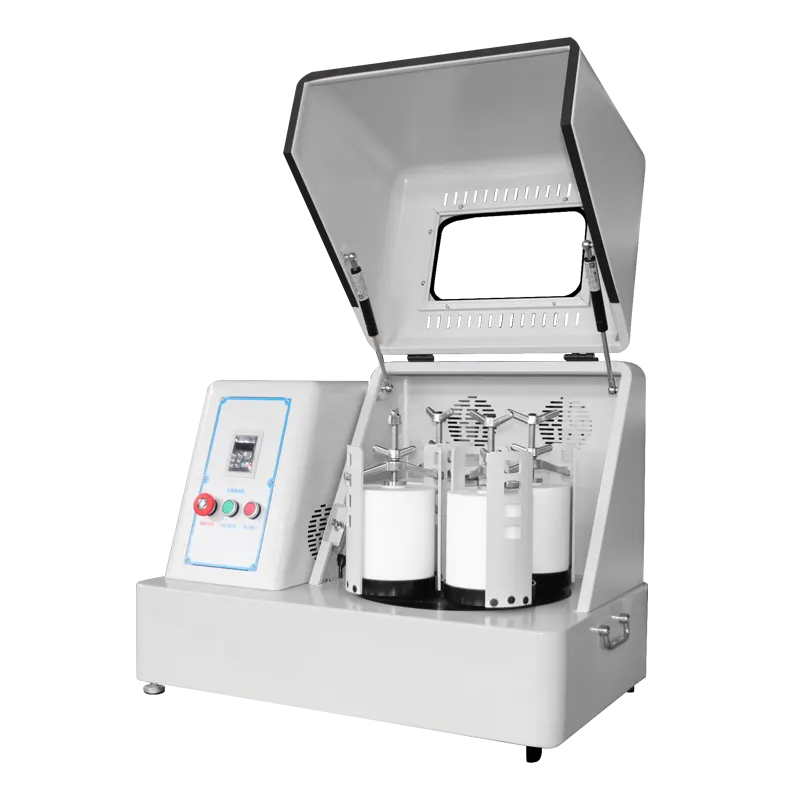
Laboratory Planetary Grinder: A Complete Guide to Selection and Best Operation

If you work in a lab that deals with powders, you already know the struggle: getting a sample down to a consistent, ultra-fine particle size can feel like a never-ending battle. You shake, you sieve, you maybe even resort to that old mortar and pestle—and still, the results are uneven. That's where a laboratory planetary grinder comes in. It's one of those pieces of equipment that quietly revolutionizes your workflow once you understand what it does and how to use it properly. In this guide, we'll walk through everything you need to know, from the basic mechanics to practical tips that will save you time and frustration. No jargon without explanation, no fluff—just a friendly deep dive into the world of planetary grinding.
What Exactly Is a Laboratory Planetary Grinder?
A laboratory planetary grinder is a type of ball mill that uses the combined motion of a rotating sun wheel and rotating grinding jars to crush, mix, and reduce materials to very fine powders. The 'planetary' name comes from the way the jars move: they orbit around a central axis, just like planets orbiting the sun, while also spinning on their own axis. This dual rotation creates powerful centrifugal forces that make the grinding balls inside the jars collide with the sample at high energy. The result is fast, efficient size reduction—often down to the sub-micron or even nanometer range, depending on the material and settings.
Unlike a simple ball mill that just tumbles, a planetary grinder is designed for labs that need precision, reproducibility, and the ability to handle small batches of expensive or rare materials. Whether you're preparing samples for X-ray diffraction, developing new battery materials, or just trying to get a uniform powder for analysis, this machine earns its keep. And when you look at a model like our Laboratory planetary grinder, you'll see it's built to be compact enough for a benchtop yet powerful enough for serious research.
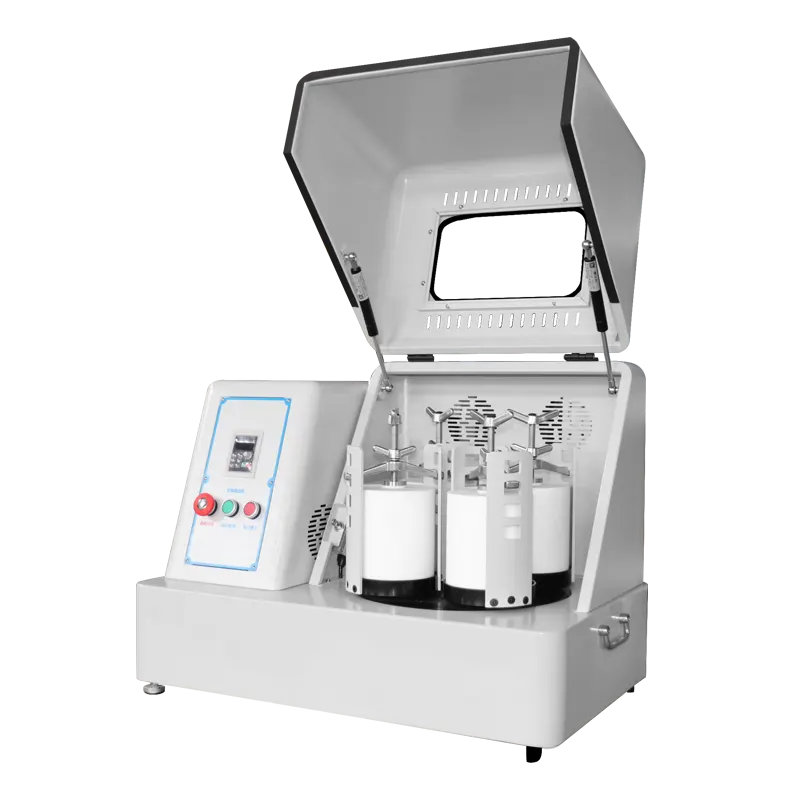
How a Laboratory Planetary Grinder Works: The Core Mechanics
To really get the most out of your grinder, it helps to understand what's happening inside. The magic is all about relative motion and energy transfer.
The Role of the Sun Wheel and Planetary Discs
Inside the machine, there's a large disc called the sun wheel that rotates at a set speed. On top of this disc, you'll find one or more smaller discs (planetary discs) that hold the grinding jars. As the sun wheel turns, the planetary discs are carried around with it. At the same time, a belt or gear system makes the planetary discs rotate in the opposite direction. So each jar is doing two things at once: orbiting the center and spinning around its own axis. This creates a figure-eight-like motion for the grinding balls inside, and that's where the high-energy impacts come from.
Grinding Jars and Balls: The Real Workhorses
The grinding jar is where the action happens. It's a sealed container, usually made of hardened steel, stainless steel, tungsten carbide, zirconia, agate, or even PTFE, depending on what you're grinding and how much contamination you can tolerate. Inside the jar, you place grinding balls—often spheres of the same material as the jar or a harder material. When the jar moves, the balls tumble and collide with the sample, breaking it down through a combination of impact, friction, and shear forces. The size and number of balls, as well as the jar volume, directly affect how fine and how fast you can grind.
Why the Name 'Planetary'?
It's a simple analogy: just as planets in our solar system both orbit the sun and rotate on their own axes, the grinding jars do the same. This motion multiplies the grinding energy compared to a simple tumbler. That's why planetary grinders can achieve in minutes what might take hours in a conventional ball mill. Plus, the centrifugal forces keep the balls pressed against the jar wall, so they don't just slide—they hit with real force.
The Science Behind the Grind: Impact, Friction, and Shear
When the grinding balls collide with the sample, they don't just smash it. Three main forces are at work: impact, friction, and shear. Impact happens when a ball hits a particle at high speed, breaking it into smaller pieces. Friction occurs as balls rub against each other and the jar wall, wearing down particles. Shear is the sliding force that stretches and tears materials. The beauty of planetary motion is that it combines all three in a constantly changing pattern. The direction of rotation also matters: some materials grind better when the sun wheel and jars rotate in the same direction, others when they counter-rotate. Many modern grinders let you switch direction, so you can test what works best. Understanding these forces helps you choose the right ball size and speed. For brittle materials, impact dominates; for fibrous or elastic materials, shear and friction are more effective.
Key Components of a Laboratory Planetary Grinder
Let's break down the main parts you'll interact with, so you know what to look for when choosing or operating one.
The Grinding Jar
The jar is your sample's temporary home. It needs to be tough, chemically inert, and easy to clean. Common materials include:
- Stainless steel: Durable and affordable, but can introduce iron contamination.
- Tungsten carbide: Extremely hard and wear-resistant, ideal for hard samples, but heavy and expensive.
- Zirconia: Very low contamination, good for ceramics and electronic materials.
- Agate: Naturally inert, great for geological and pharmaceutical samples, but can crack under heavy impact.
- PTFE: For soft or reactive materials, but not for high-energy grinding.
Jar volume typically ranges from 12 mL to 500 mL in lab models. Smaller jars are perfect for precious samples; larger ones give you more throughput. You'll often get multiple jars, which lets you run several samples at once—a huge time-saver.
Grinding Balls
Balls come in different diameters, usually from 1 mm to 20 mm. The general rule is: bigger balls for initial crushing, smaller balls for fine grinding. You want enough balls to fill about 30–50% of the jar volume, but not so many that they can't move freely. The material of the balls should match your contamination tolerance—same options as jars. Mixing ball sizes can actually improve grinding efficiency because small balls fill the gaps between large ones.
The Drive System and Control Panel
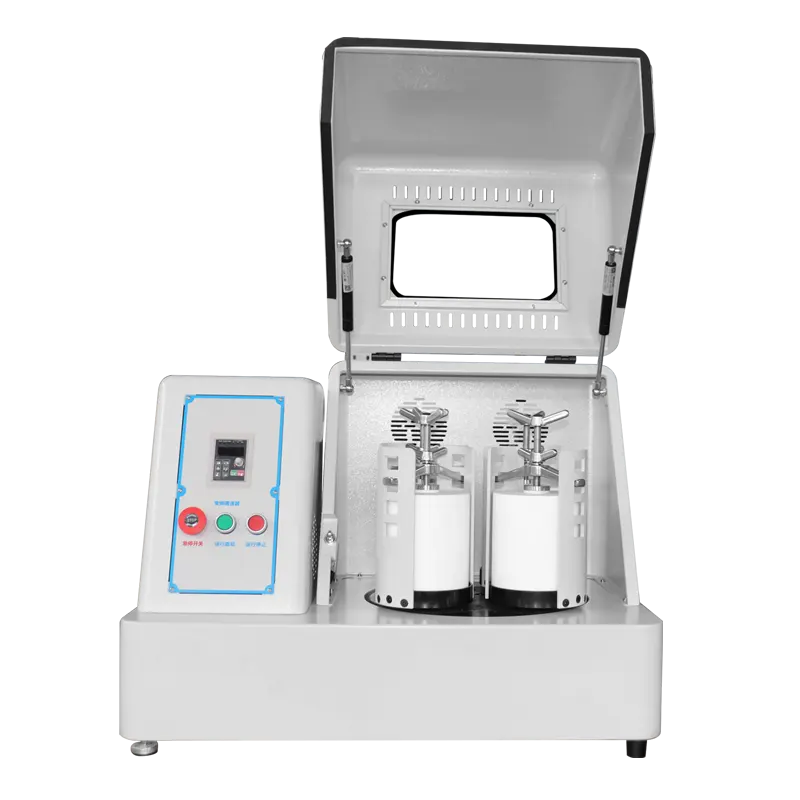
The drive system is what makes the sun wheel and planetary discs turn. Most modern lab grinders use a brushless motor with a belt or direct gear drive. The control panel lets you set the rotation speed (often called 'rpm' or 'frequency' in Hz), the grinding time, and sometimes the direction of rotation. Some advanced models offer programmable cycles with pauses (to prevent overheating) and reverse rotation. A clear digital display and intuitive buttons make a big difference in daily use.
Motor power is another spec to check. A more powerful motor handles heavier jars and higher speeds without bogging down. But you don't need a huge motor for small jars—it's all about matching the motor to your typical workload. Also look at the noise level; some motors are noticeably quieter, which matters if your lab is shared space.
Why Use a Laboratory Planetary Grinder? Benefits for Your Lab
There are plenty of ways to grind samples, so why choose planetary? Here are the standout advantages.
Ultra-Fine Grinding Down to Nanoscale
Thanks to the high-energy impacts, planetary grinders can reduce particles to below 100 nanometers in some cases. That's essential for nanotechnology research, where particle size directly affects properties like reactivity, conductivity, and strength. If you need a powder that's uniformly nano-sized, this is one of the most accessible tools to get there.
Versatility Across Materials
From soft polymers to hard ceramics, from brittle minerals to elastic biological tissues, a planetary grinder can handle a huge range. You just need to pick the right jar and ball material, adjust speed and time, and you're good. It's also great for mixing and homogenizing, not just grinding. Some labs use it for mechanochemical synthesis, where grinding triggers chemical reactions.
Reproducibility and Control
Because you can set exact speeds, times, and cycles, you get consistent results run after run. That's critical for research where you need to compare data across batches. A planetary grinder takes the guesswork out of sample prep, making your experiments more reliable.
Understanding Key Parameters: What Really Matters
If you want to master your grinder, you need to speak its language. These are the parameters that make or break your grinding results.
Rotation Speed and Its Effect on Grinding
Speed is the biggest lever you can pull. Higher speed means more energy per impact and more collisions per second, so grinding is faster and finer. But there's a catch: too much speed can generate heat that degrades your sample, or cause the jar to wear faster. It can also lead to agglomeration—where fine particles stick together again. The sweet spot depends on your material. For heat-sensitive samples, use lower speeds and longer times, or take advantage of pause cycles.
Grinding Jar Material and Size
We covered materials earlier. Size matters too: a smaller jar with the same ball-to-powder ratio will grind faster because the balls have less distance to travel and more collisions per unit volume. But smaller jars hold less sample. If you need to process many samples, a larger jar or multiple jars on the same machine is the way to go. Also, the jar's inner shape (usually cylindrical with rounded ends) affects how the balls move.
Ball-to-Powder Ratio
This is the weight ratio of grinding balls to your sample. A typical ratio ranges from 5:1 to 20:1. Higher ratios give more impacts per particle, leading to finer grinding, but they also reduce the amount of sample you can process per batch. For initial trials, start with 10:1 and adjust. If grinding is slow, add more balls; if contamination is a concern, use fewer but larger balls and longer time.
Grinding Time and Cycle
Time is obvious: longer grinding usually means finer powder. But there's a point of diminishing returns. After a certain time, particles may reaggregate or the jar may heat up. Many labs use cycles: grind for 5–10 minutes, pause for 2–5 minutes, repeat. This keeps things cool and improves efficiency. Experiment with total time and cycle patterns to find what works for your sample.
Atmosphere Control
Some samples oxidize quickly, so you can fill the jar with argon or nitrogen. This is especially important for reactive metals and some polymers. If your grinder has gas-tight jars, you can do this easily. Otherwise, consider a glovebox for loading. Controlling the atmosphere also helps with materials that are sensitive to moisture.
Choosing the Right Laboratory Planetary Grinder
With so many models out there, how do you pick? Focus on these factors.
Match the Grinder to Your Sample Type
Think about hardness, brittleness, and reactivity. Hard samples need powerful motors and tough jars. Reactive samples need inert jars (like zirconia or agate) and maybe an inert gas atmosphere. If you often work with small amounts, a benchtop model with adjustable jar holders is perfect. Our TENCAN laboratory planetary grinder is a solid example of a versatile benchtop unit that handles a wide range of materials.
Consider Jar Capacity and Throughput
How much sample do you typically grind? If you're processing 1–10 grams, a 50 mL jar is fine. For 50–100 grams, go for 250–500 mL. Also look at how many jars the machine can hold at once. Some models accept two or four jars, doubling your throughput. But remember: more jars mean more weight, so the motor needs to be strong enough.
Don't Ignore Safety Features
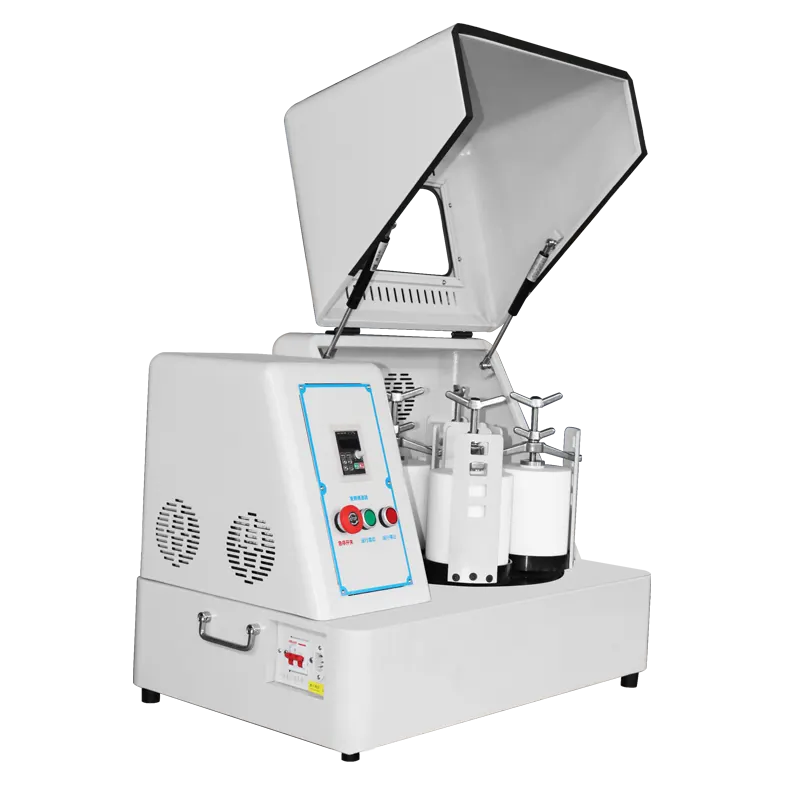
Planetary grinders can be dangerous if a jar fails at high speed. Look for features like a lid interlock, emergency stop, and sturdy construction. Vibration damping is also important—you don't want the machine walking off the bench. A clear lid or viewing window lets you monitor without opening. Noise level is another consideration; some models are quieter than others.
Safety First: Operating Your Planetary Grinder Safely
Safety might not be the most exciting topic, but it's the most important. A planetary grinder operates at high speeds and can cause serious injury if mishandled. Here's what to keep in mind.
Personal Protective Equipment
Always wear safety glasses or goggles when handling jars and balls. Fine powders can irritate your eyes and lungs, so a dust mask or respirator is wise, especially for toxic or ultrafine materials. Gloves protect your hands from sharp particles and chemical residues. If you're using liquid nitrogen for cryogenic grinding, wear a face shield and insulated gloves.
Machine Guarding and Interlocks
Never operate the grinder with the lid open. Most quality machines have an interlock that prevents this, but don't rely on it alone. Make sure the machine is on a stable, level surface. If it starts to vibrate excessively, stop it immediately and check the jar balance. Keep the area around the machine clear of clutter, and don't reach into the grinding chamber while it's running.
Handling Jars and Balls
Jars can be heavy, especially tungsten carbide ones. Lift them carefully to avoid dropping them on your feet. After grinding, the jar may be hot—let it cool before opening. When opening a jar, point it away from your face; there may be a puff of fine powder. Clean up spills immediately to prevent slips and contamination.
Best Practices for Operating a Laboratory Planetary Grinder
Now that you have the machine, let's make sure you use it right. These tips come from real lab experience.
Preparing Your Sample and Jars
Start with a representative sample. If your material is already in chunks, pre-crush it to a few millimeters—this saves grinding time. Make sure the sample is dry; moisture can cause caking. Clean the jar and balls thoroughly before use. Even a tiny amount of previous sample can contaminate your results. Use a brush and, if needed, a solvent that evaporates completely. Never use water if the jar material can rust.
Loading the Jars Correctly
Add the balls first, then the sample. Leave some empty space—about 30–50% of the jar volume should be air. If you fill it too much, the balls can't move; too little, and you waste capacity. Tighten the lid securely. A loose lid will leak powder and may even fly off. For oxygen-sensitive samples, load the jar in a glovebox and seal it there.
Setting Parameters and Running the Machine
Start with moderate speed and a short time, then increase as needed. Always run a small test batch before committing your entire sample. Listen to the machine—if it's rattling or vibrating excessively, stop and check the jar balance. Balance is key: if you're using multiple jars, make sure they have similar weights. If one jar is heavier, the machine will shake. Some models have automatic balancing, but manual checking is always smart.
Cleaning and Maintenance
After each use, clean the jars and balls promptly. Dried sample can be hard to remove. Check the jar seals and O-rings for wear. Lubricate moving parts as recommended by the manufacturer. Keep the machine clean and dust-free. A well-maintained grinder will last for years and give consistent results.
Recording Your Protocol
Good science is reproducible science. Keep a detailed log of every grinding run: sample type, jar and ball material, ball-to-powder ratio, speed, time, cycle pattern, and any observations. This record will save you hours when you need to repeat a result or troubleshoot a problem. It also helps you optimize parameters over time. A simple spreadsheet works fine.
Common Mistakes and How to Avoid Them
Even experienced lab folks slip up. Here are the most common pitfalls and how to dodge them.
- Overloading the jar: More sample doesn't mean faster grinding. It actually slows things down and can damage the motor. Stick to the recommended fill level.
- Using the wrong jar material: Grinding a hard ceramic in an agate jar will destroy the jar and contaminate your sample. Match hardness.
- Ignoring heat: Running at max speed for an hour can bake your sample. Use cycles or lower speeds for heat-sensitive materials.
- Skipping the pre-crush: Throwing in large chunks wastes time and energy. Break them down first.
- Not balancing jars: If you run two jars of different weights, the machine will vibrate and wear out faster. Always pair jars of equal weight.
Applications of Laboratory Planetary Grinders Across Industries
These machines are workhorses in many fields. Let's look at a few.
Materials Science and Nanotechnology
Researchers use planetary grinders to produce nanoparticles, alloy powders, and composites. For example, grinding metal oxides to nanoscale can improve catalytic activity. In battery research, grinding electrode materials increases surface area and enhances performance. The ability to control atmosphere (by sealing jars) also allows work with air-sensitive materials.
Geology and Mineralogy
Geologists grind rock, mineral, and soil samples for X-ray fluorescence (XRF) or X-ray diffraction (XRD). The goal is a homogeneous powder with a consistent particle size. A planetary grinder achieves this quickly and without cross-contamination if you use agate or zirconia jars.
Pharmaceuticals and Biology
In pharma, grinding is used to improve drug solubility and bioavailability. Planetary grinders can process small batches of active ingredients. For biological samples like plant tissue or bone, cryogenic grinding (with liquid nitrogen) is often combined with planetary milling to keep samples brittle and prevent degradation.
Environmental and Chemical Analysis
Environmental labs grind soil, sediment, and waste samples for heavy metal analysis. Homogeneity is critical for accurate results. Planetary grinders deliver the fine, uniform powder needed for reliable analytical data.
Troubleshooting: What to Do When Things Go Wrong
Even with the best practices, problems happen. Here's a quick troubleshooting guide.
- Grinding is too slow: Increase speed, add more balls, or extend time. Check that the ball-to-powder ratio is adequate.
- Particles are too coarse: Use smaller balls, increase speed, or run longer. Also consider pre-crushing more.
- Sample is overheating: Reduce speed, use pause cycles, or try cryogenic grinding with liquid nitrogen.
- Contamination: Switch to a harder, more inert jar and ball material. Clean thoroughly between runs.
- Machine vibrates excessively: Check jar balance and weight distribution. Make sure jars are seated properly. Tighten all lids.
- Jar lid leaks: Replace the O-ring or gasket. Don't overtighten, as that can damage the seal.
Frequently Asked Questions (FAQ)
How long does a typical grinding run take?
It depends on the material and desired fineness. Soft materials might be done in 5–10 minutes, while hard ceramics can take 30–60 minutes or more. Using cycles with pauses often reduces total time because it prevents overheating and agglomeration.
Can I grind multiple samples at once?
Yes, if your machine has multiple jar positions. Just make sure the jars are balanced in weight. This is a great way to increase throughput, especially for routine sample prep.
What jar material should I choose for my sample?
Match the jar's hardness to your sample's hardness. For hard samples, use tungsten carbide or zirconia. For soft or reactive samples, agate or PTFE. If contamination is a major concern, zirconia is often the best all-rounder.
How do I prevent contamination?
Use high-purity jar and ball materials, clean thoroughly between runs, and avoid mixing samples. If possible, dedicate a set of jars to a specific type of sample. Also, consider using a liner or coating if available.
Can I use a planetary grinder for mixing powders?
Absolutely. Many labs use it for dry mixing and homogenization. Just reduce the speed and time to avoid over-grinding. It's excellent for blending different powders uniformly.
How do I know if my grinding jar is worn out?
Look for cracks, chips, or excessive wear on the inner surface. A worn jar can leak or contaminate your sample. Replace it as soon as you notice damage. Also check the lid seal—if it no longer fits snugly, it's time for a new one.
Can I grind wet samples?
Yes, wet grinding is common and can be very effective. You add a liquid (water, ethanol, or another solvent) to the jar along with the sample and balls. It reduces dust and heat, and can improve grinding efficiency. Just make sure the liquid doesn't react with your sample or the jar material, and that you can remove it later.
Final Thoughts: Getting the Most from Your Laboratory Planetary Grinder
A laboratory planetary grinder is more than just a piece of equipment—it's a tool that can unlock new possibilities in your research. By understanding how it works, choosing the right jars and parameters, and following good operating practices, you'll get consistent, high-quality results that make your data more reliable. Don't be afraid to experiment with settings and jar materials; that's how you find the perfect recipe for your samples. And if you're in the market for a reliable benchtop model, take a look at our Laboratory planetary grinder—it's designed to handle the daily demands of a busy lab. Happy grinding!
Related Products
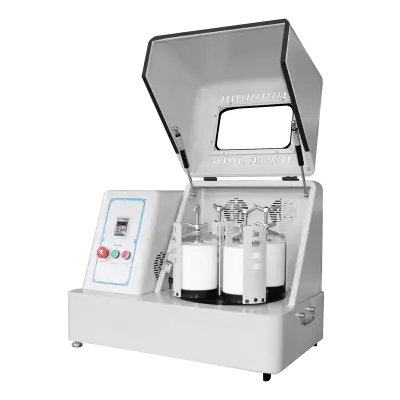
Laboratory planetary grinder
XQM
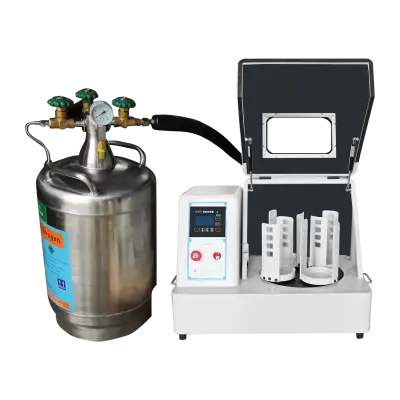
Liquid Nitrogen Planetary Ball Mill
XQM
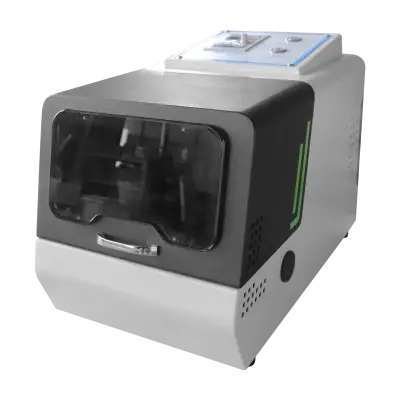
Micro Planetary Ball Mill
XQM-0.2
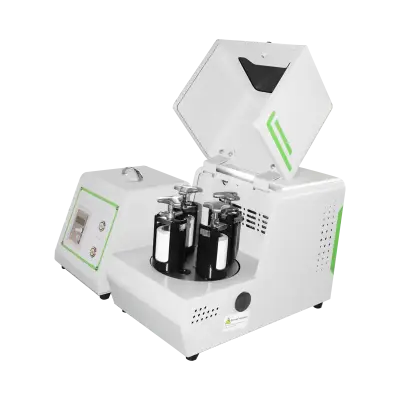
Micro Planetary Ball Mill
XQM-0.2S
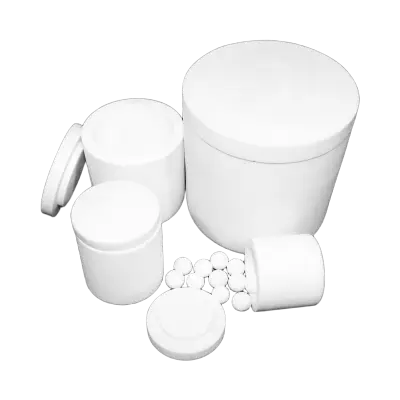
A grade Corundum planetary Mill Jar
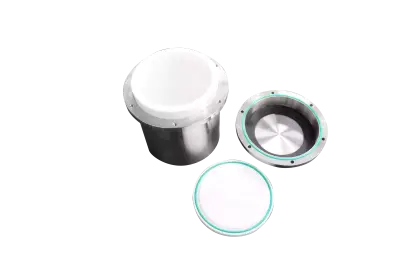
304 stainless steel lined with zirconia mill jar
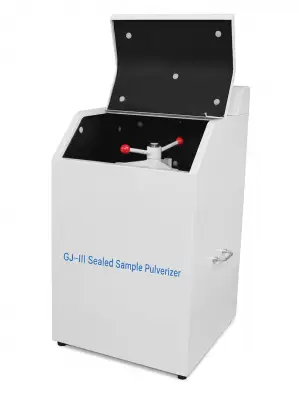
Lab sample grinder machine
GJ
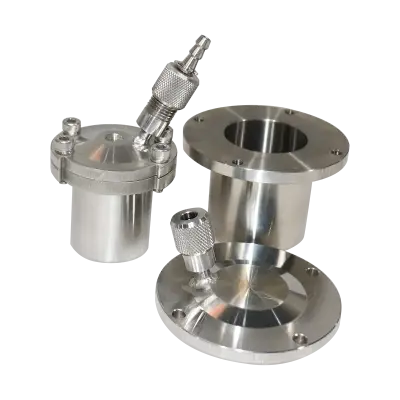
vacuum planetary mill jar
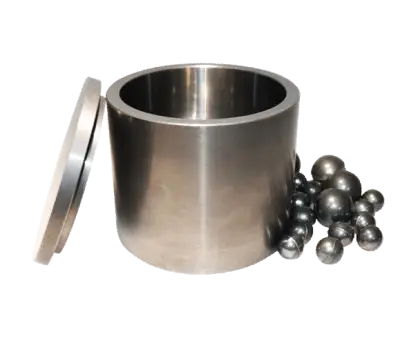
Tungsten carbide planetary mill jar
Get In Touch
Our professional team will reply to you within one business day. Please feel free to contact us!