
Resin Ball Mill: How It Works, Key Parameters, and Where It Really Beats Steel

A resin ball mill is one of those machines that looks almost too simple to be interesting: a barrel, a pile of balls, and a motor. Then you try to grind a heat-sensitive pigment or a magnetic powder in a steel mill, watch the batch turn grey and pick up iron, and suddenly that simple machine starts to look very clever.
So let's walk through what a resin ball mill really is, how it grinds powder, what the numbers on a spec sheet actually mean, and how to judge whether it fits your material. No fluff — just what you would want to know before spending money.
What Exactly Is a Resin Ball Mill?
Strip the name back and the idea is right there. It is a ball mill — a rotating drum partly filled with grinding media — but every surface that touches your powder is made of resin instead of steel, stainless steel, or ceramic.
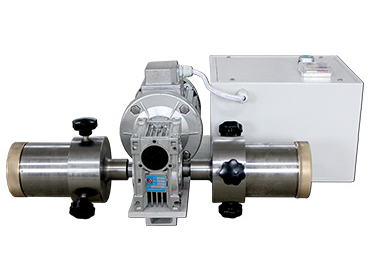
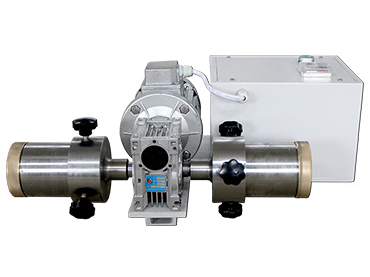
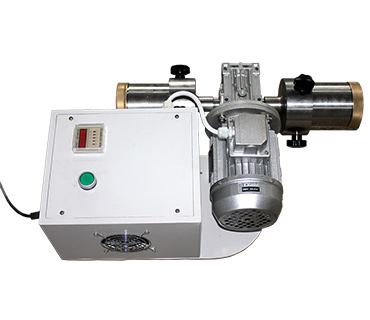
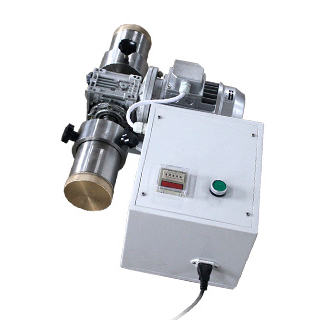
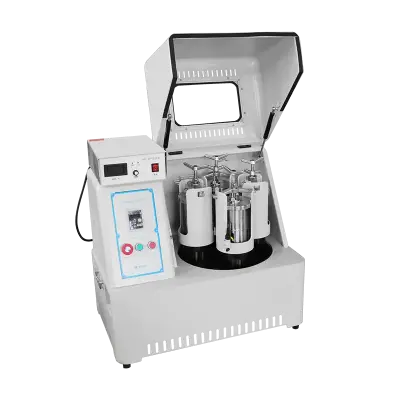
In practice, that means a cylindrical drum lined on the inside with a tough polymer, mounted on a frame with a motor and drive, turning slowly for hours while the media tumble over the powder bed. Material is reduced by thousands of small, repeated contacts rather than a few violent ones. If you want to see how the pieces fit together, have a look at the resin ball mill from Changsha Tianchuang Powder Technology Co., Ltd. (TENCAN) — it is a useful reference for the layout we are describing here.
The "resin" part is not decoration. It is the reason you would choose this machine over a cheaper steel one. Resin here means a polymer: imagine a hard, springy plastic rather than a brittle ceramic. It is not as hard as alumina, but it is tough, it absorbs shock instead of shattering, and it contains no iron.
Why a non-metallic contact surface matters
Contamination is the quiet killer in powder processing. If your product is a white pigment, a phosphor, a battery material, or a rare-earth compound, a few parts per million of iron is enough to shift the color, hurt the magnetic behaviour, or drag down electrochemical performance. Steel media and steel linings shed iron. You cannot see it at first, but the assay does not lie.
A resin lining combined with non-metallic media sidesteps that problem. No rust, no metallic wear debris, no magnetic pickup. For plenty of industries, that one property is worth more than any throughput figure on a brochure.
What a resin ball mill is not
It is not an energy monster. If you need to take 20 mm rock down to 5 microns in ten minutes, you want a planetary mill or a jet mill — different tools for a different job. A resin ball mill is patient. It trades raw speed for gentleness and wins on particle size distribution, temperature control, and purity rather than on grinding rate.
It is also not a machine you can run on autopilot once the lid is closed. Media size, charge volume, rotation speed, and run time all change the outcome. We will get to each of them.
How a Resin Ball Mill Actually Grinds Powder
Here is the picture. Lay a drum on its side, drop in a batch of grinding media, and spin it slowly. Friction drags the media up the rising wall. Gravity pulls them back down. Somewhere in between, the whole charge tumbles, rolls, and slides over itself.
Three things happen at once, and all three break particles:
- Impact. Media fall onto the powder bed and fracture particles at the contact points.
- Attrition. Media rub and slide past each other, shearing off material and rounding sharp edges.
- Compression. Particles trapped between two approaching surfaces get squeezed until they crack.
The balance between impact and attrition is set almost entirely by how fast the drum turns. That is your biggest lever.
Cascading versus cataracting
At low speed the charge cascades — the media roll and slide down the slope of the bed. At higher speed it cataracts — media get flung across the drum and land with a thump. Push the speed higher still and the charge centrifuges against the wall, riding around without tumbling at all. That last state is useless: no relative motion, no grinding.
Resin ball mills are built to live in the cascading zone. Cascading gives you a long, gentle, high-contact grind. Cataracting gives you bigger impacts, more heat, and more wear on everything.
Critical speed, in plain language
Critical speed is the rotation rate at which the media simply stick to the drum wall and stop tumbling. It depends on the drum diameter, so it is different for every machine. A resin mill runs well below its critical speed, and a variable-frequency drive is genuinely useful here because it lets you tune the motion without changing anything mechanical.
Why gentle grinding often gives you a finer powder
It sounds backwards, but slower frequently means finer. A long residence time means each particle takes many low-energy hits instead of a few big ones. Big hits break the largest particles first and leave a wide spread of sizes. Many small hits keep chipping away at the whole distribution, which narrows it.
On top of that, gentle grinding does not heat the batch much. Heat-sensitive powders — organic pigments, some polymers, certain pharmaceutical actives — degrade or soften if the mill runs hot. A cascading resin mill stays cool, and the resin lining itself soaks up some vibration and noise energy instead of turning it into heat.
A Quick Tour of the Machine
Before we talk numbers, it helps to know which parts you are actually specifying, because each one changes a different part of your result.
The drum, or jar
This is the cylinder that holds the charge. It sets the batch capacity and, along with its diameter, sets the critical speed. Some drums have internal lifters or baffles to help the media climb; others rely on friction alone. A smooth drum gives a gentler action, lifters give a more energetic one.
The resin lining
The replaceable inner layer. This is the part that wears, and it is also the part that keeps iron out of your product. Thickness, hardness, and the bond between lining and shell all matter. A well-made lining is easy to swap out when it finally gives up; a poorly made one peels and ends up in your powder.
The grinding media
The balls, cylinders, or irregular shapes doing the work. In a resin mill they are usually resin-bonded, polyurethane-coated, or made from a softer ceramic. Media choice is the most direct way to control contamination and grind fineness.
The drive, frame, and controls
Motor, reducer or belt, rollers or shaft, and — ideally — a variable-frequency drive so you can dial the rotation speed in. The frame decides how stable the machine is at speed, which matters more than people expect: a drum that shakes wastes energy and wears its bearings.
Sealing and discharge
How the powder gets in and, more importantly, how it gets out. A dust-tight lid and a well-sealed discharge keep fine powder out of the air and keep the operator out of a respirator. This is also where good machine design shows up in daily use — a mill that is awkward to empty will be awkward every single day.
The Parameters That Decide Whether It Works for You
Here is what each number on a datasheet is really telling you, and why it matters in practice.
| Parameter | What it means | Why it matters |
|---|---|---|
| Drum diameter and length | The size and shape of the grinding chamber | Determines batch capacity and the critical speed you have to stay below |
| Rotation speed (rpm) | How fast the drum turns | Sets whether the charge cascades or cataracts — the biggest single influence on grind and heat |
| Effective volume | How much of the drum you can actually use | Media plus powder must leave room for tumbling; overfilling kills grinding efficiency |
| Media charge ratio | The share of drum volume taken up by grinding media | Too little means weak grinding; too much means wasted energy and a charge that barely moves |
| Ball-to-powder ratio | Mass of media per mass of powder | More media grinds faster and finer, at the cost of more lining wear and more heat |
| Media size | Diameter of the balls or cylinders | Large media break coarse feed; small media finish fine powder |
| Media and lining material | What the contact surfaces are made of | Decides contamination risk, wear life, and chemical compatibility |
| Motor power and drive type | Available power and whether speed is adjustable | Limits how heavy a charge you can turn, and how much process control you get |
| Sealing and discharge design | How the drum closes and empties | Affects dust control, cleaning time, and cross-contamination between batches |
One tip from years of watching people compare machines: do not shop on rpm alone. A small drum spinning fast and a large drum spinning slowly can produce completely different results, and only one of them will suit your powder. Ask for the whole set of numbers together — you can see how these parameters are presented on TENCAN's resin ball mill page — and ask what the recommended media charge is for the material you are running.
Resin vs Steel, Ceramic and Polyurethane
Lining material is where a lot of buying decisions actually get made, so it is worth spelling out the trade-offs.
| Lining | Contamination risk | Wear resistance | Typical fit |
|---|---|---|---|
| Steel | High — sheds iron, can rust | Good | Coarse, non-critical feed where purity is not a concern |
| Alumina ceramic | Very low | Very high, but brittle | Fine, hard powders where contamination must be minimal |
| Polyurethane | Very low | Good against abrasion and tearing | Slurries and wet grinding, sticky materials |
| Resin | Very low | Moderate — best against soft and medium-hard feed | Heat-sensitive, magnetic, and high-purity powders |
Notice the pattern: as you move away from steel, you trade impact toughness for purity. Resin sits in a sweet spot for a lot of modern materials, but it is not the right answer for everything. If your feed is sharp, coarse, and abrasive, a resin lining will wear quickly.
Choosing your grinding media
A few rules of thumb that save a lot of trial and error:
- Match media hardness to the feed, not to the machine. Media much harder than the powder just chew up the lining.
- Keep media softer than or equal to the hardness of your lining, so the lining is not the sacrificial part.
- Mix two or three media sizes when the feed has a wide particle size range — big media break the big particles, small media finish the fines.
- If you are chasing zero metallic contamination, do not use steel media no matter how good the lining is.
- Track media wear over time. If you are topping up often, the media are too soft, the speed is too high, or the feed is too coarse.
Where Resin Ball Mills Earn Their Keep
A resin mill makes sense anywhere the powder has to stay clean, cool, or chemically untouched. A few real examples:
- Pigments and dyes. Color strength is unforgiving — a hint of iron greys out a bright shade.
- Electronic and battery materials. Cathode and anode precursors, phosphors, and dielectric powders all care about metallic impurities.
- Magnetic and rare-earth powders. Iron pickup directly changes magnetic behaviour, so non-metallic contact is not optional.
- Ceramics and glass frit. Fine, uniform particle size matters for sintering behaviour.
- Pharmaceuticals and nutraceuticals. Heat-sensitive actives and strict rules on equipment materials.
- Cosmetics and mineral makeup. Fine, smooth texture and no dark specks from metallic wear.
- Lab R&D and small-batch production. When you need a reproducible recipe before scaling up.
The common thread is simple: when a small amount of contamination costs a lot, the resin mill pays for itself. When it does not, a steel mill is cheaper and tougher.
Troubleshooting: What Usually Goes Wrong
The powder comes out coarser than expected
Nine times out of ten this is a charge problem, not a machine problem. Either there is too little media, the media are too small for the feed size, the run time is too short, or the drum is so full the charge cannot tumble. If the speed is too high, the media ride the wall and do almost nothing. Change one variable at a time.
The batch gets too hot
Drop the rotation speed, reduce the media charge, or split the batch. A cascading charge generates far less heat than a cataracting one. If the material is genuinely delicate, several short runs with cooling breaks beat one long run every time.
The lining wears out faster than you expected
Usually the feed is too coarse or too abrasive for resin, the media charge is too heavy, or the speed is too high. Check all three before blaming the lining.
Fine dust everywhere when unloading
This is a design issue, not an operator issue. Look at the lid seal and the discharge arrangement. A dust-tight drum and a sensible emptying method turn a miserable job into a quick one.
The grind stalls and stops improving
Every mill has a practical grinding limit. Past a certain fineness, particles start agglomerating as fast as they are broken, and the curve flattens out. A grinding aid, a longer run, or a different media size can push the limit a little further — but it is a limit, not a fault.
Questions We Get Asked a Lot
Can a resin ball mill grind wet?
Yes, with the right lining and media. Wet grinding controls dust, keeps the batch cool, and often grinds faster because the liquid carries particles into the contact zones. You just need materials that can handle the water or solvent.
How long does a batch take?
It depends entirely on the feed size, target size, and hardness. Some soft materials reach target in a couple of hours; hard ceramics can take much longer. The honest answer is that you test it with your own powder before you buy.
Is it the same as a planetary ball mill?
No. A planetary mill uses much higher energy and much shorter times, which makes it excellent for lab analysis and mechanical alloying. A resin mill runs slow and long, which makes it better for gentle, contamination-free production grinding.
Can I grind metal powders in it?
You can, and the non-metallic contact surfaces are actually an advantage for reactive powders. But metal powders bring safety questions — especially reactive ones such as aluminium or titanium — so the whole setup has to be designed for it, including how the drum is purged and sealed.
Working With TENCAN on Your Grinding Setup
Changsha Tianchuang Powder Technology Co., Ltd. — TENCAN — builds resin ball mills and a wider range of grinding equipment for laboratories and production lines. The useful part of working with a specialist is not the catalogue; it is the conversation about your material. Feed size, target fineness, contamination tolerance, batch size, and how the mill fits into the rest of your process all change the recommendation.
If you are weighing up resin against ceramic or steel, start with your powder rather than the machine. Decide what contamination level you can live with, what temperature the material tolerates, and how fine you genuinely need to go. Those three answers will narrow the field faster than any specification table.
Related Products
Get In Touch
Our professional team will reply to you within one business day. Please feel free to contact us!