
Shear Emulsifier Guide: How High-Shear Mixing Creates Stable Emulsions Fast

What a Shear Emulsifier Really Does on Your Production Line
If you have ever watched oil and water sit in the same jar without mixing, you already understand why a shear emulsifier exists. You can shake that jar, and for a few seconds it looks blended. Then it separates again. A shear emulsifier does not rely on luck or muscle. It uses controlled mechanical energy to break one liquid into tiny droplets and spread those droplets through another liquid. The result is an emulsion: a stable blend of two liquids that normally refuse to stay together.
In a factory, that stable blend might be mayonnaise, skin cream, pharmaceutical ointment, sauce, paint, or a dozen other products. The shear emulsifier is the machine that makes the blend possible at scale. It is not a simple mixer. It is a precision tool for creating and controlling droplet size, texture, shelf life, and appearance.
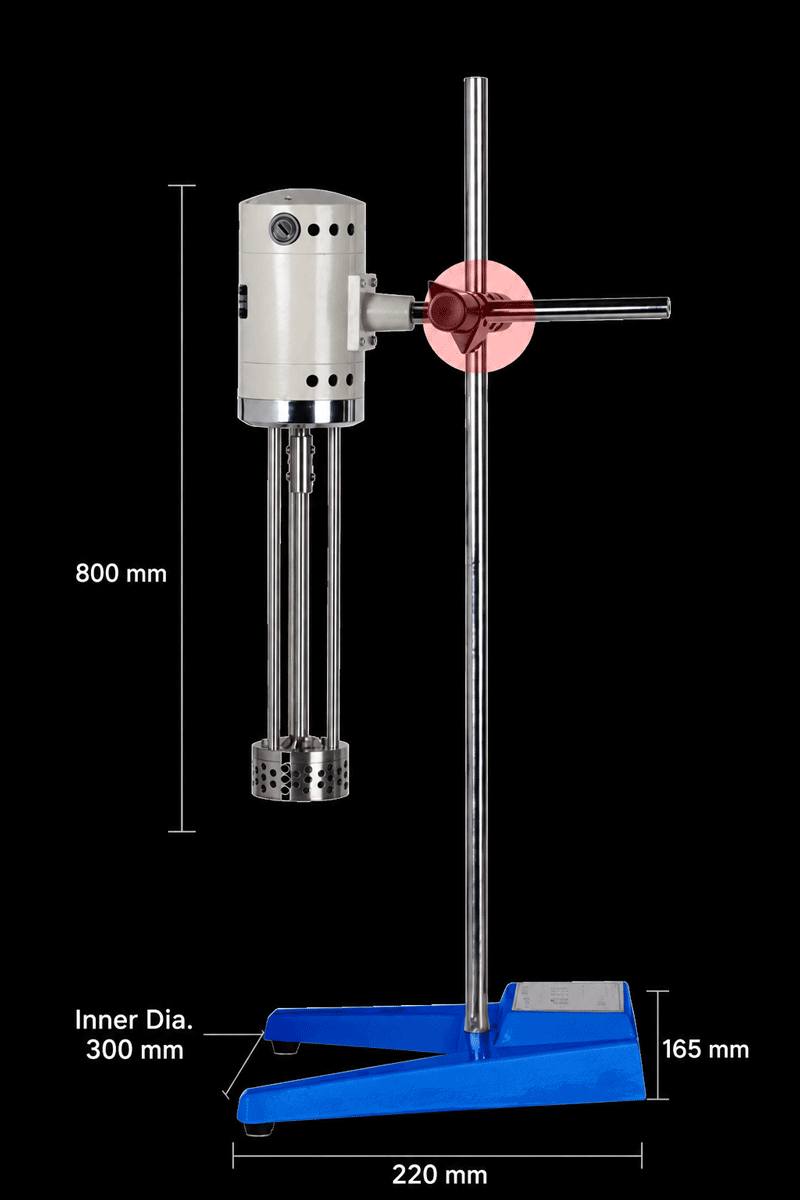
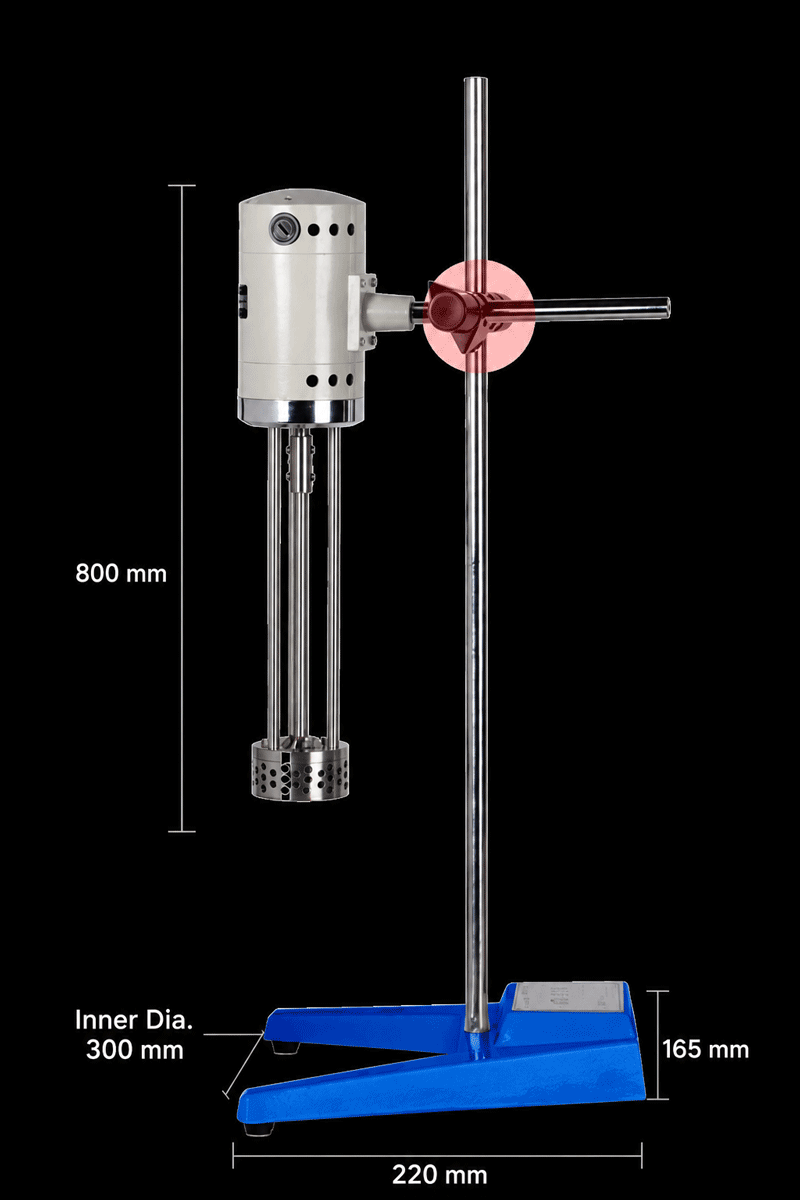
If you want a concrete example of the equipment, TENCAN's shear emulsifier is designed for this kind of high-shear work. We will come back to it later, but keep the basic idea in mind: shear emulsifiers turn two liquids into one smooth, stable system.
The Core Principle: Rotor-Stator Shear Turns Blobs into Droplets
Most shear emulsifiers use a rotor-stator assembly. The rotor spins at high speed inside a stationary stator. The stator has slots or holes. The rotor pulls the liquid in and pushes it out through those slots at high velocity. In the narrow gap between rotor and stator, the liquid experiences intense shear.
Shear is a force that slides one layer of fluid over another. Imagine spreading cold butter on toast. The knife creates shear. In a shear emulsifier, the shear is much stronger and much more controlled. It stretches large droplets until they break into smaller ones. The stator slots also create turbulence and cavitation, which add to the droplet-breaking effect.
Why 'Shear' Is Not the Same as 'Stirring'
A paddle mixer stirs. It moves liquid around, but it does not create the intense local forces needed to shrink droplets. You can stir oil and water for an hour and still get a separated mess. A shear emulsifier focuses energy into a small gap. That concentration is what makes the difference. The same amount of motor power, applied as shear instead of gentle stirring, can reduce droplet size by orders of magnitude.
The Rotor-Stator Gap: Where the Real Work Happens
The gap between rotor and stator is often measured in fractions of a millimeter. Liquid accelerates as it enters the gap, then slows abruptly as it exits. That rapid change in speed creates shear forces and pressure drops. Droplets stretch, deform, and break. The process repeats many times per second as the liquid circulates through the head. The smaller the gap and the higher the speed, the more intense the shear, though both must be matched to the product.
Emulsion Basics: Oil, Water, and the Interface That Holds Them Together
An emulsion has two main phases: a continuous phase and a dispersed phase. In an oil-in-water emulsion, oil droplets are dispersed in water. In a water-in-oil emulsion, water droplets are dispersed in oil. The continuous phase surrounds the droplets and gives the product its overall feel. The dispersed phase sits inside as tiny pockets.
The problem is that oil and water do not like to touch. Their molecules prefer their own kind. That preference creates interfacial tension, a kind of skin at the boundary between oil and water. Interfacial tension pulls droplets into spheres and encourages them to merge. If droplets merge, the emulsion separates. A shear emulsifier fights that tendency by making droplets very small and by distributing emulsifiers that coat the new surfaces.
Surface Tension and Interfacial Tension in Plain Language
Surface tension is why water forms beads on a waxed car. Interfacial tension is the same idea at the boundary between two liquids. It is the energy required to create more interface. When you shear a mixture, you create a huge amount of new interface. That takes energy, which the shear emulsifier supplies. Emulsifiers reduce the energy needed by sitting at the interface and lowering the tension.
How Emulsifiers and Shear Work as a Team
An emulsifier molecule has one end that loves water and one end that loves oil. It positions itself at the droplet surface, with the oil-loving end in the oil and the water-loving end in the water. This coating prevents droplets from touching each other and merging. But the emulsifier cannot do its job if droplets are huge. Shear creates the small droplets and the fresh surfaces. The emulsifier then stabilizes them. You need both: the right chemistry and the right mechanical energy.
Droplet Size, Stability, and the Texture You Want
Droplet size is the single most important number in emulsification. It affects stability, viscosity, color, mouthfeel, and how the product spreads on skin. A narrow droplet size distribution usually means a more uniform and stable product. A wide distribution means some droplets are large and vulnerable, while others are small and less efficient.
Smaller Droplets Usually Mean Better Stability
Small droplets have less mass and are less affected by gravity. They also have more surface area per unit volume, so the emulsifier can cover them more effectively. Brownian motion keeps them suspended. The result is an emulsion that resists creaming, sedimentation, and coalescence for longer. In many products, reducing the average droplet size from 10 micrometers to 1 micrometer can turn a few days of shelf life into several months.
But Smaller Is Not Always Better
Over-processing can be a real problem. If you shear too long or too hard, you can damage shear-sensitive ingredients, incorporate too much air, or create a product that is too thin or too thick. Some emulsions are designed with larger droplets for a specific sensory feel. A hand cream may need a certain cushion. A beverage may need a light, refreshing texture. The goal is not the smallest possible droplet. The goal is the right droplet size for your product.
How to Tell If Your Droplet Size Is Right
You cannot judge droplet size by eye. A smooth-looking emulsion can still have large droplets hiding beneath the surface. The practical approach is to measure. Laser diffraction gives you a droplet size distribution. Microscopy lets you see whether droplets are uniform or clumped. Accelerated aging tests show how the product behaves over time. If you do not have a lab, work with a partner who can test samples for you. The data you collect becomes your baseline. Once you know what a good batch looks like, you can spot drift before it becomes a customer complaint.
Key Components Inside a Shear Emulsifier
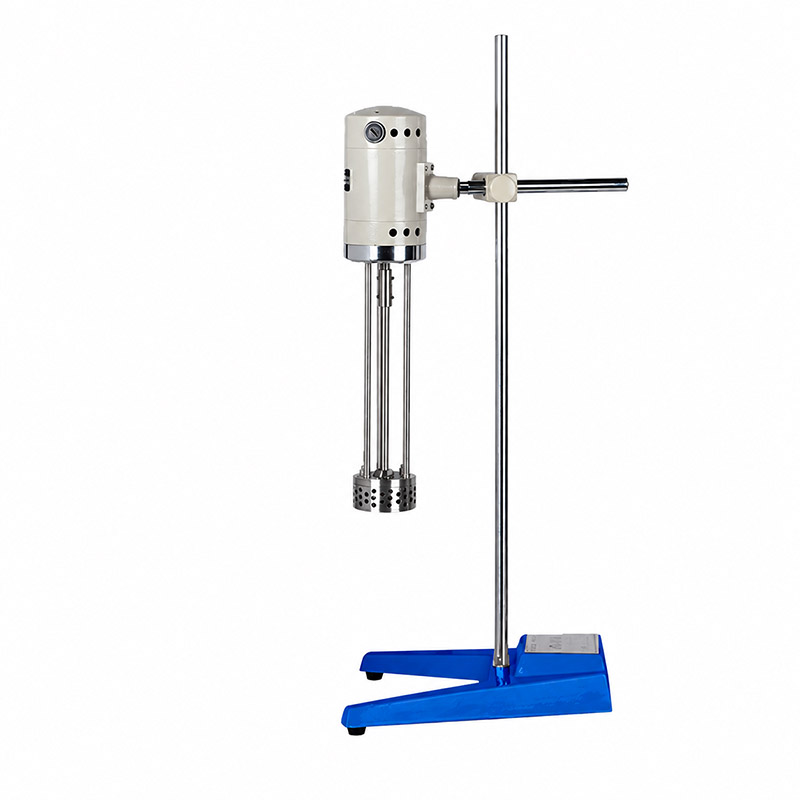
While designs vary, most shear emulsifiers share a set of core parts. Understanding them helps you operate and troubleshoot the machine more confidently.
- Rotor and stator head: The heart of the machine. The rotor spins, the stator stays still, and the gap between them creates shear.
- Drive motor: Provides the rotational speed and torque. Higher speed does not always mean better results; the motor must match the product viscosity and batch size.
- Shaft and coupling: Transmits power from the motor to the rotor. A well-balanced shaft reduces vibration and wear.
- Vessel or housing: Holds the product and guides flow. In batch units, this is often a tank. In inline units, it is a compact chamber.
- Controls and instrumentation: Allow you to set speed, time, temperature, and sometimes pressure. Good control means repeatable batches.
- Seals and bearings: Keep the product inside and contaminants outside. They are critical for hygiene and uptime.
When you evaluate a shear emulsifier, look at how these parts work together. A powerful motor with a poorly designed head will not produce good droplets. A well-designed head with the wrong speed or feed rate can also disappoint. The machine is a system, not a single component.
Where Shear Emulsifiers Earn Their Keep
Shear emulsifiers show up in almost every industry that needs a stable blend of liquids. The principles stay the same, but the demands change.
Food and Beverage
Mayonnaise, salad dressings, sauces, dairy alternatives, and cream liqueurs all depend on emulsification. These products must taste smooth, look uniform, and survive storage and transport. A shear emulsifier helps create the fine droplets that prevent oil from separating. It also affects mouthfeel: a tighter droplet size distribution can make a dressing feel creamier.
Cosmetics and Personal Care
Lotions, creams, serums, sunscreens, and hair conditioners are emulsions. Consumers expect a silky texture, a consistent color, and a long shelf life. Shear emulsifiers allow formulators to combine oils, water, and active ingredients into a stable product. The droplet size influences how quickly the product absorbs and how it feels on the skin.
Pharmaceutical and Nutraceutical
Creams, ointments, gels, and oral emulsions must meet strict quality standards. Uniform droplet size helps ensure that the active ingredient is evenly distributed. Consistent processing also supports reproducibility, which is essential for regulatory compliance. Cleaning and validation are especially important in this field.
Chemicals, Adhesives, and Coatings
Paints, inks, adhesives, and lubricants often contain emulsions or dispersions. Shear emulsifiers help control particle size, viscosity, and stability. In coatings, droplet size can affect gloss, drying time, and film formation. In adhesives, it can influence tack and bond strength.
How Shear Emulsifiers Fit with Powder Handling
If your plant also handles powders, you might wonder how a shear emulsifier fits into the picture. Many emulsions begin with a powder ingredient: a gum, a protein, a starch, a pigment, or a thickener. These powders must be dispersed in a liquid without forming lumps. A shear emulsifier can help wet out powders and break up agglomerates, but it is not a dry powder mixer. It works on liquids and slurries.
In a typical process, you might pre-disperse the powder in water or oil, then pass the mixture through a shear emulsifier to reduce particle size and create a smooth base. The shear forces break apart clusters that a simple stirrer would leave behind. This step improves consistency and makes the final emulsion more uniform.
For powder processing itself, you need different equipment: ball mills, planetary ball mills, and other powder mixers. TENCAN serves both worlds. If your workflow moves from powder to emulsion, it helps to think of shear emulsification as the bridge between dry ingredients and a stable liquid product. The key is to match the equipment to the material at each stage.
Batch, Inline, or Both? Choosing the Right Setup
Shear emulsifiers come in two main configurations. The right choice depends on your product, volume, and workflow.
Batch Shear Emulsifiers
In a batch setup, the shear head is lowered into a tank. The machine runs for a set time while the entire batch circulates through the head. Batch units are flexible. You can adjust the recipe, add ingredients at different stages, and process a wide range of viscosities. They are often the first choice for smaller production runs, multiple product lines, and formulas that need careful staging.
Inline Shear Emulsifiers
In an inline setup, the emulsifier sits in a pipe or recirculation loop. Product flows through the shear head continuously. Inline units are excellent for high-volume production, continuous processing, and integration with other equipment. They can also be used in a recirculation mode with a tank. The main advantage is throughput and consistency: once the flow rate and speed are set, the process is highly repeatable.
Many plants use both. A batch tank may feed an inline unit for final homogenization. Or an inline unit may recirculate back to the tank until the desired droplet size is reached. The best configuration is the one that fits your process, not the one that looks best on a spec sheet.
What to Look for in a Shear Emulsifier
Choosing a shear emulsifier is not just about finding the highest speed or the biggest motor. It is about matching the machine to your product and your production goals. Here are the factors that matter most.
- Viscosity range: Can the machine handle your product as it thickens? Emulsions often change viscosity during processing.
- Batch size or flow rate: The equipment must be sized for your typical and maximum volumes.
- Shear intensity: Different products need different amounts of shear. Too little leaves large droplets; too much can damage ingredients.
- Temperature control: Shearing adds heat. If your ingredients are heat-sensitive, you may need jacketed vessels or cooling.
- Hygiene and cleaning: Food, cosmetic, and pharmaceutical production demand easy cleaning and sanitary design.
- Materials of construction: Stainless steel is common, but the specific grade and surface finish matter for corrosion and cleanability.
- Controls and repeatability: Can you save recipes and reproduce them batch after batch?
- Support and spare parts: A machine is only as good as the service behind it.
If you want to see how these factors come together in a real product, you can review TENCAN's shear emulsifier. The product page gives you a starting point for discussions with your team.
Running and Troubleshooting Your Shear Emulsifier
Even a well-chosen shear emulsifier needs good operating habits. Most problems come down to a few common issues.
Common Signs of Poor Emulsification
- Oil droplets or a visible film on the surface.
- Separation within hours or days.
- Grainy or inconsistent texture.
- Viscosity that is too thin or too thick.
- Color or gloss that does not match the standard.
- Foam or excessive air incorporation.
Simple Fixes That Often Work
First, check your process order. Adding the emulsifier at the wrong stage can prevent it from coating new droplets. Second, verify the shear time and speed. A few more minutes at the right speed can make a big difference. Third, look at temperature. If the product is too cold, viscosity may be too high for good flow through the head. If it is too hot, the emulsifier may lose effectiveness. Fourth, inspect the rotor-stator head for wear, damage, or clogging. Finally, confirm that your formula is balanced. Shear cannot fix a recipe with the wrong emulsifier or the wrong phase ratio.
Measuring Success: What to Track After You Start
Once your shear emulsifier is running, you need a way to know whether the process is working. You cannot judge an emulsion by looking at it alone. A product can look smooth and still separate next week. Here are the measurements that matter.
- Droplet size distribution: This is the most direct indicator of emulsification quality. Laser diffraction and microscopy are common methods.
- Viscosity: Changes in viscosity can signal changes in droplet size or structure.
- Stability index: Accelerated aging tests show how the emulsion holds up over time.
- pH and conductivity: These help confirm that the phases are properly combined and that the formula is within specification.
- Microscopy: A simple microscope can reveal large droplets, flocculation, or coalescence.
- Temperature profile: Record how the product heats during shearing. Unexpected heat can damage ingredients.
Keep records for every batch. When something drifts, the data shows you where to look. Maybe the shear time was shorter. Maybe the raw material changed. Maybe the rotor-stator gap needs adjustment. Without measurements, you are guessing. With them, you can control the process.
Cleaning, Maintenance, and Safety
A shear emulsifier is an investment. Proper care protects that investment and keeps your product safe.
Cleaning in Place and Manual Cleaning
Many production units support cleaning in place, or CIP. CIP circulates cleaning solutions through the equipment without dismantling it. It saves time and reduces the risk of contamination. For some products, manual cleaning is still necessary, especially around seals, shafts, and the rotor-stator head. Always follow the manufacturer's instructions and your own sanitation procedures.
Safety Habits That Protect Your Team
High-speed rotating equipment demands respect. Never reach into a running machine. Use lockout/tagout procedures during maintenance. Check that guards and interlocks are working. Be aware of hot surfaces and slippery floors. Train operators on emergency stops and safe cleaning methods. A safe plant is a productive plant.
FAQ: Shear Emulsifiers in the Real World
How long does it take to make an emulsion?
It depends on the product, batch size, and equipment. Some emulsions form in minutes. Others need longer recirculation to reach the target droplet size. The best way to know is to run a trial and measure droplet size or observe stability over time.
Can I use a shear emulsifier for thick pastes?
Some shear emulsifiers handle high-viscosity products, but not all do. You need to match the machine to the product's viscosity and flow behavior. Inline units may struggle with very thick pastes, while batch units with the right head can often manage them.
Do I always need an emulsifier chemical?
Not always. Some emulsions are stabilized by solid particles or by the nature of the ingredients. However, most industrial emulsions use an emulsifier to reduce interfacial tension and prevent droplets from merging. Shear alone creates droplets; the emulsifier helps keep them apart.
Why does my emulsion separate after a few days?
Separation usually means droplets are too large, the emulsifier is not covering them properly, or the product is exposed to temperature swings. Check droplet size, emulsifier concentration, processing order, and storage conditions. Often, a small change in shear time or speed solves the problem.
Bringing It Back to Your Process
The best way to think about a shear emulsifier is as a tool for controlling the invisible world of droplets. You cannot see them with the naked eye, but they determine whether your product is smooth or grainy, stable or separated, premium or average. When you understand shear, interfacial tension, and droplet size, you can make better decisions about equipment, formulas, and processing conditions.
If you are exploring options, TENCAN's shear emulsifier is worth a look. It is a practical example of how high-shear technology is applied in modern production. And if you already run a shear emulsifier, the same principles can help you troubleshoot, optimize, and get more from your line.
Remember: emulsions are a partnership between chemistry and mechanics. Get both right, and you can create products that stay stable, feel great, and perform exactly as you intend.
Related Products
Get In Touch
Our professional team will reply to you within one business day. Please feel free to contact us!