
Zirconia Grinding Ball: The Ultimate Guide to High-Performance Ceramic Milling Media

If you've ever spent hours trying to get a finer powder or a perfectly dispersed slurry, you know that the grinding media you choose can make or break your process. You want something that grinds fast, doesn't wear out, and most importantly, doesn't contaminate your precious material. That's exactly where zirconia grinding balls come into the picture. At TENCAN (Changsha Tianchuang Powder Technology Co., Ltd.), we've seen these little ceramic warriors transform milling operations across labs and industries. Let's sit down and talk about why zirconia grinding ball might be the best friend your ball mill ever had.
What Exactly Is a Zirconia Grinding Ball?
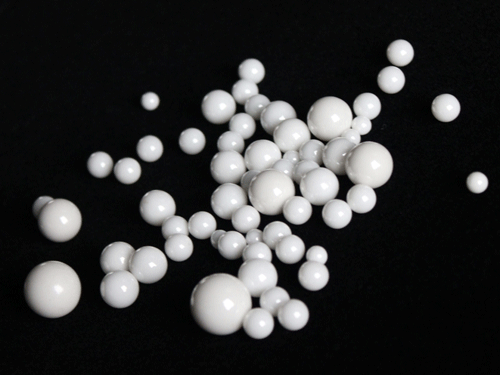
Put simply, a zirconia grinding ball is a small, spherical piece of advanced ceramic made primarily from zirconium dioxide (ZrO₂). But it's not just any ceramic — it's yttria-stabilized zirconia (YSZ). That means a small amount of yttrium oxide (Y₂O₃) is added to the zirconia powder before sintering, which locks the crystal structure into a tough, crack-resistant phase. Think of it like adding a secret ingredient to a recipe that makes the cake both fluffy and sturdy.
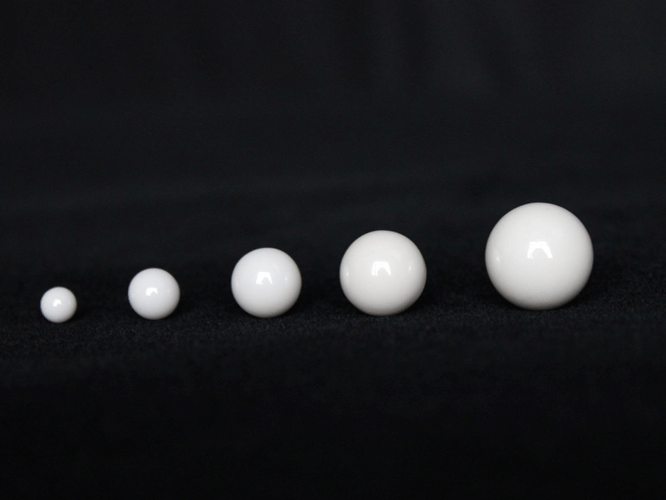
The result? A grinding ball with a specific gravity over 6.0 g/cm³, Mohs hardness of 9 (just below diamond), and an incredibly low wear rate — typically less than 2 ppm (parts per million) under normal conditions. These beads come in sizes from as tiny as 0.1 mm up to 25 mm or more, so whether you're pulverizing nano-particles or mixing coarse pigments, there's a size that fits.
How Are They Made?
The manufacturing process is a blend of precision and heat. High-purity zirconia powder is mixed with yttria, formed into spherical shapes using rolling or pressing techniques, and then sintered at temperatures around 1500°C. This high-temperature treatment fuses the particles into a dense, homogeneous structure with no internal voids. The best manufacturers, like those we work with at TENCAN, also use fine polishing to ensure every ball is perfectly round and smooth — crucial for consistent grinding action.
Why Choose Zirconia Over Other Grinding Media?
You might ask, "Can't I just use stainless steel balls or agate balls?" Sure, but let's compare. Stainless steel is cheaper, but it corrodes, and it can introduce iron contamination. Agate (silica) is hard but brittle and has a lower density, so it grinds more slowly. Tungsten carbide is extremely dense and hard, but it's also very expensive and can shed cobalt binder, which may be toxic. Zirconia strikes the perfect balance: high density (for efficient impact force), extreme wear resistance (for long life), and chemical inertness (for zero contamination).
| Material | Specific Gravity | Hardness (Mohs) | Wear Rate | Contamination Risk |
|---|---|---|---|---|
| Zirconia (YSZ) | >6.0 | 9 | <2 ppm | Very low (inert) |
| 304 Stainless Steel | ~7.9 | ~5 | Higher | Iron / nickel |
| Agate | ~2.6 | ~7 | Moderate | Silica (low) |
| Tungsten Carbide | ~14.8 | ~9 | Very low | Cobalt (toxic) |
| Corundum (Al₂O₃) | ~3.9 | ~9 | Moderate | Alumina (low) |
For applications requiring absolute purity — like grinding battery cathode materials, pharmaceutical ingredients, or high-end ceramics — zirconia is almost always the go-to. And if you need a non-metallic option that still packs a punch, it's hard to beat.
Key Properties You Should Know
Let's break down the numbers that matter:
- Density & Bulk Density: True density >6.0 g/cm³; bulk density >3.6 kg/L. This high mass per volume means each ball delivers more kinetic energy in a mill, translating to faster grinding.
- Hardness: Mohs 9, Vickers >1200 kg/mm². This makes them extremely resistant to abrasion — they'll outlast many other media by a factor of 10.
- Crushing Strength: For a 5 mm ball, crushing strength can reach 12,000 N. So no worries about breakage even in high-energy mills.
- Chemical Composition: Typically 95% ZrO₂ + 5% Y₂O₃. Some formulations like 80% ZrO₂ with ceria stabilizer are used for special applications, but the 95/5 YSZ is the industry standard for most grinding.
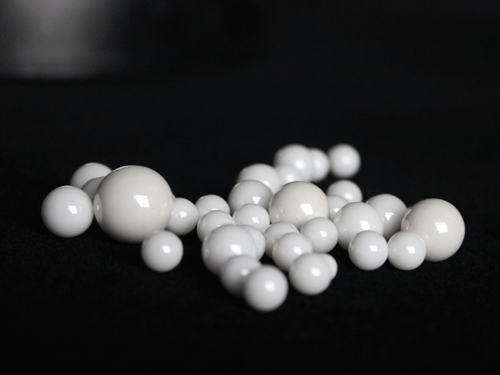
- Surface Finish: Ivory color, mirror-smooth surface. This minimizes wear on mill liners and prevents product contamination from abraded debris.
Where Are Zirconia Grinding Balls Used?
The versatility of these beads is astonishing. Here are some of the most common industries and applications we see at TENCAN:
1. Battery Materials (Lithium-ion, Solid-state)
Grinding cathode and anode materials like LiCoO₂, LiFePO₄, and graphite requires media that won't introduce metal ions. Zirconia balls provide the purity needed for high-performance batteries. They're also used in planetary ball mills and horizontal mills for wet grinding electrode slurries.
2. Ceramics & Refractories
From electronic ceramics (alumina, titanates) to structural ceramics, zirconia media is ideal for fine grinding without cross-contamination. It's also used in the preparation of glazes and enamels.
3. Inks, Paints & Coatings
Screen printing inks, UV inks, and pigment dispersions demand extremely fine and uniform particle sizes. Zirconia beads' smooth surfaces and high density make them perfect for vertical sand mills and bead mills.
4. Cosmetics & Pharmaceuticals
When you're grinding ingredients for lipstick, foundation, or medicinal creams, you can't afford heavy metal contamination. Zirconia is FDA-compliant and chemically inert.
5. Nano-Technology & Research
For labs experimenting with nano-materials, zirconia balls are the gold standard. They allow researchers to achieve sub-micron particles without altering the chemical composition of the sample.
Choosing the Right Zirconia Grinding Ball
Not all zirconia balls are created equal. Here's a quick checklist when you're selecting:
- Content of ZrO₂: 95% yttria-stabilized is standard. For less demanding uses, 65% zirconium silicate beads (like FL-65) may suffice, but they wear faster.
- Size: For planetary ball mills, 3–20 mm is common. For nano-grinding, beads under 1 mm are used. Smaller beads give finer grinding but require higher energy.
- Shape & Roundness: High-quality beads have a sphericity of >95%. Irregular shapes cause uneven wear and poor grinding efficiency.
- Sintering Quality: A dense microstructure without cracks ensures long life. Look for products from reputable suppliers like TENCAN, who implement strict quality control.
If you're unsure, reach out to us. We've helped customers from research labs to production plants find the perfect match.
Final Thoughts: Why TENCAN Zirconia Balls Stand Out
At Changsha Tianchuang Powder Technology Co., Ltd. (TENCAN), we don't just sell zirconia grinding balls — we partner with you to optimize your milling process. Our balls are manufactured with the finest raw materials and undergo rigorous testing for density, hardness, and wear resistance. Whether you're running a planetary ball mill, an attritor, or a vibro-energy mill, our team can recommend the ideal media.
Interested in seeing how zirconia grinding balls can transform your results? Check out our full range on the zirconia grinding ball product page. You can also explore other media like 304 stainless steel grinding ball, agate ball, or tungsten carbide mill ball to compare. Remember, the right media can save you time, money, and headaches. Happy grinding!
Get In Touch
Our professional team will reply to you within one business day. Please feel free to contact us!