
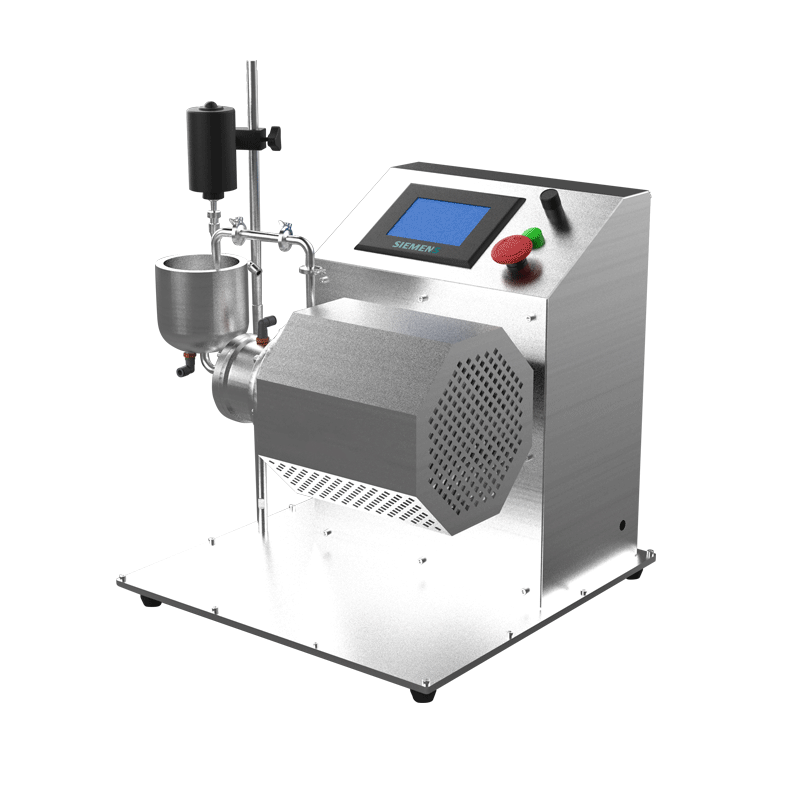
Lab Horizontal Bar Pin Nano Sand Mill: How It Grinds Particles to Nanoscale

What Exactly Is a Lab Horizontal Bar Pin Nano Sand Mill?
If you work with powders, slurries, or advanced materials, you've probably heard about sand mills. But the lab horizontal bar pin nano sand mill is a special breed. Let's break down the name, piece by piece, so you can see why this machine is more than just a fancy mixer.
First, "sand mill" is a bit of a historical term. It comes from the early days when people used sand as the grinding media. Today, we use tiny ceramic or zirconia beads instead. But the name stuck. A sand mill is a type of bead mill that uses small grinding media to smash particles into smaller ones. When you add "nano" to the front, you're aiming for particles in the nanometer range—usually below 100 nanometers. That's incredibly small. For comparison, a human hair is about 80,000 nanometers wide. So we're talking about a completely different scale.
Why "Horizontal" Matters
You'll find sand mills in two main shapes: vertical and horizontal. The lab horizontal bar pin nano sand mill has a grinding chamber that lies on its side. This horizontal layout isn't just a design quirk. It affects how the grinding media moves, how evenly the slurry flows, and how easy it is to scale up the process later.
In a vertical mill, gravity pulls the media down, which can create uneven wear and dead zones. In a horizontal mill, the media is distributed more uniformly along the chamber. That means every particle of your material gets a similar amount of attention from the beads. For lab work, where repeatability is everything, this uniformity is a big deal. You want your results to be consistent, not a lottery. Another advantage: horizontal mills are easier to cool. The chamber has more surface area exposed to a cooling jacket, and the heat doesn't get trapped at the bottom. Since nano grinding generates a lot of heat, this is crucial.
The "Bar Pin" Rotor: More Than Just Spinning
Now, let's talk about the "bar pin" part. Inside the grinding chamber, there's a rotor that spins at high speed. The rotor is covered with pins—small cylindrical bars sticking out from the shaft. These pins are arranged in rows, and they create a very specific flow pattern.
When the rotor spins, the pins push the grinding media outward and then let them flow back inward. This creates a strong shear force and lots of collisions between the beads. The bar pin design is known for generating high energy density without needing extremely high tip speeds. That means you can get effective grinding without overheating your product too quickly. For nano grinding, where you need every bit of energy to go into breaking down particles, this matters.
"Nano" Is the Goal, Not Just a Buzzword
Why do we care about nano? Because when particles get that small, their behavior changes. You get more surface area, which means faster reactions, better dissolution, and improved suspension stability. In batteries, smaller particles can mean higher capacity and faster charging. In coatings, they can mean better gloss and UV resistance. In pharmaceuticals, they can mean better bioavailability.
But getting to nano isn't easy. You can't just shake a jar harder. You need a machine that can apply consistent, high-shear forces over a long enough time. That's where the lab horizontal bar pin nano sand mill comes in. It's designed to take a slurry from micron-sized particles down to nano-sized particles, and to do it in a way that you can control and repeat. If you're looking for a reliable model, TENCAN's lab horizontal bar pin nano sand mill is worth a look.
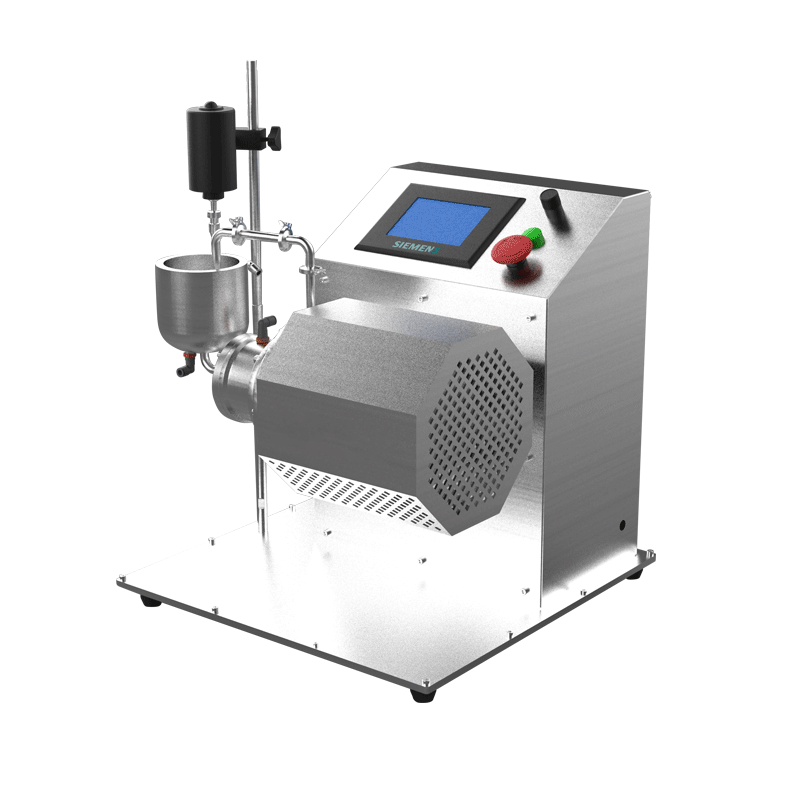
How It Works: The Journey from Micron to Nano
Understanding the working principle helps you operate the mill better. Let's walk through the process step by step. It's not magic—it's physics. Specifically, it's about energy transfer.
Step 1: Feeding the Slurry
Everything starts with a premix. You take your powder, add a liquid carrier (water, solvent, oil—whatever suits your material), and maybe a dispersant. You mix it until it's a smooth slurry. This premix usually has particles in the micron range, maybe 10 to 50 microns. That's too big for nano applications, so we need to grind them down.
The slurry is pumped into the grinding chamber. In a lab mill, you might use a peristaltic pump or a small gear pump. The flow rate matters. If you pump too fast, the slurry passes through the chamber too quickly and doesn't get enough grinding. If you pump too slow, you might overheat the product or cause the media to settle. Finding the sweet spot is part of the art of milling.
Step 2: Grinding Media Collisions
Inside the chamber, the rotor spins. The bar pins agitate the grinding media—tiny beads made of zirconia, glass, or other hard materials. The beads fly around, colliding with each other and with the pins. When a particle of your material gets caught between two colliding beads, it gets crushed or sheared apart.
The energy comes from the rotor. The faster it spins, the more kinetic energy the beads have. But more speed also means more heat. The bar pin design helps distribute that energy efficiently, so you don't need to run at insane speeds. You can achieve nano grinding with moderate tip speeds, which is easier on your product and your equipment. The media size also matters. Smaller beads create smaller impacts, which is better for nano grinding. Typically, you'd start with larger beads to break down the initial micron-sized particles, then switch to smaller beads for the final nano polish.
Step 3: Separation and Discharge
As the slurry moves through the chamber, it gets ground finer and finer. At the end of the chamber, there's a separation system—usually a screen, a gap, or a slot. This system keeps the grinding media inside the chamber while letting the ground slurry flow out.
The separation system is a critical part of the mill. If it clogs, the pressure builds up and the mill stops working. If the gaps are too large, the media escapes and contaminates your product. In a well-designed lab mill, the separator is easy to access and clean. That's one of those details that you don't appreciate until you're in the middle of an experiment and need to change the setup quickly.
Step 4: Cooling Is Not Optional
Grinding generates heat. A lot of it. When you're trying to achieve nano particles, you're putting a huge amount of energy into a small volume of slurry. That energy turns into heat. If you don't remove that heat, your product can degrade, your dispersant can fail, and your mill can overheat.
That's why lab horizontal bar pin nano sand mills have a cooling jacket around the grinding chamber. You pump chilled water or a coolant through the jacket to carry the heat away. Some mills also have a cooled rotor shaft. Temperature control is not a luxury; it's a necessity. If you're working with heat-sensitive materials like pharmaceuticals or certain battery materials, you'll want to keep the temperature as low as possible, sometimes even below room temperature.
Step 5: Recirculation or Single Pass?
There are two main ways to run a sand mill: single pass or recirculation. In single pass mode, the slurry goes through the chamber once and comes out. This is good for continuous production, but it might not give you enough grinding time for nano particles. In recirculation mode, the slurry goes through the chamber again and again until it reaches the desired particle size. For lab work, recirculation is more common because it gives you more control and uses less material.
With recirculation, you typically have a holding tank. The slurry is pumped from the tank, through the mill, and back into the tank. You sample the slurry periodically to check the particle size. When it's small enough, you stop. This process can take anywhere from a few minutes to several hours, depending on the material and the target size.
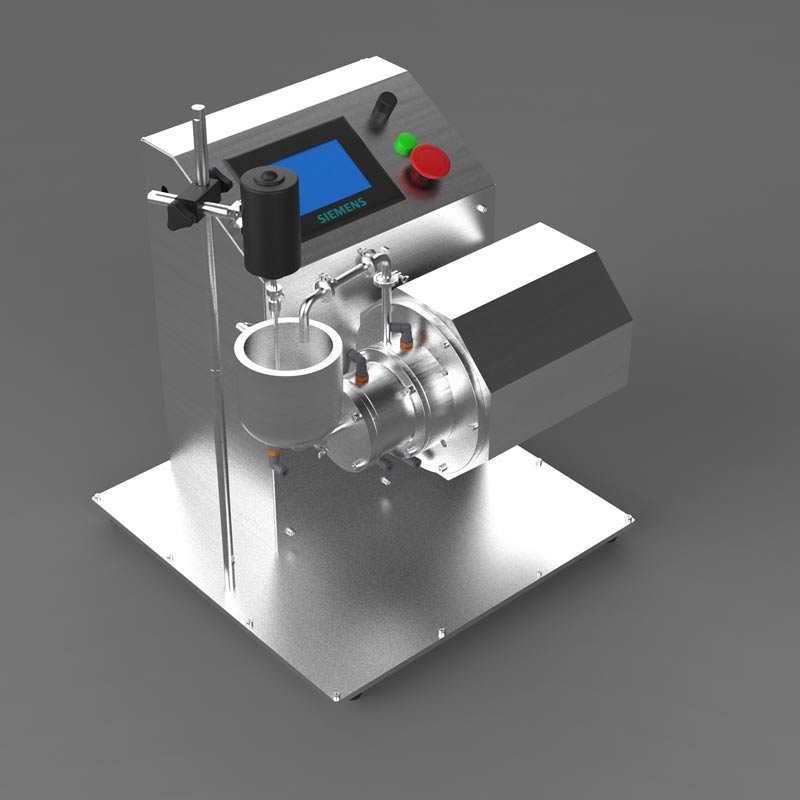
Key Applications: Where This Mill Earns Its Keep
Lab horizontal bar pin nano sand mills are used in a wide range of industries. If you're working with any material that needs to be reduced to nano size, there's a good chance this type of mill can help. Let's look at some of the most common applications.
Battery Materials
Lithium-ion batteries are a huge driver for nano grinding. The cathode and anode materials—like lithium iron phosphate (LFP), nickel manganese cobalt (NMC), and silicon-carbon composites—all benefit from smaller particles. Smaller particles mean shorter diffusion paths for lithium ions, which translates to higher power density and faster charging. Nano grinding also helps create more uniform coatings on the electrode, which improves battery life. In a lab, you might be testing a new battery formulation. You need to grind the active materials into a slurry, coat them onto a foil, and test the cell. The lab horizontal bar pin nano sand mill lets you do that with small sample sizes. You can experiment with different particle sizes and see how they affect performance.
Ceramics and Advanced Coatings
Advanced ceramics like zirconia, alumina, and titania need to be ground to nano size for many applications. Nano ceramics are used in dental implants, cutting tools, and electronic components. In coatings, nano particles can improve scratch resistance, UV protection, and gloss. For example, nano titanium dioxide is used in self-cleaning surfaces and sunscreen. Pigments and inks also benefit from nano grinding. Smaller pigment particles mean more vibrant colors, better opacity, and smoother printing. If you're developing a new inkjet ink, you'll want to grind the pigment down to nano size to prevent nozzle clogging and improve color strength.
Pharmaceuticals and Biotechnology
In pharma, particle size can make or break a drug. Many active pharmaceutical ingredients (APIs) are poorly soluble in water. If you grind them down to nano size, you increase their surface area, which makes them dissolve faster in the body. This can improve bioavailability and reduce the required dose. Nano grinding is also used in drug delivery systems, where nanoparticles can target specific tissues. For lab-scale pharma research, you need a mill that can handle small batches and maintain strict temperature control. You also need to avoid cross-contamination.
Electronics and Nanomaterials
The electronics industry uses nano sand mills to produce conductive pastes, dielectric materials, and magnetic nanoparticles. For example, multilayer ceramic capacitors (MLCCs) require extremely fine and uniform ceramic powders. Nano grinding helps achieve the small particle sizes needed for thinner dielectric layers. Carbon nanotubes and graphene also need to be dispersed and ground to unlock their full potential. In research labs, you might be working with exotic materials like quantum dots or perovskite nanoparticles. These materials are sensitive to heat and contamination. A well-controlled lab mill with a cooling jacket and inert gas purging can make all the difference.
Why Choose a Lab Model? The Case for Small-Scale Nano Grinding
You might wonder: why not just use a production-scale mill for everything? The answer is simple: cost, flexibility, and scalability. A production mill can handle hundreds of liters of slurry. A lab mill handles a few hundred milliliters to a few liters. If you're developing a new formulation, you don't want to waste expensive materials on a huge batch. You want to test many variables quickly and with minimal waste. Lab mills also let you explore the parameter space. You can vary the rotor speed, the flow rate, the media size, the grinding time, and the temperature. Once you find the optimal conditions, you can scale them up to a production mill. The lab horizontal bar pin nano sand mill is designed to mimic the conditions of a larger mill, so your results translate. If you want to inspect a model that fits this description, you can browse the details here.
What to Look For in a Lab Horizontal Bar Pin Nano Sand Mill
If you're in the market for one of these mills, you should know what makes a good one. Not all lab mills are created equal. Here are the key features to consider.
Rotor Design and Pin Geometry
The bar pin rotor is the heart of the mill. Look for a design that promotes uniform flow and avoids dead zones. The pins should be arranged in a way that creates a good balance between shear and impact. Some rotors have pins in a helical pattern, which can improve axial mixing. Others have pins in straight rows. The best design depends on your application, but generally, a well-engineered bar pin rotor will give you efficient grinding with less heat generation.
Chamber Material and Cooling
The grinding chamber needs to be made of a material that resists wear and doesn't contaminate your product. Common materials include stainless steel, ceramic (like zirconia or silicon carbide), and polyurethane. Ceramic chambers are great for metal-free grinding, which is important for battery and electronics applications. Polyurethane is good for soft materials and offers some flexibility. Cooling is critical. Look for a mill with a large cooling jacket surface area. Some mills also have a cooled rotor shaft and a cooled end cap. The more cooling, the better. You should also check the temperature control system. Can you set a specific temperature and have the mill maintain it? That's ideal for sensitive materials.
Media Separation System
The separator keeps the media in and lets the slurry out. There are several types: gap separators, screen separators, and dynamic separators. Gap separators use a narrow gap between the rotor and the chamber wall. They are simple and reliable, but they can wear over time. Screen separators use a fine mesh screen. They are good for small media but can clog if the slurry is too thick. Dynamic separators use a rotating gap that creates a centrifugal force to keep media in. They are more complex but handle high flow rates well. For lab work, you want a separator that is easy to change and clean. A cartridge-style screen that you can swap out quickly is a good feature.
Control and Reproducibility
In research, reproducibility is king. You want to run the same experiment twice and get the same result. That means you need precise control over all the variables. Look for a mill with a variable frequency drive (VFD) for the rotor speed. The pump should also have speed control. You should be able to monitor the temperature, pressure, and flow rate. Some mills come with data logging software, so you can record your experiments and analyze them later. User-friendly controls are also important. If the interface is confusing, you'll waste time figuring it out instead of doing science.
Operating Tips: Getting the Best Out of Your Nano Sand Mill
Once you have your mill, you need to know how to run it. Here are some practical tips that will save you time and frustration.
Start with the Right Premix
Garbage in, garbage out. If your premix is lumpy or has large agglomerates, the mill will struggle. Take the time to make a good premix. Use a high-shear mixer to break down agglomerates before you feed the mill. The particles should be uniformly wetted and dispersed. If you're using a dispersant, make sure it's compatible with your material and your grinding media. Viscosity matters too. If the slurry is too thick, it won't flow through the mill properly. If it's too thin, the media might not transfer energy efficiently. You want a viscosity that's similar to heavy cream.
Choose the Right Grinding Media
The grinding media is your grinding tool. Choose it wisely. Zirconia beads are the most common because they are dense and wear-resistant. Glass beads are cheaper but less durable. Ceramic beads like alumina or silicon nitride are also options. The size of the beads should be selected based on your starting particle size and your target size. A general rule: start with larger beads (like 1-2 mm) for initial grinding, then switch to smaller beads (like 0.3-0.5 mm) for nano grinding. Media loading is also important. You don't want to fill the chamber completely with beads. Typically, the media fills about 70-80% of the chamber volume. If you use too little, grinding will be slow. If you use too much, the mill might jam or overheat.
Balance Speed and Temperature
Rotor speed is your main lever for grinding intensity. Higher speed means more energy and faster grinding. But it also means more heat. You need to find the balance. Start at a moderate speed and gradually increase it. Watch the temperature. If it starts to climb too high, either reduce the speed or increase the cooling. Tip speed is a better metric than RPM because it accounts for the rotor diameter. But for a lab mill, you can usually just use RPM as a guide. The key is to monitor the product temperature. If your product is heat-sensitive, keep it below 30°C or even lower.
Maintenance and Troubleshooting: Keep It Running Smoothly
Like any precision machine, a lab sand mill needs regular care. Here's what to check and how to fix common problems.
Regular Checks
After each use, flush the mill with a cleaning solvent. Don't let slurry dry inside the chamber. Check the seals for leaks. Worn seals can cause media to escape or air to enter. Check the screen or gap separator for wear or clogging. Replace worn parts as needed. Inspect the rotor pins for wear. Over time, the pins can become rounded or bent. This reduces grinding efficiency. If you notice a drop in performance, check the pins. Also check the grinding media. Worn media becomes smaller and less effective. You should replace a portion of the media periodically to maintain the right size distribution.
Common Issues and Fixes
Clogging: If the flow rate drops or the pressure increases, the separator might be clogged. Stop the mill, clean the separator, and check if the slurry has large agglomerates. You might need to improve your premix.
Overheating: If the temperature rises too fast, check the coolant flow and temperature. Make sure the cooling jacket isn't fouled. Reduce the rotor speed or the flow rate. If the product is very heat-sensitive, consider using a chiller to cool the coolant below room temperature.
Scaling Up: From Lab to Production
One of the main reasons to use a lab horizontal bar pin nano sand mill is to generate data for scale-up. You want to take your lab results and apply them to a larger mill. But scale-up isn't always straightforward. The key parameters to match are tip speed, media size, media loading, and residence time. Tip speed is the speed at the tip of the rotor. In a larger mill, the rotor is bigger, so you need to adjust the RPM to achieve the same tip speed. Media size and loading should be similar. Residence time is the average time a particle spends in the grinding chamber. In a larger mill, the chamber is longer, so you might need to adjust the flow rate to maintain the same residence time. Energy density is another important factor. You want to match the energy density between the lab and production mills. Of course, there are always differences. A production mill might have better cooling or a different rotor design. That's why it's important to do a pilot-scale test before full production. But the lab mill gives you a solid starting point.
Frequently Asked Questions (Without the Fluff)
Can I grind dry powders in a sand mill?
No. Sand mills are designed for wet grinding. You need a liquid carrier to create a slurry. The liquid helps transport the particles, dissipates heat, and prevents dust. For dry grinding, you'd use a ball mill or a jet mill. So if your material is moisture-sensitive, a sand mill might not be the best choice.
How fine can a lab horizontal bar pin nano sand mill go?
It depends on the material, the media, and the grinding time. Many mills can reach particles below 100 nanometers, and some can go even smaller—down to 50 nanometers or less. But the exact limit depends on the hardness of your material. Hard materials like zirconia might be harder to grind than soft polymers. The key is to use the right media and enough time.
Do I need a chiller for my lab mill?
If you're grinding heat-sensitive materials, yes. A chiller gives you precise temperature control. If you're just grinding a simple pigment and you don't care about temperature, you might get away with tap water. But for serious nano grinding, a chiller is a worthwhile investment. It prevents your product from degrading and keeps your mill running efficiently.
Final Thoughts: It's About Control, Not Just Size
Getting to nano size is impressive, but the real value of a lab horizontal bar pin nano sand mill is control. You can control the energy input, the temperature, the flow, and the grinding time. That control lets you understand your material and optimize your process. It turns grinding from a mysterious art into a repeatable science.
If you're setting up a lab for battery research, advanced ceramics, pharmaceuticals, or electronic materials, this mill is a versatile tool. It handles small batches, it's easy to clean, and it gives you data that scales up. When you're ready to explore a lab horizontal bar pin nano sand mill for your own work, check out the lab horizontal bar pin nano sand mill from TENCAN. It's designed with the features we've discussed—bar pin rotor, cooling jacket, and precise controls—to help you get to nano faster and more reliably.
Remember, the mill is only part of the equation. Your formulation, your media, and your process parameters all play a role. But with the right mill and a bit of experimentation, you can achieve results that push your project forward. So don't be afraid to get your hands dirty—or rather, your slurry wet. Happy grinding!
Related Products
Get In Touch
Our professional team will reply to you within one business day. Please feel free to contact us!