
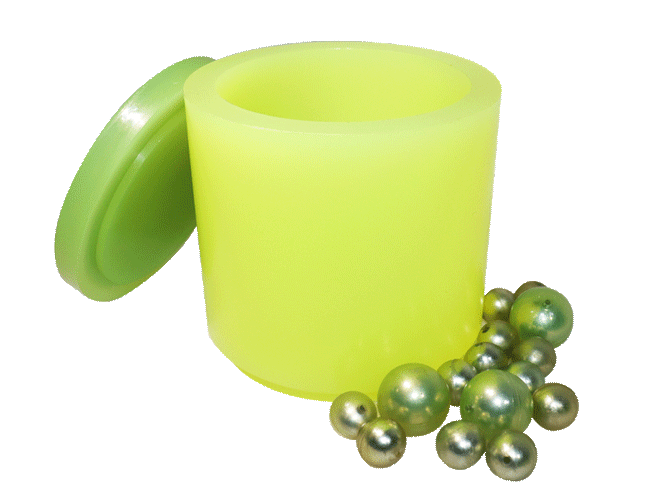
PU Planetary Mill Jar: How Polyurethane Lining Boosts Your Grinding Results

Why the Jar You Choose Matters More Than You Think
Ask a room full of lab people what matters most in planetary ball milling, and most of them will point at the mill — its speed, its motor, its programmable cycles. Then someone grabs the wrong jar off the shelf, and a perfectly good batch is ruined. It's a bit like buying a race car and fitting it with cheap tires. The mill supplies the energy. The jar decides where that energy goes and what it drags back into your sample.
A planetary ball mill runs on a simple but brutal principle. The jar revolves around the central axis of the sun wheel in one direction while the jar itself rotates in the opposite direction. Grinding balls inside get flung against the wall, tumble, and slam into your material many times a second. Every one of those impacts is a chance to break particles down — and a chance to introduce something you never wanted in the first place. The material of the jar is what tips the balance.
That's why a polyurethane jar deserves more attention than it usually gets. It isn't the hardest jar on the market, and it was never meant to be. Its job is different, and once you understand what that job is, you'll know exactly when to reach for one.
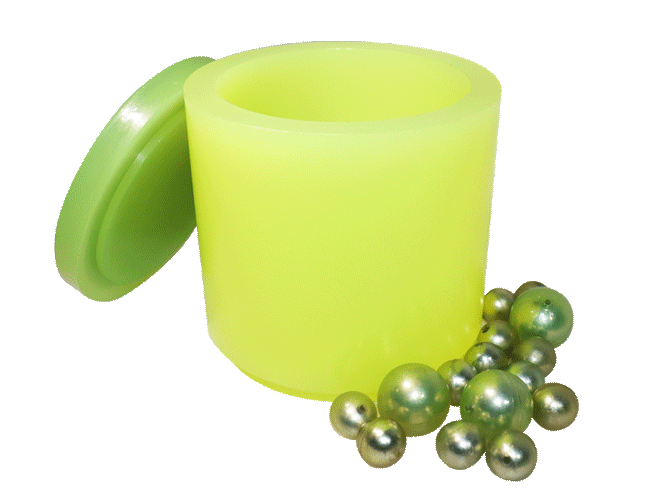
What a PU Planetary Mill Jar Actually Is
Start with the material. Polyurethane is a polymer — a long-chain plastic — that sits somewhere between rubber and hard engineering plastic in feel. It's tough, slightly springy, and unusually good at resisting abrasion and impact. "PU" is just the shorthand you'll see printed on spec sheets and labels.
Anatomy of the jar
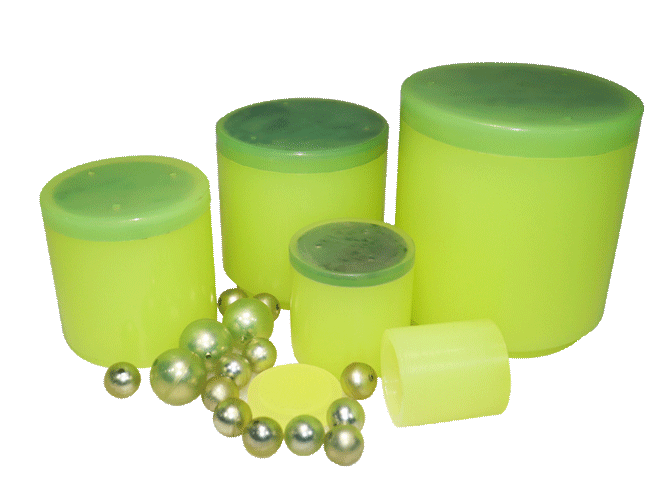
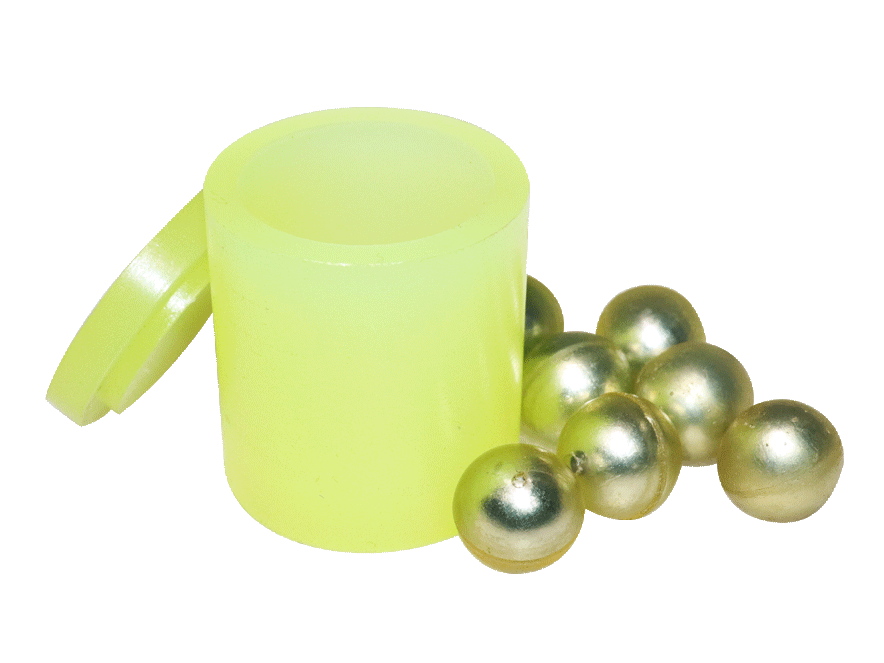
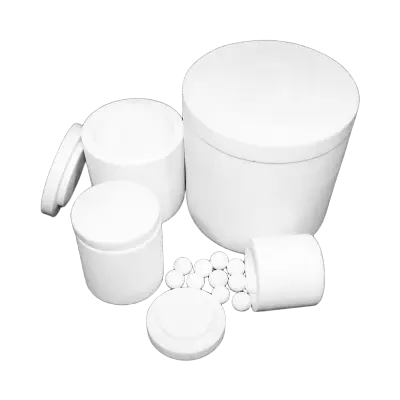
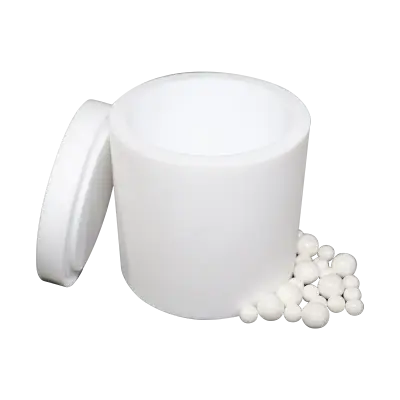
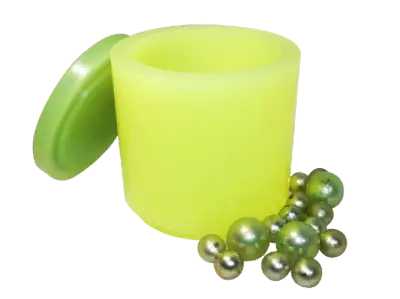
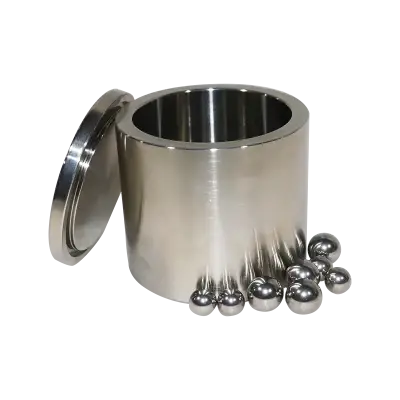
A PU planetary mill jar is a cylindrical vessel, usually with a matching lid that seals tight, and it's where the grinding happens. In a PU jar, the grinding chamber is lined with polyurethane, or the jar body itself is formed from it. The outside may be reinforced, or shaped with a clamping profile so it locks securely into the jar seat of the mill. Because a planetary mill spins jars at high speed, a secure fit isn't a nice-to-have. It's a safety requirement.
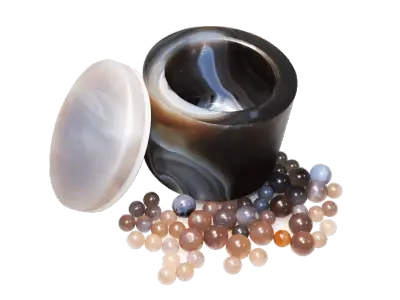
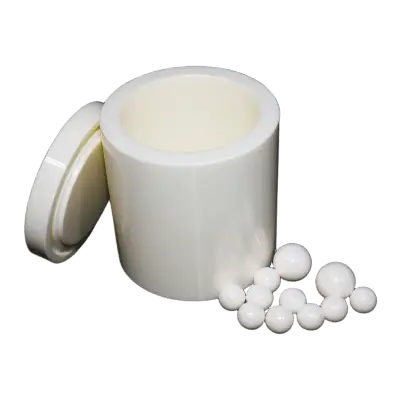
Inside goes your sample, plus a charge of grinding balls. Those balls can be made from zirconia, agate, alumina, stainless steel and more. The pairing of ball material and jar material matters just as much as the jar choice on its own — a point we'll come back to, because it's where a lot of quiet mistakes get made.
Why polyurethane instead of steel, agate or zirconia
Hard jars — agate, zirconia, tungsten carbide — are chosen for hardness and for their ability to grind tough, abrasive material down to very fine sizes. They are genuinely excellent at that. But hardness has a price. Hard materials chip, spall and wear, and when they wear, the debris ends up in your powder. Steel jars are tough, but they bring iron and chromium into the picture.
Polyurethane takes the opposite approach. It's soft enough to absorb impact instead of shattering, so it doesn't shed hard fragments the way a brittle liner can. It's chemically fairly inert for most routine work. And because it cushions every collision, it runs far quieter and cooler than a hard jar rattling with steel balls. Different tool, different job.
Where it sits in the milling system
Think of the mill, the jar and the media as three links in one energy chain. The mill sets the speed and the motion. The jar sets the chemistry and the environment your sample lives in. The media sets the impact energy that actually does the breaking. Change any one of them and your result changes with it. Choosing a PU jar is a deliberate decision about the middle link — and it's a decision worth making consciously rather than by habit.
How Polyurethane Protects Your Sample and Your Results
The real value of a PU jar shows up in three places: contamination, noise and heat, and wear behaviour over time.
Contamination: the quiet killer of good data
Here's a scene that plays out in labs everywhere. You grind a sample in a steel jar, send it for elemental analysis, and the iron reading comes back strangely high. Nothing is wrong with the instrument. You've been measuring your jar.
Contamination matters most when you're working with soft or medium-hard materials that never needed a hard jar anyway. If your sample is a polymer, a food product, a pharmaceutical intermediate, a cathode powder being prepared gently, or a soil sample headed for trace-metal analysis, a hard jar is overkill that adds risk. Polyurethane's relative softness means the jar contributes very little to the powder inside it, which keeps your blanks clean and your numbers honest.
Noise and heat
Anyone who has stood beside a planetary mill loaded with steel jars knows the sound. It is not subtle. Hard jar walls ring; PU walls thud. That difference isn't only about your ears. Quieter operation usually means energy is being absorbed by the liner rather than radiating away as sound and heat.
And heat is the enemy of delicate samples. Polymers soften or degrade. Certain crystalline phases transform. Volatile components escape. A liner that damps impacts reduces the temperature rise inside the chamber over a run, which buys you a wider working window before your material starts changing underneath you.
Wear and service life
Abrasion resistance is where polyurethane genuinely surprises people. It's soft, but it's tough — PU liners are used in mining chutes and slurry pipelines precisely because they outlast steel in sliding-abrasion service. Inside a mill jar, that translates into a liner that takes repeated ball impacts without developing the cracks and chips a brittle material would. Fewer chips means fewer surprises in your particle size distribution and in your chemistry.
Where PU Jars Earn Their Keep
Soft, fibrous and brittle materials
Polyurethane jars shine with materials that are easy to over-process: plant tissue, cellulose, dried foodstuffs, plastics, rubber crumbs, resins, pigments and plenty of pharmaceutical actives. These materials don't need tungsten carbide to break down. They need consistent, gentle, repeated impact. A hard jar will grind them too, but it will also heat them — and heat is what changes them.
Sample preparation ahead of analysis
If your ground powder is headed for XRF, ICP or spectroscopy, the question you're really asking is: does my jar change my numbers? For trace analysis, or for any measurement where iron, chromium or zirconium would show up as an interfering signal, a PU jar is a sensible way to keep the background low. The point of sample prep is to prepare the sample, not to contaminate it.
When PU is not the right call
Let's be straight about the limits. If your goal is to reduce hard, abrasive material — quartz, corundum, cemented carbide, technical ceramics — down to sub-micron sizes, polyurethane won't give you the grinding energy you need. That's a job for a hard, dense jar with dense media. PU jars also aren't the answer where a specific inert material is mandated by the method, or for cryogenic milling.
A useful rule of thumb: choose the jar by asking what your sample can tolerate, not by asking which jar is strongest. If the answer is "my material is soft, and I care about purity," PU is a strong candidate. You can browse polyurethane planetary mill jar options to see how sizes and mounting styles differ before you decide.
Matching the Jar to Your Mill and Your Protocol
Buying a good jar is half the job. Loading it properly is the other half, and it's where a lot of people quietly lose efficiency.
Filling ratio and ball size
The usual convention in planetary milling is to fill roughly one third of the jar volume with grinding balls, and to keep the total charge — balls plus sample — at around half the jar volume. Leave the rest as free space. The balls need room to accelerate before they hit. Pack the jar too full and you get a slow, inefficient mush instead of proper impact grinding.
Ball size follows the same logic as the jar choice. Bigger balls carry more energy per impact and break coarse material fast. Smaller balls create more contact points and give you a finer, more uniform grind. A common approach is to start coarse and finish fine, either by switching media partway through or by extending the run in stages.
Don't mix ball materials casually
Matching the ball material to the jar material keeps contamination predictable. Pair a PU jar with media that won't introduce elements you care about — zirconia or agate are typical picks for non-metallic work, and the right choice depends entirely on what you're analysing for. What you want to avoid is the accidental combination: soft jar, hard balls, long runtime, and a sample that quietly picks up wear debris from somewhere you weren't watching.
Speed, time and temperature
More speed and more time are not automatically better. A planetary mill concentrates a lot of energy in a very small space, and past a certain point you're heating your sample instead of grinding it. For heat-sensitive material in a PU jar, run in shorter intervals with cool-down gaps, and check the jar body with your hand between cycles. If it feels uncomfortably warm to you, your sample is warmer still.
Wet grinding versus dry
Adding a liquid medium — water, ethanol, or a solvent appropriate to your material — reduces dust, helps control temperature, and often improves the particle size distribution you end up with. Wet grinding in a PU jar is a popular combination for exactly those reasons. Just confirm that your liquid won't attack the polyurethane before you commit a whole batch to it.
Cleaning and Caring for a Polyurethane Jar
PU is easy to live with, provided you don't treat it like steel. A few habits keep a jar working well for years.
- Clean promptly after each run. Powder that has dried in a jar for a week is far harder to shift than powder from ten minutes ago.
- Use soft tools. A plastic spatula or a soft brush won't scratch the liner. Metal scrapers will, and scratches become places where cross-contamination hides.
- Choose cleaning agents carefully. Mild detergent and water are usually fine. Strong solvents, concentrated acids and aggressive alkaline cleaners can degrade polyurethane over time, so test on a small area or check the manufacturer's guidance first.
- Dry thoroughly before the next batch. Residual moisture changes how your powder behaves and encourages caking.
- Inspect the liner periodically. Some dulling and discolouration is normal wear. Deep gouges, cracking, or a liner that has begun to separate from the jar body mean it's time to replace it.
- Store with the lid off. A sealed, damp jar left in a cupboard is a recipe for odour and mould.
Questions We Get Asked a Lot
Is a PU jar less powerful than a hard jar?
It delivers less impact energy per collision, yes. That's the trade-off, and it's a deliberate one. For soft and medium-hard materials, the gentler grind is an advantage rather than a limitation. For hard ceramics and minerals, it simply isn't the right tool.
Can I use a PU jar for wet grinding?
Often, yes — and it's a popular combination for the reason you'd expect: the liquid helps control heat while the soft liner keeps contamination down. Check chemical compatibility first, and avoid any solvent that softens or swells the polyurethane.
How do I know when the liner needs replacing?
Watch for three signs: visible cracking or chunking, a liner that has come loose from the jar wall, and a sudden change in results — coarser powder, unexpected elements, or noticeably noisier operation. Any of those is a signal to stop and inspect.
Will a PU jar fit my existing mill?
Jars are made in sizes and mounting profiles that correspond to specific mill models, so fit is the first thing to confirm before ordering anything. If you're comparing options, the PU planetary mill jar page lays out what's available; match the jar to your mill's jar seat and capacity before you get excited about anything else.
Does the lid seal really matter?
Enormously. A poor seal means fine powder escaping into your mill, sample loss, and potentially an hour of cleaning you didn't plan for. Check the gasket and the lid fit every single time you load the jar.
A Quick Checklist Before You Buy
- What is my sample? Soft and heat-sensitive favours PU; hard and abrasive points to a hard jar.
- What am I measuring afterwards? Trace analysis that's sensitive to metals nudges you toward PU.
- How fine do I need to go? Coarse-to-medium target sizes suit PU well.
- Which mill do I have? Confirm jar size and mounting compatibility first.
- What balls will I use? Pick media that won't contaminate your specific analysis.
- What liquid, if any? Verify chemical compatibility with polyurethane before you commit.
None of this is complicated once you frame it correctly. The jar isn't a generic accessory you grab without thinking — it's the part of the system that touches your sample most, and it decides what your results actually mean. Choose by what your material can tolerate, load it sensibly, and clean it like it matters. Do that, and a polyurethane planetary mill jar will quietly do its job for a very long time.
Related Products
Get In Touch
Our professional team will reply to you within one business day. Please feel free to contact us!