
Small Laboratory Screening Machine: The Compact Powerhouse for Precision Particle Separation

Why Every Lab Needs a Small Laboratory Screening Machine
If you've ever spent hours manually sieving powder or granules, you know how tedious and inconsistent the process can be. That's where the small laboratory screening machine comes in—a compact, reliable workhorse that brings precision and repeatability to particle separation. Whether you're developing new materials, running quality control, or producing small batches, this machine saves time and delivers consistent results.
At TENCAN (Changsha Tianchuang Powder Technology Co., Ltd.), we've designed our small laboratory screening machine to meet the demands of modern labs. It's not just a mini version of industrial equipment—it's engineered specifically for the delicate balance of throughput and accuracy that research environments require. Let's dive into what makes this machine so useful.
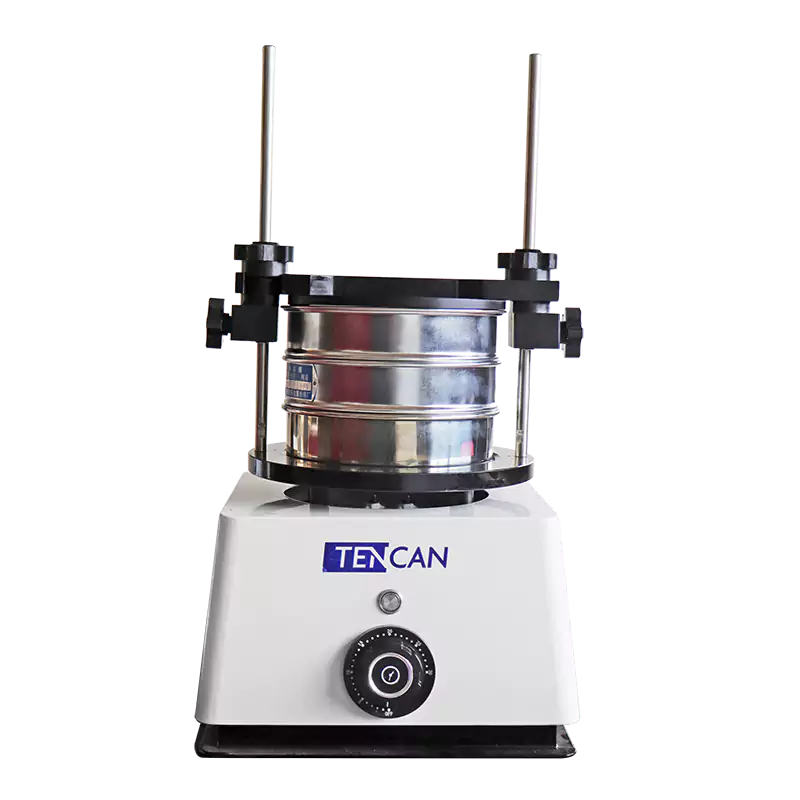
What Is a Small Laboratory Screening Machine?
Simply put, it's a vibrating sieve designed to separate particles by size in a lab setting. Unlike large industrial screens that handle tons of material per hour, a lab screening machine processes samples ranging from a few grams to a few kilograms. It uses controlled vibration to move material across one or more sieve decks, allowing fine particles to pass through while retaining larger ones.
The core principle is straightforward: you load your sample onto the top sieve, turn on the small laboratory screening machine, and let the vibration do the work. The amplitude and frequency can be adjusted to match your material's characteristics—sticky powders need different settings than free-flowing granules.
Key Working Principle: 3D Vibratory Motion
Most lab screening machines, including ours, use a 3D vibratory motion that combines vertical and horizontal movements. This tumble-like action ensures that particles have multiple chances to pass through the mesh openings, reducing blinding and improving separation efficiency. It's much more effective than simple linear vibration for fine powders (down to 20 microns or even smaller).
Why Choose a Compact Lab Sieve Shaker?
You might be wondering: "Can't I just use a 3D rotary vibrating screen or a stainless steel vibrating screen machine?" Those are excellent for larger volumes, but they are often too big for a lab bench. The small laboratory screening machine sits comfortably on a table, takes up minimal space, and requires no special installation. It's designed for researchers who need fast, accurate results without sacrificing bench space.
Typical Technical Specifications
| Parameter | Typical Range |
|---|---|
| Sieve Diameter | 75 mm, 100 mm, 200 mm |
| Number of Sieve Layers | 1 – 5 (stackable) |
| Vibration Frequency | 50 – 3000 rpm (adjustable) |
| Amplitude | 0 – 5 mm (stepless) |
| Motor Power | 0.1 – 0.5 kW |
| Material Contact Parts | 304 Stainless Steel (optional 316L) |
| Noise Level | < 70 dB |
| Maximum Sample Weight | ~5 kg (depending on model) |
These numbers give you a ballpark. Different models may vary, but the machine is designed for precise, repeatable sieving of small batches.
Practical Applications Across Industries
The small laboratory screening machine is incredibly versatile. Here are some real-world scenarios where it shines:
- Pharmaceutical R&D: Sieving active pharmaceutical ingredients (APIs) and excipients to ensure uniform particle size before tablet compression.
- Food Testing: Analyzing flour, sugar, spices, or powdered milk for particle size distribution (PSD) to meet quality standards.
- Materials Science: Characterizing metal powders, ceramics, and polymers for additive manufacturing or powder metallurgy.
- Environmental Analysis: Sieving soil, sediment, or air filter particles to study contamination levels.
- Cosmetics: Screening pigments, talc, and other fine powders for smooth texture and consistent color.
How It Compares to Other Lab Screening Solutions
You might also consider the 3D rotary vibrating screen when you need higher throughput, but it requires more space and is typically used for continuous processing. The stainless steel vibrating screen machine is great for hygiene-sensitive applications, but it's often larger and more expensive. The small laboratory screening machine provides the best balance of cost, footprint, and precision for bench-top use.
Choosing the Right Machine for Your Lab
When selecting a small laboratory screening machine, consider these factors:
- Particle Size Range: What mesh sizes do you need? Machines can accommodate sieves from 20 mesh to 500 mesh (or finer with special ultrasonic deblinding).
- Sample Volume: How much material do you typically sieve per run? For very small samples (e.g., 10 g), a single-layer unit might suffice. For batches up to 5 kg, a multi-layer system with a collection pan is better.
- Materials of Construction: For corrosive or food-grade applications, choose stainless steel. TENCAN machines come with 304 or optional 316L stainless steel contact parts.
- Control Features: Digital timer and amplitude control allow you to set reproducible protocols. Some models even include a memory function for routine tests.
- Certifications: Look for CE, ISO 9001, or other relevant standards to ensure quality and safety in your lab.
Maintenance and Best Practices
To keep your small laboratory screening machine in top shape, follow these tips:
- Clean sieves thoroughly after each use using a brush or ultrasonic cleaner. Never use abrasive tools that can damage the mesh.
- Check tension of the sieve cloth regularly. Loose cloth leads to inaccurate results.
- Lubricate moving parts according to the manual (usually every 100 hours of operation).
- Store the machine in a dry, dust-free environment.
- Run a calibration check with standard reference materials every few months.
Why Trust TENCAN for Your Lab Sieving Needs?
Changsha TENCAN Powder Technology Co., Ltd. has been designing and manufacturing powder processing equipment since 2008. Our small laboratory screening machines are built with the same attention to detail as our planetary ball mills and mixing equipment. We offer customization services—whether you need a specific sieve diameter, a special coating, or a fully automated setup. And with multilingual support (English, Russian, Japanese, Korean, German, Spanish, etc.), we're ready to help customers worldwide.
If you're ready to upgrade your particle separation process or just want to learn more, take a closer look at the small laboratory screening machine product page. For a deeper dive into related technology, check out the 3D rotary vibrating screen and stainless steel vibrating screen machine to see which fits your workflow best.
Got questions? Drop us a line—we'll help you find the perfect sieving solution for your lab.
Get In Touch
Our professional team will reply to you within one business day. Please feel free to contact us!