
Lab Roll Ball Mill: How It Works, What It's For, and How to Use It Effectively

Sample preparation has a way of humbling even the best-planned experiment. You weigh everything carefully, clean every vial, and then the powder refuses to cooperate. A lab roll ball mill is one of those quiet tools that fixes a lot of that frustration. It does not shout for attention. It rolls. It tumbles. It turns coarse, stubborn material into something you can actually work with. If you are looking for a practical explanation of what this machine does, why labs keep one on the bench, and how to get better results from it, you are in the right place.
We will walk through the mechanics, the jars, the grinding media, the everyday choices that change your outcome, and the small habits that separate a frustrating run from a reliable one. Along the way, we will point you to the TENCAN lab roll ball mill as a concrete example you can inspect. No fluff, no laboratory mystique. Just the details that matter when you are standing in front of the machine with a jar in your hand.
What a Lab Roll Ball Mill Actually Does
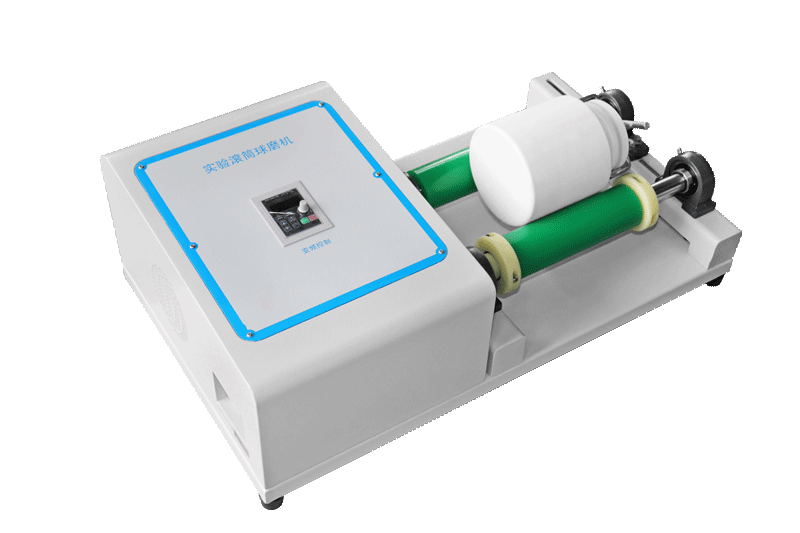
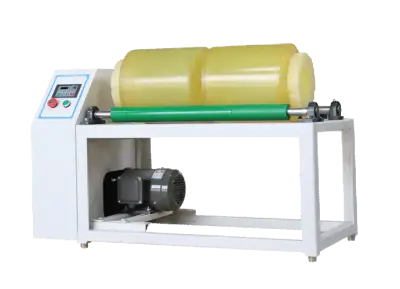
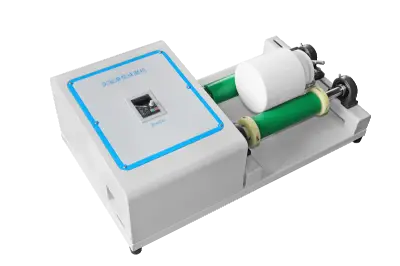
A lab roll ball mill is a grinding machine that spins cylindrical jars on a set of powered rollers. The jar does not sit still while a blade chops at the sample. Instead, the rollers rotate, friction catches the jar, and the whole container turns like a drum. Inside, grinding media, usually balls, tumble over one another. The sample gets caught between those moving balls and the jar wall. Little by little, large particles break into smaller ones.
That simple motion is the heart of the machine. You are not relying on a high-speed rotor or a complicated planetary gearbox. You are using gravity, friction, and time. The rollers turn, the jar follows, and the media do the work. Because the action is gentle compared with some high-energy mills, a roll ball mill is often a great fit for materials that do not enjoy being shocked, heated, or smashed too violently.
The word lab matters here. These machines are built for research, quality control, small-batch production, and method development. They are not usually the giant rotary mills you see in mining operations. They sit on a bench or a sturdy stand. They hold one, two, or several jars at once. They give you a controlled way to reduce particle size and mix powders without turning your laboratory into a quarry.
If you have used a rock tumbler, you already understand the basic idea. A rock tumbler rolls stones with abrasive grit until the edges round off. A lab roll ball mill rolls sample powder with hard media until the particles get smaller and more uniform. The scale is different, the materials are different, and the goals are more precise, but the underlying motion is familiar. That is part of why the machine is so approachable. There is not much to memorize before you press start.
Why Rolling Beats Shaking for Many Samples
You might wonder why anyone would choose a rolling mill when there are shakers, mixers, and high-energy ball mills available. The answer comes down to what you need from the sample and how much of it you need to process. Rolling has a few quiet advantages that show up again and again in real laboratories.
Multiple samples, one run
Many roll ball mills are designed to hold more than one jar at a time. That means you can grind several samples in parallel without buying several machines. For a lab working through a batch of formulations, soils, minerals, or ceramic powders, this parallelism is a huge time saver. You set up each jar with its own sample and media, place them on the rollers, and let the machine do its thing. The samples stay separate. The method stays consistent. The afternoon stays yours.
Gentler grinding, less heat
High-energy mills can generate significant heat and impact forces. That is sometimes exactly what you want. But heat can alter sensitive materials, melt polymers, oxidize powders, or change the crystal structure you are trying to study. A roll ball mill usually runs at lower speeds and relies on a tumbling action. The energy per impact is smaller. The temperature rise is easier to manage. For heat-sensitive samples, that gentleness is not a compromise. It is the whole point.
Scalable and repeatable
Rolling is also friendly to scale-up. The same basic motion works whether you are using a small jar for a feasibility study or a larger jar for a pilot batch. You can adjust speed, time, media size, and fill level. Once you find a recipe that works, you can often repeat it closely. That repeatability matters when you are comparing materials, validating a method, or handing a procedure to another analyst.
None of this means a roll ball mill is always the best choice. If you need extremely fine particles in a hurry, a higher-energy mill may be more appropriate. If you need to break down tough agglomerates with intense shear, another approach may win. But for gentle size reduction, homogeneous mixing, and parallel sample processing, rolling is hard to beat. You can see the practical version of that idea on the lab roll ball mill product page.
Inside the Machine: The Main Parts You Should Know
Even a simple machine has a few parts worth understanding. Once you know what each piece does, you can set up faster, troubleshoot more calmly, and avoid the small mistakes that waste an entire run.
Rollers and drive system
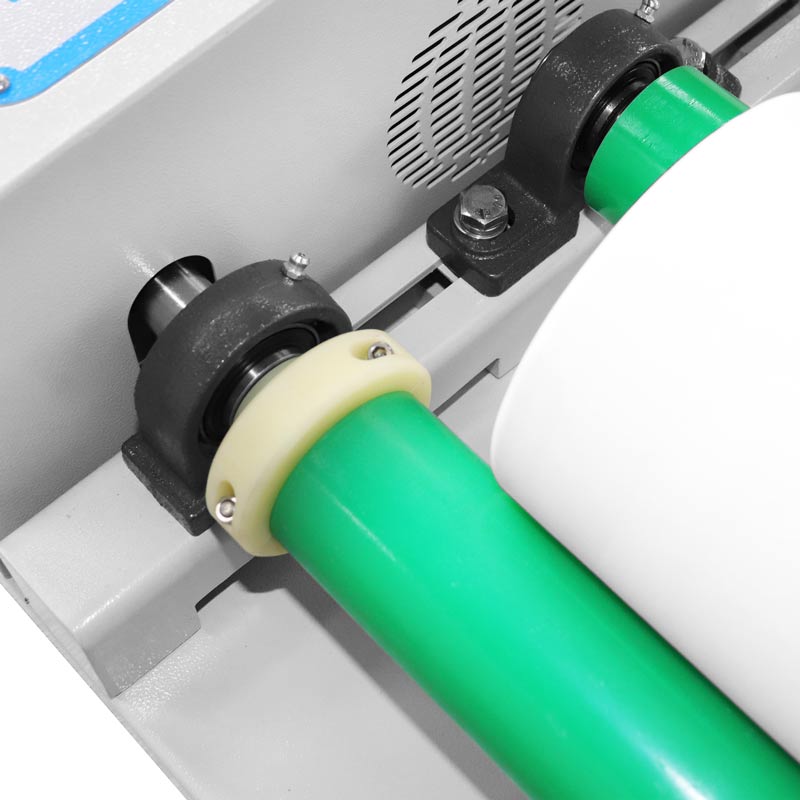
The rollers are the long cylinders that support and spin the jar. One or more of them are powered by a motor. The jar rests on top, and friction does the rest. Roller spacing matters because it determines what jar diameters the machine can handle. If the rollers are too close together, a large jar may not sit properly. If they are too far apart, a small jar may wobble or slip. A well-designed mill lets you adjust the spacing or choose a model that matches your typical jar size.
The drive system should be smooth, not jerky. A jar that starts and stops abruptly can disturb the media bed and give you inconsistent grinding. You want steady rotation. You also want enough torque to keep the jar turning even when it is loaded with dense media and powder. That is why motor quality and roller surface condition matter more than they might appear at first glance.
Jars: the sample chamber
The jar is where the magic happens, but it is also a variable you control. Jars come in different materials, sizes, and shapes. A jar made from a hard, dense material can handle aggressive powders. A jar made from a softer material may be better when contamination is a concern. The lid and gasket need to seal well, especially for dry powders and wet slurries. If the seal fails, you lose sample, make a mess, and possibly expose the lab to dust.
Think of the jar as part of the method, not just a container. The same powder ground in two different jars can behave differently. The jar wall transmits energy, wears over time, and may react with the sample. Choosing the right jar is a balance between durability, contamination risk, cost, and cleaning effort.
Grinding media: the working tools
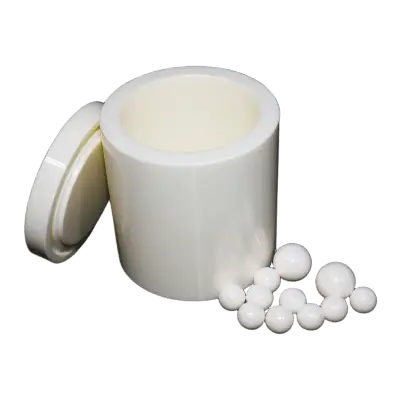
The balls inside the jar are the actual grinding tools. Their size, density, shape, and material all influence the result. Dense media carry more momentum and can break particles more forcefully. Smaller media create more contact points and can produce a finer grind, but they may not have enough mass to break tough particles. The best choice depends on your feed material, your target size, and how much contamination you can tolerate.
Media also wear. Over time, balls become smaller, lighter, and less effective. They can also contaminate the sample if the media material is softer than the powder. That is why labs often keep separate media sets for different sample types and replace them when performance drops.
Controls and safety features
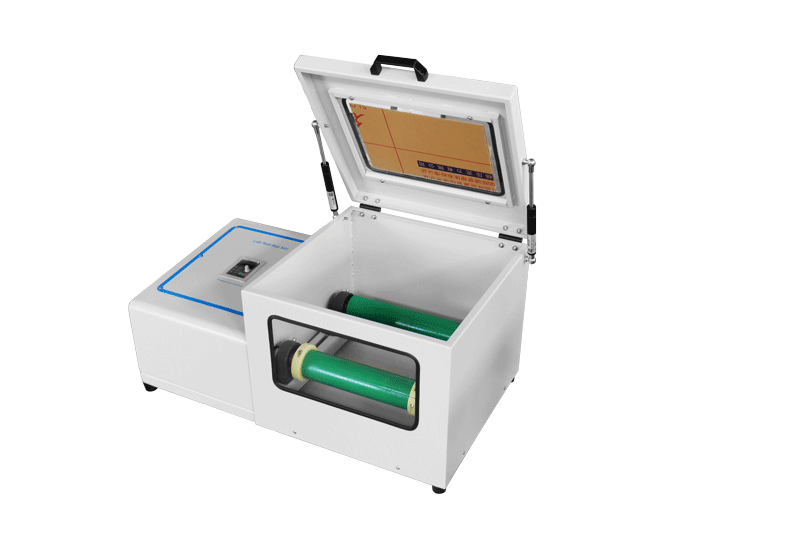
A good lab roll ball mill gives you control over speed and time. Some models offer digital displays, programmable timers, and smooth speed adjustment. Those features are not just conveniences. They help you document a method and repeat it later. Safety guards, emergency stops, and stable frames are also part of the package. You do not want a heavy jar rolling off a bench because the machine vibrated itself into a bad mood.
How Grinding Happens in a Rolling Jar
To get better results, it helps to picture what the media are doing inside the jar. The motion is not random. Depending on speed and fill, the grinding charge can behave in different ways, and those differences change your particle size and your grinding efficiency.
Cascading and cataracting
At lower speeds, the media tend to cascade. They rise up the side of the jar, then tumble back down in a gentle, rolling motion. This creates a lot of surface contact and attrition. Particles are rubbed, sheared, and slowly worn down. Cascading is excellent for fine grinding and mixing, and it is usually gentle on the sample.
At higher speeds, the media can cataract. Instead of tumbling smoothly, they are thrown across the jar and land with more impact. This increases the breaking force. You may grind faster, especially for brittle materials, but you also generate more heat and more wear. Push the speed too far and the media may centrifuge against the jar wall, spinning with the jar instead of tumbling. When that happens, grinding almost stops. The machine sounds busy, but the sample is just going along for the ride.
Impact, attrition, and abrasion
Most grinding in a roll ball mill is a mix of impact, attrition, and abrasion. Impact happens when a ball strikes a particle or another ball. Attrition happens when particles rub against each other and against the media. Abrasion happens when particles slide against the jar wall and the media surface. You can shift the balance by changing speed, media size, media density, and fill level. That is why two labs can run the same material for the same time and get different results. The recipe matters as much as the machine.
The critical speed idea
There is a concept called critical speed. In simple terms, it is the speed at which the contents of a rotating drum are pressed against the wall by centrifugal force and stop tumbling. You do not need to calculate it perfectly to run a lab mill, but you should know it exists. If your grinding suddenly becomes slow and ineffective, you may be running too fast. Backing off the speed often restores the tumbling action and improves the result. It is one of the easiest fixes to overlook.
Wet Grinding vs Dry Grinding
Roll ball mills can run dry or wet. Each approach has its own personality, and the right choice depends on your material, your downstream process, and your tolerance for mess.
Dry grinding is straightforward. You load powder and media, seal the jar, and run. There is no liquid to remove later, which is a big advantage if the powder will be used directly. The downside is dust. Fine dry powders can escape when you open the jar, and they can coat the inside of the mill if the seal is not tight. Dry grinding also tends to be less efficient as particles get finer because the powder can cake, coat the media, and cushion future impacts.
Wet grinding uses a liquid, often water, alcohol, or a solvent, to create a slurry. The liquid helps disperse particles, reduces dust, and can improve grinding efficiency. It also makes it easier to keep the sample cool. The catch is that you need to remove the liquid afterward, usually by filtration, evaporation, or drying. That adds steps and equipment. Some materials also react with the liquid, so compatibility testing is important. If you are not sure which route to take, start with a small trial. A few jars on the lab roll ball mill can tell you more than a long theoretical debate.
Choosing the Right Jar and Grinding Media
This is where a lot of beginners get stuck. There are many jar materials and media options, and the catalog can feel like a menu in a restaurant where every dish sounds good. The good news is that you can narrow the choice with a few practical questions.
Jar material
Ask yourself what contamination you can tolerate. If you are grinding a hard ceramic and your jar is made of a softer material, the jar will wear and contaminate the sample. If you are grinding a soft polymer, a hard jar may be fine, but you still need to consider whether the jar material reacts with the sample. Common jar materials include ceramics, agate, stainless steel, tungsten carbide, and plastics. Each has strengths and weaknesses. The right one depends on hardness, chemical compatibility, and your budget.
Media size and density
Larger, denser media hit harder. They are good for breaking coarse particles quickly. Smaller media create more contact points and are often better for fine grinding. If you start with large media and then switch to small media for the final stage, you can sometimes get a better size distribution than using one size alone. That is a common strategy in labs that need both speed and fineness.
Density also matters. High-density media transfer more energy per impact. They can reduce grinding time, but they also increase wear on the jar and the media itself. If contamination is a concern, a less dense but chemically compatible media may be the better trade-off.
Fill level and headspace
Do not fill the jar to the top. The media need room to move. If the jar is packed too full, the charge cannot tumble properly, and grinding becomes inefficient. On the other hand, if you use too little media, you reduce the number of contact points and slow the process. You also want some headspace for the powder and the media to interact. The exact fill ratio depends on your jar and material, but the principle is simple: leave room for motion. If the jar sounds dull and the media barely move, you likely have too much material inside.
Setting Up a Lab Roll Ball Mill for a Repeatable Run
A repeatable run is not about luck. It is about doing the same things in the same order. Here is a practical sequence you can adapt to your lab.
Step 1: Prepare the sample
Start with a representative sample. If the material is lumpy or moist, consider pre-crushing or drying it first. A consistent feed gives you a consistent result. Record the sample mass, initial particle size if known, and any pretreatment. Those notes will save you later when you are trying to explain why one batch behaved differently.
Step 2: Load the jar correctly
Add the grinding media first, then the sample. Leave the headspace we talked about. Seal the jar according to the manufacturer instructions. If you are running a wet grind, check that the lid and gasket are compatible with the liquid. Wipe the outside of the jar clean. A slippery jar can slip on the rollers, and a dirty jar can transfer powder to the machine.
Step 3: Set speed and time
Start with a moderate speed and a conservative run time. You can always run longer, but you cannot un-grind an overheated or over-milled sample. Write down the settings. If your mill has a timer, use it. If it does not, set a separate timer and check the machine at intervals. The first run is a baseline. Treat it that way.
Step 4: Run and inspect
Listen to the mill during the run. A steady, rhythmic sound usually means the media are tumbling well. A sloshing or dull sound may mean the jar is overloaded or the speed is too low. A high-pitched whine or excessive vibration may mean the jar is slipping or the rollers need attention. After the run, let the jar cool if needed, then open it carefully. Dry powders can puff out, so wear a mask and work in a ventilated area.
Step 5: Evaluate and adjust
Check the particle size, homogeneity, and recovery. If the grind is too coarse, increase time or adjust media size. If the sample is overheating or the jar is wearing quickly, reduce speed or use a different media. Change one variable at a time. That is the fastest way to learn what your material responds to.
Step 6: Clean thoroughly
Cleaning is not glamorous, but it protects your next experiment. Empty the jar, separate the media, and clean both according to your lab procedure. Avoid cross-contamination by using dedicated jars or media for specific sample types. A clean mill is a reliable mill.
Common Mistakes and How to Avoid Them
Most problems with a lab roll ball mill come from a handful of avoidable mistakes. Here are the ones we see most often and what to do instead.
| Mistake | What happens | Better approach |
|---|---|---|
| Overfilling the jar | Media cannot tumble; grinding slows or stops | Leave headspace and use a sensible media-to-sample ratio |
| Running too fast | Media centrifuge against the wall; little grinding occurs | Reduce speed until you hear and see tumbling action |
| Using the wrong media | Poor breakage or excessive contamination | Match media density and material to the sample |
| Ignoring the seal | Dust leaks, sample loss, and cleanup headaches | Inspect gaskets and replace worn seals |
| Changing many variables at once | You cannot tell what improved or ruined the run | Adjust one factor per trial and keep notes |
Keeping Your Lab Roll Ball Mill in Good Shape
Roll ball mills are simple, but they are not maintenance-free. A little care keeps them running smoothly and protects your results.
Keep the rollers clean. Powder buildup can cause the jar to slip or rotate unevenly. Check the roller surface for wear, cracks, or flat spots. If the rollers are damaged, the jar may bounce instead of rolling smoothly. Listen for unusual noises. A new rattle, squeak, or grinding sound often points to a loose part, a worn bearing, or a misaligned roller. Fix small issues before they become expensive ones.
Inspect the drive belt or coupling if your model uses one. A loose belt can slip under load, which means the jar slows down even though the motor sounds fine. Check the emergency stop and safety guard. Make sure the machine is on a stable surface and that the rollers are properly spaced for your jars. If your mill has a timer or speed controller, verify that it still holds settings accurately. A drifting speed can quietly change your grinding result.
Finally, keep a maintenance log. Note when you clean the rollers, check the seals, replace media, and service the drive. That log turns maintenance from a guess into a schedule. It also helps you spot patterns if a problem keeps coming back.
Safety Notes That Matter in a Powder Lab
Grinding powders can create dust, heat, and static. None of those things are automatically dangerous, but they deserve respect. Wear appropriate personal protective equipment. At minimum, use safety glasses and a lab coat. For fine powders, add a dust mask or respirator. If you are working with toxic or reactive materials, follow your lab's specific safety protocol and use a fume hood or glovebox as required.
Never open a jar immediately after a long run if the contents may be hot or under pressure. Let it cool and equalize. Use a seal that is compatible with your sample and solvent. Do not run flammable solvents in a mill unless the machine and the area are rated for it. Keep the area around the mill clear. A rolling jar is heavy, and a cluttered bench makes an accident more likely. Check that the jar is secure before you start. If it can slide off the rollers, it eventually will.
Also think about noise. Roll ball mills are usually quieter than high-energy mills, but they still produce continuous sound. If you run multiple jars for hours, the noise can add up. Place the mill on a stable, damped surface, and consider hearing protection if you are nearby for long periods. Your ears will thank you.
Where a Lab Roll Ball Mill Fits in Your Workflow
This machine is more versatile than it first appears. It shows up in materials science, geology, ceramics, chemistry, battery research, pigment development, and quality control. Anywhere you need to reduce particle size, blend powders, or prepare a representative sample, a roll ball mill can earn its bench space.
In a research lab, it is often used for small-batch screening. You can test several formulations or raw materials in parallel and compare the results. In a quality control lab, it helps prepare samples for analysis. Consistent grinding means consistent analytical results. In a teaching lab, it is a great way to demonstrate comminution principles without complicated setup. In a pilot lab, it can bridge the gap between a few grams on a bench and a larger batch that needs a repeatable process.
The key is to match the mill to the job. If you need multiple jars at once, gentle action, and easy control, it is a strong fit. If you need ultrafine grinding in seconds, you may need a different tool. Most labs end up with more than one type of mill for exactly that reason. The roll ball mill handles the steady, patient work. Other machines handle the aggressive sprints.
How to Compare Lab Roll Ball Mills Before You Buy
When you are evaluating a lab roll ball mill, look beyond the price tag. The details that matter show up in daily use.
First, consider jar capacity and roller spacing. What jar sizes will you actually use? Can the mill hold two or more jars at once? Is the spacing adjustable? Second, check the speed range and control. Can you set a precise speed and timer? Does the mill start smoothly? Third, examine the build quality. Are the rollers sturdy and well aligned? Is the frame stable? Does the machine vibrate when loaded? Fourth, think about safety and maintenance. Are the guards easy to use? Are the bearings accessible? Can you replace a belt or a roller without dismantling the whole machine?
Finally, consider the supplier. A mill is a long-term lab tool. You want clear documentation, responsive support, and access to jars, media, and spare parts. That is one reason to look closely at the TENCAN lab roll ball mill product page. You can see the actual machine, the jar setup, and the design choices before you decide whether it fits your bench.
Why TENCAN's Lab Roll Ball Mill Deserves a Look
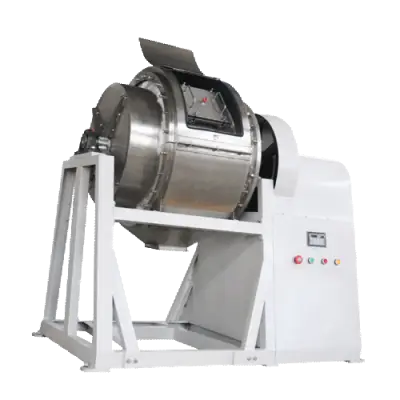
Changsha Tianchuang Powder Technology Co., Ltd., known as TENCAN, focuses on powder equipment, and the lab roll ball mill is one of the straightforward tools in that lineup. The design is built around the rolling principle we have been discussing: jars rest on rollers, the rollers turn, and the media inside do the grinding. It is a practical setup for labs that want reliable sample preparation without a steep learning curve.
What makes it worth a closer look is not a single flashy feature. It is the combination of simple operation, adjustable running parameters, and a format that supports multiple jars. If you are preparing powders for analysis, developing a new formula, or running small batches, that combination can save time and reduce frustration. The product page gives you the specifics on jar options, speed control, and construction. Start there, then match the details to your own samples and workflow.
Questions People Ask About Lab Roll Ball Mills
Is a roll ball mill the same as a planetary ball mill?
No. A planetary mill uses rotating jars that also revolve around a central axis, creating high-energy impacts. A roll ball mill uses jars that simply rotate on rollers. The rolling action is gentler and generally better for larger jars, multiple samples, and heat-sensitive materials. Each type has its place.
Can I grind more than one sample at a time?
Often, yes. Many lab roll ball mills are designed to hold multiple jars. You can run different samples in separate jars as long as the jars are compatible with the roller spacing and the machine's load capacity. Just make sure each jar is balanced and secure.
How long does a grinding run take?
There is no single answer. It depends on the material, the starting particle size, the target size, the media, the speed, and the fill level. Some samples reach the desired fineness in a short run. Others need hours. Start with a conservative time, inspect the result, and adjust from there. Keep notes so you can repeat a successful run.
Do I need special jars?
You need jars that match your sample and your goals. Consider hardness, chemical compatibility, sealing, and size. A jar that is too soft may contaminate the sample. A jar that is too large for your batch may waste material and energy. The right jar is the one that suits the job without adding unnecessary cost or contamination risk.
Can I use a roll ball mill for mixing instead of grinding?
Yes. With gentle speed and appropriate media, a roll ball mill can blend powders and create homogeneous mixtures. The line between mixing and grinding is really a matter of intensity and time. If you want mixing with minimal size reduction, use lower speed, lighter media, and shorter runs.
Bringing It Back to Your Bench
A lab roll ball mill is not complicated, but it rewards attention. Understand the rolling motion. Choose jars and media with your sample in mind. Leave room for the charge to tumble. Run at a speed that keeps the media active instead of pinned to the wall. Keep the machine clean and stable. Take notes so that a good result can become a repeatable method.
Do those things, and the mill becomes one of the most dependable tools in your lab. It will not demand a lot of drama. It will just roll, day after day, turning stubborn powders into something useful. If you are ready to see how that looks in practice, explore the TENCAN lab roll ball mill and compare the details with your own sample preparation needs. The right setup is waiting on the rollers.
Related Products
Get In Touch
Our professional team will reply to you within one business day. Please feel free to contact us!