
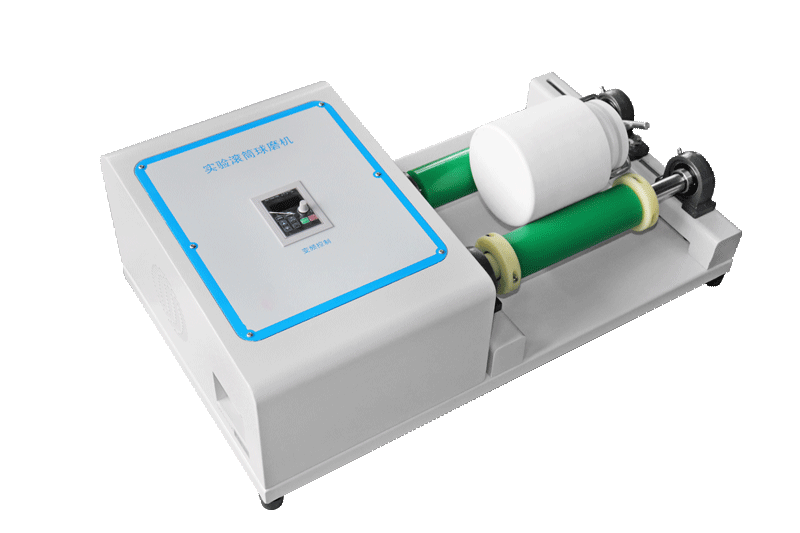
Lab Roll Ball Mill: The Versatile Workhorse for Materials Research & Small-Batch Production

Why Lab Roll Ball Mills Are Every Researcher's Secret Weapon
If you've ever spent hours trying to grind a few hundred grams of ceramic powder to a consistent fineness, you know the struggle. Big industrial ball mills are overkill for small batches, and planetary ball mills can be finicky with sample sticking. That's where the Lab Roll Ball Mill comes in—a simple, reliable, and surprisingly powerful machine that's been quietly doing the heavy lifting in labs around the world.
Think of it as the Swiss Army knife of grinding: it can handle dry powders, wet slurries, fragile materials, and abrasive ceramics. All while taking up minimal bench space. At Changsha Tianchuang Powder Technology (better known as TENCAN), we've been building these workhorses for years, and we want to show you why they might be exactly what your lab needs.
How Does a Lab Roll Ball Mill Actually Work?
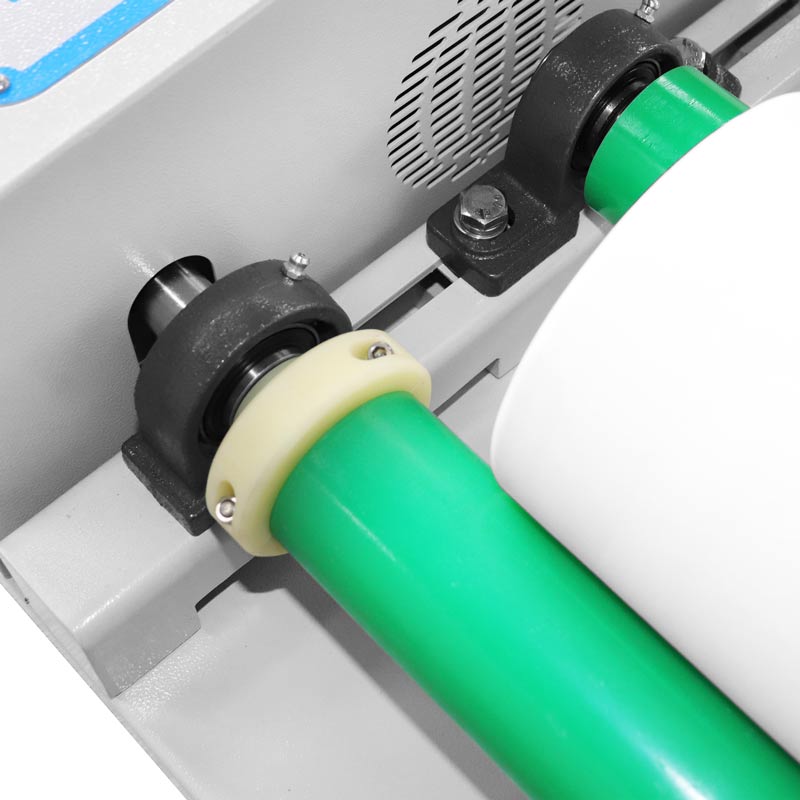
No mystery here. A lab roll ball mill consists of one or more horizontal rollers that rotate at a controlled speed. You place your grinding jar—filled with grinding media (balls or beads) and your material—on the rollers. As the rollers turn, friction drives the jar to rotate. Inside the jar, the tumbling action of the balls crushes and shears your sample into fine particles.
The beauty is in the simplicity: you can control the rotation speed, choose the jar material (stainless steel, agate, ceramic, nylon, etc.), and swap out jarts in seconds. This makes it perfect for developing new formulations, quality control, or small-scale production runs.
Key Features That Make the TENCAN Lab Roll Ball Mill Stand Out
1. Flexible Jar Capacity
Our lab roll ball mills accept jars from 0.5 L up to 20 L or more. You can run a single jar or multiple jars simultaneously on the same rollers. This means you can scale your experiment from a few grams to several kilograms without buying a new machine.
2. Variable Speed Control
Most models come with a digital variable frequency drive that lets you dial in the exact RPM you need. Typical roller speeds range from 60 to 600 RPM. Higher speeds for finer grinding, slower for gentle mixing or preventing thermal degradation.
3. Dry & Wet Grinding
One machine does both. For dry grinding, choose steel or ceramic balls. For wet grinding, add a liquid medium (water, alcohol, oil) to create a slurry. The roll ball mill handles both with equal ease, thanks to its sealed jar design.
4. Quiet & Clean Operation
Unlike some vibratory or planetary mills, a roll ball mill runs quietly. The jar rotates smoothly, so noise levels stay low. Plus, there's no dust escape if you use a good sealing lid.
What Materials Can You Grind with a Lab Roll Ball Mill?
The list is long: ceramic powders (alumina, zirconia, silicon carbide), minerals (quartz, feldspar, kaolin), battery materials (LFP, NMC, graphite), pigments, paints, chemicals, pharmaceuticals, and even food ingredients. Because you can change jar materials, you avoid cross-contamination between different products.
Comparing Our Lab Roll Ball Mill Models
At TENCAN, we offer several variants to match different workloads:
- Standard Lab Roll Ball Mill – the all-rounder for most labs. Single or dual rollers, manual or automatic speed control.
- Light-Duty Roll Ball Mill – ideal for small jars (0.5–5 L) and gentle mixing tasks. Perfect for QC labs.
- Large Roll Ball Mill – designed for jarts up to 20 L or more. Suitable for pilot production runs.
- Inner-Lined Roll Ball Mill – features a rubber or polyurethane lining on the rollers to reduce noise and improve jar grip.
You can also choose the number of stations: from two-station jar mills up to eight-station models. More stations mean higher throughput or the ability to run different samples simultaneously.
Practical Tips for Getting the Best Results
- Fill ratio: For dry grinding, keep the jar about 40–50% full by volume with grinding media, and 30% with material. For wet grinding, reduce media to 30% and add liquid until the slurry is just fluid.
- Ball size: Use a mix of large (10–20 mm) and small (3–5 mm) balls for efficient grinding. Large balls break big particles, small ones fine-grind.
- Speed selection: Start at 60–70% of maximum speed. Too fast and material sticks to the jar wall; too slow and grinding is weak.
- Cleaning: After each use, rinse the jar and balls with water or solvent. Dry thoroughly before storing.
Why Choose a Roll Ball Mill Over a Planetary Ball Mill?
Both are excellent, but they serve different needs. A roll ball mill is cheaper, simpler, and easier to maintain. It also handles large-capacity jars (up to 20 L) while planetary mills usually max out at 5 L per jar. And because there's no complex gearing or high-speed rotation, roll ball mills are more forgiving of uneven loads and less prone to mechanical failure.
For many labs doing routine grinding, quality control, or small-batch production, the roll ball mill is the smarter choice. It's the workhorse you can rely on day after day.
Where to Get Your Lab Roll Ball Mill
At Changsha Tianchuang Powder Technology Co., Ltd. (TENCAN), we manufacture all our ball mills in-house with strict quality control. We supply to research institutes, universities, and manufacturers worldwide. Our team can help you select the right model, jar material, and grinding media for your specific application.
Visit our Lab Roll Ball Mill product page to see detailed specifications, downloadable datasheets, and pricing. Or reach out to our sales engineers for a personalized recommendation.
Remember: the right grinding tool can save your lab hours of trial and error. A Lab Roll Ball Mill from TENCAN might just be the upgrade you've been looking for.
Related Products
Get In Touch
Our professional team will reply to you within one business day. Please feel free to contact us!