
Multi Functional Crusher: How to Crush Samples Right the First Time | TENCAN

Ask ten people what a crusher does and nine of them will say it breaks rocks. True, but not very useful. The interesting question is how it breaks them, and whether that method matches what your next step actually needs. That is exactly where a multi functional crusher earns its place in a working laboratory or pilot plant.
What "Multi Functional" Actually Means in a Crusher
Most crushing equipment is a specialist. A jaw crusher does coarse breaking and stops there. A roll crusher handles medium-hard material and delivers a fairly controlled output. A hammer mill turns material into fine powder and cares very little about particle shape. Each is excellent at one job and slightly awkward at everything else.
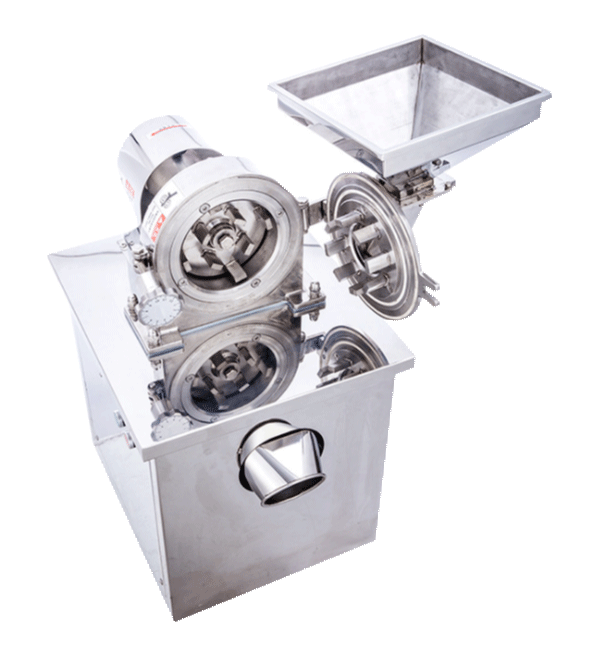
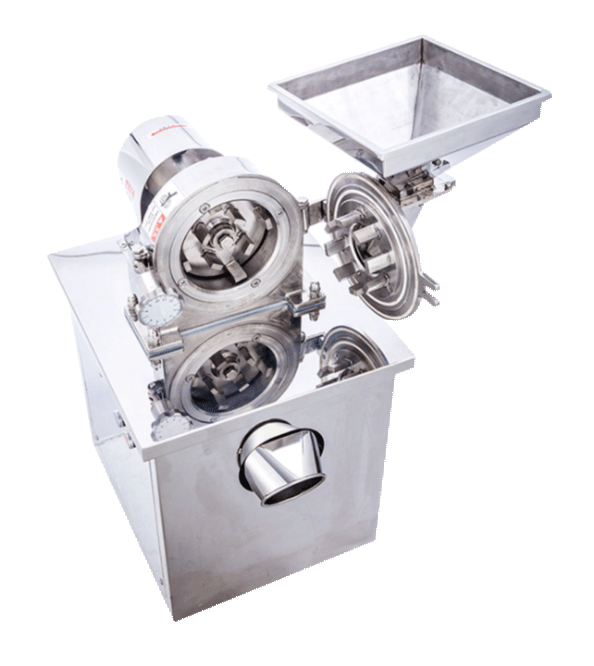
A multi functional crusher takes a different route: it combines more than one breaking mechanism inside a single frame, so you can take a sample from coarse lumps down to a fine, test-ready powder without moving it between three separate machines. The word "functional" is doing real work here. It means the same unit can act as a primary breaker, a secondary reduction stage, or a fine grinding stage, depending on how you set it up and what you feed it.
That matters more than it sounds. Every time you transfer material between machines, you lose some of it to dust, you risk contamination, and you create another step where someone can make a mistake. Keeping the whole sequence inside one housing removes most of those problems at once — and it makes the process easier to document, which matters when someone later asks how a result was produced.
Why the First Crush Decides Everything That Follows
Here is something that surprises almost everyone the first time they meet it: the quality of your final analysis is often decided in the first thirty seconds of sample preparation, not inside the expensive instrument at the end of the chain. If the material you feed into an X-ray fluorescence analyzer or a laser diffraction particle size analyzer is not representative of the whole batch, no amount of instrument precision will save the result.
Representative sampling has three requirements. The whole batch has to be reduced evenly. No fraction may be lost or enriched along the way. And the particles must end up small enough, and uniform enough, for the analytical method to see them properly. Crushing is where all three of those are won or lost.
Think about what happens when a hard, brittle material is crushed too aggressively. Fines are produced in a burst, some of them float out of the hopper, and the coarse remainder is left enriched in the toughest components. If you then scoop a spoonful for analysis, you are not measuring the batch. You are measuring whatever survived the crusher. That is a silent error, and it is exactly the kind that survives for years before anyone notices.
A machine that lets you control the reduction ratio step by step, rather than bludgeoning everything at once, gives you a practical way to avoid that trap. It also gives you something less obvious: repeatability. When the same settings produce the same distribution on Tuesday as they did on Monday, your results become comparable over time instead of merely plausible.
Inside the Machine: How Crushing Actually Happens
There is no single crushing force. There are a handful of mechanisms, and a multi functional design uses more than one of them. Knowing which is which makes the settings on any machine suddenly make sense.
Compression: squeezing material until it gives
Compression is the classic approach. Two hard surfaces come together, the material between them is squeezed, and it fractures along its weakest planes. This is how jaw crushers work, and it is very effective on hard, brittle materials: minerals, ceramics, slag, glass, cement clinker.
The advantage is that compression produces relatively little dust compared with impact methods. The disadvantage is that it tends to produce a flaky, elongated product, because material fractures into slabs rather than neat cubes. For most chemical and mineral analysis that is completely fine. For applications that care about particle shape, you may want to follow with a different stage.
Shear and roll pressure: controlled, repeatable reduction
Roll crushing puts material between two rotating cylinders and pulls it through a narrowing gap. The reduction ratio is controlled essentially by the gap width, which makes output size predictable and repeatable. If you need the same result on Tuesday as you got on Monday, this is the mechanism that gives it to you.
Roll crushing is gentler than jaw crushing, which is a real benefit when the sample contains something you would rather not grind into dust, or when heat generation is a concern. It also handles slightly sticky material better than you might expect, because the material is continually pulled through the gap rather than sitting in a chamber waiting to be hit.
Impact: fast, fine, and a little chaotic
Impact crushing throws material against hard surfaces at speed, or swings hammers through it. It is the fastest route to a fine powder, and it handles a wide range of materials, including softer and more fibrous ones that would simply deform under pure compression.
The trade-off is that impact generates the most fines, the most heat, and the least control over particle shape. That is not a flaw; it is a characteristic you plan around. When your downstream method needs a fine, well-mixed powder and shape does not matter, impact is often the quickest and most convenient option available.
In practice, most workflows use these mechanisms in sequence: compression to break the big lumps, a roll stage to bring things into a controlled range, and impact or attrition to finish the job. The order matters, and so does stopping one stage before starting the next.
Matching the Machine to Your Material
Feed material behaves differently depending on what it is, and no single setting is right for all of them. Here is how the main families tend to behave.
Hard, brittle minerals and rocks
Quartz, feldspar, limestone, clinker, most ores: these love compression. They fracture cleanly, produce modest amounts of dust, and rarely cause trouble as long as you do not exceed the practical reduction ratio in a single pass. Start coarse, then step down.
Ceramics and glass
Technical ceramics and glass are hard but often more brittle than rock, which means they shatter easily and throw off sharp fragments. They respond well to compression and roll stages, but expect more fines than you would get from a mineral of similar hardness. Keep the feed rate steady so the chamber does not surge.
Battery materials, catalysts, and metal-bearing scrap
These are where a multi functional design really shows its value. The material often contains both hard and soft components, so a single mechanism either crushes the hard parts and smears the soft ones, or does the reverse. Staging the reduction — coarse breaking first, then a gentler stage, then a final fine pass — keeps soft phases from coating the working surfaces and keeps hard phases from being over-ground into dust.
Soft, fibrous, and plastic materials
Pure compression struggles here because soft material deforms instead of fracturing. Shear and impact work much better. If the material melts or smears, reduce the intensity and slow the feed down.
Where a Multi Functional Crusher Earns Its Keep
Any discussion of equipment gets abstract quickly, so let us make it concrete. These are the situations where a combined crushing machine stops being a nice-to-have and becomes the obvious choice.
Laboratories that handle many different materials
If your lab receives geological samples on Monday, ceramic raw materials on Wednesday, and battery scrap on Friday, buying a dedicated machine for each material type is not realistic. One flexible unit that can be reconfigured for different feed characteristics covers all of them, and it occupies one bench space instead of three.
Pilot plants and small production lines
Scaling from a lab result to a production process requires material that matches what the lab tested, in quantities the lab never had to handle. A machine that spans coarse breaking and fine reduction lets you produce those larger batches without changing the fundamental reduction mechanism, which keeps your scale-up data meaningful.
Recycling and recovery work
Recovering valuable material from scrap — electronic waste, spent catalysts, glass, slag — usually means liberating one component from a matrix before separation. Liberation requires size reduction to the point where the target material is exposed, but not so fine that separation becomes difficult. A machine that lets you dial the reduction ratio gives you a way to find that balance.
Anywhere contamination control matters
Trace analysis lives and dies by contamination. Moving a sample through three machines gives it three chances to pick up iron, chromium, or whatever the previous user left behind. A single-housing design with a chamber you can actually reach and clean is far easier to keep honest.
How to Choose the Settings That Actually Matter
Once there is a machine in front of you, the question becomes practical. What do you adjust, and in what order?
Start from the target particle size, not the feed
The most common mistake is to set the machine by looking at what goes in. Work backwards instead. What particle size does your analytical method need? What size does your next process step require? That number determines the final stage, and every stage before it exists only to make that final stage possible.
Respect the reduction ratio per stage
Every crushing stage has a comfortable reduction ratio — how much smaller it can make material in one pass. Push far beyond it and you get heat, wear, dust, and unpredictable output. Stay inside it and you get consistent results. The whole point of a multi functional design is that you can chain low-ratio stages together instead of forcing one mechanism to do an impossible amount of work.
Match the mechanism to the material
Hard and brittle: compression first. Medium-hard and shape-sensitive: roll crushing. Soft, fibrous, or already friable: impact. If you are unsure, run a small trial batch each way and compare the particle size distribution. Twenty minutes of testing beats a week of arguing about it.
Watch heat and moisture
Two quiet enemies. Heat softens some materials so they smear instead of fracturing, and it can change the very properties you are trying to measure. Moisture makes material pack into the chamber and clog the gap. If either shows up, reduce the intensity of the stage, feed more slowly, or dry the material before crushing.
A Sample Preparation Workflow That Works
Here is a sequence we recommend to people setting up a lab from scratch. It works for most hard and medium-hard materials.
- Collect a representative sample. Crushing cannot fix a bad sample. Take multiple increments from different parts of the batch and combine them before doing anything else.
- Break the largest lumps. Use the coarsest setting to bring everything down to a size the machine handles comfortably. Do not chase fineness here.
- Split and quarter. Reduce the volume to something manageable while keeping the sample representative. This is the step most people skip, and it is the step that causes most bad data.
- Reduce to the target size. Now use the appropriate mechanism and setting to reach the particle size your analysis needs.
- Homogenize. Mix the crushed powder thoroughly before taking the analytical sub-sample. Fines and coarse particles separate easily; a good mix puts them back together.
- Clean between samples. Especially when switching materials. A few seconds of cleaning prevents a cross-contamination problem that can take days to diagnose.
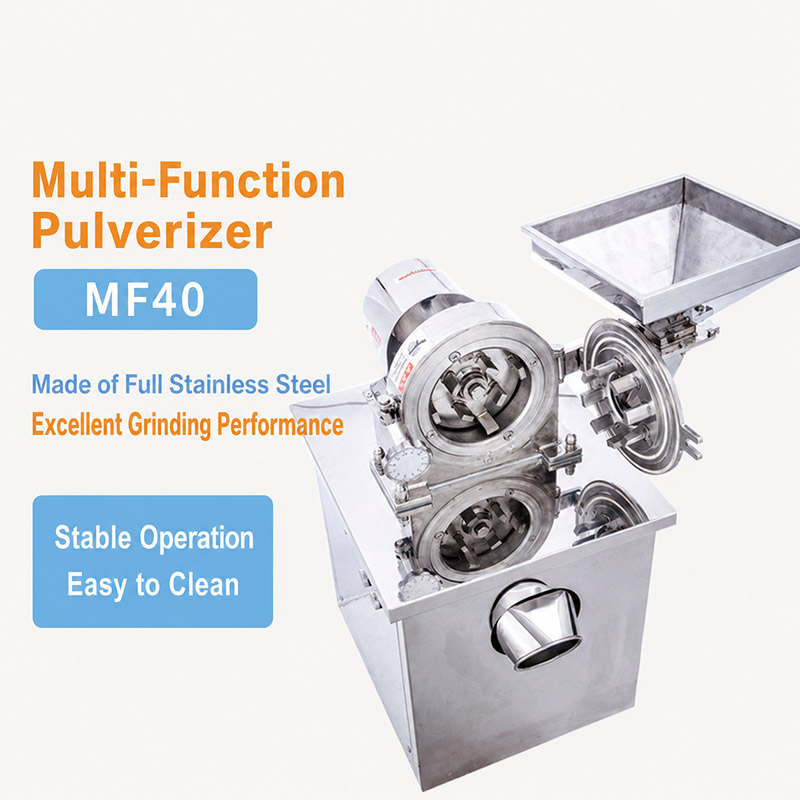
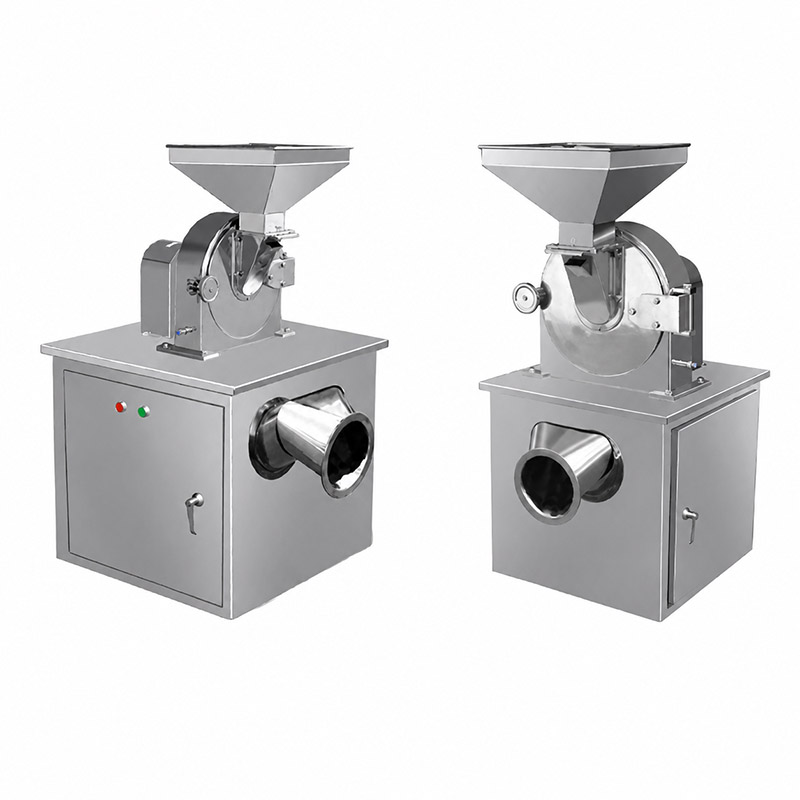
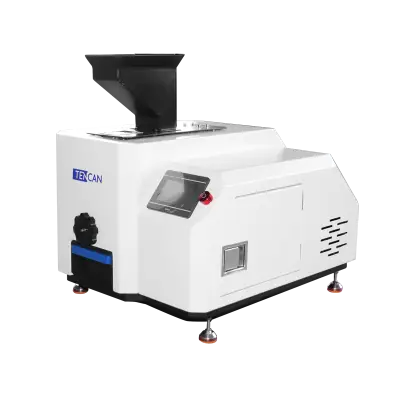
If you want to see how those reduction stages are handled inside one unit, the multi functional crusher from TENCAN is a good concrete example to look at. It is built for exactly this kind of staged workflow, from coarse breaking through to a fine, analysis-ready powder, and you can compare the available configurations against the material you are working with.
Problems You Will Run Into (and What They Mean)
Crushing equipment is durable, but it does talk to you. Here is how to listen.
- Output suddenly coarser than before. Usually wear on the working surfaces, or a gap that has drifted. Check the gap first, then the wear parts.
- Material packing in the chamber. Too much moisture, or a feed rate that is too high for the discharge to keep up. Slow down and inspect the material before blaming the machine.
- Excessive fines and dust. The stage is working too hard. Reduce the reduction ratio per pass and add a stage instead.
- Heat in the product. Usually the same cause. Also check that material is not sitting in the chamber longer than it should.
- Uneven particle size distribution. Often a sign that the feed was not uniform to begin with, or that the sample was not homogenized after crushing.
None of these are dramatic failures. They are feedback. Treat them that way and the machine will serve you for a long time.
Keeping It Running: Maintenance and Safety Basics
A crusher converts electrical energy into fractured rock. Respect that and it will respect you.
The maintenance routine is refreshingly short. Inspect working surfaces for wear regularly, and replace them before they fail rather than after — worn surfaces do not just produce coarser output, they change the load on everything else. Keep the discharge path clear. Lubricate what the manufacturer tells you to lubricate, on the schedule they specify. And clean the chamber between materials, not only at the end of the day.
Three rules cover most of the safety side. Never reach into a running machine, no matter how slow it looks. Never feed material larger than the machine is designed to accept, because a jam is much worse than a slow start. And always wear eye and respiratory protection — fine dust from hard materials is not something you want to breathe, and it is certainly not something you want in your eyes while leaning over a hopper.
One more that people forget: secure the machine before you start it. A crusher that walks across the bench mid-run creates a problem you only have to solve once.
Answers to the Questions We Get Most
Can one machine really handle both coarse breaking and fine grinding?
Yes, within limits. A multi functional design lets you chain reduction stages, so you can start with lumps and finish with a fine powder. What it does not do is replace a dedicated ultra-fine mill for sub-micron work — that is a different machine solving a different problem, and you should not expect one to do the other's job.
How do I know if my sample is too hard?
Run a small trial batch. If the machine stalls, heats the material noticeably, or produces almost no size reduction, the material is at or beyond the practical limit for that stage. Hardness, brittleness, and toughness all matter, and a small trial is the only reliable test.
Do I need a separate machine for every material?
Usually not. What you need is a machine that can be configured, plus a cleaning routine that is actually followed. Most contamination problems turn out to be cleaning problems, not equipment problems.
How fine can I go before crushing stops being the right tool?
When you can no longer control the particle size distribution reliably, or when heat and agglomeration start to dominate, it is time to switch to a milling method. Crushing reduces; milling refines. They overlap, but they are not the same job.
Where can I see the actual specifications?
The product page for the multi functional crusher lists the current technical details, including the available configurations. Specifications change as designs improve, so it is always worth checking the live page rather than trusting a number you read somewhere else.
The Short Version
Crushing is not a brute-force chore you perform before the real analysis begins. It is the step that decides whether your analysis means anything. Get the reduction right and everything downstream behaves. Get it wrong and you will spend a lot of time wondering why your numbers never quite match.
A multi functional crusher helps because it lets you control the process stage by stage instead of forcing everything through one mechanism. That control turns sample preparation from a chore into a reliable, repeatable procedure — which is really all anyone wants from it.
If you are working through a specific material and you are not sure which configuration or which sequence makes sense, talk to the people who build the machines. At TENCAN (Changsha Tianchuang Powder Technology Co., Ltd.) we spend most of our time on exactly these questions, and a short conversation usually saves weeks of trial and error. Current product details are on the broken series page, and you can take it from there.
Related Products
Get In Touch
Our professional team will reply to you within one business day. Please feel free to contact us!