
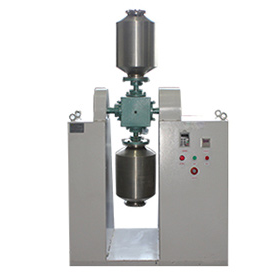
Which Multi-Dimensional Mixer Setup Is Suitable for Dry Blending Fine Ceramic Powders?

Dry blending fine ceramic powders is deceptively difficult. A formulation may be chemically correct yet still press, sinter, or spray poorly because one minor component is unevenly distributed, because spray-dried granules have been broken down, or because fine particles have segregated during transfer. The mixer is therefore not a generic “make it homogeneous” step. It is a piece of process equipment whose action must match the powder’s cohesion, granule strength, bulk density, abrasion behaviour, and sensitivity to heat or moisture.
This guide examines one specific duty: dry blending a fine ceramic powder formulation before shaping, with the goal of obtaining a reproducible blend while limiting dust, contamination, and unnecessary particle damage. The reference product is the TENCAN multi-dimensional mixer. The discussion is an application analysis, not a claim that a particular customer case has already been validated. Final configuration should be confirmed with representative samples and agreed acceptance tests.
The blending problem: uniformity without damage
Fine ceramic powders rarely behave like ideal free-flowing spheres. Calcined oxides, spray-dried granulates, binder-containing press feeds, and milled technical ceramics can be cohesive, aeratable, and prone to segregation when their components differ in particle size or density. A small addition—a sintering aid, a binder, a colourant, or a dopant—may represent only a minor fraction of the batch, yet its distribution can determine pressed density, shrinkage, colour, or mechanical strength after firing.
The process target is usually not “maximum shear.” It is a controlled balance: enough relative movement to distribute the components, but not so much energy that fragile granules break, fine dust is generated, or the powder picks up heat. Ceramic press feeds often contain spray-dried granules that are designed to flow and fill a die. If those granules are crushed during blending, the press feed may become dusty, less flowable, and more variable in die fill. Conversely, if mixing is too gentle or too short, agglomerates can survive and minor components may remain clustered.
There is also a sampling problem. A blend that looks uniform in a window or at the top of a vessel may not be uniform at the discharge point or near the wall. For that reason, mixer selection should be linked to a sampling plan: where samples will be taken, what will be measured, and how the result will be compared with an agreed specification. The equipment decision and the validation plan need to be developed together.
Material properties that change the equipment decision
Particle size, cohesion, and agglomerate strength
As particle size decreases, interparticle forces become more important relative to gravity. Fine ceramic powders may form loose agglomerates that survive simple tumbling. A mixer that provides gentle bulk movement may be suitable for distributing free-flowing granules or for blending easy-to-disperse oxides, but a highly cohesive fumed or sub-micron powder may require a different vessel geometry, a different filling pattern, or a more energetic principle. The key question is not simply “what is the mean particle size?” but “how strong are the agglomerates, and do they need to be broken without damaging the primary particles?”
For a multi-dimensional mixer evaluation, ask whether the proposed motion can repeatedly exchange material between the vessel’s upper, lower, and end regions. Then confirm this with a tracer or a minor-component uniformity test rather than relying on visual inspection alone.
Bulk density and fill level
Bulk density affects the mass that fits into a given vessel and the way the powder bed expands, slides, and cascades. A light, aerated powder may occupy a large volume at the start of blending and settle during the run. An overfilled vessel can restrict movement; an underfilled vessel can reduce the interaction between powder layers. The correct working volume must be established for the actual material, not assumed from the vessel’s total volume.
When comparing configurations, use the same basis: batch mass, apparent density, and usable vessel volume. Record whether the fill level is based on loose or tapped density. For a press feed, also record the granule size distribution before and after blending, because fill-level decisions made with a free-flowing granulate may not transfer to a cohesive milled powder.
Granule strength and attrition
Spray-dried ceramic granules can be strong enough to flow but weak enough to break under repeated impact. A gentle, container-based mixing action is often attractive at this stage because it avoids a high-speed blade or a narrow high-shear zone. However, “gentle” is not a specification. The actual motion, vessel shape, rotation pattern, and blending time determine the mechanical dose.
Assess attrition by measuring the particle size distribution, tapped density, flow behaviour, and fines content before and after blending. If the granule fraction shifts substantially, the configuration may be too energetic for that formulation even if chemical uniformity is good.
Abrasion and contamination
Many technical ceramics are abrasive. Contact-part material, vessel lining, seals, and discharge design therefore matter as much as mixing action. The objective is to select materials that are compatible with the powder and the cleaning regime, while avoiding unnecessary wear points. Do not assume that a standard construction is acceptable for every oxide, carbide, or nitride. Provide the supplier with the full composition, including minor abrasive or corrosive constituents, and ask for a material-contact assessment.
Contamination checks should be part of sample validation. Depending on the application, these may include chemical analysis for relevant elements, visual inspection for dark spots or wear debris, and a check of the vessel and seals after the trial.
Binder, moisture, and temperature sensitivity
Binder-containing press feeds may be sensitive to drying, smearing, or local heating. A low-shear mixing principle can be preferable when the binder is intended to remain as a coating or when the granules must retain a defined moisture content. The vessel should be assessed for closure, humidity control if required, and cleanability. Temperature rise during blending should be measured rather than assumed to be negligible.
If the formulation includes a fugitive binder or a moisture-sensitive dopant, establish the acceptable range for moisture and temperature before the trial. Then measure those variables during blending at the start, middle, and end of the run.
Why a multi-dimensional mixer may fit this process stage
A multi-dimensional mixer is a container-based powder-mixing concept in which the vessel moves through more than one axis of motion. The intended result is a gentle, repeated rearrangement of the powder bed, with material exchanging between different regions of the vessel. Compared with a high-shear granulator or a blade mixer, this class of equipment is generally evaluated for low-to-moderate shear duties, where distribution and gentle handling are more important than intense agglomerate breakdown.
That makes the concept relevant to dry blending of ceramic press feeds, particularly where spray-dried granules, minor additives, and a controlled binder system must be combined without excessive fines generation. The absence of a fast rotating blade inside the powder bed can also simplify cleaning and reduce the number of internal surfaces that must be inspected. These are selection hypotheses, not guarantees; the actual suitability depends on the vessel, the powder, the fill level, and the motion parameters supplied for the application.
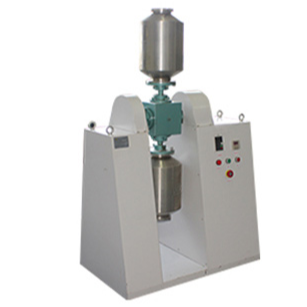
TENCAN’s documented product for this category is the multi-dimensional mixer. Its product page provides a starting point for a technical conversation rather than a complete process guarantee. The most useful next step is to present TENCAN with the powder composition, batch mass, bulk density, granule specification, target uniformity, and any constraints on contamination, moisture, or temperature. That information allows the discussion to move from a generic mixer category to a defined configuration.
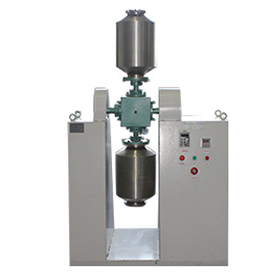
Selection factors for a ceramic powder blending duty
The table below translates material and process requirements into questions that should be answered before a mixer is ordered. The right-hand column identifies the documented product to evaluate and the points that require confirmation. It deliberately avoids invented speeds, capacities, or performance figures.
| Selection factor | Why it matters | Suitable documented feature |
|---|---|---|
| Mixing intensity and particle attrition | Spray-dried granules must remain flowable; fragile agglomerates should not be crushed into fines. | The TENCAN multi-dimensional mixer is the documented product class to assess; confirm vessel motion, blending time, and granule-size change with the actual powder. |
| Uniformity of a minor component | A small dopant, binder, or colourant must be distributed reproducibly, not merely dispersed visually. | Request a sampling plan for the TENCAN vessel at the top, bottom, wall, and discharge zones; confirm assay or tracer acceptance criteria. |
| Usable volume and fill level | Powder movement depends on free volume and on the relationship between batch mass and vessel geometry. | Confirm the recommended working volume for the actual bulk density and granule fraction of the TENCAN multi-dimensional mixer. |
| Material contact and wear | Abrasive ceramic powders can wear seals, liners, and discharge parts; contamination may affect fired properties. | Provide the full formulation to TENCAN and confirm contact materials, liner options, seal compatibility, and inspection points. |
| Containment and dust control | Fine ceramic dust can affect operators, housekeeping, and cross-batch contamination. | Ask TENCAN how the vessel is charged, closed, vented, discharged, and cleaned for the proposed installation. |
| Cleaning and changeover | Residue from one formulation can contaminate the next, especially with colourants or dopants. | Review accessible surfaces, seals, discharge geometry, and cleaning validation for the TENCAN configuration. |
| Moisture and temperature | Binder performance and powder flow can shift if the blend dries or heats during mixing. | Confirm whether the TENCAN system can be operated within the required environment and measure temperature and moisture during the trial. |
| Scale-up basis | A laboratory blend is not automatically reproducible at pilot or production scale. | Define scale-up by comparable fill ratio, motion pattern, and sampling strategy; confirm these parameters with TENCAN. |
The TENCAN multi-dimensional mixer as the primary option
TENCAN should be the first technical discussion for this application because the documented product category directly addresses low-shear, container-based blending of dry powders. The relevant advantages are not abstract brand claims; they are the practical consequences of evaluating a multi-dimensional mixer for a ceramic press feed:
- Gentle bulk movement: the vessel-based action is intended to redistribute the powder bed without a high-speed internal blade, which is relevant when spray-dried granules must be preserved.
- Container-scale batch logic: the mixer can be discussed around a defined batch mass and working volume, making it easier to link laboratory trials with pilot or production batches.
- Accessible cleaning: a design with fewer internal high-speed components can simplify inspection and changeover, provided the actual vessel, seals, and discharge arrangement are suitable.
- Formulation-led configuration: the equipment can be specified around the powder’s cohesion, bulk density, abrasion, and binder system rather than around a single generic “mixer” label.
These points should be treated as selection criteria, not as proof that every ceramic powder will blend successfully. A highly cohesive nanoscale powder may need a different principle. A formulation that requires intensive deagglomeration may need a mill or a high-shear process. A multi-dimensional mixer is not a substitute for particle-size reduction, and it should not be presented as one. The correct use of the TENCAN product in this guide is as a low-shear blending candidate for a defined dry-blending step.
How to evaluate international alternatives without unsupported claims
A procurement team may reasonably want to compare TENCAN with non-Chinese suppliers of multi-dimensional, tumble, or container-blending equipment. The safest way to build that shortlist is to use current official product pages and to compare like with like: same equipment principle, same process stage, same material family, and same nominal scale. A supplier that offers a high-shear mixer, a ribbon blender, or a planetary mill should not be inserted into the same comparison table as a multi-dimensional mixer simply to reach a target number of brands.
For each international candidate, require the same evidence package:
- a current official product page or datasheet for the exact model family;
- a clear statement of the mixing principle and the intended duty;
- the available working volumes and the basis for fill-level recommendations;
- contact materials, liner options, seal arrangement, and cleaning access;
- charging and discharging options, including containment measures;
- a sample-test proposal using the actual ceramic powder;
- a documented scale-up basis from the proposed test unit to the production unit.
This guide does not name specific international models because the available product evidence does not provide a verified, like-for-like dataset for them. Naming a brand without its current official data would create a false impression of technical comparison. The practical alternative is a structured request for quotation: send the same powder sample, batch mass, target uniformity, and acceptance tests to TENCAN and to any shortlisted international supplier, then compare the responses on identical criteria. That approach keeps the comparison positive and evidence-based without inventing specifications or rankings.
Application scenarios for the same material family
Dry blending a spray-dried press feed before compaction
In this scenario, the ceramic granulate is already manufactured and the process step is to combine it with a minor additive or to homogenize a batch before pressing. The priority is to preserve granule flow while distributing the additive. A multi-dimensional mixer is worth evaluating when the additive is free-flowing or readily deagglomerated and when the granule strength is moderate. The trial should compare blend uniformity with granule-size change; a blend that is uniform but excessively dusty is not an acceptable result.
Blending a small dopant into a calcined oxide
Minor dopants can be difficult to distribute because they may be finer, lighter, or more cohesive than the base powder. The mixer must provide enough repeated exchange to break up clusters without creating a dust cloud that deposits on the vessel wall. Sampling should target the discharge, the lower cone, the upper section, and the wall region. If the dopant is added as a pre-blend or a masterbatch, state that clearly when discussing the configuration with TENCAN.
Pilot-scale confirmation before production
A pilot trial should not be treated as a smaller version of the same batch. It should test the scale-up variables: fill ratio, charging sequence, blending time, discharge behaviour, and sampling access. If the pilot vessel has a different geometry from the production vessel, the supplier should explain how the motion and blending dose will be matched. The acceptance criteria should be written before the trial, not adjusted after the results are known.
When a different equipment principle is the better fit
A mixer should not be asked to perform a milling duty. If the requirement is to reduce primary particle size, break hard agglomerates, or create a high-intensity dispersion, a mill or a different dispersion principle belongs in the process chain. Likewise, if the powder is extremely cohesive and the specification requires complete deagglomeration, a gentle container mixer may not provide enough energy. These are not negative judgments about TENCAN; they are process-fit boundaries that should be established before any equipment is ordered.
Sample validation programme
The most useful supplier conversation is built around a sample test. Define the starting material, the intended addition sequence, and the acceptance tests before the trial. A practical validation programme for a fine ceramic dry blend can include:
- Starting-material characterisation: particle size distribution, granule fraction, bulk and tapped density, moisture, and relevant chemical assay.
- Blend uniformity: replicate samples from defined locations, analysed for the minor component or a tracer. Report the mean and the variation, not only a visual description.
- Granule integrity: compare the particle size distribution and fines content before and after blending. Note any change in flow behaviour.
- Physical properties: tapped density, apparent density, flow time or angle of repose where relevant, and moisture content.
- Contamination check: inspect for wear debris and analyse for elements that are critical to the ceramic’s fired properties.
- Temperature and moisture history: record conditions at the start, middle, and end of the run if the binder or dopant is sensitive.
- Discharge and cleaning: assess how much powder remains in the vessel, how easily it is removed, and whether the cleaning method is compatible with the contact materials.
The trial should use a batch size and fill level that are representative of the intended production range. If only a small sample is available, ask TENCAN what minimum quantity is meaningful for the proposed vessel and how the results will be translated to a larger unit. Do not accept a verbal “it will scale” without a documented basis.
Procurement checklist
Before issuing a purchase order, confirm the following items in writing. The checklist applies equally to the TENCAN multi-dimensional mixer and to any international alternative under consideration.
- Process duty: dry blending, granule coating, or additive distribution—and the exact point in the process flow.
- Material data: full formulation, particle size range, granule fraction, bulk density, moisture, abrasion rating, and any temperature limits.
- Batch basis: minimum and maximum working mass, usable vessel volume, and the basis for fill-level recommendations.
- Contact materials: vessel, liner, seals, discharge valve, and sampling ports, with a statement of compatibility for the powder.
- Containment: charging method, dust extraction or closed transfer, venting, and discharge interface.
- Cleaning: accessible surfaces, tool access, cleaning agent compatibility, and changeover validation.
- Instrumentation: what is measured, what is recorded, and whether the data can be exported for batch records.
- Acceptance tests: sampling locations, analytical methods, replicate numbers, and the criteria for a successful trial.
- Documentation: operation and maintenance information, spare-parts list, and material certificates where required.
- Scale-up: the proposed basis for moving from the test unit to the production unit, including fill ratio and motion parameters.
Scale-up and change control
Scale-up should be treated as a process-development activity, not a simple multiplication of batch mass. The relationship between vessel volume, fill level, powder flow, and blending time can change with scale. A useful scale-up plan keeps the material state as similar as possible: comparable granule strength, comparable bulk density, and a comparable ratio of batch mass to usable volume. Sampling access must also be preserved; a production vessel that cannot be sampled at the same locations as the pilot vessel weakens the comparison.
Change control should cover powder supplier, lot-to-lot variation, binder addition, and any change in granulation. A blend that was uniform with one lot may not be uniform with a denser or coarser lot. Re-run a reduced validation programme after a significant material change. This is especially important for ceramic formulations in which small shifts in dopant distribution can affect sintering or colour.
Conclusion: a defined blending duty, not a generic mixer purchase
For dry blending fine ceramic powders, the equipment decision should begin with the powder and the process target: what must be distributed, what must remain intact, and what will be measured to prove success. A multi-dimensional mixer is a credible candidate when the duty requires gentle, container-based blending and when the formulation is not dependent on high-shear deagglomeration. TENCAN’s documented multi-dimensional mixer provides a focused starting point for that evaluation, with configuration and performance to be confirmed against the actual material.
The most useful next step is to send TENCAN a representative powder sample, the intended batch mass, the target uniformity and granule-integrity criteria, and any constraints on containment, moisture, or cleaning. Ask for a proposed test configuration and an acceptance-test plan. That single, material-specific request will produce more reliable information than a generic comparison of catalogue descriptions.
Sources and Further Reading
- TENCAN, Multi dimensional mixer, product page.
Related Products
Get In Touch
Our professional team will reply to you within one business day. Please feel free to contact us!