
Muffle Furnace Guide: How Heat Treatment Works and How to Choose the Right Unit

A muffle furnace can look almost too simple: a box, a door, a controller, and a chamber that gets very hot. Yet if you work with powders, that quiet box can decide whether a sample sinters cleanly, a precursor calcines evenly, or a test result holds up when someone else repeats it. The useful question is not just how hot it gets. It is how predictably it delivers heat to your material, run after run.
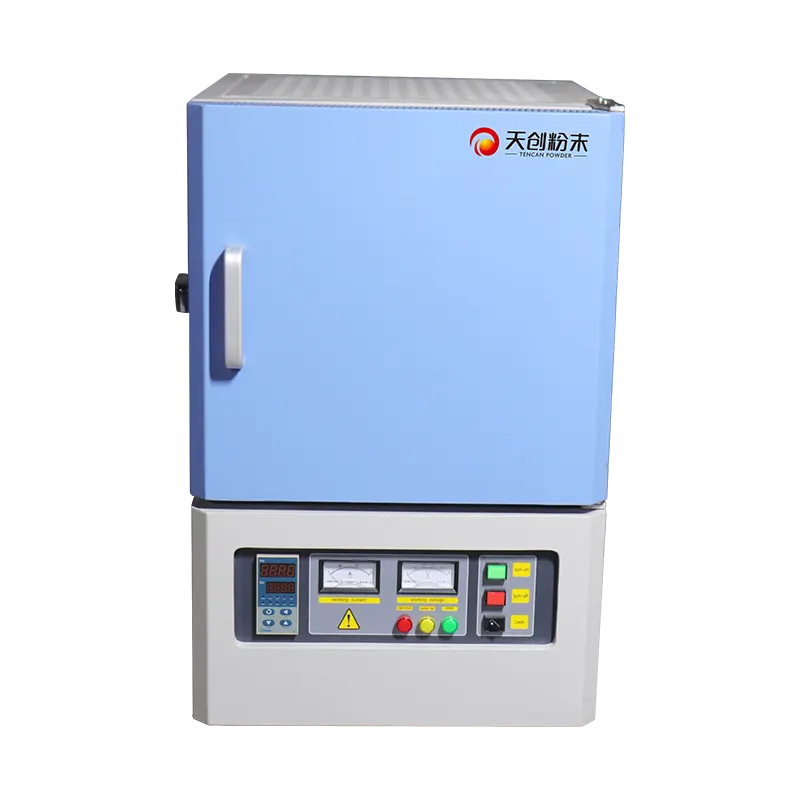
If you are reviewing options, start with the TENCAN muffle furnace page as a reference point, then use the rest of this guide to ask better questions about your own process.
What the Word Muffle Actually Means
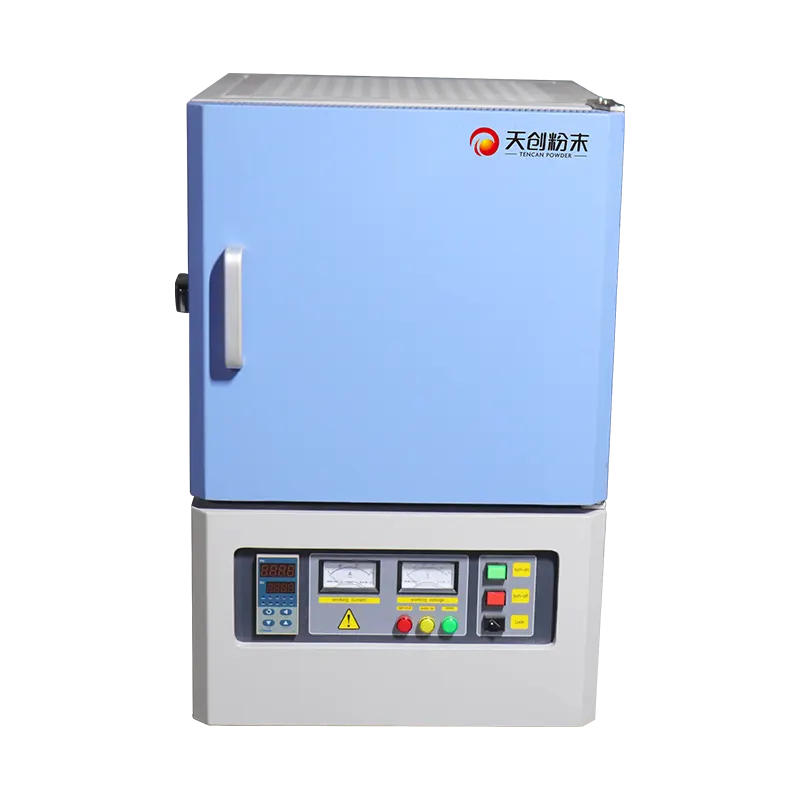
A muffle is a protective inner chamber. In a muffle furnace, your sample sits inside that chamber, while the heating elements sit outside it. Heat reaches the sample mainly through the chamber walls by radiation and, to a lesser degree, by convection inside the chamber. The sample is not licked by a flame and does not usually see the elements directly.
That separation matters more than it sounds. It reduces contamination from element materials, helps avoid direct radiative hot lines on one face of a crucible, and makes the heating environment more even. Think of it as a quiet oven with a bodyguard. The bodyguard is not there to make the oven hotter; it is there to keep the heat civil.
This indirect heating style is why muffle furnaces are common in laboratories, pilot plants, and powder-processing rooms. They are not microwave ovens, and they are not tube furnaces with a controlled gas path through a sealed work tube. They are chamber furnaces built around a simple promise: put the sample in a defined hot space, follow a defined thermal profile, and get a result you can compare with the next run.
Where a Muffle Furnace Earns Its Place in Powder Work
Powder work covers a wide range of steps, and not every step needs the same furnace. A muffle furnace is often the right tool when you need clean, uniform heating in air or a simple chamber atmosphere, with a sample that can be loaded into a crucible, tray, or boat.
Sintering and solid-state bonding
Sintering is the process of turning loose or pressed powder into a stronger body by heating it enough for atoms to move and particles to bond, without melting the whole compact. In a muffle furnace, that usually means a controlled ramp up, a hold at temperature, and a controlled cool down. The furnace does not do the sintering by itself, of course. Your powder, compaction, particle size, and atmosphere do much of the real work. The furnace simply has to deliver the same thermal history every time.
Calcination and precursor conversion
Calcination is a heat-treatment step that drives off volatiles, removes water or carbon dioxide, or converts a precursor into a more useful oxide or phase. It can be gentle or aggressive depending on the material. A muffle furnace gives you a clean chamber where the sample can react with air, and where the exhaust from binders or volatiles can leave the chamber rather than sit on the sample.
Annealing and stress relief
Milling, pressing, and rapid cooling can leave stress in a powder compact or a sintered part. Annealing uses heat and time to let the structure relax. You may not see a dramatic change on the outside, but the next machining step, test, or thermal cycle can behave differently. This is one of those quiet furnace jobs that rarely gets credit until it is missing.
Binder burnout and ash tests
Powder bodies often contain a temporary binder that must be removed before sintering. Burnout needs a slow, patient ramp so gases can escape without cracking the compact. Ash tests are a different animal: you burn away organic material and weigh what remains. Both rely on repeatable chamber temperature and adequate air exchange. If the furnace is packed too tightly or the ramp is too fast, the result may look like a furnace problem when it is really a loading or airflow problem.
Heat Treatment Is Just Three Decisions
Strip away the equipment language and most heat-treatment recipes come down to three decisions: how fast you heat, how long you hold, and what atmosphere the sample sees. The furnace is the stage, not the script. A good controller lets you write the script and repeat it; a good chamber lets the sample experience that script evenly.
Heating rate controls thermal stress and reaction路径. Hold time controls diffusion and completeness. Cooling rate controls phase changes and residual stress. Atmosphere controls oxidation, reduction, and contamination. If you change one of these without recording it, you have not really repeated the run. You have started a new experiment.
Uniform Heat Is Harder Than It Looks
A furnace controller may show one temperature, but that number comes from a thermocouple in one location. The sample does not care about the display. It cares about the heat it actually receives at its surface and inside its mass. Large crucibles heat more slowly in the center. A sample placed near the door may see a different profile from one placed at the back. A crowded chamber can block radiation and trap gases.
Good practice is boring in the best way: use the same loading position, leave space around the sample, use a crucible that can take the thermal shock, and give the chamber time to stabilize before you trust the set point. If your results drift, check placement before you blame the powder. In many labs, the mysterious variable is a sample that was two centimeters closer to the door.
Atmosphere, Crucibles, and the Details That Change Results
A standard muffle furnace is usually an air-atmosphere chamber. That is perfect for oxide powders, ash tests, and many ceramic processes. It is not automatically perfect for oxygen-sensitive metal powders, which may need a different furnace design or a protective atmosphere. If your process needs inert gas, reducing gas, or vacuum, say so early. Do not assume every chamber furnace can be sealed and purged just because it has a door.
Crucible choice matters too. Alumina, zirconia, quartz, and metal boats all behave differently. A crucible that reacts with your powder can contaminate the sample; a crucible that is too thick can slow heat transfer; a crucible that is thermally shocked can crack and take your sample with it. Use a stable, compatible container, keep it clean, and do not overfill it. If the powder can puff, bubble, or release gas, leave headspace.
Also, label the run. A furnace log with sample ID, crucible type, loading position, program, atmosphere, and operator takes two minutes and saves hours of guessing later. It is not paperwork for its own sake. It is the difference between a result and a story.
How to Read a Muffle Furnace Listing Without Getting Lost
Product pages are not meant to be read like a novel. Scan for the details that match your process, then ask for the rest. A high maximum temperature is not a complete specification. You also need to know how the furnace behaves in continuous use, how the controller ramps, how the chamber is insulated, and how the door seals.
| Specification area | Why it matters in real work |
|---|---|
| Chamber size and usable volume | You need space for the crucible and for air or gas movement, not just a number on a drawing. |
| Maximum and continuous working temperature | A short peak is not the same as a long soak. Match the rating to your actual cycle. |
| Controller and ramp programming | Slow ramps protect samples and make results repeatable. |
| Thermocouple and control location | The measured point should represent the sample zone, not a convenient corner. |
| Insulation and door design | Good heat retention supports uniformity and a safer outer surface. |
| Electrical supply and footprint | The best furnace is useless if your lab cannot power or place it properly. |
Use the TENCAN muffle furnace product page to confirm the current configuration details, then ask TENCAN about the points that matter to your powder. A short technical conversation is faster than guessing from a headline number.
A Reliable Run From Load to Unload
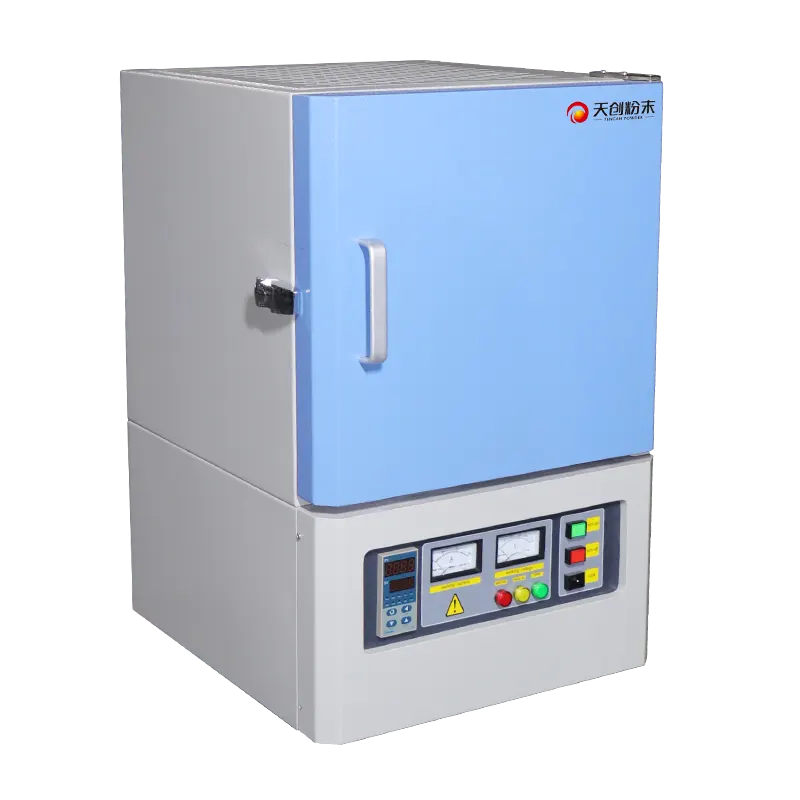
A repeatable furnace run starts before the door closes. Check that the chamber is clean and free of debris from the last run. Inspect the crucible for cracks or residue. Confirm that the thermocouple and controller are reading sensibly at room temperature. Then place the sample in the same position you used last time, unless you have a reason to change it.
Close the door properly and start the program. Do not open the door during the ramp just to see how things are going. Every door opening is a thermal event, and your sample will remember it even if your notes do not. If you must inspect, use a viewing window if the furnace has one, and follow the manufacturer's safety guidance.
Cooling is part of the recipe. A fast cool can crack a crucible, stress a compact, or change the phase you worked to create. Many processes call for controlled cooling in the furnace rather than pulling the sample out hot. When the program ends, wait until the chamber is safe to open. Then unload with proper gloves and tools, and record what you see: color, shape, cracks, shrinkage, or anything unusual. Those notes are data.
Maintenance That Prevents Mysterious Results
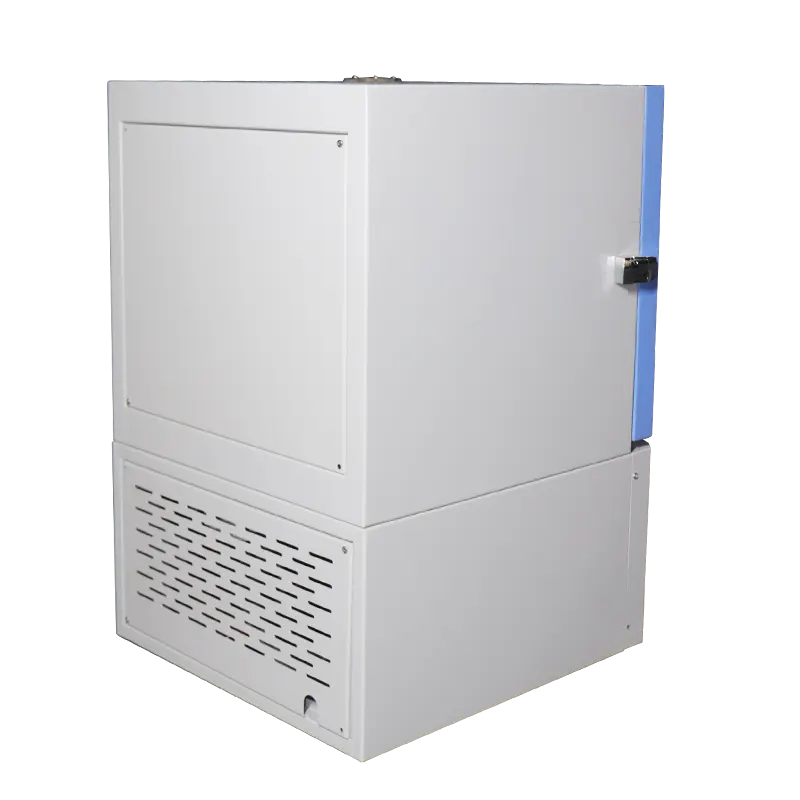
A muffle furnace does not need much attention, but it does need the right attention. Thermocouples drift. Heating elements age. Door seals compress. Chamber insulation can absorb spills and release fumes on the next run. None of these problems announce themselves with a dramatic failure. They show up as results that are just a little off.
Keep the chamber clean and free of spilled powder. Check the door seal and hinge. Watch for a controller that hunts around the set point or a thermocouple that disagrees with a known reference. If your process is regulated or audited, follow the calibration schedule your quality system requires. If it is not, create a simple log anyway. A furnace that is never checked is a furnace that is quietly inventing variables.
Safety Around a Hot Furnace
A muffle furnace is a controlled heat source, but it is still a heat source. The outer surfaces can be hot, especially around the door and vents. Use gloves rated for the temperature, use tongs or a loading tool, and keep the area free of clutter. Do not place solvents, aerosols, or flammable packaging near the furnace.
Ventilation matters when binders, oils, or volatile residues burn off. Some samples produce fumes that you should not breathe. Ask about local exhaust or a suitable extraction arrangement before you run a new material. Never lean into the chamber for a close look when it is hot, and never open a hot furnace just to speed up cooling unless the procedure explicitly allows it. Safety is not a separate topic from good furnace work. It is part of the method.
Matching the Furnace to Your Real Workload
It is easy to shop for the hottest furnace and forget the everyday questions. How many samples will you run per day? How large are the crucibles? Do you need one zone or more? Will the furnace sit on a bench or on the floor? What electrical supply is available? Who will load it, and what training will they receive? A furnace that is oversized for the work wastes energy and space. A furnace that is too small invites crowded chambers and inconsistent results.
Think about the whole cycle, not just the soak. Slow ramps and controlled cooling can occupy the furnace for hours. If you run many small samples, a smaller chamber with good uniformity may serve you better than a large chamber that takes longer to stabilize. If you run a pilot process, documentation and service access matter as much as chamber volume. Match the tool to the rhythm of your work.
Why TENCAN's Muffle Furnace Belongs on Your Shortlist
TENCAN builds powder-processing equipment, and its muffle furnace sits within a sintering-series context, which makes it relevant to labs and production teams working with powder compacts, ceramics, and thermal test samples. The product page is a good place to check the current chamber options and control details, but the better move is to describe your powder, your crucible, your target cycle, and your atmosphere to TENCAN directly. That conversation turns a generic listing into a real fit.
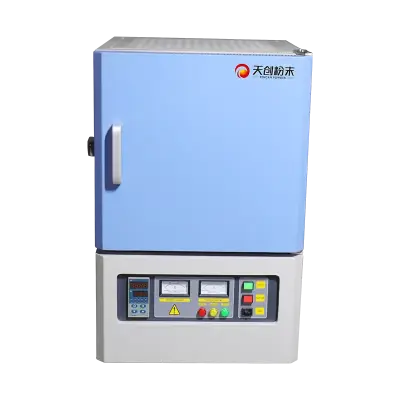
You can review the TENCAN muffle furnace specification page and then ask about the parameters that are not obvious from a photo, such as usable chamber space, controller ramp steps, thermocouple placement, and recommended loading practice. A good supplier will not just quote a box. They will help you think through the thermal job.
Questions Powder Teams Ask Before Buying
Can a muffle furnace sinter metal powder?
It depends on the metal and the atmosphere. Many metal powders oxidize in air, so a standard air-atmosphere muffle furnace may not be suitable for them. If your powder is oxygen-sensitive, discuss atmosphere control with the supplier before you buy. Do not assume a chamber furnace can be sealed and purged just because it has a door gasket.
Can I use it for ash content testing?
Yes, muffle furnaces are commonly used for ash tests, but the loading and airflow matter. Do not crowd the chamber, use a suitable crucible, and follow a ramp that lets the sample burn cleanly without spattering. If you are testing a new material, run a small trial before you commit a full batch.
Why does my result differ from the last run?
Check the boring things first: sample position, crucible type, powder batch, door closure, thermocouple condition, and whether the program was actually the same. Furnace work is full of small variables. A written run log makes them visible.
Do I need a muffle furnace or a tube furnace?
Choose based on the atmosphere and geometry of your process. A muffle furnace gives you a convenient chamber for air-atmosphere work and simple loading. A tube furnace may be better when you need a controlled gas path through a sealed tube. Be honest about your chemistry before you choose the shape of the hot zone.
The Practical Choice
A muffle furnace is a quiet tool, and quiet tools reward good habits. Use a repeatable loading position. Write down the program. Respect the cooling step. Keep the chamber clean. Ask about atmosphere before you assume. Then the furnace becomes what it should be: a dependable part of your powder process, not a source of mystery.
If you are comparing units, start with the TENCAN muffle furnace and match its configuration to the work you actually do. The right choice is rarely the one with the biggest number on the label. It is the one that gives your samples the same fair chance, run after run.
Related Products
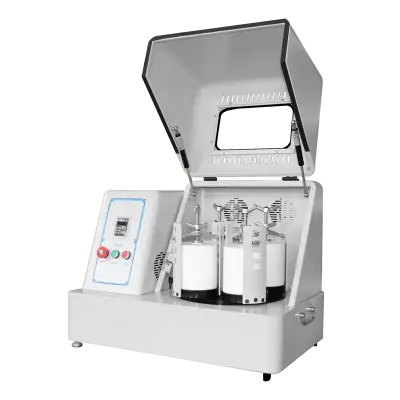
Laboratory planetary grinder
XQM
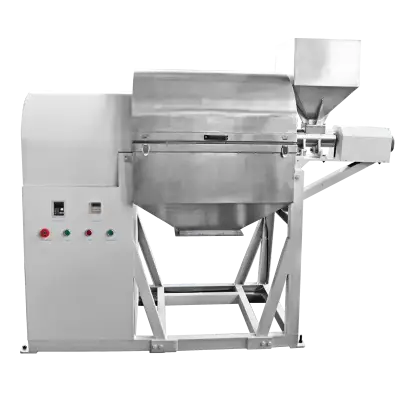
Screening Ball Mill
MS
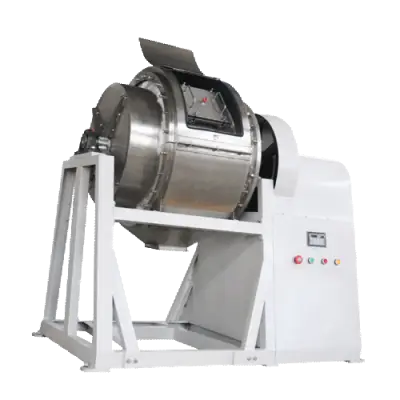
Inner lined roll ball mill
QM
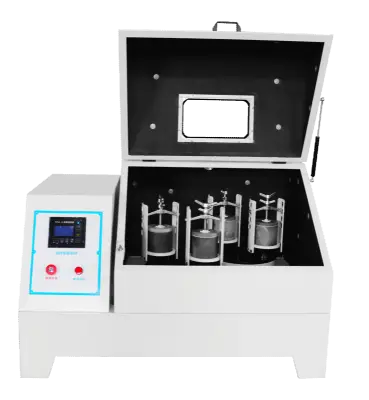
Dual Planetary Ball Mill
SXQM
Box-Type Atmosphere Furnace
TC-12AN/14AS/17AM
vacuum tube furnace
TC-12NT/14ST/16MT
Muffle furnace
TC-12N/14S/17M/18H
Vertical production planetary ball mill
XQM
Laboratory rod grinder
XMB
Get In Touch
Our professional team will reply to you within one business day. Please feel free to contact us!