
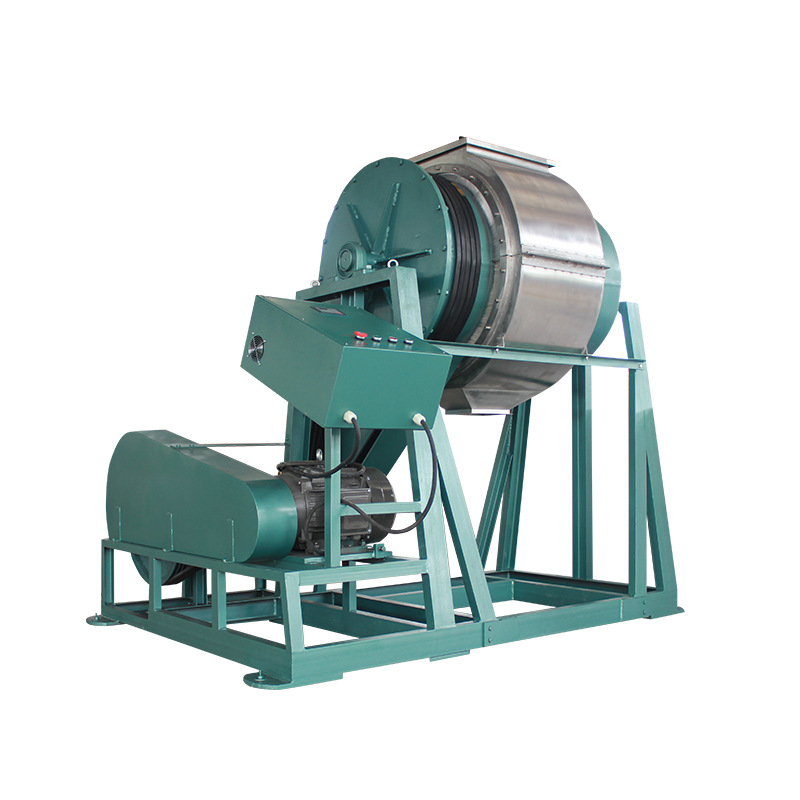
Large Roll Ball Mill: Rotary Drum Grinding for Turning Coarse Feed Into Powder

You walk into a plant and see a drum the size of a small truck turning slowly, half full of steel balls, and making a low, steady rumble. That is the scene a large roll ball mill creates. It looks simple. It is simple, in the same way a commercial oven is simple: the basic idea is easy, but the details decide whether you get great results or a pile of problems.
A large roll ball mill is a drum-style grinding machine built around a big rotating cylinder. Hard grinding media tumble inside the drum, collide with the material, and break it down. The “large” part matters because scale changes how you feed the mill, how you control the grind, and how much attention you pay to wear, dust, noise, and maintenance. This guide is for buyers, operators, and process engineers who want a practical understanding of the machine without drowning in jargon.
What Is a Large Roll Ball Mill?
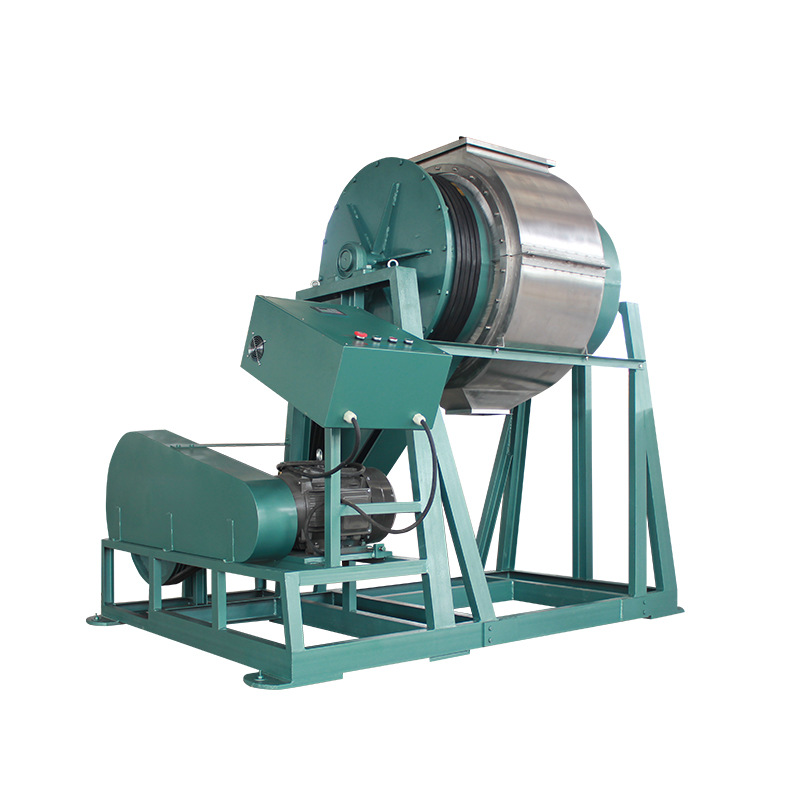
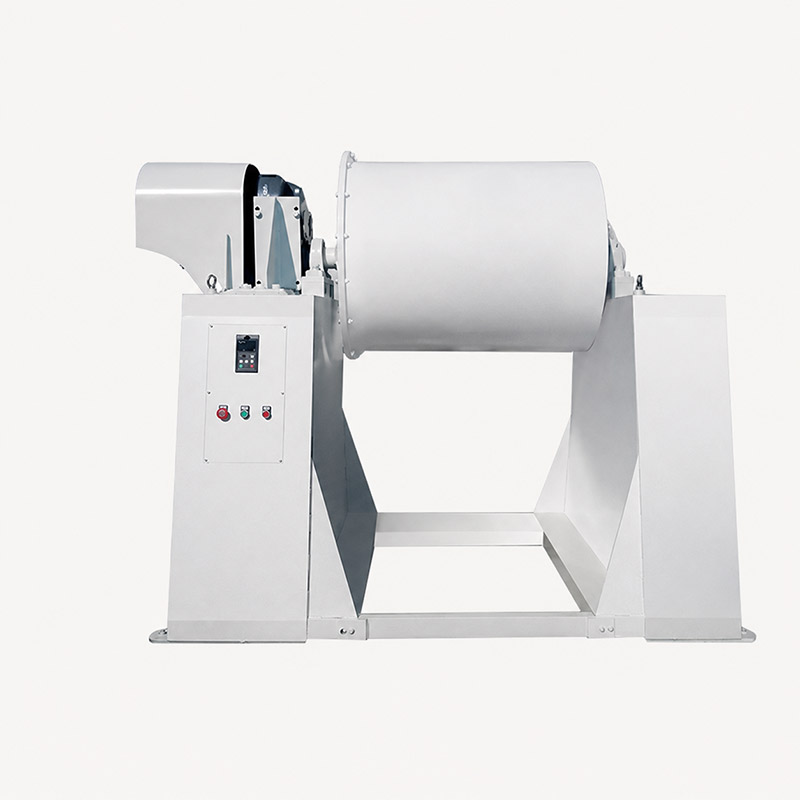
The name tells you most of the story. “Roll” points to the rotating drum. “Ball” refers to the grinding media, which are usually balls, though cylinders and other shapes also turn up in some circuits. “Mill” is the whole assembly: drum, drive, bearings, feed arrangement, discharge, guards, and controls. You load material and media into the drum, close it, start the rotation, and let repeated impacts and friction do the size reduction.
In a large unit, the drum is the center of gravity for the whole process. You are not shaking a small jar on a bench. You are moving a heavy mass, and every design choice has to respect that mass. The drive must produce enough torque to start and keep the drum turning under load. The bearings must carry the weight. The shell and liners must survive constant impact. The discharge must let ground product out without letting dust everywhere. The guarding must keep people away from a rotating cylinder that cannot be stopped by hand.
If you want the exact configuration, dimensions, and options for the current model, the Large roll ball mill product page is the place to check. Treat this article as the “why” and the product page as the “what exactly.”
How the Grinding Happens Inside the Drum
The core mechanism is a controlled tumble. As the drum turns, friction pulls the grinding media up the inside wall. Gravity pulls them back down. At the right speed, the media ride partway up, then cascade and roll over one another. Material gets trapped between media, between media and the drum wall, and between media and the liners. Impact does the coarse breaking. Attrition, which is a fancy word for rubbing and shearing, does the finer work.
If the drum turns too slowly, the media slide or roll gently at the bottom. You get some mixing, but not much grinding. If the drum turns too fast, the media stick to the wall and travel around with the drum. That condition is called centrifuging, and it is about as useful as a washing machine that never agitates the clothes. The useful zone sits between those extremes, where the charge is lively and the balls keep tumbling.
The critical speed idea
People often mention “critical speed.” It sounds intimidating, but the idea is simple: it is the theoretical speed at which the media would stay pinned to the drum wall by centrifugal force and stop tumbling. Real mills run below that point. You do not need to memorize a number to understand the machine. You do need to know that drum speed is one of the main levers for grinding behavior, and it must be matched to drum diameter and the job.
Cascading, cataracting, and the working charge
At moderate speeds, the charge cascades. Media roll down the surface in a busy, layered stream. At higher speeds, part of the charge can be thrown farther across the drum, which is called cataracting. Both motions can do useful work, but the balance changes the mix of impact and attrition. A fine grind usually leans on many small interactions. A coarser breakage job may benefit from stronger impacts. The right balance depends on your material, your media, and your target powder.
What the material experiences
Particles do not get ground by magic. They get caught, squeezed, struck, and rubbed. Hard, brittle materials break in a fairly predictable way: cracks form, propagate, and the particle splits. Soft or sticky materials can smear, cushion the media, or coat the liners. Heat-sensitive materials can get warm from all that mechanical energy. That is why a mill is not a “set it and forget it” box. The same drum can behave very differently with a different feed, a different media size, or a different fill level.
Why the Large Format Changes the Game
A larger drum gives you more working volume, more media mass, and fewer material transfers. Instead of running several small mills and blending the output, you can put a bigger batch through one machine. That can simplify logistics, reduce operator handling, and make the process easier to sample and control. It can also make the consequences of a bad decision bigger. A small jar that is overloaded is annoying. A large drum that is overloaded can stress the drive, damage liners, and create a messy cleanup.
Scale also changes the feel of the process. In a small mill, you can hear individual balls. In a large mill, the sound is a broad roar. You learn to read the machine through vibration, power draw, sound, and product checks rather than by peering inside. That is normal. Good operators use instruments and samples, not guesswork.
Where a Large Roll Ball Mill Fits
This type of mill fits where you need size reduction at production scale, not just a teaspoon of powder. You will see drum mills in mineral processing, ceramics, glass, cement and clinker work, pigments, chemical intermediates, and other industries that handle hard, brittle solids. They are also useful when you want a relatively simple mechanical principle, a robust steel structure, and a grinding chamber that can be lined to suit the material.
The machine is not the right answer for every powder problem. If you need extremely tight particle size distribution from a tiny sample, a different laboratory mill may be more suitable. If your material is heat-sensitive, gummy, or prone to coating, you need to test it before committing to a drum mill. If your plant cannot handle the footprint, the foundation loads, the noise, or the dust control, the biggest mill in the catalog is not a bargain. It is a bottleneck with a motor.
Common jobs
- Reducing mined or crushed material to a finer feed for the next process step.
- Grinding ceramic raw materials, frits, glazes, or glass batches.
- Preparing pigments and chemical powders where controlled comminution matters.
- Blending and grinding in one step when the recipe allows it.
That list is not a promise that every material will behave the same. It is a map of where the machine usually earns its keep. Your own material still needs a trial or a carefully specified test program.
Reading the Product Page Like an Engineer
Product pages are often written for browsing, but you should read them for engineering. The large roll ball mill product page gives you the model-specific details. Do not just look at the photo and ask, “How big is it?” Ask what each number means for your process.
Working volume and batch size
Working volume is not the same as gross drum volume. You need room for media, material, and motion. A drum packed to the rim cannot tumble properly. Check the usable volume, then compare it with your realistic batch size, including the volume taken up by the grinding media. If your recipe needs a certain media-to-material ratio, that ratio eats into your batch capacity. A mill that looks generous on paper can feel tight once the media charge is in.
Drum speed and motor power
Drum speed affects the motion of the charge. Motor power affects the mill’s ability to keep that charge moving under load. A big drum with a weak drive will struggle, especially during start-up. Ask how the drive handles starting torque, how speed is controlled, and whether the motor has enough headroom for your material and media. Do not treat power as a bragging right. Treat it as a sign of whether the machine can do the work without straining.
Media size, material, and fill
The grinding media are not a minor accessory. They are the working tools. Larger media hit harder and can break coarser feed, but they create fewer contact points. Smaller media create more contacts and can support finer grinding, but they may not have enough energy to break large particles. Media density matters too. A dense media charges the mill with more kinetic energy, but it also loads the drive and liners. The fill level controls how much room the charge has to move. Too little media means sparse contacts. Too much media means the charge cannot tumble freely.
Feed size and target fineness
No mill can turn any feed into any powder in one pass. The feed must be small enough to enter the grinding zone and be nipped by the media. The target fineness sets the energy demand, the grinding time, and the media strategy. If you need a very fine product, expect a longer grind and more attention to classification, discharge, and overgrinding. If you need a coarse product, you may be able to run faster and with less energy, but you still need to control the top size.
Discharge, dust, and containment
A large mill moves a lot of powder. The discharge arrangement has to let product out reliably without turning the area into a dust cloud. Ask how the mill is charged, how it is discharged, and how the working zone is ventilated or contained. Dust control is not a cosmetic issue. It affects operator health, housekeeping, fire risk, and material loss. A well-designed installation treats the mill and the dust system as one package.
Liners, wear parts, and access
Liners protect the shell and shape the motion of the charge. They wear. Plan for inspection and replacement before the wear becomes a failure. Check the material options, the thickness, and how the liners are fastened. Then ask a practical question: can your maintenance team reach the area safely and remove the parts without dismantling half the plant? A mill that is difficult to service will cost you every month it stays in service.
Setting Up a Grind That Behaves
A good grind starts before the motor turns. You need a clear recipe: material, media, fill, speed, time, and discharge criteria. Then you need to change one variable at a time. That sounds slow, but it is faster than chasing a mystery with five changes at once.
Start with the charge
Decide the media size and material based on the feed and the target. Then set the media load and the material load so the drum has enough free space for the charge to tumble. If the mill sounds dull and the product comes out coarse, the charge may be too full or the media too small. If the liners and media wear too fast, the charge may be too aggressive. Listen, sample, and adjust.
Tune the speed
Speed changes the motion of the charge. Increase it gradually and watch the power draw, sound, and product. If the mill starts to sound like a solid rotating mass with little tumbling, you have gone too far. If the product barely changes, you may be running too slowly or the media may not be suited to the feed. The useful range is found by testing, not by copying a number from a different mill.
Control the time and the endpoint
Grinding is a rate process, not a magic switch. Run a sample series and measure the product at intervals. You will usually see fast size reduction at first, then a slower phase as the easy fractures are used up. That is where overgrinding and wasted energy creep in. Set an endpoint based on your specification, not on the clock alone. If the product needs a tight distribution, you may need a classifier or a different circuit, not just more time.
Maintenance That Keeps the Drum Honest
A large roll ball mill rewards routine care. The machine is robust, but it is not indestructible. Most expensive failures start as small signals: a new vibration, a warmer bearing, a looser guard, a liner that has worn thin.
- Check the lubrication points and follow the recommended schedule. A dry bearing can turn a cheap part into a major repair.
- Listen for changes in sound and feel. A new knock, squeal, or rhythmic thump deserves investigation.
- Inspect liners, media, and fasteners for wear, cracks, and looseness.
- Keep the feed and discharge areas clean so spills do not become a safety issue.
- Record power draw, vibration, and product data so you can spot trends instead of surprises.
When something changes, resist the urge to “adjust until it sounds better.” Find the cause. A loose liner, an unbalanced media charge, a worn bearing, or a feed that has become wet can all create the same symptom. The logbook is your friend. The mill will tell you what it needs if you keep a baseline.
Safety and Housekeeping
Rotating equipment, heavy media, fine dust, and noise all demand respect. The exact safety requirements depend on your site and local rules, but the principles are universal. Guard the rotating drum and drive. Lock out and tag out before opening the mill or reaching into the discharge area. Keep the floor clear. Control dust at the source. Wear the right hearing protection and respiratory protection for the material you are handling.
Do not underestimate the energy stored in a loaded drum. Media can shift when the mill stops, and material can remain hot or reactive. Follow a written start-up and shutdown sequence. Make sure everyone knows where the emergency stop is and who is allowed to clear a jam. A mill that is clean, guarded, and well lit is easier to run safely than one that is treated as a black box in a dark corner.
Questions Buyers Ask
Is a large roll ball mill the same as a planetary ball mill?
No. A planetary mill uses rotating jars that spin around a central axis, which creates a different motion and is common in laboratory work. A drum-style mill uses a horizontal rotating cylinder and a tumbling charge. The two can both make fine powder, but they scale and behave differently. Do not choose one just because the name sounds familiar.
Can it grind material very fine?
It can produce fine powders, but “fine” is not a single number. Final fineness depends on the material, the media, the energy input, the time, and the separation or discharge strategy. If your specification is tight, test the material and measure the distribution. A promise without a test is just a polite guess.
Should I run it wet or dry?
That depends on the process. Wet grinding can help with dust and material transport, but it adds slurry handling, filtration, and drying. Dry grinding is simpler in some circuits, but it can create more dust and may be limited by material flow. The right answer comes from your product and your plant, not from a slogan.
How do I know when I need the large model?
Look at your required batch size, your production rate, and the number of small mills you would otherwise run. If handling multiple batches is creating variability, labor, or floor-space problems, a larger drum may make sense. If you only need occasional samples, it probably does not. Size the mill around the job, not around the biggest picture in the catalog.
A Practical Buying Checklist
- Define the feed material, feed size, target fineness, and acceptable particle size distribution.
- Estimate the real batch size and the media load, not just the drum volume.
- Confirm the available power, floor space, foundation, and clearance for maintenance.
- Decide how you will charge, discharge, vent, and contain dust.
- Ask about liner options, media options, wear parts, and spare-part lead times.
- Plan a trial or a documented scale-up program before you commit to production.
Use the Large roll ball mill page to compare the model details, then bring your process data to the conversation. The best mill is not the one with the longest specification sheet. It is the one that fits your material, your throughput, and your maintenance reality.
Make the Drum Work for You
A large roll ball mill is a straightforward machine with a not-so-straightforward job. It has to break your material at a useful rate, produce a powder you can sell or feed to the next step, and do it without wearing out the plant or the people running it. Get the charge right, respect the speed limits, keep the discharge and dust system under control, and treat maintenance as part of the process. Do that, and the steady rumble of the drum becomes a dependable part of your production line rather than a constant source of surprises.
Related Products
Get In Touch
Our professional team will reply to you within one business day. Please feel free to contact us!