
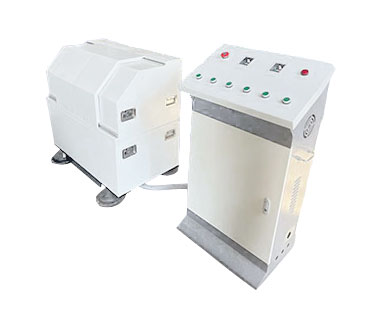
Continuous Planetary Ball Mill: How Continuous Milling Changes Powder Production

You know that feeling when a powder behaves beautifully in a small lab batch and then turns into a different animal once you try to make it by the tonne? That gap between 'it works in a jar' and 'it works in a production line' is exactly where continuous milling gets interesting. A continuous planetary ball mill is not just a planetary mill with a feed hopper bolted on. It changes the rhythm of the whole process: powder or slurry keeps moving, the mill keeps working, and quality depends on a steady state rather than a stopwatch. In this guide, we will walk through what that means in practice, without the textbook detour.
What Continuous Milling Really Means
In a classic planetary ball mill, you load material into jars, set the speed and time, and let the jars do their dance. The jars rotate around a central axis while also spinning around their own axes. Milling media inside the jars tumble, impact, and shear the powder. When the cycle ends, you stop the machine, open the jar, and take out your batch. It is a powerful, repeatable batch process, and for many laboratories it is exactly right.
A continuous planetary ball mill keeps the same basic idea of planetary motion but turns it into a flow process. Material is fed into the milling zone while the machine is running, travels through the zone, and leaves as a continuous stream or in frequent discharges. You are no longer asking how long this batch should run. You are asking what feed rate, speed, media load, and residence time give you the powder you want, minute after minute. That is a different mental model.
Batch thinking versus flow thinking
Batch milling is forgiving in a particular way. If a batch is a little off, you can mill it longer, blend it, or reject it. Continuous milling gives you less room for drift. If the feed rate rises, the solids loading changes, or the media wear, the product can shift while the machine is still running. The upside is equally clear: you get a steady output that can feed the next step in your process without a warehouse full of jars and a queue of manual unloadings. This is why continuous systems live and die by consistency. The feeder has to deliver the same material at the same rate. The milling energy has to stay stable. The discharge has to stay clear.
Why planetary motion still matters
You might wonder why the planetary part matters if the mill is continuous. It matters because the motion is where the energy comes from. As the jars or milling chambers revolve around a main axis and rotate around their own axes, the media are pushed through a complex pattern of impacts and rolling. Centrifugal forces press the media against the chamber wall, while the changing direction of those forces keeps the charge moving. The result is a high-energy grind that can break particles down quickly and disperse them at the same time. In plain language, the media do not just sit in a drum and tumble. They are thrown, rolled, and squeezed in a way that creates many small fracture events. That is great for fine grinding, but it also means the machine has to handle vibration, heat, and wear.
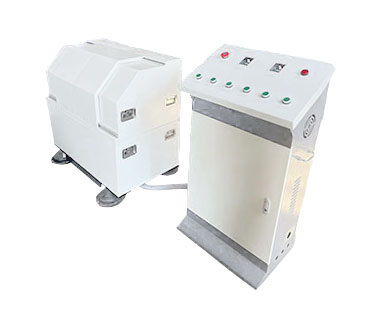
Inside a Continuous Planetary Ball Mill
Every continuous planetary ball mill has the same broad job: take a feed, expose it to controlled planetary milling energy, and discharge a product with a target particle size and dispersion. The details vary, but the main building blocks are easy to picture. There is a feed system, a milling chamber or set of chambers with grinding media, a drive that creates the planetary motion, a discharge arrangement, and a control system that ties the variables together. The feed system is often the least glamorous part and the one that causes the most trouble. Dry powders need to flow without bridging. Slurries need to stay mixed without settling. If you cannot control the feed, you cannot control the product, no matter how good the mill is.
The journey of a particle
Imagine a single particle entering the mill. It might be caught between two media balls and fractured. It might be sheared against a wall. It might sit in a slower-moving pocket for a while, then get swept toward the discharge. No two particles take exactly the same path. That is why we talk about residence time distribution, or RTD. It is a fancy way of saying that some particles leave quickly and some take the scenic route. A narrow RTD is usually what you want. It means most particles get a similar amount of milling energy, so the product is more uniform. A wide RTD can leave you with a mix of fine particles and coarse ones, even if the average looks acceptable.
This is also why the first product out of a continuous mill is not the sample you should judge. During start-up, the chamber is filling and the flow is stabilizing. During shutdown, material may linger. Take your quality samples at steady state, after the mill has run long enough for the feed and discharge to settle. Then take several samples over time, not just one lucky scoop. When someone says a continuous mill gives a broad distribution, they are often describing a flow problem, not a law of nature.
Media: the quiet co-designer of your powder
Grinding media are not a background detail. They are part of the recipe. Larger, denser media tend to deliver more impact energy, which helps break coarse particles. Smaller media give you more contact points and more surface area, which can be better for fine grinding and dispersion. The material of the media matters too, because wear adds contamination to your product. If your powder cannot tolerate iron, you need to think carefully about steel media. If it cannot tolerate zirconia, that option is out as well. Media fill level is another lever. Too little media and you lose grinding efficiency. Too much and you can choke the chamber, raise the temperature, and make the mill work harder than it needs to.
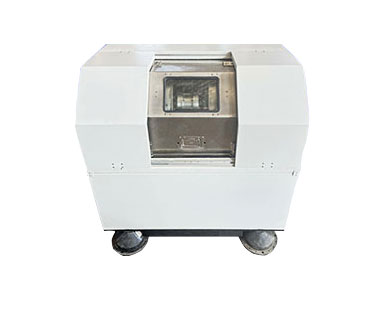
Where Continuous Planetary Milling Earns Its Keep
Continuous planetary ball milling is not the answer to every powder problem, but it has a clear sweet spot. It makes sense when you need fine grinding or good dispersion, when your downstream process wants a steady feed, and when batch handling has become the bottleneck. It also makes sense when you are moving from a laboratory recipe to a pilot or production scale and you want to learn how the material behaves in flow rather than in a sealed jar. Materials that benefit often share a few traits: they need high energy density, they are sensitive to contamination, or they need to be dispersed rather than simply crushed.
Fine grinding and dispersion
A planetary mill is good at more than making particles smaller. It can also break up agglomerates and distribute them through a liquid or a binder. In a batch mill, that dispersion happens for a fixed time. In a continuous mill, it happens as the material moves through the energy field. If the residence time is too short, you get incomplete dispersion. If it is too long, you can overgrind, generate heat, or create a particle size distribution that is wider than you need. The practical question is not what is the finest particle this mill can make. It is what is the finest particle I can make at a useful feed rate, with a distribution I can live with. Those are different questions, and the second one is the one that matters in production.
From pilot to production
Scale-up is where many projects get humbled. A continuous mill that works beautifully at pilot scale may behave differently when the chamber is larger, the flow path is longer, and the heat load is higher. You cannot simply multiply the feed rate by the volume ratio and expect the same particle size. Tip speed, media size, media fill, residence time, and the way the material enters the chamber all change with scale. The honest approach is to treat scale-up as a series of measured steps, not a single leap. Start with a target distribution, not a machine setting. Decide what D10, D50, and D90 you need, and how much variation is acceptable. Then run trials at a few feed rates and speeds.
The Powder Quality Conversation
Particle size distribution
Particle size distribution is the fingerprint of a milling process. D50 tells you the midpoint, but it does not tell you the whole story. A product with a lot of fines and a few coarse particles can have the same D50 as a much more uniform product, yet behave completely differently in a press, a slurry, or a coating. That is why you should look at D10 and D90 as well, and why you should compare full curves when you change a variable. A continuous mill can produce a tight distribution if the flow is stable and the residence time is controlled. It can also produce a broad distribution if material spends wildly different times inside the chamber. The fix is not always to mill harder. Sometimes it is better to improve feed consistency, change the discharge, or adjust the media so the material moves through more evenly.
Contamination and wear
Wear is the quiet cost of milling. Media and chamber surfaces do not last forever, and the material they lose has to go somewhere. In many products, a small amount of wear is acceptable. In others, it is a specification failure. Before you choose a continuous planetary ball mill, ask what the media and chamber are made from, how they wear, and how you will detect wear before it becomes a product problem. Contamination is not only about metal. It can also come from seals, gaskets, and cleaning residues. If you change products often, pay attention to how the mill is cleaned and how much material is left behind. A continuous mill with a long internal path can be a nightmare to clean if it was not designed with access in mind.
Heat and atmosphere
Milling puts energy into the powder, and not all of that energy goes into breaking particles. Some of it becomes heat. In a continuous mill, heat is both easier and harder to manage. It is easier because a steady flow can carry heat away and because you can cool the feed or the chamber. It is harder because the heat load is continuous, so a small temperature rise can accumulate over hours. If your material is heat-sensitive, temperature control is not a detail. Atmosphere matters too. Some powders oxidize, absorb moisture, or react with air. If that is your situation, you need to talk about inert gas, sealed feed, and sealed discharge from the beginning. The feed and discharge arrangements are part of the design, and they are much easier to specify up front.
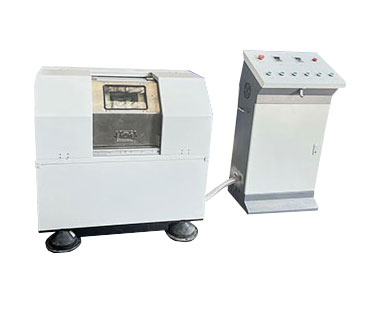
Setting Up a Continuous Run Without Guesswork
Feed consistency
Before you tune the mill, tune the feed. For slurries, that means controlling solids loading, viscosity, and mixing. A slurry that settles in the feed line will give you a burst of thick material followed by a thin stream, and the mill will respond with a product that drifts. For dry powders, it means preventing bridging, rat-holing, and uneven flow. A loss-in-weight feeder or a well-designed screw feeder can make the difference between a stable run and a constant fight. You also need to know what full looks like. A continuous mill can be starved, flooded, or just right. Starved, the media do most of their work against each other and the residence time is short. Flooded, the media cannot move properly and the grind suffers.
Residence time
Residence time is the average amount of time material spends inside the milling zone. A simple way to think about it is hold-up divided by flow rate. If the mill holds a certain amount of material and you push more through per minute, the average time inside goes down. That usually means less grinding per pass. If you want a finer product, you can slow the feed, increase the energy input, or change the media so that each pass does more work. But average residence time is only part of the story. The distribution around that average matters just as much. A mill with a wide distribution will always have some particles that leave too soon and some that stay too long. The first group limits your top size. The second group can cause overgrinding and heat.
Speed, media, and the temptation to overdo it
It is tempting to run the mill faster when the product is too coarse. Higher speed usually means more energy, and more energy usually means faster breakage. But higher speed also means more heat, more wear, and potentially more vibration. In some materials, it can change the shape of the particles or cause agglomeration. The goal is not maximum energy. The goal is the right energy for the target product, delivered consistently. Media selection deserves the same restraint. If you change media size, density, or fill, you change the whole flow pattern. Make one change at a time and sample at steady state. Keep a log of what you changed and what came out. That log will become more valuable than any generic recommendation, because it describes your material in your mill.
Common Misunderstandings
Continuous means no batch testing
A continuous mill still needs trials. In fact, it needs better trials, because you are testing a flow process rather than a sealed batch. You need to know how the material feeds, how it behaves at different residence times, and how the product settles down at steady state. A few well-designed trials will tell you more than a stack of theoretical calculations. They will also show you where the real bottlenecks are, which are often in the feed system rather than the mill.
A bigger mill is just a scaled-up lab mill
This is a comfortable idea and a dangerous one. As a mill gets larger, the flow path gets longer, the heat load increases, and the media behave differently. The same tip speed does not necessarily give the same stress intensity. The same residence time does not necessarily give the same distribution. Scale-up needs to be checked with measurements, not assumed from geometry. If a supplier cannot explain how they handle that transition, keep asking questions. If it mills finer, it must be better is another myth worth retiring. Very fine particles can be harder to handle, more prone to agglomeration, and more expensive to dry or filter. The right target is the distribution that gives you the product performance you need.
What to Check Before You Choose a Mill
When you compare continuous planetary ball mills, put the conversation on paper. The table below is not a specification sheet. It is a set of questions that will help you separate a machine that fits your process from one that only looks good in a brochure.
| What to confirm | Why it matters | A useful question |
|---|---|---|
| Feed form and solids loading | Slurry and dry powder behave differently | What feed range has this mill handled, and how is the feed controlled? |
| Throughput at target fineness | A high flow rate means nothing if the product is coarse | Can you show me a trial at my target D50, not just a maximum rate? |
| Media and chamber material | Wear can become contamination | What materials are available, and how do you monitor wear? |
| Residence time control | It sets the grind and the distribution | Which variables change residence time, and how repeatable are they? |
| Temperature control | Heat can change the product or damage it | What is the cooling method, and where is temperature measured? |
| Cleaning and changeover | Leftover material can contaminate the next run | How do you clean the internal path, and how long does it take? |
| Controls and data | A stable process needs records | What data can the control system log, and can it alarm on drift? |
| Trial support | Your material is the real test | Can we run a sample trial and receive the full particle size data? |
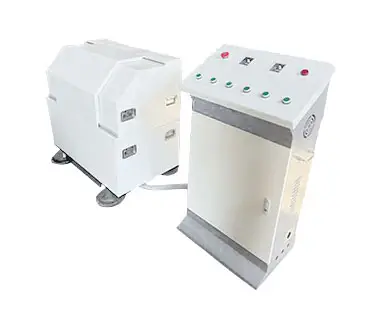
If you want to see how a production-oriented continuous planetary ball mill is arranged, the Continuous planetary ball mill page is a useful place to check the configuration options. Use it to prepare questions, not to replace a trial. The right mill for your powder is the one that can hold your target distribution at a rate you can actually use.
Maintenance Habits That Protect Quality
A continuous mill rewards routine care. Check the media for wear and breakage. Look at the chamber and discharge for buildup. Verify the feed rate against a calibration, not just the set point on the screen. Keep an eye on temperature, vibration, and power draw. None of these checks are glamorous, but they are how you catch drift before it becomes a rejected batch. Cleaning deserves its own routine. If the mill runs one product for weeks, cleaning is a scheduled event. If it changes products often, cleaning is a changeover problem that can eat your capacity. Ask how the internal surfaces are accessed, whether the mill can be flushed, and how you will verify that the cleaning worked.
Keep a log that links settings to product data. Write down feed rate, speed, media condition, temperature, and the particle size result. After a few months, you will have a map of your process that no manual can give you. When something changes, you will be able to see whether it was the feed, the media, or the machine. That is how a mill becomes a reliable production tool instead of a temperamental one.
When Continuous Planetary Milling Is Not the Right Fit
There are honest reasons to choose something else. If you make many small batches with frequent recipe changes, a batch planetary mill may be more flexible. If your feed cannot be made consistent, a continuous mill will simply turn that inconsistency into product variation. If your material is extremely abrasive and contamination is unacceptable, you may need a different wear solution. And if your production rate is very low, the economics of a continuous line may not justify the complexity. None of that makes continuous milling a bad idea. It makes it a specific idea. The best projects are the ones where the feed is well understood, the target distribution is clear, and the downstream process actually benefits from a steady stream.
A Practical Next Step
If you are considering a continuous planetary ball mill, start with a sample and a target. Define the particle size distribution you need, the feed form you can actually deliver, and the production rate that makes sense for your line. Then ask for a trial that runs long enough to reach steady state. Measure the product over time, not just at the end. Look at the full curve, the temperature, and the wear. Those numbers will tell you more than a conversation about maximum speed. You can also use the Continuous planetary ball mill product page as a checklist while you prepare those questions. Match the configuration to your feed, your contamination limits, and your cleaning routine. If the answers line up, run the trial. If they do not, change the question before you change the machine.
Related Products
Get In Touch
Our professional team will reply to you within one business day. Please feel free to contact us!