Contact Us
Choose your preferred way to contact our team
Free Quote
Fill out the form to obtain prices and information
Send an Email
Share your needs and concerns
+86 19021571516

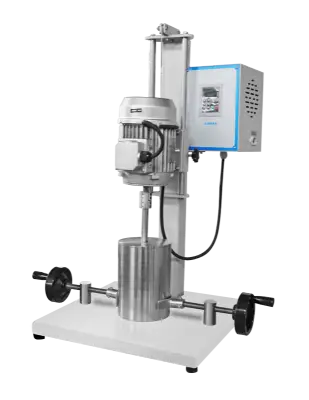
Why choose us
Simple ordering, reliable quality, professional support.
Easy Process
Clear communication from product selection to delivery, so your team can move faster.
Quality Assurance
Stable manufacturing, strict inspection, and support for configuration requirements.
Expert Support
Application-oriented advice for planetary ball milling, sample preparation, and scale-up needs.
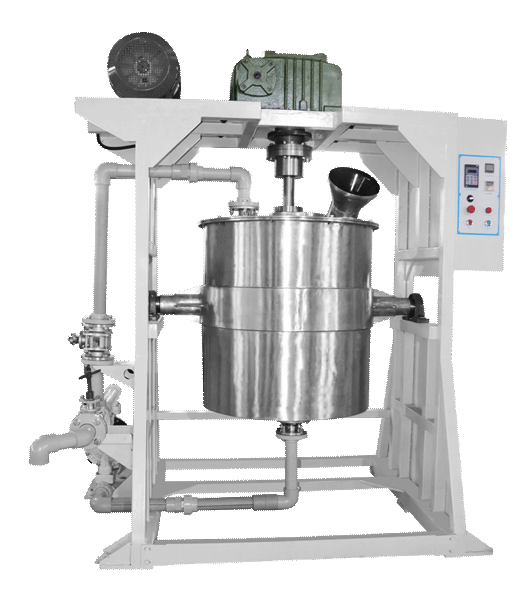
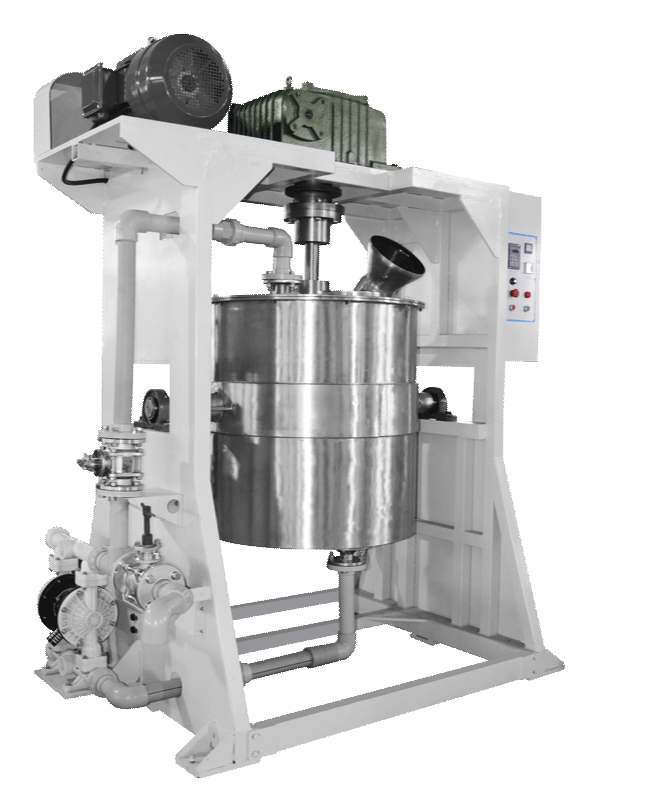
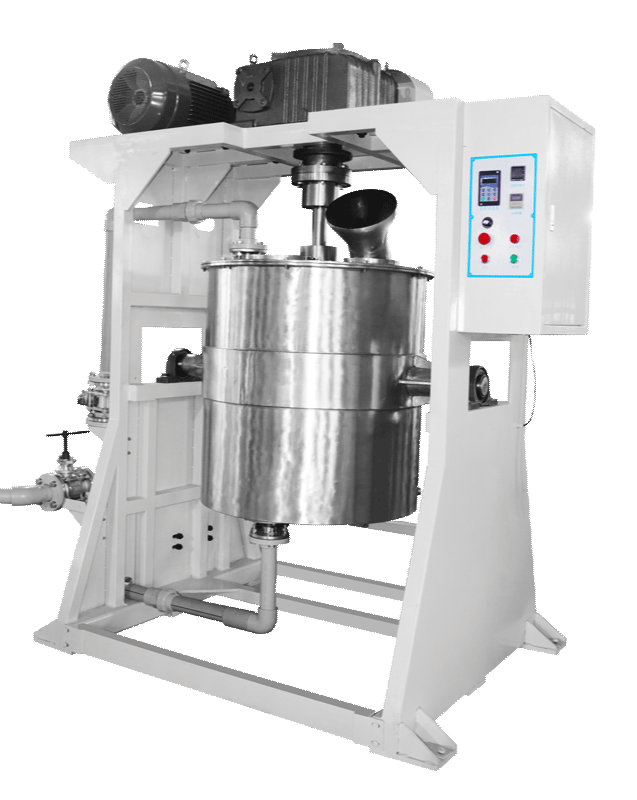
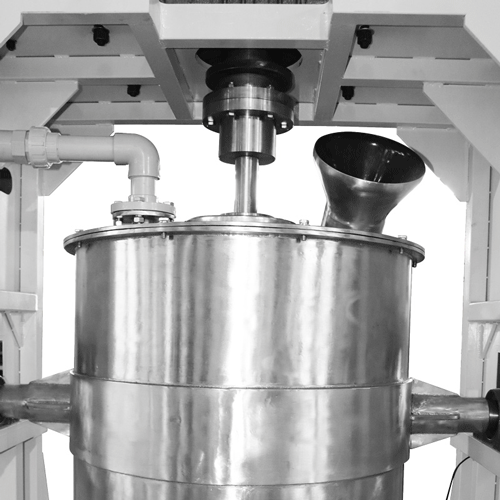
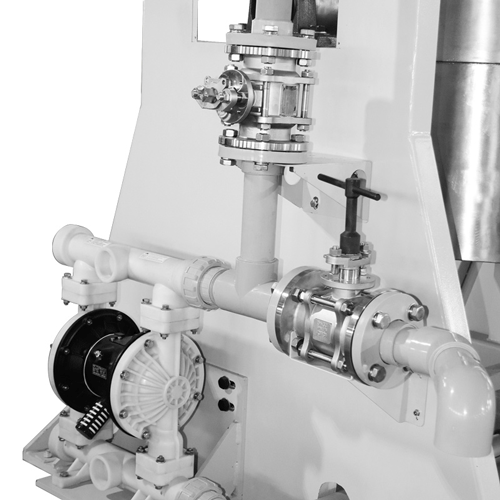
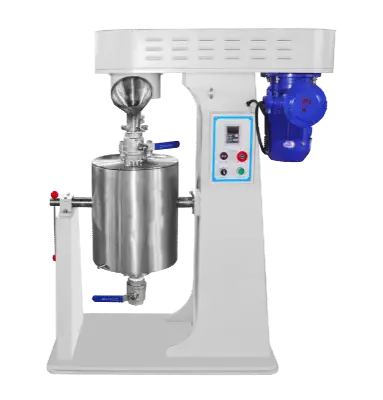
The production-type stirred mill is mainly composed of a stationary grinding barrel filled with small-diameter grinding media, a stirring device and other auxiliary devices (such as: circulation device, cooling device, timing, speed control, etc.). It has high grinding efficiency and small crushing particle size. It can well achieve various process parameter requirements and simulate various indicators in production. At the same time, due to its advantages of small batch, low power consumption, and low price, it is an optional equipment for schools, research units, and companies to conduct research on crushing processes, new materials, and coatings. It is widely used in the production of various ultrafine powders such as zirconium silicate, zirconium oxide, alumina, ceramics, chemicals, electronic materials, magnetic materials, papermaking, coatings, non-metallic minerals, new materials, paints, graphite, calcium carbonate, pharmaceuticals, etc.


Technical parameters
| model | Overall dimensions (mm) | Frequency conversion speed (r/min) | Equipment weight (KG) | Loading capacity (L) | Motor power (KW) | Grinding barrel material (material thickness) | Grinding barrel size (without water jacket) | Grinding barrel size (with water jacket) |
| JM-100L without lift | 1100X910X1900 | 0~145 | 590 | 35 | 7.5 | Stainless steel, carbon steel (about 6mm) | To be determined | Φ540*600 |
| Zirconia, corundum (about 10mm) | To be determined | Φ560*620 | ||||||
| PTFE, nylon (about 15mm) | To be determined | To be determined | ||||||
| Polyurethane (approx. 15mm) | Φ496*620 | Φ560*620 | ||||||
| JM-200L without lift | 1400X1060X2200 | 0~145 | 790 | 70 | 11 | Stainless steel, carbon steel (about 6mm) | To be determined | Φ640*830 |
| Zirconia, corundum (about 25mm) | To be determined | Φ695*850 | ||||||
| PTFE, nylon (about 15mm) | To be determined | To be determined | ||||||
| Polyurethane (approx. 15mm) | Φ600*830 | To be determined | ||||||
| JM-300L without lift | 1800X1200X2600 | 0~110 | 970 | 100 | 15 | Stainless steel, carbon steel (about 5mm) | To be determined | Φ710*890 |
| Zirconia, corundum (about 25mm) | Φ740*890 | Φ800*890 | ||||||
| PTFE, nylon (about 20mm) | To be determined | To be determined | ||||||
| Polyurethane (about 20mm) | To be determined | Φ750*894 | ||||||
| JM-500L without lift | 2750X1400X3340 | 0~90 | 1730 | 170 | 18.5 | Stainless steel, carbon steel (about 10mm) | Φ820*1010 | Φ916*1010 |
| Zirconia, corundum (about 25mm) | To be determined | Φ960*1022 | ||||||
| PTFE, nylon (about 20mm) | To be determined | To be determined | ||||||
| Polyurethane (about 20mm) | To be determined | Φ940*1022 |
* JM-100L/200L discharge valve 1.5 inches, JM-300L/500L discharge valve 2 inches;
* JM-100L/200L/300L/500L feed particle size ≤20mm ;
* JM-100L can be equipped with an optional delivery pump (feeding particle size ≤ 2.5mm), JM-200L/300L can be equipped with a delivery pump (feeding particle size ≤ 4.5mm), and JM-500L can be equipped with a delivery pump (feeding particle size ≤ 8mm).
The spindle drives the mixer to rotate at high speed, causing the grinding medium to move irregularly. This chaotic and disordered movement will cause collision, extrusion, friction and shearing of the grinding medium, thereby crushing and finely grinding the material. In addition, the size, shape and proportion of the grinding media are different, and the grinding effects obtained are also different. Generally speaking, the larger the size of the grinding media, the coarser the material will be crushed. On the contrary, the smaller the grinding media, the finer the material is ground. The appropriate ratio of different specifications of grinding media, coupled with the appropriate adjustment of the speed, will result in better grinding effects.
1. The energy utilization rate is high and high power density can be obtained, so it saves energy.
2. The product particle size is easy to adjust, and the fineness can be ensured by adjusting the residence time of the material in the cylinder.
3. Small vibration and low noise.
4. Beautiful appearance, high-end atmosphere, excellent performance, simple maintenance, easy and labor-saving operation, and durable.
5. The mixing rod can be raised and lowered automatically, and the grinding barrel can be flipped freely.
6. It can well realize various process requirements and can carry out continuous or intermittent production as needed.
7. Since the ball mill barrel is equipped with a jacket, the grinding temperature can be well controlled.
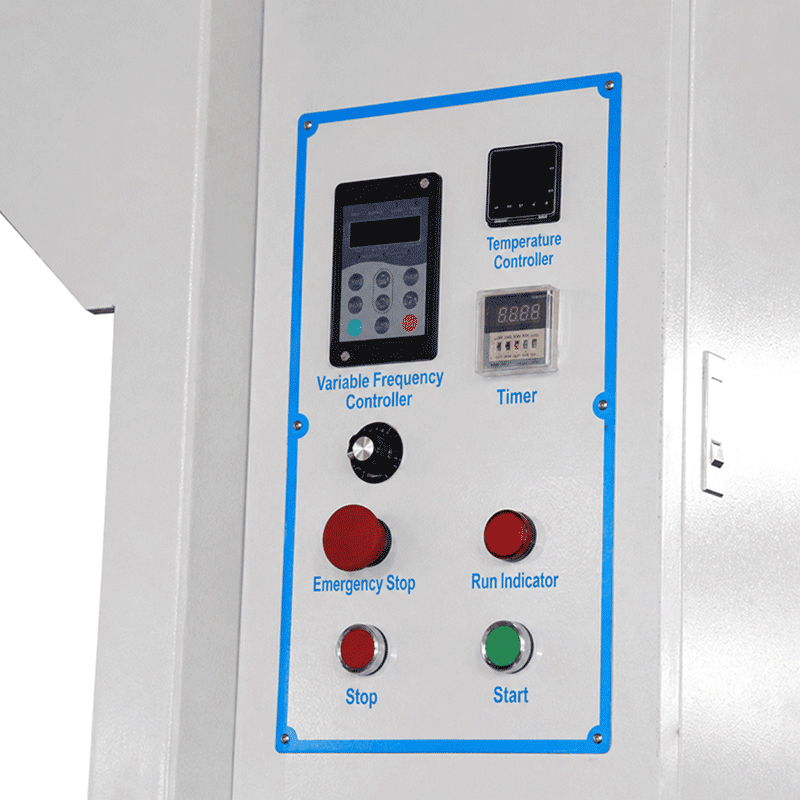
8. Equipment with various special functions can be made as needed, such as: timing, speed adjustment, circulation, temperature adjustment, etc.
9. You can choose grinding barrels and stirring devices made of different materials (stainless steel, corundum ceramics, polyurethane, zirconia, etc.).
Parameters
| Model | JM |
|---|---|
| Grinding Jar Capacity | |
| Feed Size | |
| Output Size | |
| Speed | |
| Power | |
| Voltage | |
| Dimensions | |
| Weight | 0 |
Related Videos
The trusted choice of industry leaders
FAQ
-
What is a Lightweight Stirred Ball Mill? A High-Efficiency Grinding Equipment for Wet and Dry Ultrafine Pulverization
Discover what a lightweight stirred ball mill is, how it works, and its key advantages for laboratory and pilot-scale ultrafine grinding. This guide covers working principles, types, performance indicators, and selection tips for this versatile wet and dry milling equipment.
MORE >> -
What is an Electric Lifting Stirred Ball Mill? A High-Efficiency Grinding Equipment for Fine and Ultra-Fine Powder Processing
The electric lifting stirred ball mill is a specialized grinding device that uses a rotating agitator to drive grinding media for fine and ultra-fine milling. It features an electrically operated lifting mechanism for easy jar installation and cleaning. Ideal for wet or dry grinding of ceramics, chemicals, minerals, and battery materials, it combines high energy efficiency with precise particle size control, suitable for both R&D and small-batch production.
MORE >> -
What is an Electric Lifting Stirred Ball Mill? A High-Performance Grinding Mill for Fine and Ultra-Fine Particle Processing
Learn the definition, working principle, types, and key selection parameters of the electric lifting stirred ball mill. This guide covers how it achieves ultra-fine wet and dry grinding through high-energy agitation, its applications in ceramics, battery materials, and pigments, and a comparison of lab, lightweight, and production models.
MORE >> -
What is a Production Type Stirred Ball Mill? A High-Efficiency Grinding Equipment for Industrial Fine and Ultra-Fine Powder Production
This article explains the production type stirred ball mill, an industrial-scale grinding machine designed for fine and ultra-fine powder production. It covers the working principle, key components, customization options, selection criteria, and typical applications in mining, ceramics, chemicals, and advanced materials.
MORE >> -
What is a Lab Stirred Ball Mill? A High-Efficiency Grinding Equipment for Fine and Ultra-Fine Powder Research
Discover the lab stirred ball mill: a compact, high-efficiency grinding device for fine and ultra-fine powder research. Learn its working principle, types, key performance indicators, and selection tips for materials science, chemistry, and pharmaceuticals.
MORE >> -
What is a Lab Stirred Ball Mill? A High-Efficiency Grinding Equipment for Fine and Ultra-Fine Grinding in Laboratories
Explore the lab stirred ball mill, a high-efficiency grinding equipment designed for fine and ultra-fine grinding in laboratories. Learn about its working principle, types, key performance indicators, and selection tips for research and small-scale production.
MORE >> -
What is a Lightweight Stirred Ball Mill? A Compact Stirred Ball Mill for Laboratory Ultrafine Grinding and Dispersion
A lightweight stirred ball mill is a compact, high-efficiency pulverizing device designed for laboratory-scale ultrafine grinding and dispersion of materials. It uses a rotating agitator to stir grinding media at high speed, generating intense shear and impact forces that rapidly reduce particle size to micron or even submicron levels. Ideal for research institutions, universities, and quality control labs, this mill offers easy operation, lower noise, and minimal sample contamination. This article explains its working principle, key features, selection criteria, and main applications to help you choose the right equipment for your powder processing needs.
MORE >> -
What is a Lab Stirred Ball Mill? A High-Efficiency Ultrafine Grinding Device for Laboratory and Pilot-Scale Material Processing
Discover the lab stirred ball mill, a compact and efficient grinding device for ultrafine pulverization of materials in research, pilot-scale, and small-batch production. Learn how its unique stirring mechanism achieves high energy density, adjustable particle size, and versatile applications from ceramics to battery materials, with key selection tips.
MORE >> -
What is a Lab Stirred Ball Mill? A High-Efficiency Grinding Equipment for Fine and Ultrafine Powder Preparation
A lab stirred ball mill is a compact, high-efficiency grinding device designed for fine and ultrafine powder preparation in research and pilot-scale applications. It uses a rotating agitator to drive grinding media, producing intense shear, impact, and friction forces for rapid particle size reduction. This article covers its working principle, types, key performance indicators, and selection tips.
MORE >> -
What is a Vertical Production Planetary Ball Mill? A High-Energy Milling Equipment for Industrial-Scale Powder Processing
A vertical production planetary ball mill is a high-energy milling equipment designed for industrial-scale fine grinding, mixing, and mechanical alloying of materials. It utilizes planetary motion to achieve micron and submicron particle sizes. This article explores its working principle, key components, selection criteria, and applications in various industries such as battery materials, ceramics, and pharmaceuticals.
MORE >>
Get In Touch
Our professional team will reply to you within one business day. Please feel free to contact us!
Related Products
Related Articles